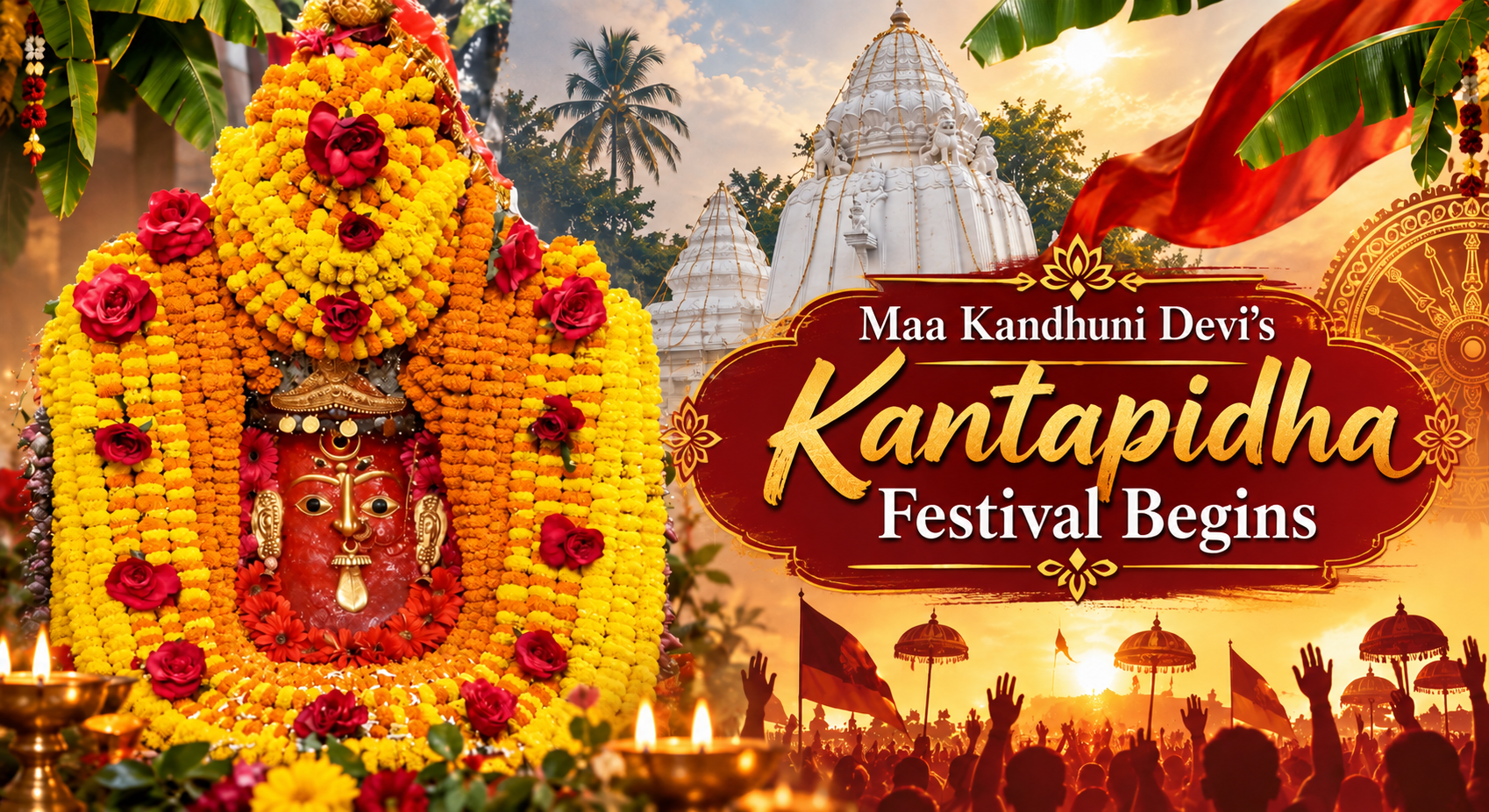

The annual Kantapidha Mahotsav in Sorada celebrates Maa Kandhuni Devi while preserving the region’s royal, tribal and religious traditions.
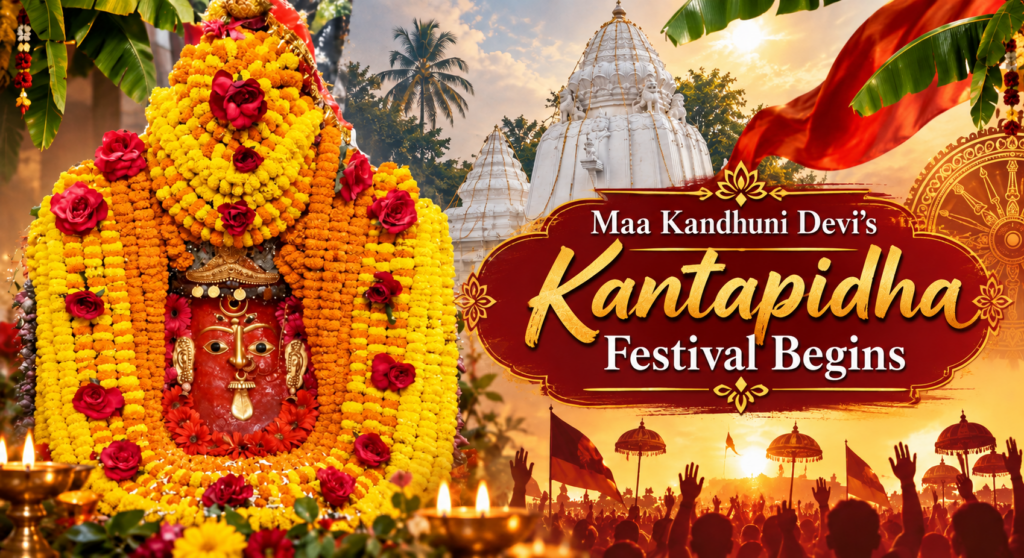
Sorada: A centuries-old tradition of faith, devotion and cultural heritage came alive in Sorada in Odisha’s Ganjam district on Wednesday with the inauguration of the Maa Kandhuni Devi’s Kantapidha Mahotsav. The celebrations will continue until October 3, bringing together religious rituals, cultural programmes and community participation.
Centred on Maa Kandhuni Devi, the revered deity associated with the Sorada royal dynasty, the festival represents a continuing link between the region’s royal history, tribal traditions and local religious practices. It has evolved over generations into an important expression of Sorada’s collective cultural memory and spiritual identity.
According to historical accounts and local tradition, Raja Abhaya Pratap Singh Deo, also known as Raja Shadadhanu Singh Deo and regarded as the first ruler of the Sorada dynasty, inaugurated the festival in honour of Maa Kandhuni Devi in 1476 AD. Over the centuries, the celebration came to be known as the Kantapidha Yatra, continuing as a living expression of faith and cultural continuity.
The festival programme began with the inauguration ceremony and Bali Yatra, featuring the ceremonial receipt of Angya Maal from Sri Jagannath Temple after Sandhya Alati Niti. The Maa Kandhuni Devi Mahotsav is scheduled for September 29, while the main Kantapidha Yatra will be held on October 3, coinciding with the closing ceremony.
For Nilamani Bishoyi, MLA from the Soroda Assembly Constituency and president of the Maa Kandhunidevi Development Trust, the festival is a celebration of a heritage that has endured across generations.
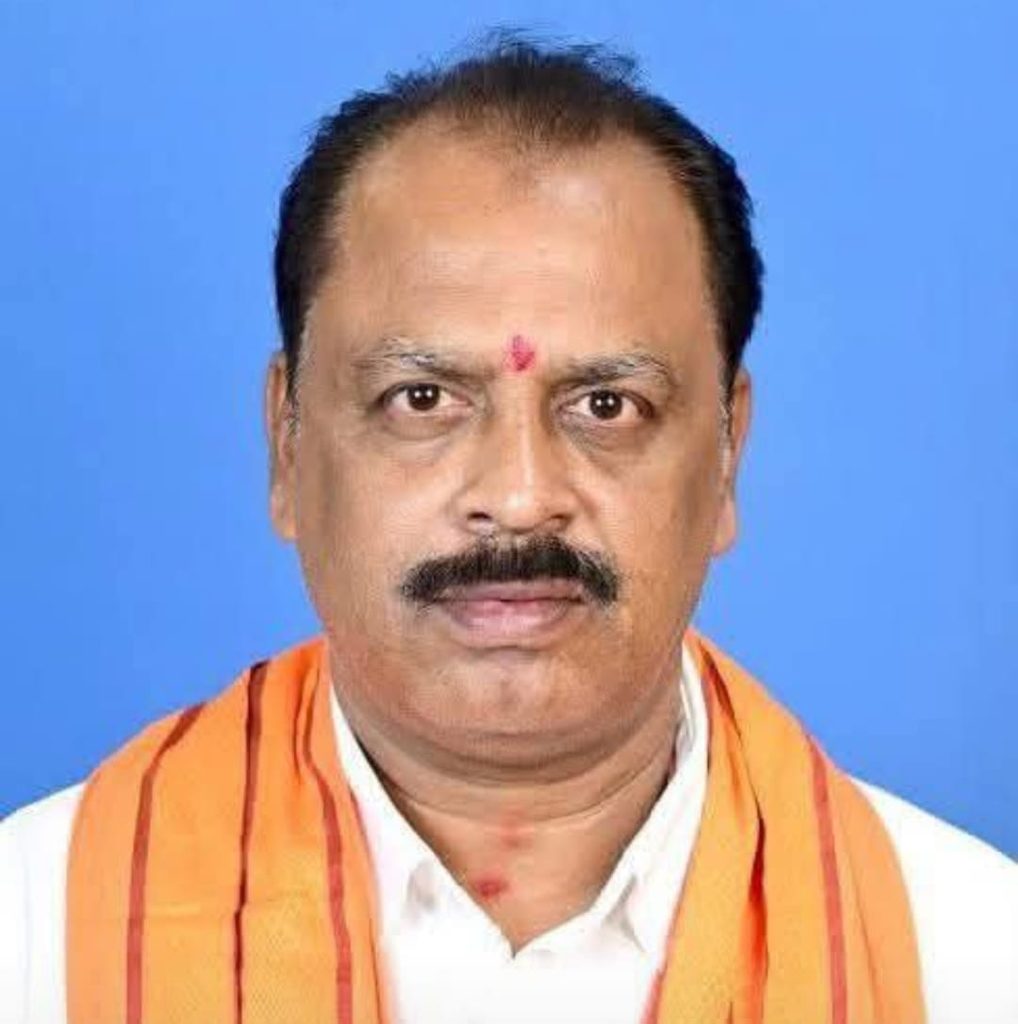
“I feel deeply honoured and privileged to be part of this sacred and culturally significant celebration. The Kantapidha Yatra is a living expression of the enduring legacy, faith and glorious heritage of the Khidisingi Dynasty, and it is a privilege to witness, cherish and carry forward this age-old tradition for generations to come,” Bishoyi said.
Rajanikant Mahapatra, secretary of the Maa Kandhunidevi Development Trust, also emphasised the wider cultural significance of the celebration.
“I extend my heartfelt wishes for the grand success of the Maa Kandhunidevi Kantapidha Yatra and Mahotsav. May this sacred celebration continue to flourish as a living symbol of our rich cultural heritage, devotion and collective spirit, bringing generations together in celebration of Sorada’s enduring traditions,” Mahapatra said.
The traditions surrounding Maa Kandhuni Devi are closely connected with the history of the Sorada royal family and the Kandha community. Maa Khemeswari Devi, also revered as Barahi Devi or Khambeswari Devi, was traditionally regarded as the family deity of King Patta Malik, the Kandha ruler of the region. Over generations, her worship among the Kandha people came to be associated with the name Maa Kandhuni Devi.
The festival carries a distinctive ritual tradition that is closely associated with its name. According to local tradition, the priest, known as the Dehuri, observes rigorous penances during the festival. On the concluding day, Maa Kandhunidevi is traditionally believed to enter the body of the chief priest, who then takes the Goddess around the town to appear before devotees. The ritual culminates in the priest sitting on a bed of thorns, a practice traditionally associated with the name “Kantapidha”.
Beyond its religious rituals, the festival represents the synthesis of royal tradition, tribal belief, local religious practices and the broader spiritual heritage of Odisha. The Kantapidha Yatra has consequently endured as more than an annual religious observance; it is a living cultural institution connecting the people of Sorada with their history, identity and ancestral traditions. As the celebrations continue through October 3, Sorada’s historic festival once again brings its past into the present, keeping alive a tradition that has survived for centuries through faith, community participation and collective memory.