At IndiaVerve, we go beyond the noise to bring you meaningful stories of change, resilience and progress—from India to the world stage. Our mission is to bring readers credible, wide-ranging coverage across politics, business, sports, culture, society and more.

Odisha now has 100 tsunami-ready coastal villages

The milestone under the UNESCO-IOC programme strengthens Odisha’s community-based disaster preparedness as the state works towards making all 381 tsunami-prone coastal villages ready.

Bhubaneswar: Odisha has achieved a major milestone in tsunami preparedness, with 100 coastal villages now recognised as Tsunami Ready under the UNESCO-IOC Tsunami Ready Recognition Programme.

The latest recognition of 75 additional villages in 2026 takes the total number of Tsunami Ready villages in the state to 100, marking significant progress towards the Odisha government’s goal of preparing all 381 tsunami-prone coastal villages and habitations across six coastal districts.

The initiative is being implemented by the Odisha State Disaster Management Authority (OSDMA) with a focus on scientific preparedness, community participation and strengthening the ability of coastal communities to respond effectively to tsunami hazards.

The National Tsunami Ready Board (NTRB) conducted field verification of coastal villages on September 26 and 27 before reviewing its findings at a meeting in Bhubaneswar on September 28. The meeting was chaired by Dr Balakrishnan Nair, Director, Indian National Centre for Ocean Information Services (INCOIS), and Rajesh Prabhakar Patil, Managing Director, OSDMA.

During the field assessment, the Board visited villages in six coastal districts and interacted with residents to assess their awareness of tsunami hazards, preparedness measures and emergency response mechanisms.

The villages visited included Nidhipada and Gudupahi in Balasore; Muladihi, Bhatapada, Amarnagar and Nuagaon in Bhadrak; Sailendrasahi and Bhateni in Kendrapada; Motto and Singharpal in Puri; and New Kirtipur (1008), Laxmipur, Noliasahi and Ramtara in Jagatsinghpur.

The NTRB appreciated the active participation of local communities and their awareness of tsunami risks. It also commended OSDMA’s systematic preparedness measures and efforts to translate scientific early-warning systems and disaster-management protocols into community-level action.

The Board members subsequently interacted with Revenue and Disaster Management Minister Suresh Pujari and shared their observations from the field verification.

Odisha’s journey under the UNESCO-IOC programme began in 2019, when Venkatraipur (Boxipalli) in Ganjam and Noliasahi in Jagatsinghpur became the first villages in the state to receive Tsunami Ready recognition. In 2024, another 24 villages were recognised.

According to an official statement, India became the first country in the Indian Ocean Region to implement the Tsunami Ready Programme, while Odisha became the first state to prepare communities under the programme.

The UNESCO-IOC initiative is a community performance-based programme that brings together government authorities, scientific institutions, community leaders and emergency management agencies to strengthen tsunami preparedness. It aims to build resilient communities capable of protecting lives, livelihoods and property through awareness, preparedness and timely response.

The NTRB meeting was attended by OSDMA Advisor Dr Kamal Lochan Mishra, Executive Director Susmita Behera, OSDMA officials and INCOIS scientists. Suci Dewi Anugrah, Chair of Working Group-3: Tsunami Ready Implementation, ICG/IOTWMS-UNESCO-IOC, joined virtually.
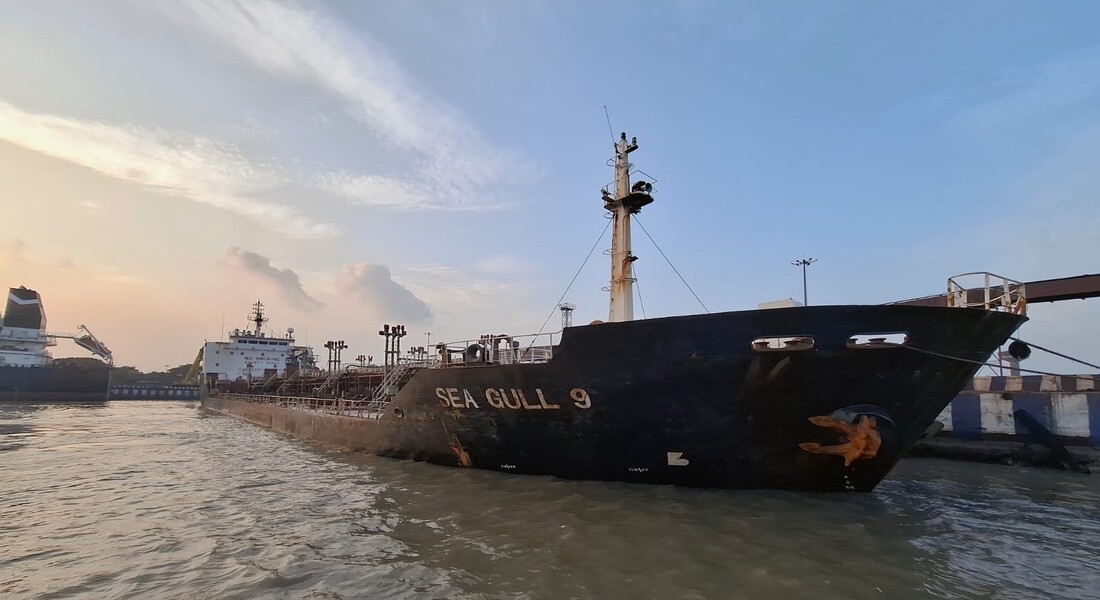
Indian Coast Guard, Paradip Port team avert maritime emergency involving MT Seagull 9

Bhubaneswar: A coordinated response by the Indian Coast Guard (ICG) and Paradip Port Authority on Monday helped avert a serious maritime emergency involving the Belize-flagged chemical tanker MT Seagull 9 off the Odisha coast.

The vessel, carrying around 9,000 metric tonnes of crude palm oil and 23 crew members, reported a distress situation at about 7:30 am on September 27 after its main engine failed and a ballast tank began flooding rapidly. The flooding caused the vessel to develop a dangerous tilt while it was around 37 nautical miles east-south-east of Paradip.

The Indian Coast Guard immediately deployed ICGS Vishwast to the location. A specialist Coast Guard Damage Control Team boarded the unstable vessel and undertook emergency measures to prevent further flooding and stabilise the tanker, according to an official statement.

The team used submersible de-flooding pumps, arrested the leakage, blanked two damaged seawater pipelines and contained a third fractured line. These measures helped eliminate the immediate risk of the vessel capsizing.

Paradip Port Authority coordinated tug assistance to bring the vessel safely towards the harbour. The distress signal was received by Harbour Master Capt. Indranil Mukherjee, who coordinated the initial assistance. Under the direction of Deputy Conservator Capt. A.C. Sahoo, the PPA tug Dolphin proceeded to the vessel, located approximately 40 miles from Paradip, and towed it towards the port.

After reaching the harbour, MT Seagull 9 entered under minimum engine power and was safely berthed at NQ2 under the supervision of Deputy Conservator Capt. A.C. Sahoo and pilot Capt. S.B. Panigrahi.

The Coast Guard also diverted a Pollution Control Vessel and an additional Offshore Patrol Vessel to strengthen the response. ICG Dornier aircraft operating from Bhubaneswar carried out aerial surveillance to monitor the situation.

A minor palm-oil sheen detected near the vessel on September 27 was found to have fully dissipated during follow-up aerial surveillance on September 28. Pollution-response protocols continue to remain in place as a precaution to protect the marine environment.

The combined efforts of the Indian Coast Guard and Paradip Port Authority ensured the safety of the vessel, its crew and cargo while maintaining continued monitoring of the surrounding marine environment.

Angul Aluminium Park showcased at Kolkata roadshow

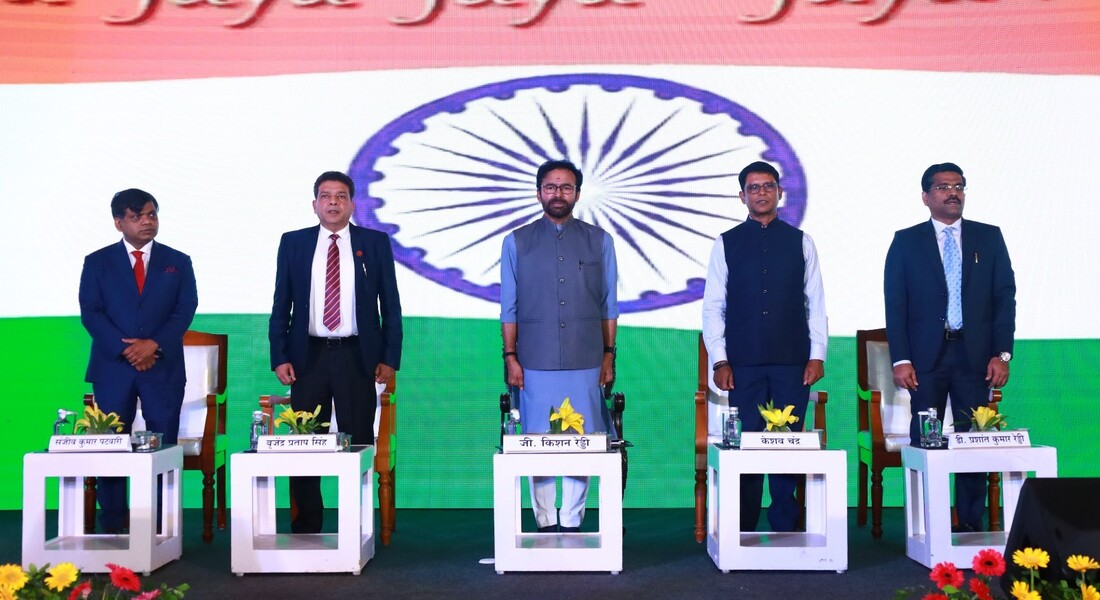
Bhubaneswar: The Angul Aluminium Park was showcased as a major destination for downstream aluminium manufacturing and investment at an exclusive roadshow held in Kolkata on Monday, with Union Minister for Coal and Mines G. Kishan Reddy highlighting the need for greater domestic value addition in the sector.

Reddy, who attended the roadshow as chief guest, said the Angul Aluminium Park has the potential to strengthen India’s aluminium value chain by promoting downstream manufacturing, investment and innovation.

The park has been envisioned as a hub for downstream aluminium manufacturing and offers world-class infrastructure, assured access to aluminium from NALCO and opportunities across a range of industries.

Reddy stressed the importance of creating greater value from India’s mineral resources and reducing dependence on exports by manufacturing essential high-value aluminium products domestically.

He said such efforts would support India’s self-reliance and strengthen its manufacturing capabilities.

The Kolkata roadshow brought policymakers, investors and industrialists together to highlight investment opportunities at the Angul Aluminium Park and explore stronger industrial linkages across Eastern India.

The government of Odisha presented the park as an integrated investment destination, with industry-ready infrastructure, a dedicated molten-metal transportation corridor and end-to-end investor facilitation.

Aboli Naravane, IAS, MD, IPICOL, participated in the roadshow along with industry leaders and stakeholders as Odisha highlighted the opportunities available for downstream aluminium manufacturers.

With NALCO providing assured raw-material linkages within the park, downstream manufacturers can establish operations and expand value-added production. The opportunities showcased at the park include advanced manufacturing, recycling and other value-added aluminium products.

The initiative is aimed at deepening Odisha’s aluminium value chain, encouraging industrial partnerships and creating new avenues for investment and employment.

At the roadshow, NALCO CMD B.P. Singh highlighted the strategic opportunities offered by the Angul Aluminium Park, describing it as a hub that can promote innovation, downstream value addition and growth across the aluminium sector.

The event also saw NALCO hand over a dividend cheque of Rs 1,083.06 crore for the financial year 2025-26 to the Union government. The cheque was presented to Reddy in Kolkata in the presence of Keshav Chandra, IAS, Secretary, Ministry of Mines; Vivek Kumar Bajpai, Joint Secretary, Ministry of Mines; Jagdish Arora, Director (P&T), NALCO; and A.K. Behuria, Director (Finance), NALCO.

The dividend payout reaffirmed NALCO’s continued profitability and value creation, according to the information shared at the event.

The roadshow underlined the push to connect Odisha’s established aluminium ecosystem with West Bengal’s industrial and market potential and build stronger supply chains and manufacturing opportunities across Eastern India.

Naveen Patnaik leads BJD protest against MMDR Amendment Act

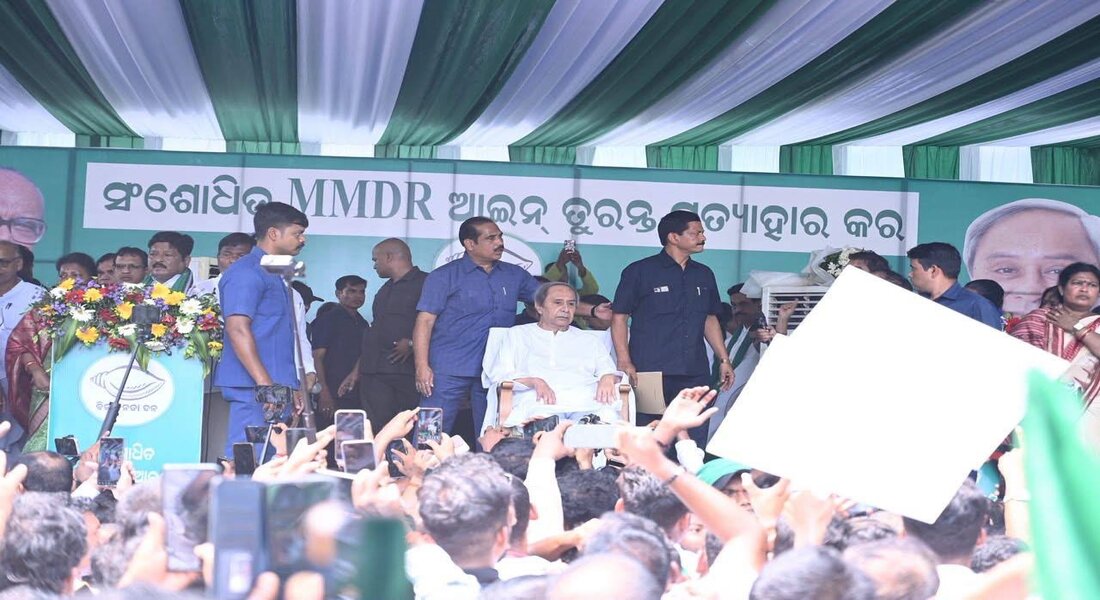
Bhubaneswar: Biju Janata Dal (BJD) President Naveen Patnaik on Monday joined a massive party protest outside the Odisha Assembly, demanding withdrawal of the Mines and Minerals (Development and Regulation) Amendment Act, 2026.

Addressing the gathering, Patnaik said the amended legislation was directly linked to the rights of Odisha and asserted that the state’s mineral resources and land were matters of concern for its people.

“This is not an ordinary Bill. It is linked to the rights of the state,” Patnaik said, while calling for a united political response to the legislation.

Patnaik alleged that the amendment was passed in Parliament without adequate discussion and questioned the silence of the 20 BJP MPs from Odisha.

In a detailed post on X, he also criticised the Odisha government over its response to the legislation.

The BJD president said he had written to Chief Minister Mohan Charan Majhi, seeking a special session of the Assembly and later requesting a resolution opposing the MMDR Amendment Act. According to Patnaik, he received no response to either request.

Patnaik further claimed that Odisha could suffer losses of thousands of crores of rupees every year because of the amended law. He called on political parties across the state to join the BJD’s campaign against its implementation in Odisha.

The former chief minister said the agitation was being carried out in the interest of Odisha and its 4.5 crore people, particularly the younger generation. He said the BJD would continue its campaign until the state’s rights were restored.

The protest at Lower PMG in Bhubaneswar forms part of the BJD’s opposition to the MMDR Amendment Act, with the party demanding its withdrawal.

The Union government, however, has stated that the 2026 amendment is intended to facilitate mineral exploration and development, particularly of critical and strategic minerals, while providing greater flexibility to mining lease holders.

The Ministry of Mines has also said the amendment does not diminish states’ rights over land and minerals or their power to levy mineral taxes.

The BJD has maintained that the legislation affects Odisha’s rights and financial interests and has said it will continue its agitation against the amendment.

Asian Games 2026: India crosses 40-medal mark

New Delhi: India crossed the 40-medal mark at the Asian Games 2026 after another busy day of competition on Monday, with athletics, shooting, boxing and other disciplines adding to the country’s tally.

India have now collected four gold, 17 silver and 19 bronze medals, according to reports.

Esha Singh produced one of the day’s biggest moments by winning silver in the women’s 25m Air Pistol individual event. She finished eighth in qualification to reach the final before securing the silver medal.

The shooting competition also brought disappointment for India. The women’s 25m Air Pistol team finished fifth and missed out on a medal. Manu Bhaker failed to make the individual qualification, while India’s team challenge also fell short after Rahi Sarnobat hit the frame.

In boxing, Lovlina Borgohain moved into the women’s 75kg semifinals after defeating Korea’s Seong Suyeon, assuring India of a medal. Priya Ghanghas also secured a medal berth by reaching the women’s 60kg semifinals after beating Tajikistan’s Mijgona Samadova.

India added another medal through Pincky Balhara in Kurash. She lost her women’s 78kg semifinal but finished with a bronze medal.

Athletics also contributed to India’s medal haul, with Vithya Ramraj taking bronze in the women’s hurdles with a national-record time.

India’s men’s cricket team booked a place in the semifinals after its quarterfinal against Afghanistan was called off due to rain, sending Shreyas Iyer’s side through.

In archery, Ganesh Mani Ratnam Thirumuru advanced to the men’s compound individual quarterfinals after beating compatriot Sahil Jadhav 149-148 in the round of 16. Earlier, Thirumuru had defeated Indonesia’s Sostar Andaru Rinaldi 144-142, while Sahil Jadhav had beaten Mongolia’s Jamiyangombo Purevdorj 149-137. Thirumuru’s quarterfinal is scheduled for October 1.

India’s teams also recorded notable results in squash. The women’s team defeated China 2-1 and later recorded a 3-0 win over China, while the men’s team beat China 2-0 in Pool C and also registered a 3-0 victory over China. The women’s team additionally defeated Japan 2-1 in a pool match.

In volleyball, India beat Hong Kong 3-0 in a men’s group-stage match.

Surfing produced mixed results for the Indian contingent. Kishore Kumar Anbarasu defeated China’s Ma Wensong 9.86-8.80 in the men’s shortboard third round, while Sivaraj Babu lost 7.83-11.50 to the Philippines’ Jayuard Alciso.

India’s women’s doubles campaign in sepaktakraw ended after a 1-2 defeat against Japan left the team at the bottom of Group B.

In tennis, Ankita Raina and Rutuja Bhosale lost their women’s doubles first-round match against Kazakhstan’s Anna Danilina and Yuliya Putinseva. Sumit Nagal’s men’s singles second-round match against Hong Seong-chan was postponed.

Shooting also saw Indian competitors continue their qualification campaigns. After Day 2 of men’s trap qualifying, Shapath Bharadwaj was fifth, Kynan Chenai 19th and Ahvar Rizvi 32nd. In the women’s trap qualification, Neeru was first, followed by Manisha Keer in 21st and Aashima Ahlawat in 23rd.

With boxing, shooting, athletics and team sports continuing to produce results, India moved beyond the 40-medal mark as the Asian Games entered another crucial phase.

LPU suspends classes for 10 days after student protests over rape allegation

New Delhi: Lovely Professional University (LPU) has suspended classes for 10 days and postponed its midterm examinations indefinitely following student protests and violence on its Phagwara campus over an allegation that an outsider raped a female student.

The university has allowed students to return home during the break after consulting their parents or guardians. Those staying on campus have been advised to remain inside their hostels or residences and avoid unnecessary movement or participation in any unrest, citing safety concerns.

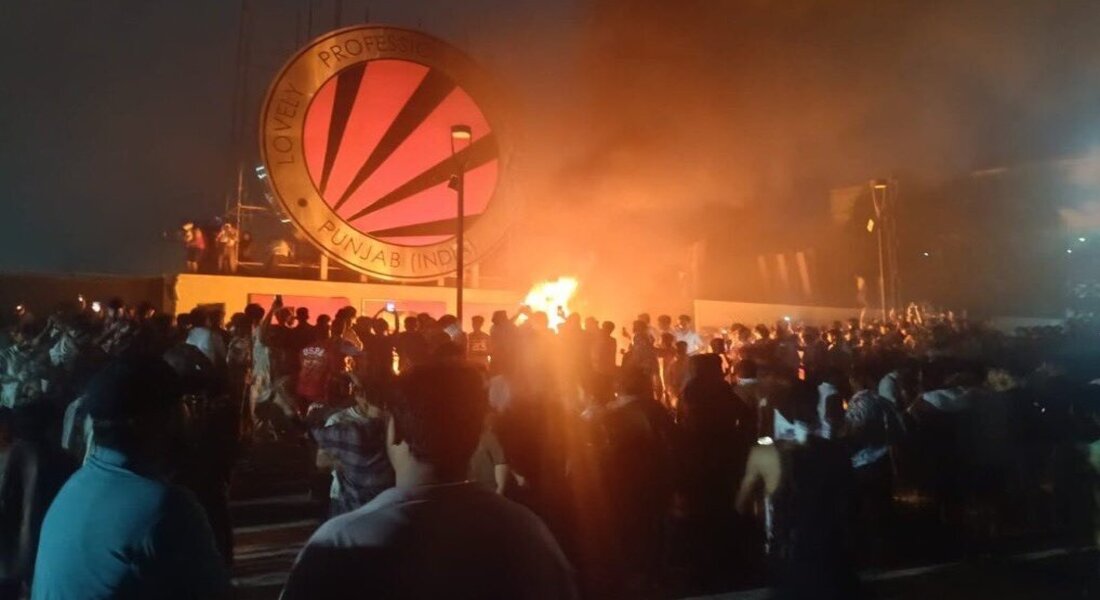
The decision followed a prolonged protest on Sunday, when hundreds of students blocked a section of National Highway-44 outside the university for more than 15 hours. Students were demanding action over the alleged rape, which they claimed took place on the university premises. The university, however, described reports of the incident occurring on campus as “rumours”.

Police said a rape case had been registered against an unidentified person based on a complaint by students and that a Special Investigation Team (SIT) had been formed to investigate the allegation.

The highway blockade was cleared during the intervening night of Sunday and Monday, Jalandhar Police Commissioner Satinder Singh said. He said the situation was under control and remained peaceful.

Tensions escalated on Sunday evening when protesters allegedly pelted stones at police personnel and damaged police vehicles, injuring several personnel, according to officials. Police had been attempting to clear the highway blockade, which had continued since around 8 am, when some students allegedly threw water bottles at them.

Police subsequently used a lathi charge, following which protesters moved towards the campus, officials said. Once inside the university premises, some protesters allegedly continued stone-pelting.

A heavy police force led by ADGP M.F. Farooqui entered the campus late Sunday night, followed by a flag march involving senior officers and other personnel. Jalandhar Police Commissioner Satinder Singh, DIG (Jalandhar Range) Naveen Singla and Kapurthala SSP Gaurav Toora were among the officers present.

Shiromani Akali Dal leader Sukhbir Singh Badal criticised the reported use of force against students and accused the Punjab government of failing to maintain law and order. He also appealed to students to protest peacefully and seek accountability through lawful means.

The LPU protests came a day after a separate incident at Chitkara University in Patiala, where students allegedly set a police vehicle on fire following unverified claims that two female students had died by suicide on the university premises.

Videos circulating on social media purportedly showed protesters at LPU damaging window panes and flower pots and setting some objects on fire while raising slogans demanding justice. The authenticity and context of individual social media videos could not be independently established from the report

Odisha orders comprehensive review of unused government land

Bhubaneswar: The Odisha Revenue & Disaster Management Department has directed all Collectors to undertake a comprehensive and time-bound review of government land provided for developmental and public welfare projects but left unutilised or used for purposes other than those sanctioned.

The directions have been issued by Additional Chief Secretary, Revenue & Disaster Management Department, Dr. Arabinda Kumar Padhee, through a letter to all Collectors.

The review will cover government land provided through advance possession, permissive possession, lease and alienation to Government departments, corporations, institutions, organisations and individuals.

The department has said that government land is a valuable public resource and stressed the need to ensure its protection, proper utilisation and prevention of misuse, unauthorised occupation and unauthorised retention.

Under advance possession, collectors have been directed to take necessary action under Rule 11-A of the Odisha Government Land Settlement Rules, 1983. Pending cases are to undergo prompt field verification. Where land is found to be unutilised or used for a purpose other than the one sanctioned, necessary action is to be taken for revesting the land with the government in accordance with law.

Land held under permissive possession will also be reviewed to verify its present utilisation status. Where such land is lying vacant or the conditions governing permissive possession are not being complied with, action is to be taken under Rule 9-A(2) of the Odisha Government Land Settlement Rules, 1983.

The department has also ordered a case-wise review of government land leased to institutions, organisations and individuals. Where leased land has remained unutilised for more than three years from the date of settlement, or is being used for a purpose other than the sanctioned purpose, such cases are to be identified and the process of resumption initiated and completed expeditiously in accordance with law.

Where provisions relating to resumption apply under Section 3-B of the Odisha Government Land Settlement Act, 1962, action is to be taken by following due legal procedure and the principles of natural justice. After completion of the resumption process, the land is to be restored to Government possession and necessary corrections made in revenue records wherever required.

Government land transferred to various departments for projects and specific purposes will also undergo field-level verification. If any land, or part of it, has remained unutilised for more than three years and is no longer required for the purpose for which it was transferred, a proposal is to be submitted to the concerned department for relinquishment of the land and its restoration to the Revenue & Disaster Management Department.

In cases where land has been only partially utilised, the need to retain the unutilised portion will also have to be specifically examined and recorded.

The department has further directed district administrations to take prompt and stringent action, in accordance with applicable rules and prescribed procedures, against encroachments detected on government land that has been leased out or alienated.

Dr. Padhee has stressed that revenue field officials must discharge their statutory responsibilities fearlessly, impartially and strictly in accordance with law, particularly in cases involving vested interests, influential organisations or individuals. They have been directed not to succumb to fear, favour, pressure or influence.

The department has also warned that if the involvement or collusion of government officers or employees with vested interests, corrupt individuals or other unethical entities is established, stringent disciplinary as well as criminal action will be initiated under the applicable provisions of law.

District administrations have been directed to sensitise all concerned officers and employees about the directions and take necessary precautions for the protection and proper management of government land.

A comprehensive district-wise record of the review process is to be maintained, covering cases reviewed, cases identified for action, processes initiated, processes completed and land restored to the Government account.

For regular monitoring, Collectors have been directed to submit monthly progress reports online to the department by the 5th of every month in four separate formats covering Advance Possession, Permissive Possession, Resumption and Relinquishment.

The review and action process has been designated as a priority assignment. Collectors have been made personally responsible for ensuring that there is no unnecessary delay or negligence and that appropriate action is taken in all eligible cases. They have also been directed to ensure proper assignment of responsibilities at the district level.

The Revenue & Disaster Management Department said it remains committed to safeguarding government land and ensuring its proper, lawful and productive utilisation as a valuable public resource.

Hirakud Dam opens 28 gates amid rising inflows into Mahanadi

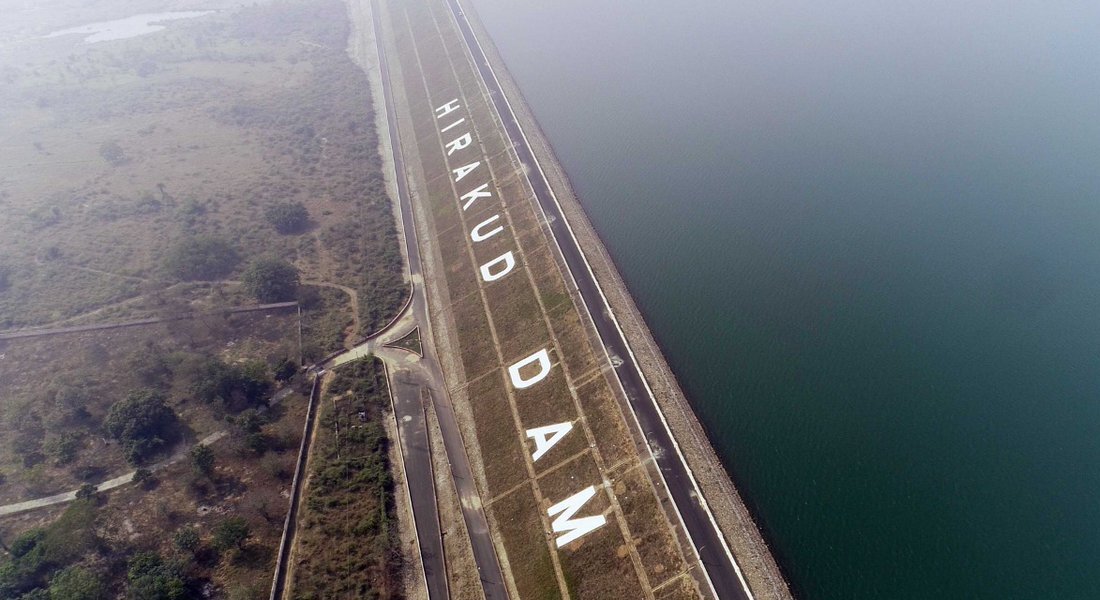
Bhubaneswar: The Water Resources Department on Sunday opened 28 gates of the Hirakud Dam to regulate rising inflows following heavy rainfall across the Upper Mahanadi Basin and several sub-basins of the Mahanadi river system.

The development followed the landfall of the deep depression between the night of September 23 and September 24, 2026, and its subsequent movement towards Chhattisgarh.

Heavy rainfall was recorded across the Upper Mahanadi Basin on September 25 and 26, with the basin receiving an average of 39.14 mm and 71.66 mm of rainfall, respectively.

Widespread heavy rainfall across various sub-basins increased inflows into the Seonath, Jonk, and other tributaries of the Mahanadi, resulting in a significant rise in water levels and discharge in several rivers.

Heavy rainfall in the catchment of Ravishankar Sagar, also known as Gangrel Dam, further increased inflows into the reservoir. Around 2.50 lakh cusecs of water was subsequently released into the downstream basin.

With inflows into the Hirakud Reservoir rising, 20 gates of the Hirakud Dam were opened on September 26 to regulate the incoming water and create the required flood cushion for accommodating additional inflows.

The situation subsequently intensified at the Seorinarayan and Saradih gauge sites, where inflows increased further. After the discharge at the Saradih gauge site crossed 7 lakh cusecs, eight additional gates of Hirakud Dam were opened, taking the total number of operational gates to 28.

The gates are being operated with consideration for both dam safety and the need to minimise the impact of flooding in the downstream delta region.

As of Sunday, the water level of the Hirakud Reservoir stood at 628.35 feet, while 4,56,792 cusecs of water were being released through the 28 gates.

The Water Resources Department said it is continuously monitoring inflows, reservoir conditions, water levels, and gauge-site status across rivers and reservoirs. Field-level engineers and officials remain alert and are operating dams and barrages as required.

The department is also undertaking coordinated measures for regulated discharge and water management as the hydrological situation continues to evolve. Public safety and flood management remain the highest priorities while managing the increased inflows into the Mahanadi system.