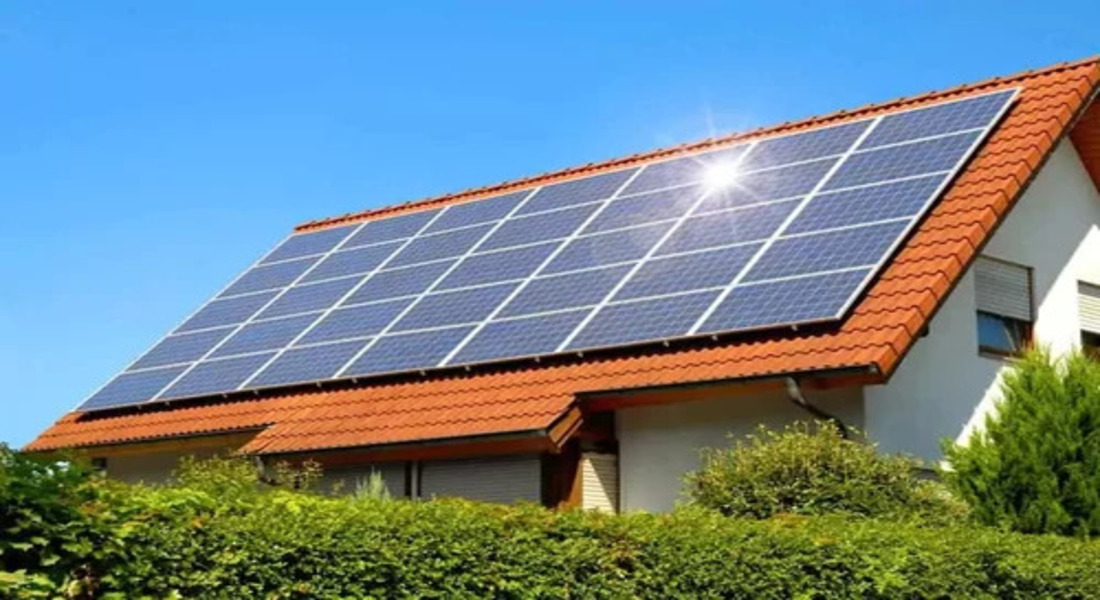
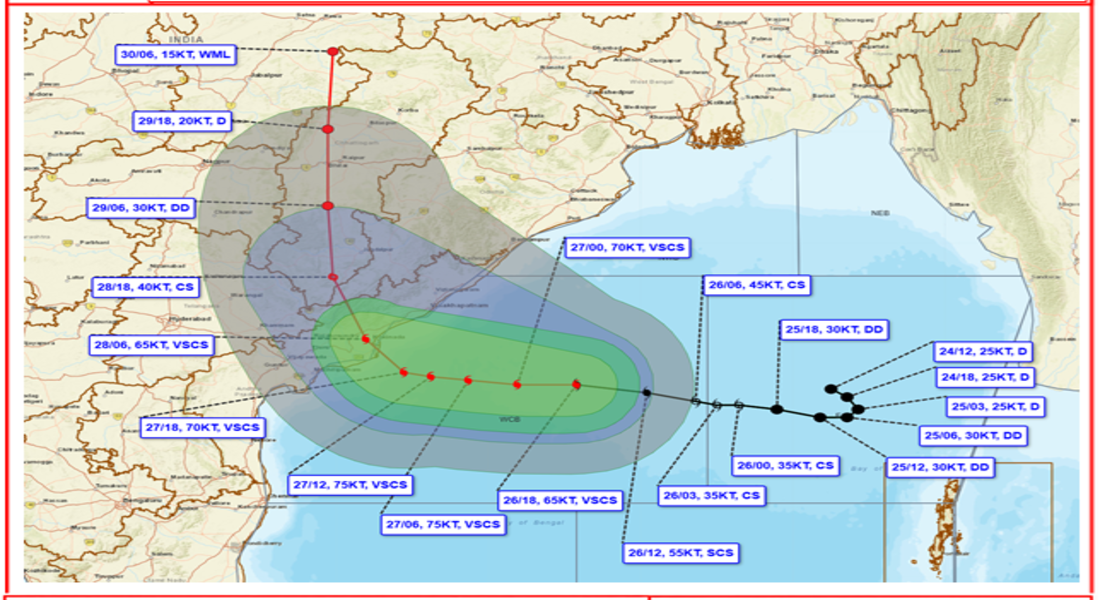
The rapid pace of rooftop solar installation in India has not kept pace with the risks posed by climate emergencies like tropical cyclones. Although India now installs more than 3 lakh rooftop solar systems on average each month, it does not adequately account for climate emergencies such as tropical cyclones. As of this writing, Andhra Pradesh is bracing for the impact of very severe cyclonic storm Arnab, the first in the Bay of Bengal this year. Can rooftop solar (RTS) systems under the PM Surya Ghar scheme withstand such intense wind forces?
Cyclone Arnab, with projected sustained winds of 125-135 km/h, would be a litmus test for current RTS systems in Andhra Pradesh’s coastal districts and neighbouring Odisha. Meanwhile, last month’s deep depression, which affected 11 states, including South Odisha, North Andhra Pradesh, Telangana, and Chhattisgarh, could have seriously threatened the installed RTS. Although the depression’s sustained winds (50-60 km/h) were well below the typical minimum solar panel ratings (100 km/h), coverage of the event showed no widespread damage to solar installations.
However, RTS systems in Cuttack and Bhubaneswar were damaged during violent thunderstorms in May due to the North-Western Monsoon, locally called ‘Kala Baisakhi’. Pre-monsoon storms across India in May cracked and shattered RTS panels, damaged frames, and displaced modules, suggesting poor material quality and weak mounting practices. As a result, vendors lost credibility and faced direct financial burdens for replacements. Is there a standard operating procedure (SOP) to address tropical cyclones or Kala Baisakhi for RTS systems?
Under the PM Surya Ghar Muft Bijli Yojana, India aims to provide solar electricity to 1 crore households by March 2027. Undoubtedly, India is inching towards renewable energy targets faster than any other country. It is heartening to see India’s progress in harnessing abundant solar energy and leading the global green energy transition through RTS. To meet the Paris Climate Agreement by increasing its renewable energy share, meet Sustainable Development Goals (SDGs) targets, and amid political populism around free electricity, India has been aggressively installing RTS systems. As of October 26, 2026, 54,22,833RTS systems have been installed, totalling 18.8 gigawatts (GW) of capacity and benefiting 64,15,156households. India aims to install 874 GW of generation capacity by 2031-32. So far, Odisha has installed 2,63,938 RTS systems, added 583.8 MW of capacity, and benefited 2,65,371 households. Meanwhile, Andhra Pradesh has installed 4,90,275 RTS systems, added 1,349.79 MW of capacity, and benefited 4,97,090 households.
According to the India Meteorological Department (IMD), cyclone Arnab will make landfall between Bapatla and Visakhapatnam, near Yanam, in the wee hours of October 28. Let’s check the status of RTS in these ground-zero districts. Bapatla has already installed 20,809 RTS systems, added 56 MW of capacity and is benefiting 20,935 households. With 13,458 RTS systems in Visakhapatnam, 20,011 in Kakinada, 11,969 in Konaseema, 17,494 in Anakapalli, 24,118 in East Godavari, 11,737 in Alluri Sitharama Raju, 19,177 in West Godavari, 25,763 in Eluru, 20,965 in Guntur, and 18,797 in Krishna, these districts are in Cyclone Arnab’s impact zone. Can these RTS systems remain intact as Cyclone Arnab barrels down?
Are there guidelines for protecting RTS systems during tropical cyclones in Andhra Pradesh or Odisha, or, for that matter, in India? However, Many RTS vendors believe that no SOP exists for climate change-induced extreme weather anomalies, especially tropical cyclones. In general, vendors say RTS can withstand wind speeds up to 100 km/h. Neither the PM Surya Ghar nor the state distribution companies have adequately formulated protocols to protect RTS installations during disasters, at least in nearly 100 districts of India that are prone to tropical cyclones. The existing SOPs are formulated solely with RTS system implementation in mind. Even the operational guidelines (2024) for capacity building for the 3 lakhs RTS installers under the Ministry of New and Renewable Energy (MNRE) do not explicitly address RTS protection or safety during tropical cyclones.
Whether it’s April-May (pre-monsoon) or October-December (post-monsoon), tropical cyclones originating in the Bay of Bengal and the Arabian Sea affect thirteen Indian coastal states and union territories. West Bengal, Odisha, Andhra Pradesh, Tamil Nadu, Puducherry, Andaman and Nicobar, and Gujarat are highly vulnerable to tropical cyclones. According to the India Meteorological Department (IMD), among 100 cyclone-prone districts, 12 are very high, 25 are high, and 48 are moderately prone to cyclones. Does this geographical area not warrant special attention in terms of guidelines for the RTS with regard to cyclones?
Andhra Pradesh or Odisha, like other vulnerable coastal states, can model how to ensure the safety and protection of RTS systems. With its ambitious target in the ‘Sapath Patra’, or Letter of Commitment (2024), to achieve 7.5 GW of solar energy by 2030, Odisha must not delay addressing concerns about RTS installations in districts within basic wind speed zones up to 198 km/h. Coastal Odisha never forgets the fury of the October Super Cyclone (1999). People in Andhra Pradesh have also witnessed dozens of very severe cyclonic storms in the last three decades. Cyclone Fani (wind speed 175-185 km/h) in May 2019 damaged some solar systems along its path. Another high-intensity cyclone in recent memory was Phailin (2013). So, what constitutes an SOP for protecting RTS systems in cyclone-prone districts?
Despite minimal downside impact during RTS installation, such as clearing nearby tree crown cover or branches to a) allow abundant sunlight and b) protect solar panels from monkeys leaping, the quality of RTS mounting is paramount for withstanding strong winds. The condition of the buildings or premises where installations are planned must not be overlooked. As the number of vendors increases each month, it is increasingly important to closely oversee the materials used for the mounting structure; they must also pass quality control. Corrosion in the coastal districts is the major impediment to long-term RTS benefits. Scale up and prioritise adopting RTS designs that withstand wind speeds of 200 km/h in these highly vulnerable districts.
Beyond these structural aspects, non-structural measures can protect RTS, especially solar panels, during disaster cycles. Insurance for solar panels is being considered to benefit consumers, but awareness remains very low. Without insurance for the panels, can customers be compensated for damage to solar panels during cyclones or other extreme weather conditions? State and Union governments should consider compensating at least ration-card holders by providing solar panels and other items after post-disaster assessments.
A larger concern remains that during a cyclone or severe thunderstorm (Kala Baisakhi), damaged solar panels or flying debris from them may pose a serious risk of trauma and death. Additionally, damaged solar panels may significantly add to electronic waste (e-waste). By 2060, the world is expected to generate up to 402 million tonnes of photovoltaic (PV) waste from discarded or damaged solar panels. To avoid these risks, it is highly recommended to dismantle the solar panels before the cyclone and reinstall them thereafter. Therefore, integrating RTS into disaster risk reduction is vital. Can Surya Mitra, RTS installers under the MNRE, be tasked with this?
Distribution companies (DISCOMs), RTS vendors, and local ‘apada mitras’ (volunteers) can be roped in to plan these swift activities and integrate RTS systems into infrastructure restoration and recovery under the District Disaster Management Plans (DDMPs). Since the 2024-25 implementation of the PM Surya Ghar Scheme, hardly any DDMP mentions integrating RTS into restoration and recovery measures. With the exact GPS locations of RTS systems from wards to villages, and from rural to urban areas, it is possible to dismantle solar panels in a timely manner. Identify a local group of Surya Mitras or volunteers and provide training to strengthen their skills in dismantling and installing solar panels. With financial support, connect these volunteers to the grid, under the District Collector’s supervision, with DISCOMs. To make the RTS revolution succeed, India must secure the RTS from climate emergencies.
**
Dr Avilash Roul is an international advisor on climate change risks and transboundary rivers , and a Senior Fellow at the Society for the Study of Peace and Conflict (SSPC), New Delhi. The views expressed are personal and do not necessarily reflect those of IndiaVerve.