At IndiaVerve, we go beyond the noise to bring you meaningful stories of change, resilience and progress—from India to the world stage. Our mission is to bring readers credible, wide-ranging coverage across politics, business, sports, culture, society and more.

PM Modi inaugurates Bharat Renewable Energy Summit, sets ambitious clean energy targets

New Delhi: Prime Minister Narendra Modi on Monday inaugurated the Bharat Renewable Energy Summit and Expo 2026 at Bharat Mandapam in New Delhi, highlighting India’s progress in renewable energy and outlining an ambitious roadmap for expanding non-fossil fuel capacity.

Addressing industry leaders, investors, startup representatives and senior officials from India and abroad, Modi said the summit was taking place at a time when global energy disruptions had highlighted the importance of renewable energy for everyday life and national development.

This year’s summit coincides with the Ninth Assembly of the International Solar Alliance and includes delegates from the Fourth Conference on Green Hydrogen, giving the event a broader international dimension, according to an official statement.

Referring to the economic disruptions caused by the COVID-19 pandemic and the ongoing West Asia crisis, the Prime Minister said India had managed these challenges while maintaining high economic growth. He attributed the country’s resilience partly to a decade of sustained domestic investment and systemic reforms in clean energy.

He said India’s investment in clean energy had helped protect the economy from severe external shocks and stressed that energy security was directly linked to economic security.

Continued dependence on fossil fuels, he observed, would leave the global economy vulnerable to repeated disruptions because reserves were finite and concentrated in a few regions.

Modi said clean energy offered a more widely accessible alternative and would play a central role in securing the world’s future energy requirements.

India targets another 500 GW of non-fossil energy capacity

Highlighting India’s clean energy journey over the past 12 years, Modi recalled the country’s commitment at COP26 to achieve 500 GW of non-fossil fuel-based energy capacity by 2030.

He said India had fulfilled its Paris commitment in 2025, five years ahead of schedule, by ensuring that non-fossil sources accounted for 50 per cent of its installed electricity capacity.

According to the Prime Minister, India now has more than 50% non-fossil installed capacity and has achieved nearly 300 GW towards its 500 GW target. He described the country as one of the world’s top three nations in solar and renewable energy.

PM Surya Ghar scheme covers over 65 lakh households

Highlighting the expansion of rooftop solar power, Modi spoke about the PM Surya Ghar Muft Bijli Yojana, launched in February 2024 with the objective of installing rooftop solar systems in one crore households.

He said more than 65 lakh households had joined the initiative within 24 to 25 months, with approximately one lakh new households joining every six days.

Citing a study, the Prime Minister said participating households had reduced their electricity bills by around 7%.

Green hydrogen and transmission infrastructure gain momentum

Modi said India’s clean energy ecosystem extended beyond hydropower, solar, wind and nuclear energy, with green hydrogen emerging as another important area of development.

Under the National Green Hydrogen Mission, India is working towards producing 50 lakh tonnes of green hydrogen by the end of this decade. The country is also exploring its integration into the transport sector.

The Prime Minister noted that India had started its first green hydrogen train a few months ago.

Solar module manufacturing capacity crosses 200 GW

The Prime Minister attributed India’s renewable energy progress partly to the expansion of domestic manufacturing, noting that the country had earlier depended heavily on imports even for smaller solar components.

He said India’s solar module manufacturing capacity had increased from around 2 GW a decade ago to more than 200 GW. Domestic solar cell manufacturing capacity had also reached nearly 40 GW, alongside expanding production of other components.

Modi said these developments reflected the success of the Atmanirbhar Bharat and Make in India initiatives and demonstrated India’s growing manufacturing capabilities in the clean energy sector.

PM Modi calls for greater use of solar power in agriculture

Focusing on agriculture, Modi urged stakeholders to move beyond the distribution of solar-powered irrigation pumps and explore additional opportunities to generate solar energy on farmland.

He called for encouraging farmers across more villages to install solar panels on unused agricultural land and along the boundary ridges of their fields.

The Prime Minister also urged startups, IITs, innovators and entrepreneurs to develop solar solutions capable of supplying power throughout the day and under different weather conditions.

Battery storage and innovation offer opportunities for young entrepreneurs

Emphasising the importance of energy storage in the next phase of renewable energy development, the Prime Minister called for next-generation innovation, indigenous storage hardware and the creation of additional battery storage capacity.

He described this requirement as a major opportunity for India’s youth and urged researchers and investors to develop solutions that could also benefit other countries.

Modi said clean energy initiatives were already generating thousands of jobs across solar panel and hardware manufacturing, installation, servicing and transportation.

Renewable energy sector attracts over Rs 15 lakh crore investment

Inviting international investors to participate in India’s renewable energy expansion, Modi highlighted the country’s demand, scale, growth potential and political and policy stability.

He said the renewable energy sector had attracted investments exceeding Rs 15 lakh crore, equivalent to USD 164 billion, over the past decade.

More than Rs 6 lakh crore, or USD 63 billion, had been invested in the two years since the 2024 RE-INVEST Summit, he added.

India proposes USD 200 million Africa Solar Facility

Highlighting India’s commitment to international cooperation in renewable energy, Modi referred to the principle of ‘One Earth, One Family, One Future’, which underpins the country’s clean energy approach and the International Solar Alliance.

He said India was committed to ensuring that countries in need could access the necessary funding, technology and expertise to advance their clean energy transition.

In this context, the Prime Minister said a proposal for a USD 200 million Africa Solar Facility had been put forward to support solar energy development in Africa.

Concluding his address, Modi said the coming decade would be crucial for achieving global climate goals. He expressed confidence that participants at the summit would play an important role in connecting countries and regions with the global clean energy transition.
Cyclone Murasu threatens Andhra coast; evacuations stepped up across three states

Severe cyclonic storm expected to make landfall near Ongole with winds of up to 120 kmph; Chennai faces heavy rain and flight disruptions, while Odisha mobilises more than 300 rescue teams

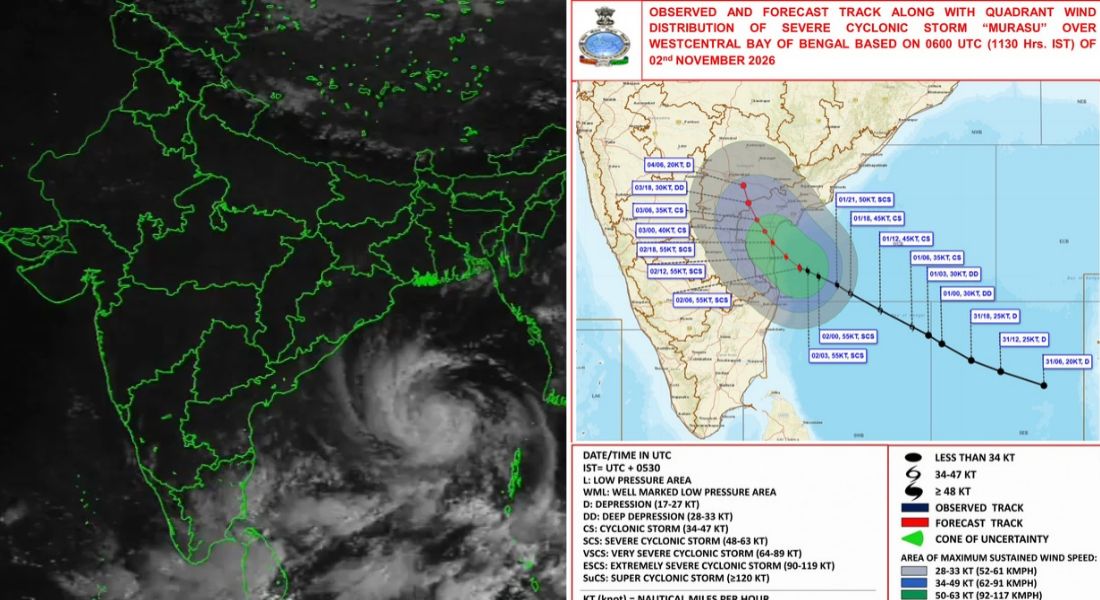
A severe cyclonic storm over the Bay of Bengal is moving towards the Andhra Pradesh coast, prompting large-scale evacuation preparations and emergency response measures across Andhra Pradesh, Tamil Nadu and Odisha. Cyclone Murasu is expected to make landfall late on Monday night or in the early hours of Tuesday, even as parts of the eastern coast continue to recover from the devastation caused by Cyclone Arnab last week.

According to the India Meteorological Department (IMD), Murasu was centred over the west-central and adjoining southwest Bay of Bengal at 5.30 am on Monday, November 2. It was moving west-northwestwards at around 25 kmph and was located approximately 200 km east-northeast of Chennai, 210 km east-southeast of Nellore and 260 km southeast of Ongole.

The weather department has forecast that the storm will cross the south Andhra Pradesh coast between Nellore and Narsapur, close to Ongole, between 11.30 pm on Monday and 4 am on Tuesday. It is expected to bring sustained wind speeds of 100–110 kmph, with gusts reaching 120 kmph.

Andhra Pradesh steps up evacuation

Authorities in Andhra Pradesh have begun evacuating people from vulnerable coastal areas. Around 2,000 people had been moved to safer locations by Monday, with the state reportedly planning to evacuate approximately 30,000 people as the storm approaches, according to the Reuters report.

The state administration has activated its disaster response arrangements, with coastal districts on alert and residents in vulnerable locations being advised to follow official instructions.

The preparations come as Andhra Pradesh is still assessing the damage caused by Cyclone Arnab, which made landfall in the state on October 29. The storm claimed at least six lives, according to officials cited by Reuters, and damaged homes, crops and critical infrastructure. More than 15,000 electricity poles were reportedly damaged, disrupting power supply across several areas.

Tamil Nadu has extended assistance to its neighbouring state. The state government has deployed 500 electricity department personnel in 25 teams, along with essential equipment, to help restore power infrastructure damaged by Murasu. Tamil Nadu Electricity Minister R Nirmal Kumar said the deployment followed a request from Andhra Pradesh Chief Minister N Chandrababu Naidu to Chief Minister C Joseph Vijay.

Chennai hit by heavy rain, flight disruptions

Meanwhile, heavy overnight rainfall inundated parts of Chennai and neighbouring Chengalpattu and Tiruvallur districts. Schools in Chennai were declared closed on Monday, while the IMD issued an orange alert for the city.

Chennai airport authorities reported flight cancellations due to adverse weather and advised passengers to check with their respective airlines for updates.

Madhavaram recorded 11 cm of rainfall in the 24 hours preceding the report, while Ennore Port and Nungambakkam received 10 cm each.

Greater Chennai Corporation Commissioner G S Sameeran said the city had not experienced major flooding, although some areas reported water stagnation. Two of the city’s 22 subways experienced minor waterlogging, which was cleared promptly, he said. Civic teams equipped with pumps and backup motors were deployed in vulnerable areas, while arrangements were made to manage traffic and respond to possible coastal flooding.

Odisha prepares for possible impact

Although Murasu is forecast to make landfall in Andhra Pradesh, Odisha has also stepped up its preparedness, particularly across its southern districts. State Revenue and Disaster Management Minister Suresh Pujari said Ganjam, Gajapati, Rayagada, Koraput and Malkangiri were among the districts likely to experience the storm’s impact.

District collectors have been alerted, with emergency response arrangements strengthened across the state. More than 300 teams comprising personnel from the National Disaster Response Force (NDRF), Odisha Disaster Rapid Action Force (ODRAF) and Odisha Fire Service have been positioned for rescue and relief operations.

Pujari said teams deployed during Cyclone Arnab were still in place and would remain available to respond to any emergency arising from Murasu.

The IMD has forecast heavy rainfall at isolated places in Ganjam and Gajapati, accompanied by thunderstorms, lightning and gusty winds of 40–50 kmph. Rayagada, Koraput, Malkangiri, Puri and Khurda are also likely to receive rainfall.

Odisha has already begun experiencing light rain in some areas, with the intensity expected to increase. Authorities have urged residents in vulnerable locations to remain alert and follow safety advisories as the storm advances towards the Andhra coast.

Defence Ministry signs Rs 53,866 crore contracts for eight Next Generation Corvettes for Navy

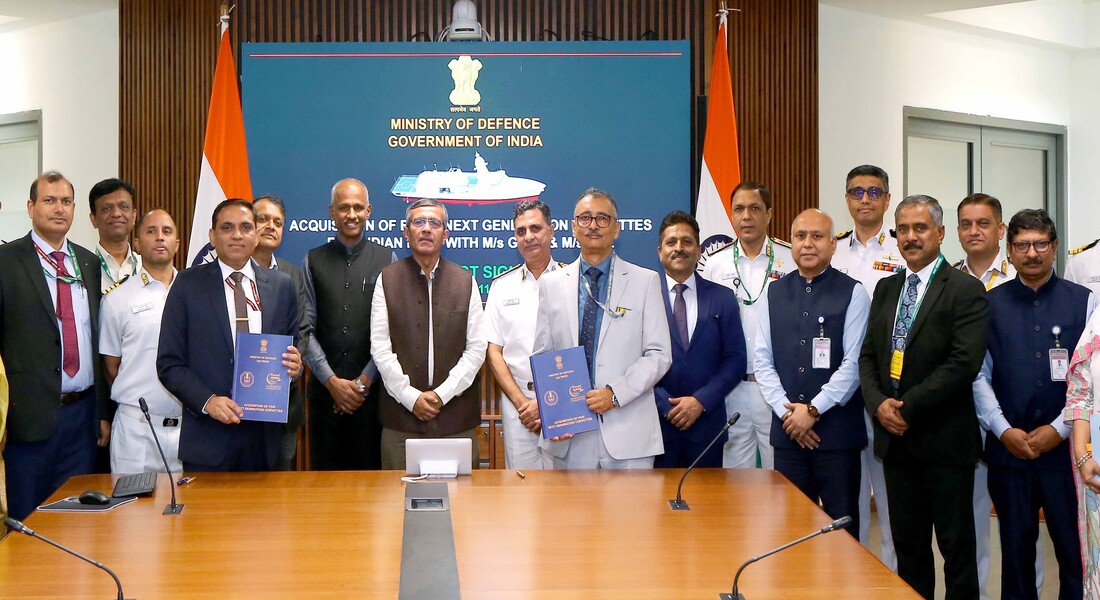
New Delhi: The Ministry of Defence on Monday signed contracts worth Rs 53,866.50 crore with Garden Reach Shipbuilders & Engineers Limited (GRSE) and Goa Shipyard Limited (GSL) for the construction of eight Next Generation Corvettes (NGCs) for the Indian Navy.

The project marks a major step towards strengthening India’s indigenous warship-building capabilities and enhancing the Navy’s operational preparedness, according to an official statement.

The contracts were signed in the presence of Defence Secretary Rajesh Kumar Singh at Kartavya Bhawan-2 in New Delhi.

Under the agreement, GRSE will construct five NGCs, while GSL will build the remaining three. The project introduces a significant milestone in India’s naval shipbuilding programme, as the vessels will be indigenously designed by the Indian Navy and constructed by Defence Public Sector Undertakings selected through a competitive process.

The initiative is the first project of its kind in which the Indian Navy will undertake indigenous design of the warships, while the construction responsibility will be assigned to selected defence shipyards through a competitive selection process.

The eight corvettes will feature advanced missiles, weapons systems and sensor suites, providing them with capabilities to undertake operations across the air, surface and sub-surface domains.

Their induction is expected to significantly strengthen the Indian Navy’s ability to protect maritime trade routes and conduct anti-surface and anti-submarine warfare operations. The vessels will also support coastal defence, littoral combat operations, maritime presence and surveillance missions.

The acquisition comes at a time when strengthening maritime security and safeguarding India’s strategic interests at sea remain important priorities. With their advanced operational capabilities, the Next Generation Corvettes will add to the Navy’s ability to respond to a wide range of maritime security challenges.

Major boost to indigenous shipbuilding and employment

Beyond strengthening naval capabilities, the project is expected to provide a substantial boost to India’s domestic shipbuilding industry and its network of industrial partners.

The programme will promote collaboration among Defence Public Sector Undertakings, private shipyards and Indian industrial partners, including micro, small and medium enterprises.

The increased participation of domestic industries is expected to strengthen the country’s defence manufacturing ecosystem and expand indigenous production capabilities.

According to the Defence Ministry, construction of the eight warships is expected to generate approximately 72 lakh person-days of employment in the shipyards over the next ten years. Another 460 lakh person-days of employment are expected to be generated in ancillary industries and MSMEs during the same period.

The project will also encourage the use of Made-in-India materials and equipment, indigenous technologies and Indian skills and expertise, further strengthening domestic industrial capabilities.

The contracts represent another significant step towards achieving Aatmanirbharta in defence manufacturing and advancing the government’s Make-in-India initiative.

By combining indigenous warship design with domestic construction and wider industrial participation, the Next Generation Corvette programme is expected to strengthen both India’s maritime defence capabilities and its long-term self-reliance in naval shipbuilding.

Odisha floods: Nuagada residents protest relief delays; MLA assures additional supplies

Four days after severe flooding in Ganjam, villagers allege that essential services remain disrupted; officials reach the protest site as residents demand urgent restoration.

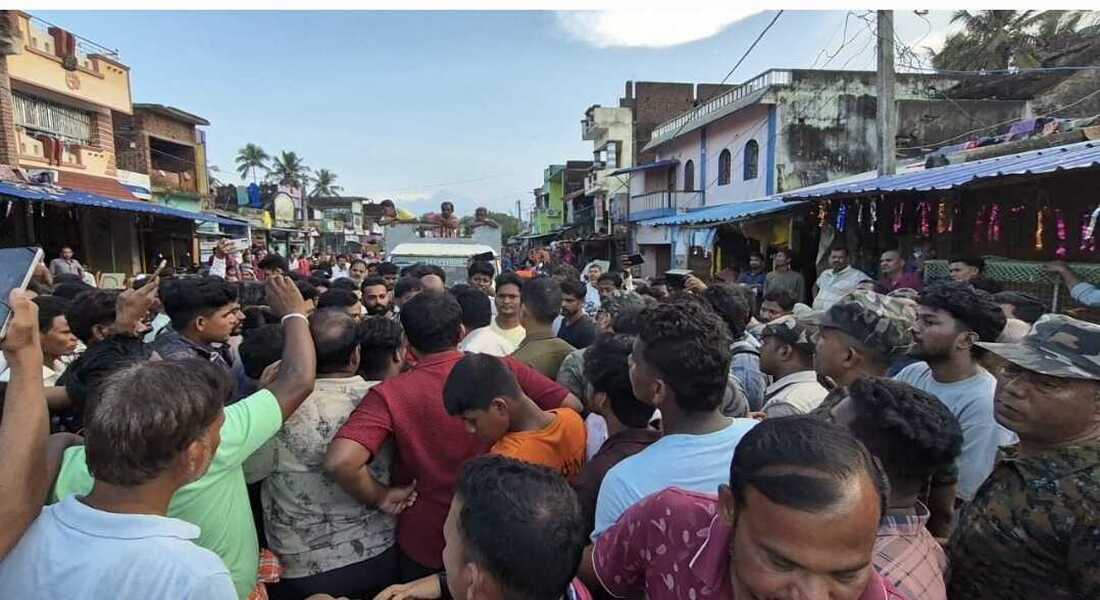
Sorada (Ganjam): Frustrated by the delay in restoring essential services following the devastating floods triggered by Cyclone Arnab, residents of Nuagada village in Odisha’s Ganjam district have staged a road blockade, disrupting traffic on National Highway 59 and demanding immediate relief and restoration of electricity and drinking water supplies.

The protest, which began on Sunday morning and continued for several hours, reflected the growing frustration among residents of Nuagada, Suramani, Bhaliagocha, Narayanpur, Bishnupur and Palakatu, where families continue to face difficulties in accessing basic amenities even as floodwaters recede.

Villagers alleged that roads remained covered with mud and debris, electricity supply had not been restored in several pockets and drinking water was scarce. They also complained that relief materials and adequate food supplies had not reached all affected households, forcing families to depend on community support.

The blockade prompted Sorada Block Development Officer Tanmaya Patra, Tehsildar Gopal Krishna Routray and Inspector-in-Charge Sunil Kumar Pradhan, along with other officials, to reach the spot and engage with the protesters. However, residents remained firm on their demands, seeking immediate intervention to restore essential services and ensure regular distribution of relief materials.

Local volunteers, including social workers Swadhin Kumar Panda and Satya Patra and engineer Sangram Mohanty, joined the villagers in demanding drinking water, cooked food and electricity restoration. The Sorada Lions Club has been providing cooked meals to affected families, while youth volunteers have been arranging drinking water and helping clear mud-covered roads.

The protest came amid visits by public representatives to flood-hit areas. On Saturday, Fisheries and Animal Resource Development Minister Gokulananda Mallik and Aska MP Anita Subhadarshini visited Nuagada, Suramani and other affected villages, where residents raised concerns over delays in receiving relief assistance.

A delegation of Biju Janata Dal leaders, including former MLA Purna Chandra Swain, Pratap Jena, Chandra Sekhar Sahu, Srikanta Sahu and Ranjita Sahu, also visited Nuagada to assess the situation.

Following the protest, Sorada MLA Nilamani Bishoyi assured residents of Nuagada that their relief requirements would be addressed. He said 530 packets of rice had been earmarked for the village, of which 400 had already been distributed, while the remaining packets would be provided shortly. Relief materials have also been supplied to other flood-affected villages in Sorada block, he said.

Bishoyi said he had been personally visiting affected villages and meeting residents at their doorsteps to assess their needs. He also said the block administration was working relentlessly to ensure that essential relief materials reached all affected areas.

“I have been personally visiting all affected villages, going door to door to meet residents and understand their needs. The block administration has been working relentlessly and has begun sending all required relief materials to flood-hit villages in Sorada block,” he said.

Ganjam was among the worst-hit districts following exceptionally heavy rainfall associated with Cyclone Arnab. The swollen Rushikulya river inundated several towns and villages, particularly in Sorada, Asika, Purushottampur, Patrapur and neighbouring areas.

According to district administration figures reported on October 31, more than 1.05 lakh people across Ganjam’s 22 blocks were affected. Around 56,051 people had been evacuated to 367 relief shelters, while cooked food was being distributed at approximately 370 locations. Although the number of villages surrounded by floodwater had fallen sharply, around 700 people were still reported stranded in waterlogged areas.

Restoration work has gathered pace across the district. The Works Department has repaired several damaged road stretches, including approaches to Palashpur Bridge and Taptapani Ghati. Electricity restoration has also progressed, with the power distribution company reporting that more than 93 per cent of affected consumers in Ganjam had been reconnected by October 31.

However, the progress in district-wide restoration has not necessarily translated into the immediate return of essential services in every village. Nuagada residents’ protest underlines the difficulties faced by communities where damaged roads, disrupted water supplies and delayed relief distribution continue to affect daily life.

For families who lost household belongings and livelihoods in the floods, restoring electricity and safe drinking water is now as urgent as rebuilding damaged homes. Residents have warned that continued delays could aggravate public health concerns, particularly as stagnant water and accumulated sludge increase the risk of post-flood infections.

Brahmapur water supply raised to 72 MLD

Bhubaneswar: The Odisha government has intensified efforts to restore normal drinking water supply in Brahmapur following the disruption caused by Cyclone Arnab, augmenting supply through alternative sources while expediting restoration of the damaged Janibilli Intake.

The Housing and Urban Development Department, in coordination with WATCO, has stepped up emergency measures to minimise inconvenience to residents and ensure access to safe drinking water.

The city’s water supply has now been increased to 72 million litres per day (MLD), comprising 64 MLD from the surface water source and an additional 8 MLD drawn through 18 production wells mobilised to strengthen the distribution network.

To support water distribution and meet the requirements of affected localities, 46 tankers have been deployed across the city. These include 12 private tankers, which have been engaged to supplement the emergency supply arrangements.

The department has also reported the restoration of water supply to MKCG Medical College and Hospital and the Indian Institute of Science Education and Research. Meanwhile, water supply services in Hinjilicut and Gopalpur continue to operate smoothly.

Enhanced measures to ensure drinking water safety

Alongside efforts to increase water availability, the department has stepped up measures to maintain drinking water quality and prevent contamination in the affected areas.

Super chlorination is being maintained at treatment plants, with pre-chlorination at 4 parts per million (ppm) and post-chlorination at 10 ppm. An additional chlorination level of 2 ppm is being ensured in tail-end distribution zones to maintain water quality and safeguard public health.

As part of efforts to strengthen emergency response capacity, a Mobile Treatment Unit has also reached the Brahmapur Division Office. Its deployment is expected to further support the department’s operational preparedness during the restoration process.

Janibilli Intake restoration reaches 99% completion

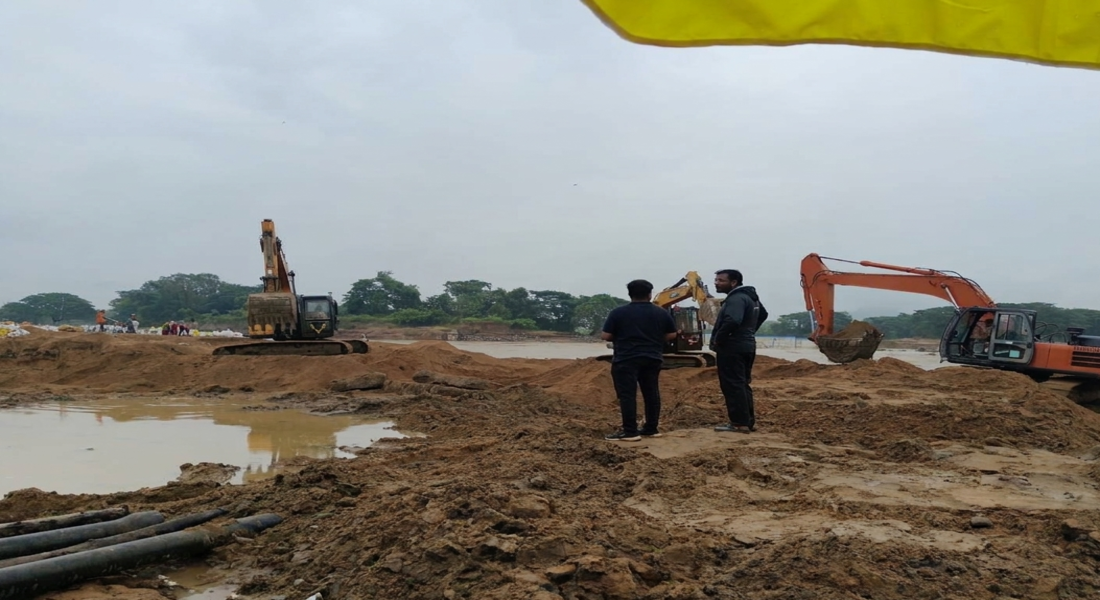
Meanwhile, restoration work at the Janibilli Intake is progressing on a war footing, with the temporary ponding arrangement nearing completion.

According to the department, the temporary ponding arrangement has reached approximately 99% completion. Construction of a sand bund near the intake point is continuing at an accelerated pace to facilitate the restoration process.

Around 15,000 sandbags have already been placed at the site, while another 5,000 were scheduled to be placed on Monday. Dedicated manpower and machinery have been deployed to complete the work.

An Odisha Disaster Rapid Action Force team has also been stationed at the site to ensure the safety of personnel engaged in the restoration activities.

Additional support for urban local bodies

The Housing and Urban Development Department has extended additional administrative support to the Brahmapur Municipal Corporation and other affected Urban Local Bodies (ULBs) to strengthen field-level coordination and speed up emergency response measures.

Additional officials have been deployed to assist the local bodies in managing restoration and relief operations. The department has also permitted the ULBs to utilise their available financial resources according to their requirements for urgent restoration and relief activities.

The department is closely supervising the ongoing interventions, with particular emphasis on augmenting water supply, maintaining drinking water quality and completing restoration work at the Janibilli Intake.

With alternative water sources, tanker services and emergency infrastructure measures being mobilised simultaneously, the state government is working to restore normal drinking water supply in Brahmapur at the earliest.

Odisha announces comprehensive relief package for affected families, farmers

Bhubaneswar: Odisha Chief Minister Mohan Charan Majhi on Sunday announced a comprehensive assistance package for people affected by Cyclone Arnab, covering damaged houses, crop losses, livestock, fisheries, small businesses and other livelihood activities.

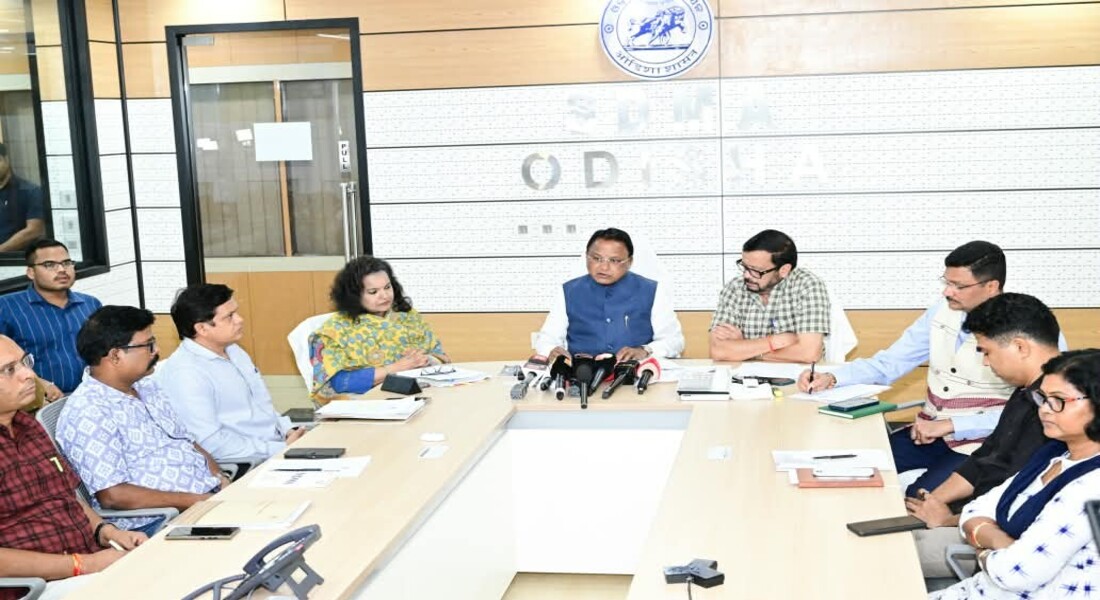
The package was announced following a high-level review meeting chaired by the Chief Minister at the office of the Special Relief Commissioner on Sunday evening. The meeting reviewed relief operations, reconstruction measures, and the assessment of cyclone-caused damage.

Revenue and Disaster Management Minister Suresh Pujari, Chief Secretary Anu Garg, Additional Chief Secretary of the Revenue and Disaster Management Department Dr Arabinda Padhee, Special Relief Commissioner Rajesh Prabhakar Patil and other senior officials attended the meeting.

Briefing the media after the meeting, Majhi said he was in regular contact with the Central government about Cyclone Arnab’s impact and the measures the state administration has taken. He had also discussed the situation with Union Home Minister Amit Shah.

A central inter-ministerial committee will visit Odisha on November 2 to assess the damage caused by the cyclone, with particular attention to the worst-affected districts of Ganjam, Gajapati and Kandhamal.

The Chief Minister assured that the state government would extend assistance to everyone affected by the disaster, reiterating that the administration had consistently supported people during previous calamities and would continue to do so this time.

He also cautioned that the effects of Cyclone Arnab had not completely subsided and that another possible cyclone, Murasu, could pose a fresh threat. Consequently, government teams deployed for relief and monitoring in different areas have been directed to remain in their respective locations and respond according to the evolving situation.

Assistance for affected families

Under the announced package, every affected family will receive 50 kg of rice along with financial assistance of Rs 2,500.

Families whose houses have been washed away, destroyed, or remained submerged for more than two days will receive an additional Rs 2,500 for clothing and Rs 2,500 for utensils.

For fully or severely damaged houses, the government has announced assistance of Rs 1.20 lakh in plain areas and Rs 1.30 lakh in hilly areas. Owners of partially damaged pucca houses will receive Rs 6,500, while those with partially damaged kutcha houses will get Rs 4,000. Assistance of Rs 8,000 has been earmarked for damaged huts and Rs 3,000 for cattle sheds.

Agricultural assistance for farmers

Farmers who have suffered crop losses of 33 per cent or more will receive input subsidies for a maximum of two hectares. The assistance will be Rs 8,500 per hectare for non-irrigated land, Rs 17,000 for irrigated land and Rs 22,500 per hectare for perennial crops.

The minimum assistance has been fixed at Rs 2,500 for perennial crops, Rs 2,000 for irrigated areas and Rs 1,000 for non-irrigated areas.

Farmers requiring the removal of sand or silt deposited on agricultural land will receive Rs 18,000 per hectare, subject to a minimum assistance of Rs 2,200 per farmer.

To support cultivation during the coming season, the government will distribute 1.20 lakh pulse minikits, 5,000 oilseed kits and 50,000 vegetable seed kits among affected farmers. The total distribution will cover 1.75 lakh special minikits.

Special assistance has also been announced for 2,000 hectares of sugarcane-growing areas affected by the cyclone. Depending on farmers’ requirements, support of Rs 27,500 per hectare will be provided for demonstrations of the space transplanting method, while Rs 12,500 per hectare will be available for ratoon crop management.

During the Rabi season of 2026-27, farmers will receive a 75 per cent subsidy on pesticides and bio-pesticides.

The government has also announced relief measures for agricultural borrowers. Wherever crop losses are 33 per cent or more, short-term Kharif loans taken by willing farmers will be converted into medium-term loans.

In addition, Joint Liability Groups will be formed during the Rabi season to facilitate credit access for sharecroppers, landless farmers and cultivators working under oral agreements.

Compensation for livestock losses

The package provides financial compensation to farmers who lost livestock in the cyclone. Owners of milch animals, including cows and buffaloes, will receive Rs 37,500 per animal, while compensation for sheep, goats and pigs has been fixed at Rs 4,000.

For draught animals such as camels, horses and bullocks, the assistance will be Rs 32,000. Owners of smaller draught animals, including calves, donkeys, ponies and mules, will receive Rs 20,000.

Poultry farmers will be compensated at Rs 100 per bird, subject to a maximum of Rs 10,000.

The government will also provide subsidies to help 1,000 farmers procure goats, bullocks and similar animals to restore their livelihoods.

To support dairy farming, 5,000 dairy farmers in affected areas will receive cattle feed at the rate of 100 kg per animal, subject to a maximum of 500 kg.

Furthermore, 200 poultry farms that have suffered more than 70 per cent damage will receive assistance for recovery under the Mukhyamantri Krushi Udyog Yojana.

Relief measures for fishermen and fish farmers

The fisheries sector has also been included in the assistance package. Affected fish farmers will receive financial assistance covering up to 75 per cent of the eligible cost, calculated at Rs 1,12,500 per hectare.

For freshwater fishing activities, compensation of Rs 22,500 will be provided for fully or partially damaged boats and Rs 15,000 for damaged fishing nets.

Marine and Chilika fishermen will receive Rs 60,000 for fully or partially damaged boats and Rs 15,000 for nets.

Fish farmers whose pond embankments have been breached or whose soil has been eroded will also receive assistance. Community ponds leased by women’s self-help groups will be covered under the package, with support of up to Rs 1.75 lakh per hectare.

Financial support for MSMEs, traders and shopkeepers

Small businesses and commercial establishments affected by the cyclone will receive financial support to help them recover from losses.

The government will assess damage to business premises, cabins, stalls, machinery, fixtures, stocks and other business assets belonging to affected MSMEs, traders, shopkeepers, roadside vendors and commercial establishments.

Eligible MSMEs, traders and shopkeepers will be able to access loan assistance of up to Rs 12 lakh. The government will provide a 25% subsidy on the loan amount, subject to a maximum of Rs 3 lakh. The subsidy will be transferred directly to the banks by the state government.

Roadside vendors, temporary stall operators and kiosk owners will receive Rs 10,000, while shops and other commercial establishments will be eligible for assistance of Rs 25,000.

Support for women, artisans and weavers

Women-led self-help groups affected by the cyclone will receive additional seed money of Rs 5,000 each, subject to eligibility.

The government has also announced assistance for the handicrafts and handloom sectors. Weavers and artisans will receive Rs 5,000 per person to replace damaged tools and equipment. An additional Rs 5,000 per artisan will be provided to compensate for the loss of materials.

Assistance for silk farmers

Sericulture farmers cultivating Eri, Mulberry and Tasar silk will receive input assistance of Rs 6,000 per hectare. Muga silk farmers will be eligible for Rs 7,500 per hectare.

Silk farmers whose rearing houses have been completely damaged will receive financial assistance of Rs 1.75 lakh each.

The government has also prioritised the restoration of irrigation infrastructure in cyclone-affected villages.

The Odisha Lift Irrigation Corporation has been directed to immediately undertake repairs of lift irrigation points in all affected villages. Majhi has instructed officials to ensure that every affected lift irrigation point becomes functional before the commencement of the Rabi season.

The assistance package is aimed at helping affected households rebuild damaged homes, enabling farmers to resume agricultural activities and restoring livelihoods across sectors affected by Cyclone Arnab. The government will continue relief and monitoring operations as it assesses the extent of the damage and prepares for possible further weather disturbances.

PV Sindhu, Lakshya Sen clinch singles titles at Hylo Open 2026

New Delhi: Top Indian shuttlers PV Sindhu and Lakshya Sen won their respective singles titles at the Hylo Open 2026 badminton tournament on Sunday.

In the women’s singles final, Sindhu, a two-time Olympic medallist, defeated world No. 25 Line Kjærsfeldt of Denmark in straight sets, 21-12, 21-14. It took Sindhu just 38 minutes to secure the victory at the Saarlandhalle in Saarbrücken, Germany, according to reports.

Sindhu claimed her second title of the season, following her triumph at the Japan Open Super 750 in July.

That victory had ended her wait for an individual title since December 2024. With her latest success, she has taken her career tally to seven BWF World Tour titles.

Meanwhile, in the men’s singles final, seventh seed and world No. 14 Lakshya Sen registered a convincing 21-17, 21-10 victory over Indonesia’s Jonatan Christie, who is ranked sixth in the world.

This was Sen’s second Hylo Open title.