
At IndiaVerve, we go beyond the noise to bring you meaningful stories of change, resilience and progress—from India to the world stage. Our mission is to bring readers credible, wide-ranging coverage across politics, business, sports, culture, society and more.

Microsoft services hit by prolonged global outage, company rules out cyberattack

New Delhi: Thousands of users across multiple countries faced difficulties accessing Microsoft’s productivity and communication platforms after a major technical disruption affected Microsoft 365 and several connected services for more than nine hours.

The company struggled to restore normal operations as successive recovery attempts failed to bring all affected services back online.

The disruption affected a wide range of Microsoft products, including Outlook, Teams, Word, Excel, PowerPoint, SharePoint and OneDrive. The company’s AI assistant, Copilot, also experienced problems, while certain services connecting external AI platforms to Microsoft 365 were disrupted.

Microsoft has said there was no indication that malicious activity or a cyberattack was responsible for the incident. A company spokesperson said the organisation “had no indication of a cyber-attack”.

Nearly 130,000 reports were recorded across 74 countries, highlighting the widespread impact on individual users and organisations relying on Microsoft’s cloud-based services, according to guardian.com.

Investigations pointed towards a possible configuration-related problem affecting the servers that support Microsoft 365. Microsoft identified an issue involving server settings that may have disrupted normal operations and triggered failures during automated checks, leaving several servers unexpectedly unavailable.

The company attempted multiple recovery measures, including reversing recent updates and controlling the amount of traffic directed towards the affected infrastructure. It also worked to restore unavailable servers and redirect users through alternative network routes.

Microsoft Executive Vice-President of Copilot Charles Lamanna acknowledged the disruption in a post on X and said the company would provide further information as its investigation progressed.

“We regret that today’s outages caused disruptions for our customers, and we are working to address the issue,” Lamanna said.

“We will continue to share more information as soon as we have it, and for now I can confirm that there is no indication this is the result of malicious or cyber activity,” he added.

Before identifying the server availability problems, Microsoft had reported unusually high demand on part of its infrastructure. The company said a portion of its systems was “experiencing elevated load”, which was likely contributing to connectivity errors.

Microsoft subsequently focused on stabilising the servers that had been restored and bringing the remaining affected systems back into operation. It confirmed that the recovered servers had remained stable and that traffic was being redirected through alternative routes wherever possible.

The company also cautioned that service restoration would not necessarily be immediate for every user, as applications and devices would need to reconnect once capacity became available.

“As capacity is restored, users may experience a gradual recovery as their clients reconnect,” the company said in a statement.

The impact was not limited to Microsoft’s own product ecosystem. Connectors supporting OpenAI and Anthropic’s AI services also encountered problems because of the disruption to Microsoft infrastructure.

OpenAI said it was investigating failures involving its Microsoft connectors, which could prevent new connections and affect the functioning of certain tools. Anthropic separately reported that an issue with an upstream provider was disrupting its Microsoft 365 connector.

The incident comes shortly after another major disruption involving Microsoft’s Azure cloud platform last month. That outage affected Microsoft’s productivity software and services used across several industries worldwide.

As restoration work continued, Microsoft was also examining whether reversing a limited number of recently introduced configuration changes could help bring the remaining systems back online faster. The company said it was “assessing whether reverting the small number of recent configuration updates we identified could help accelerate recovery”.
Odisha approves five Instream Storage Projects to strengthen water security

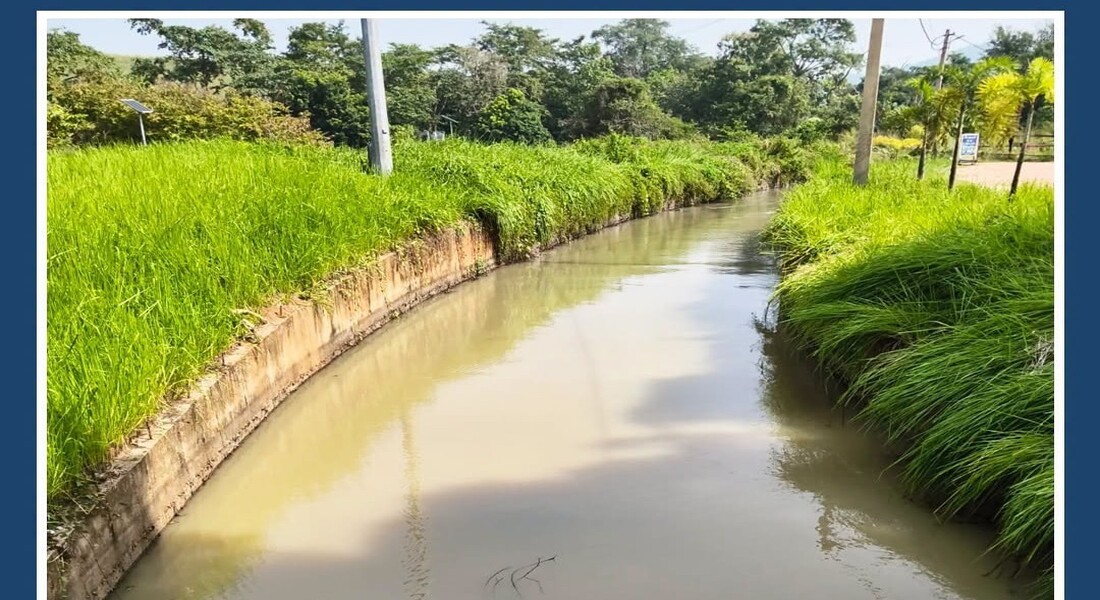
Bhubaneswar: The Odisha government has approved five Instream Storage Structure (ISS) projects worth Rs 625.47 crore within a month, marking a significant push towards strengthening water security, groundwater recharge and climate resilience across the State.

The projects, spread across Rayagada, Kalahandi, Ganjam, Balangir and Sonepur districts, are expected to benefit nearly 72,000 people in 74 villages by improving water availability, supporting irrigation and strengthening rural livelihoods.

The five approved projects include Dhuanpadar ISS on the Vansadhara River and Revatiguda ISS on the Nagavali River in Rayagada district; Bhimpur ISS on the Bahuda River in Ganjam district; Muralijore ISS near Nijharidara village in Bhawanipatna block of Kalahandi district; and Kutasingha Barrage across the Ong River, a major tributary of the Mahanadi, benefiting communities in Balangir and Sonepur districts.

The proposed structures will help conserve monsoon water within river channels and improve its availability during the lean season. The stored water is also expected to facilitate groundwater recharge, improve the sustainability of wells and borewells, and strengthen the resilience of communities facing water stress.

Beyond meeting domestic water requirements, the projects will support irrigation, livestock rearing and other rural livelihood activities. Dhuanpadar, Muralijore and Revatiguda projects are also expected to generate additional opportunities in fisheries and allied activities, creating scope for increased rural incomes.

The projects are part of the State Government’s strengthened mission-mode approach to the Instream Storage Structure programme since 2024, with emphasis on water conservation, sustainable resource management and climate adaptation.

By improving water availability and supporting river ecosystems, the initiative is expected to contribute to long-term water security and ecological resilience across the project areas.

Under the leadership of Chief Minister Mohan Charan Majhi, the government continues to prioritise water conservation and the development of sustainable water infrastructure. The approval of these five projects marks another step towards securing dependable water resources, strengthening rural livelihoods and advancing the vision of Viksit Odisha.

Three-year project launched to conserve medicinal plants and strengthen tribal livelihoods

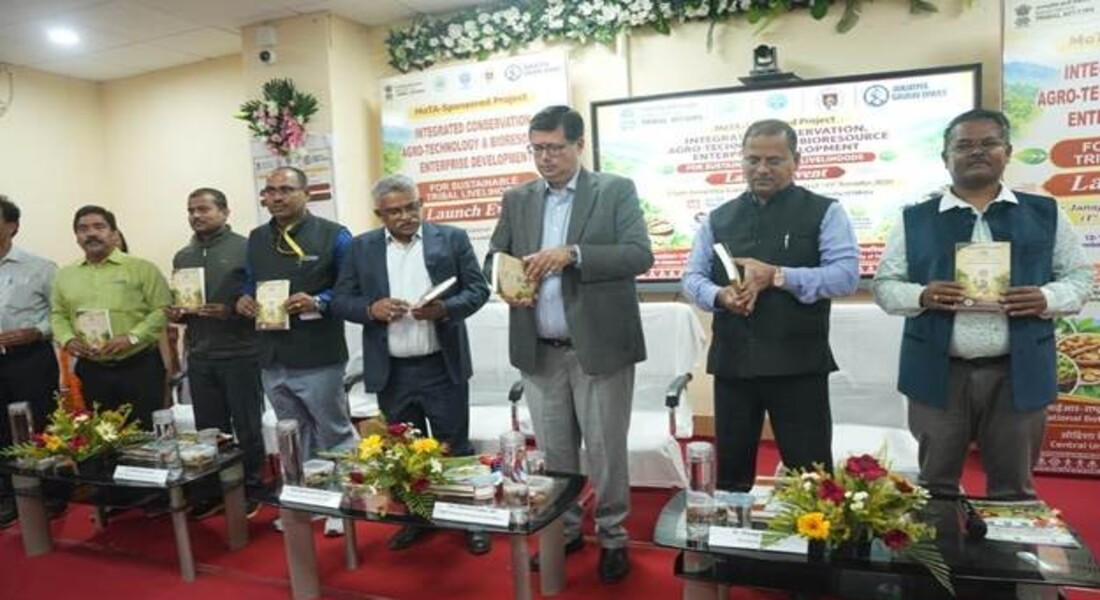
Bhubaneswar: The Ministry of Tribal Affairs, in collaboration with the CSIR–National Botanical Research Institute (CSIR-NBRI), Lucknow, launched a three-year initiative on Thursday to conserve medicinal plant biodiversity in tribal regions and create sustainable livelihood opportunities by developing bioresource-based enterprises.

The project, titled “Integrated Conservation, Agro-Technology and Bioresource Enterprise Development for Sustainable Tribal Livelihoods in Tribal Hotspots of India”, was formally launched at the Central University of Odisha, Koraput.

The initiative will cover 16 selected tribal hotspots across 13 States and Union Territories, including Odisha, Andhra Pradesh, Assam, Chhattisgarh, Gujarat, Jharkhand, Karnataka, Kerala, Ladakh, Madhya Pradesh, Maharashtra, Uttar Pradesh and Uttarakhand.

In Odisha, the selected locations are Kandhamal, Balangir and Koraput, according to an official statement.

The project aims to combine scientific research with traditional tribal knowledge to protect medicinal plant resources while creating opportunities for tribal communities to benefit economically from their indigenous bioresources.

Under the initiative, approximately 200–300 medicinal plant species will be documented, while scientific propagation will be undertaken for 30–40 rare, endangered, and threatened species. The programme also envisages establishing 16 community nurseries and 16 seed banks, alongside developing community-level capacities for medicinal plant cultivation and bioresource-based enterprises.

To support conservation and sustainable cultivation, the project will distribute between 40,000 and 50,000 quality planting materials.

Initial fieldwork has already been carried out by CSIR-NBRI in Uttar Pradesh’s Sonbhadra district in October 2026. The research team interacted with 146 tribal knowledge holders across 12 villages to document traditional medicinal practices.

During the exercise, the team collected 97 field numbers representing approximately 200 medicinal and economically important plant samples. It also collected 25 live orchid samples for germplasm conservation and multiplication at the CSIR-NBRI Botanical Garden.

The initiative will establish institutional linkages among scientific organisations, Krishi Vigyan Kendras (KVKs), Van Dhan Vikas Kendras (VDVKs), State Tribal Welfare and Forest Departments, and local communities.

Tribal farmers, traditional healers, women and rural youth will receive particular attention through capacity-building initiatives, cultivation activities and value-chain development. The approach seeks to ensure that local communities play an active role in conserving biodiversity while developing sustainable economic opportunities.

The inaugural programme was attended by the Additional Secretary and senior officials of the Ministry of Tribal Affairs, Dr. Ajit Kumar Kumar Shasany, Vice-Chancellor of the Central University of Odisha, and Dr. Sharad Kumar Srivastava, Chief Scientist and Principal Investigator at CSIR-NBRI, Lucknow.

Ms. Snehaprabha Majhi of the ITDA Project Administration, Koraput, scientists from ICMR-National Institute of Health Research, Bhubaneswar, researchers, industry representatives, faculty members and tribal community representatives also participated.

A special technical session titled “From Tribal Knowledge to Enterprise” brought together experts and stakeholders to discuss ways to translate traditional knowledge and medicinal plant resources into sustainable economic opportunities.

The programme also includes interactions with tribal farmers and traditional knowledge holders, followed by a field visit to the Koraput tribal hotspot on November 13.

Through the initiative, the Ministry of Tribal Affairs seeks to develop a replicable institutional model integrating biodiversity conservation, scientific research, preservation of indigenous knowledge and community-led enterprise development.

It also recognises tribal communities as custodians of India’s biological and traditional knowledge heritage, with an emphasis on enabling them to secure sustainable economic benefits from their local bioresources.