At IndiaVerve, we go beyond the noise to bring you meaningful stories of change, resilience and progress—from India to the world stage. Our mission is to bring readers credible, wide-ranging coverage across politics, business, sports, culture, society and more.

Odisha showcases heritage and handlooms at India International Trade Fair 2026

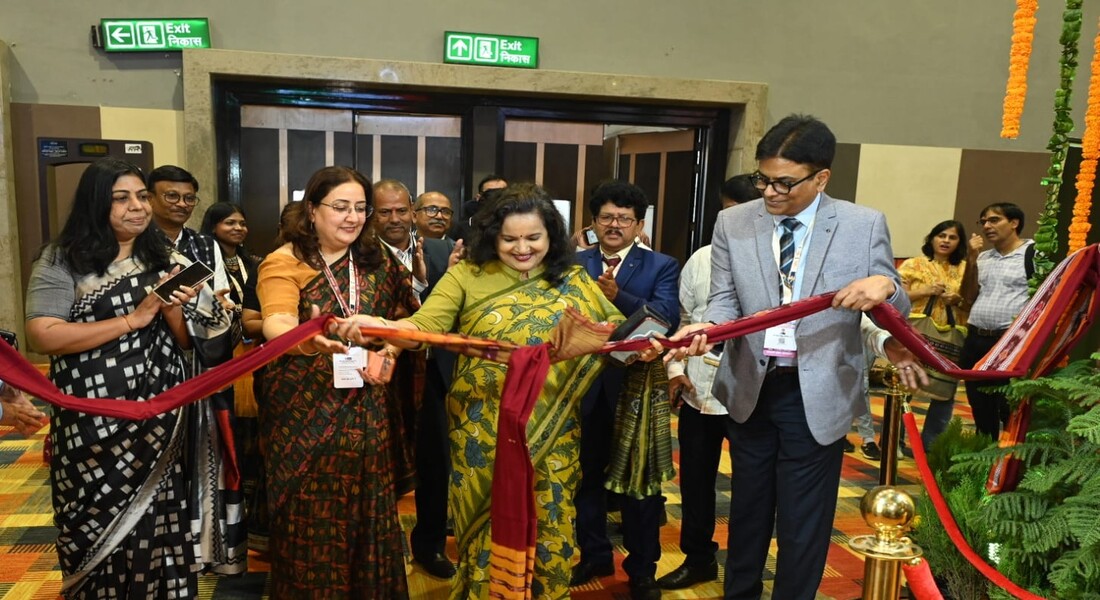
Bhubaneswar: The Odisha Pavilion at the 45th India International Trade Fair (IITF)-2026 was inaugurated by Chief Secretary Anu Garg at Hall-3 of Bharat Mandapam in New Delhi on Saturday, showcasing the state’s rich cultural heritage, traditional craftsmanship, diverse resources and emerging economic opportunities.

Presented under the theme ‘Where Virasat Inspires Vikas’, the pavilion reflects the overarching theme of this year’s fair, ‘Vikash aur Virasat’. It brings together an extensive collection of Odisha’s handlooms, handicrafts, Geographical Indication (GI)-tagged products, tribal art, agricultural produce, forest-based products, dairy products, rural enterprises and tourism offerings.

The exhibition features participation from various state government departments, agencies, institutions, cooperatives and producer organisations, highlighting Odisha’s efforts to preserve its cultural legacy while embracing innovation, entrepreneurship and sustainable development.

At the inauguration ceremony, Garg highlighted the importance of presenting Odisha’s heritage and its contemporary development journey on national and international platforms. She said the state’s traditional skills, indigenous knowledge, cultural identity and abundant resources provided a strong foundation for its growth aspirations.

She emphasised the need to create wider market opportunities for local artisans, weavers, farmers, tribal communities, women’s Self-Help Groups and entrepreneurs, enabling them to connect with larger markets and benefit from emerging economic opportunities. She also encouraged visitors and stakeholders to explore the diverse products and initiatives displayed at the pavilion.

A major attraction of the Odisha Pavilion is its extensive showcase of the state’s handloom and handicraft traditions. Sambalpuri textiles, cotton, tussar and silk products, Pattachitra paintings, palm-leaf engravings, silver filigree, Dhokra craft, stone and wood carvings, applique work and other traditional creations highlight the craftsmanship and artistic heritage of Odisha.

Live demonstrations of silver filigree, Dhokra casting, stone carving and traditional weaving provide visitors with an opportunity to witness the skills and techniques behind these traditional crafts. The pavilion also features blockchain-enabled handloom weaving, demonstrating how contemporary technology can be integrated with traditional craftsmanship.

Women’s entrepreneurship and rural livelihoods receive particular attention through the participation of ORMAS.

Mission Shakti showcases a wide range of products made by women Self-Help Groups, including Sabai grass crafts, tribal jewellery, Paper Mache products, millet-based products, ready-to-eat delicacies, handlooms and handicrafts.

ORMAS presents products reflecting the strength of rural entrepreneurship, including Golden Grass crafts, spices, millet products, pickles, Mahua products and coir crafts. These displays highlight the contribution of women and rural communities to inclusive economic growth and sustainable livelihoods.

The pavilion also offers a glimpse into Odisha’s distinctive tribal heritage through Gond and Lanjia Saora paintings, the traditional Dongaria Kondh shawl, Minor Forest Produce, value-added tribal products, and Koraput Coffee.

The agricultural section showcases millets, Black Rice, traditional rice varieties, cashew, honey, spices, and value-added millet products, highlighting the state’s potential in sustainable agriculture and food processing.

OMFED presents its range of dairy products alongside organic Kandhamal Haldi, adding to the diversity of Odisha’s agricultural and food-based offerings.

Odisha Tourism highlights the state’s spiritual, cultural and natural attractions, including the Sun Temple at Konark, Jagannath Dham at Puri and Chilika Lake, providing visitors with an insight into the state’s diverse tourism potential.

Through its wide-ranging displays, the Odisha Pavilion brings together the state’s traditional heritage, local craftsmanship, agricultural strengths, tribal culture, rural enterprises and tourism offerings, presenting its journey of preserving its cultural identity while exploring new avenues for economic growth and development.
Centre announces five lakh pucca houses for Odisha under PMAY-G

Bhubaneswar: The Centre has announced five lakh pucca houses for poor families in Odisha under the Pradhan Mantri Awas Yojana–Gramin (PMAY-G), with Union Minister for Agriculture and Farmers’ Welfare and Rural Development Shivraj Singh Chouhan assuring that no eligible family would be left without a permanent home.

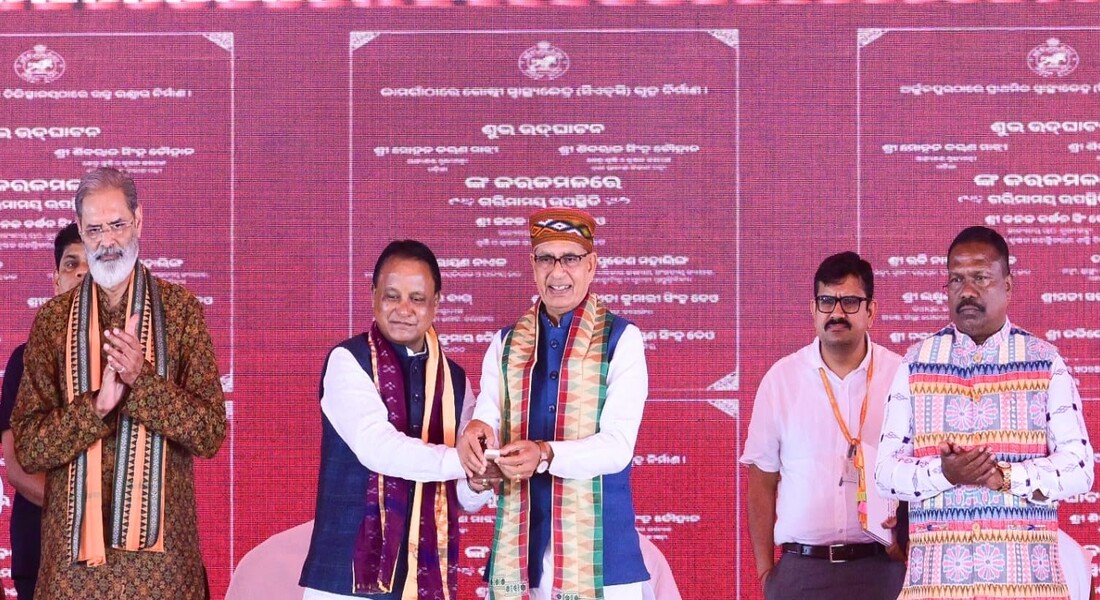
Making the announcement at a state-level programme of the rural housing scheme in Balangir in the presence of Chief Minister Mohan Charan Majhi, Chouhan said a fresh and proper survey had been completed to identify eligible beneficiaries.

All families meeting the eligibility criteria would receive pucca houses in a phased manner, ensuring that poor households still living in kutcha houses could benefit from the scheme, according to an official statement.

The Union Minister also announced a joint initiative of the Central and Odisha governments to provide subsidies for installing solar panels on houses constructed under the scheme. The initiative would help beneficiaries bring their electricity bills down to zero and create an additional source of income by allowing them to sell surplus electricity.

The programme also witnessed the foundation stone laying ceremony for a new agriculture college in Balangir. Deputy Chief Minister and Agriculture Minister Kanak Vardhan Singh Deo, Panchayati Raj and Drinking Water Minister Ravi Narayan Nayak, Health and Family Welfare Minister Dr Mukesh Mahaling, Member of Parliament Sangeeta Kumari Singh Deo and local legislators Naveen Kumar Jain, Laxman Bag and Rupa Mishra attended the event.

Highlighting the contribution of women to society and the economy, Chouhan praised Odisha’s Subhadra Yojana, under which women receive Rs 10,000 annually. He said the initiative had strengthened women’s confidence and enhanced their dignity.

He also appreciated Odisha for achieving its target of creating 27 lakh Lakhpati Didis a year ahead of schedule. The state has now recorded 29 lakh women attaining Lakhpati Didi status under the leadership of Chief Minister Mohan Charan Majhi.

The Union Minister said that over the next five years, loans worth Rs 10 lakh crore would be extended through banks to women across the country. The initiative would help more women establish businesses, expand their livelihood activities and achieve Lakhpati Didi status.

He further announced that access to institutional credit would no longer remain restricted to members of self-help groups. Women interested in starting individual businesses or livelihood activities would also be eligible to obtain loans without the requirement of a guarantee.

Describing service to farmers as equivalent to worshipping God, Chouhan assured that the new agriculture college in Balangir would be developed into the country’s finest agricultural institution.

He said the institution would receive support from the Indian Council of Agricultural Research (ICAR) and the government of India. Leading agricultural scientists from different parts of the country would work closely with farmers, understand their challenges and help address issues affecting agricultural production and livelihoods.

The Union Minister also said a comprehensive roadmap was being prepared in coordination with the Odisha government to modernise agriculture across the state.

As part of the proposed agricultural transformation initiative, solar panels would be installed above agricultural fields, allowing farmers to continue cultivating fruits and vegetables underneath them. This arrangement would enable farmers to generate income from both agricultural activities and solar power, providing an additional source of earnings.

Chouhan also informed the gathering that the names of eligible farmers who had previously been left out of the Pradhan Mantri Kisan Samman Nidhi scheme had now been included in the beneficiary list.

Outlining the government’s plans for rural infrastructure and development, Chouhan said Odisha would receive approximately Rs 4,000 crore this year under the Viksit Bharat–G RAM G scheme.

Under the announced funding plan, every panchayat would receive between Rs 25 lakh and Rs 50 lakh annually. Over five years, smaller panchayats would receive up to Rs 1 crore, while larger panchayats would be eligible for funds of up to Rs 2 crore for development activities.

He said the financial assistance could be utilised for constructing roads, drains, schools and panchayat buildings, improving road connectivity to farmers’ fields and developing ponds for water conservation.

The Union Minister also highlighted the government’s efforts to strengthen rural road connectivity through the Pradhan Mantri Gram Sadak Yojana.

He said 1,700 kilometres of roads had been approved under the fourth phase of the scheme. The government would also work towards connecting all remaining villages through pucca roads, ensuring better accessibility and improved connectivity in rural areas.

Paying tribute to Balangir’s cultural identity and traditions, Chouhan referred to the region’s Nuakhai festival and traditional Dalkhai and Rasarkeli dances. He called upon people to work collectively towards building a developed Odisha.

Addressing the gathering in a warm and personal manner, the Union Minister said he had not come to the state as a distinguished guest or visitor but as a humble public servant in his capacity as Minister for Agriculture and Rural Development.

Expressing his admiration for Odisha’s spiritual and cultural traditions, he said he saw Lord Jagannath in the living and vibrant people of the state and the image of Subhadra Maiya in its women.

Chouhan also praised Chief Minister Mohan Charan Majhi, describing him as a simple, approachable, and dedicated public servant who worked tirelessly for the people.

He said that, with the objective of realising Prime Minister Narendra Modi’s vision of Viksit Bharat, the Chief Minister was working towards building a Viksit Odisha.