At IndiaVerve, we go beyond the noise to bring you meaningful stories of change, resilience and progress—from India to the world stage. Our mission is to bring readers credible, wide-ranging coverage across politics, business, sports, culture, society and more.

PM Modi highlights poverty reduction, end of Naxalism at Janjatiya Gaurav Diwas event

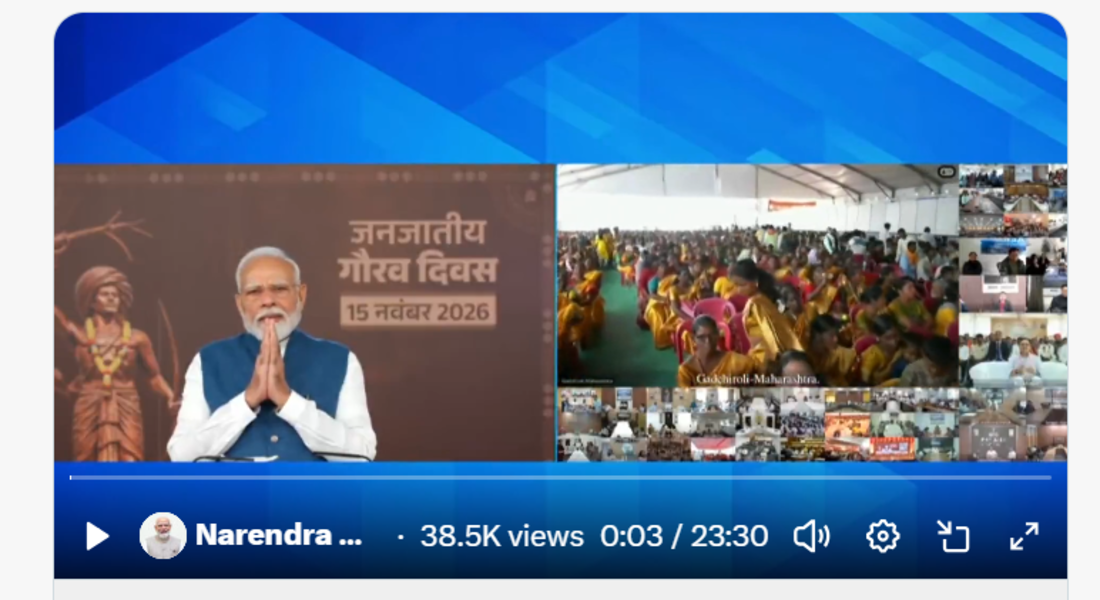
New Delhi: Prime Minister Narendra Modi on Sunday said two major national milestones, nearly 50 crore people coming out of extreme poverty and India’s freedom from Naxalism and Maoist terror, carry special significance for tribal regions.

He was addressing the Janjatiya Gaurav Diwas programme.

He emphasised the significance of both developments for tribal communities, particularly in regions that have long faced poverty and Left-Wing Extremism.

Modi participated in the programme in Gadchiroli, Maharashtra, through video conferencing, inaugurating and laying the foundation stone for 246 development projects worth around Rs 3,000 crore.

The event marked the 151st birth anniversary of Dharti Aaba Bhagwan Birsa Munda, according to an official statement.

Greeting people across the country with ‘Johar’, the Prime Minister paid tribute to Bhagwan Birsa Munda and said the nationwide celebrations reflected the pride of tribal communities and the enduring inspiration drawn from their heroes and heroines.

Referring to Gadchiroli’s rich tribal heritage, Modi recalled the contributions of freedom fighters Raghoji Bhangre, Bhagoji Naik and Veer Baburao Shedmake. He also acknowledged the participation of Governors, Chief Ministers, Deputy Chief Ministers and public representatives in celebrations across the country.

Modi noted that Janjatiya Gaurav Diwas, instituted on November 15, 2021, had grown into a national celebration. During Bhagwan Birsa Munda’s 150th birth anniversary last year, more than two lakh events were organised, drawing participation from crores of citizens. He said the growing recognition of tribal heritage and freedom fighters reflected a significant change in national consciousness.

Recounting the struggles of tribal communities against colonial rule, the Prime Minister referred to Tirot Sing’s resistance in the Khasi Hills, the Kol movement in Chota Nagpur and the Santhal rebellion led by Sido and Kanhu. He also recalled the sacrifices of Govind Guru’s followers at Mangarh and the contributions of Rani Gaidinliu, Tantya Bhil, Alluri Sitarama Raju and Rani Durgavati.

Modi said the Ulgulan movement led by Bhagwan Birsa Munda and his struggle at a young age continued to inspire millions of Indians.

As part of the Janjatiya Gaurav Diwas celebrations, more than 170 tribal development projects were inaugurated, and the foundation stones for over 70 projects were laid across various states, involving an investment of around Rs 3,000 crore.

These included a museum dedicated to freedom fighter Ropuiliani in Mizoram and a new building for the Tribal Research Institute in Arunachal Pradesh. Projects relating to educational institutions, healthcare services, tribal product marketing centres and rural infrastructure were also included.

The Prime Minister congratulated the people on the projects and initiatives launched on the occasion.

Addressing the issue of poverty, Modi referred to a recent World Bank report which, according to him, showed that nearly 50 crore Indians had moved out of extreme poverty over the past 12 to 13 years. He described this as a major achievement in independent India’s history, attributing it to collective social effort, the hard work of citizens and targeted welfare schemes and policy decisions.

He said the government had prioritised communities and regions that had remained deprived of basic facilities for decades. More than Rs 1 lakh crore had been allocated to the PM-JANMAN Yojana and the Dharti Aaba Janjatiya Gram Utkarsh Abhiyan to improve conditions in particularly backward tribal regions.

Turning to Naxalism, Modi said it had caused immense suffering in tribal regions, including Gadchiroli. He recalled that around 125 districts had been affected by Naxalism, with hundreds of violent incidents reported every year and thousands of innocent people, many of them from tribal communities, losing their lives.

The Prime Minister asserted that the end of Naxalism had brought a sense of security to families in formerly affected areas. He said mothers and sisters were now expressing relief, while young people who had been deprived of their childhood could access education and employment opportunities.
Odisha Governor calls for protecting tribal literature, languages and traditional knowledge

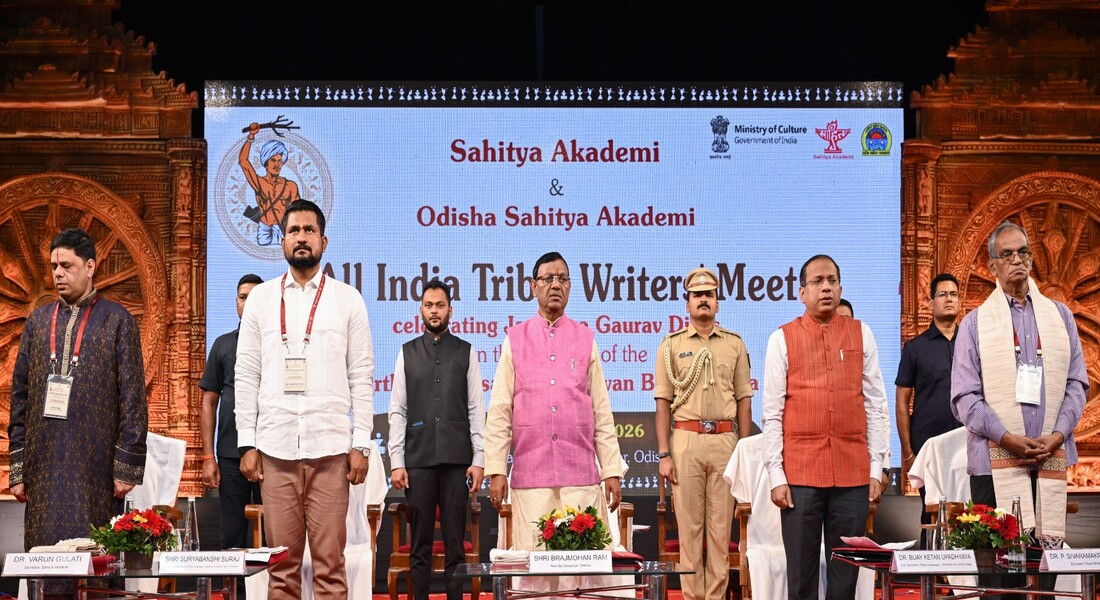
Bhubaneswar: Odisha Governor Braj Mohan Ram on Sunday pressed for the preservation and wider promotion of tribal literature, languages and traditional knowledge. He described them as invaluable assets of India’s rich and varied cultural heritage.

The Governor was speaking at the inaugural session of the All India Tribal Writers’ Conference at Rabindra Mandap in Bhubaneswar. The event was organised with the support of the Sahitya Akademi and the Odisha Sahitya Akademi. It coincided with Janjatiya Gaurav Divas and the 151st birth anniversary of Bhagwan Birsa Munda.

Tribal literature, he said, carries the history, traditions, experiences and life philosophy of tribal communities. It adds to the literary and cultural life of the whole country.

Tribal communities have passed down their history and knowledge for generations through folk songs, folktales and proverbs. Documenting and protecting that heritage is a shared responsibility, the Governor said.

Paying tribute to Birsa Munda, he said that marking November 15 as Janjatiya Gaurav Divas since 2021 was an important step in recognising the contribution and sacrifice of tribal society.

The story of India’s freedom struggle and nation-building stays incomplete, he added, without remembering tribal heroes.

On Odisha’s own tribal heritage, the Governor said every community has its own language, folk songs, traditions and way of life. He called the Mahendragiri hills and the Eastern Ghats key centres of tribal life, faith and traditional knowledge. He also pointed to the deep link between Odisha’s cultural traditions and nature worship, Daru Devata and Lord Jagannath.

He urged tribal writers to write about their community’s struggles, successes, aspirations and traditions in their own languages and from their own point of view. The close bond between tribal society and nature, and its respect for water, forests and land, holds useful lessons for tackling climate change and environmental challenges, he said.

The Governor asked the Sahitya Akademis, universities, research bodies and publishers to encourage writing, research, publishing and translation in tribal languages. Tribal literature from Odisha, Jharkhand, the North-East and Central India must reach readers across the country and abroad, he said.

Speaking of the goals of a Viksit Bharat by 2047 and a Viksit Odisha by 2036, he said development will have real meaning only when tribal communities are equal partners in it and their languages, culture and traditions are protected. He advised tribal youth to stay rooted in their mother tongue and culture while taking up modern education and technology.

Suryabanshi Suraj, Minister for Higher Education, Sports and Youth Services and Odia Language, Literature and Culture, also addressed the gathering.

College of Agricultural Engineering and Technology celebrates diamond jubilee

Bhubaneswar: The College of Agricultural Engineering and Technology (CAET), functioning under Odisha University of Agriculture and Technology (OUAT), Bhubaneswar, celebrated its Diamond Jubilee on Sunday, marking six decades of contribution to agricultural engineering education, research, mechanisation and farmer services in Odisha.

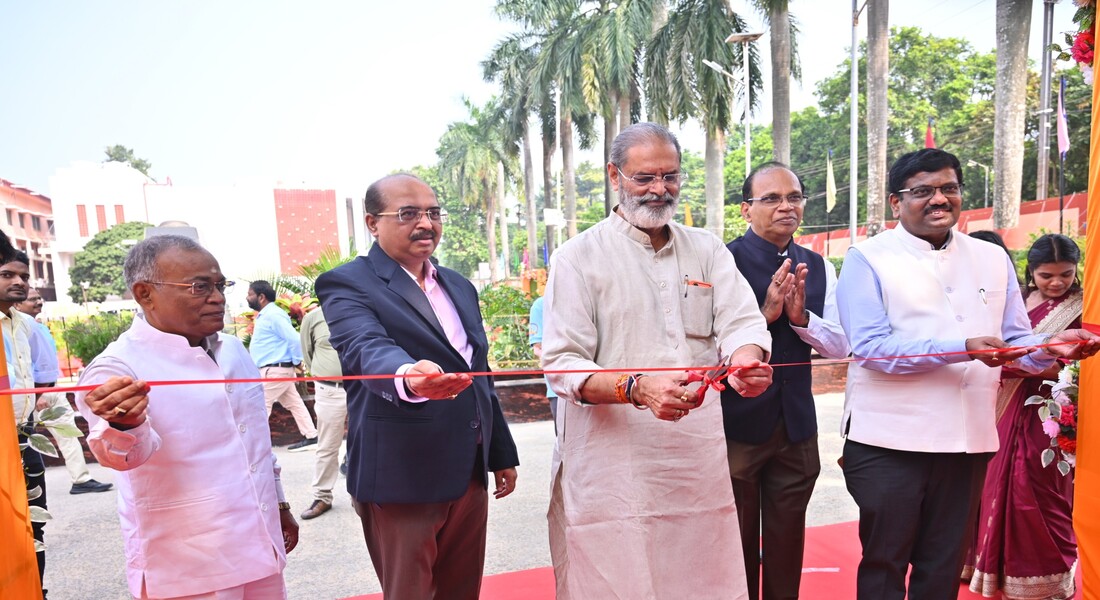
The Diamond Jubilee celebrations were inaugurated by Deputy Chief Minister and Minister for Agriculture and Farmers’ Empowerment and Energy, Kanak Vardhan Singh Deo.

Commissioner-cum-Secretary of the Agriculture and Farmers’ Empowerment Department Sachin Ramchandra Jadhav and OUAT Vice-Chancellor Prof. (Dr.) Pravat Kumar Raul also attended the event.

Addressing the gathering, the Deputy Chief Minister stressed the importance of agricultural mechanisation, research and innovation among students. He also assured that agricultural mechanisation would remain a government priority, with the necessary support for the development and professional recognition of the field.

The dignitaries inaugurated a Diamond Jubilee memorial on the college campus and a Technology Exhibition showcasing innovations, machinery and modern techniques in agricultural engineering. The exhibition featured agricultural mechanisation, post-harvest processing, soil and water conservation, drones and other contemporary farm technologies.

A special souvenir titled “Confluence”, published to mark the occasion, was also released. The volume documents CAET’s history, achievements, research, technological contributions and the experiences and memories of its alumni.

More than 1,000 people, including alumni, students, faculty members, scientists, academicians, researchers and agricultural machinery manufacturers, participated in the celebrations.

The day-long programme featured a Diamond Jubilee seminar, an interaction between students and alumni, and a cultural programme presented by students in the evening.

Over its six-decade journey, CAET has produced graduates, postgraduates and researchers who have gone on to occupy important positions in universities, research institutions in India and abroad, government departments and industry.

The college has also contributed through research, the development of new machinery and technical know-how, and efforts to take these innovations to farmers.

At the inaugural session, CAET Alumni Association President Engineer P. K. Mohapatra placed several demands before the Deputy Chief Minister and the departmental Secretary to strengthen agricultural engineering and enhance its professional recognition.

These included restructuring the Agricultural Engineering cadre and recruiting and posting agricultural engineers at every block level in the Departments of Agriculture, Horticulture, and Soil Conservation and Watershed Development.

Established in 1966, CAET was founded with the objective of applying mechanical and technical knowledge to make farming more efficient, productive and profitable through modern engineering.

Over the years, the college has developed its academic and research activities across several disciplines, including farm machinery, soil and water conservation, post-harvest processing, agricultural structures, civil and environmental engineering, and mechanical and electrical engineering.

Its work has also expanded into renewable energy and irrigation and drainage engineering to address changing agricultural needs.

Odisha finalises reservoir operation SOP ahead of possible low-pressure system

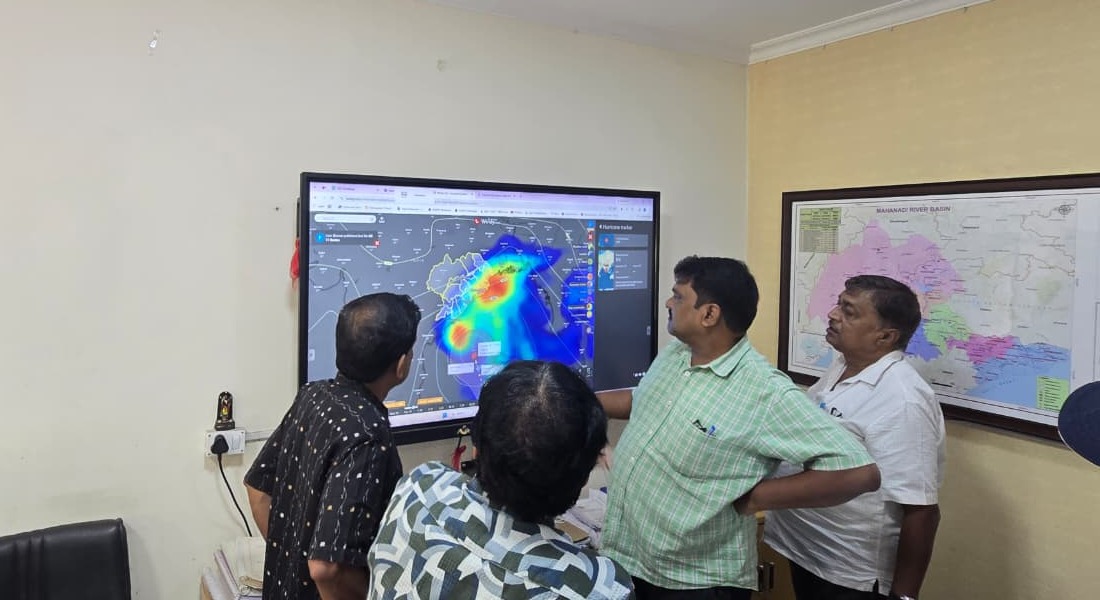
Bhubaneswar: The Odisha government has stepped up preparedness to deal with potential rainfall and flood situations following the India Meteorological Department’s forecast of a developing low-pressure system over the southeast Bay of Bengal.

The Department of Water Resources has intensified monitoring and preparedness measures to manage any possible rise in river flows and reservoir inflows across the state.

A high-level virtual review meeting was held under the chairmanship of Engineer-in-Chief, Water Resources, Er. Dillip Kumar Rout. Engineer-in-Chief, Planning and Designs; Engineer-in-Chief, Schemes and Monitoring; Chief Engineer, RBVN; Additional Chief Engineers; and concerned Superintending Engineers attended the meeting.

The officials reviewed the expected rainfall, possible increases in river flows, anticipated reservoir inflows, and measures for strategic reservoir management in the event of adverse weather conditions.

The meeting also examined the increased water storage following Cyclone Arnab in eight medium reservoirs in Ganjam district and two medium reservoirs in Gajapati district.

Taking into account the existing storage levels and the evolving weather forecast, the department finalised a Standard Operating Procedure (SOP) to guide reservoir operations and preparedness during the upcoming weather event.

The review stressed the need for continuous monitoring of reservoir levels, coordination among different divisions, and timely decisions to minimise potential flood risks. Field-level officials were also advised to remain alert and prepared to respond promptly whenever required.

The department said it would continue to monitor the developing weather situation and maintain preparedness at all levels, with a focus on protecting critical water infrastructure and communities living downstream.

Badminton: Lakshya Sen lifts Japan Masters 2026 title

New Delhi: Lakshya Sen won the men’s singles title at the Japan Masters 2026 on Sunday, defeating local favourite Koki Watanabe.

With this victory, he became the first Indian to win the Japan Masters title.

The 25-year-old Indian shuttler lost the opening game 13-21 but fought back to win the next two games 21-18 and 21-14, according to reports.

This was Lakshya’s second consecutive BWF Super 500 title, following his triumph at the Hylo Open in Germany, where he defeated Indonesia’s Jonatan Christie in the final.

The victory in Germany was Lakshya’s first title of the season and the seventh of his career.

The Indian shuttler had earlier withdrawn from the Korea Open. However, his Japan Masters triumph strengthened his bid to qualify for the season-ending BWF Tour Finals.

BJP’s CR Kesavan accuses Rahul Gandhi of defaming India at Bharat Summit 2026

New Delhi: BJP leader C.R. Kesavan on Sunday accused Congress MP and Leader of Opposition in the Lok Sabha Rahul Gandhi of maligning India’s democratic institutions before an international audience, following his address at the Bharat Summit 2026 in Hyderabad.

In a strongly worded post on X, Kesavan questioned the Congress’s decision to host an international gathering where, he alleged, Gandhi and other party leaders used the platform to attack India’s democratic system.

Kesavan dismissed the gathering as a “Bharat Badnaam Summit”, accusing the Congress of using an international event to project India and its democratic institutions in a negative light.

He also raised questions about the foreign delegates who attended the two-day summit, demanding that the Congress disclose their backgrounds and alleged connections with organisations funded by US billionaire George Soros.

Kesavan described some of the delegates as having “very dubious credentials” and accused the Congress of allowing individuals allegedly linked to organisations funded by Soros to participate in discussions critical of India.

The BJP leader further questioned Gandhi’s remarks about seeking international support for what he described as India’s political battle. Referring to Gandhi’s earlier statement, “It is not just an Indian battle”, Kesavan alleged that the Congress leader was inviting foreign involvement in India’s internal affairs.

Kesavan further alleged that Gandhi and those aligned with him were working with foreign interests to undermine India’s democratic system, warning that the Congress would face the consequences of such efforts.

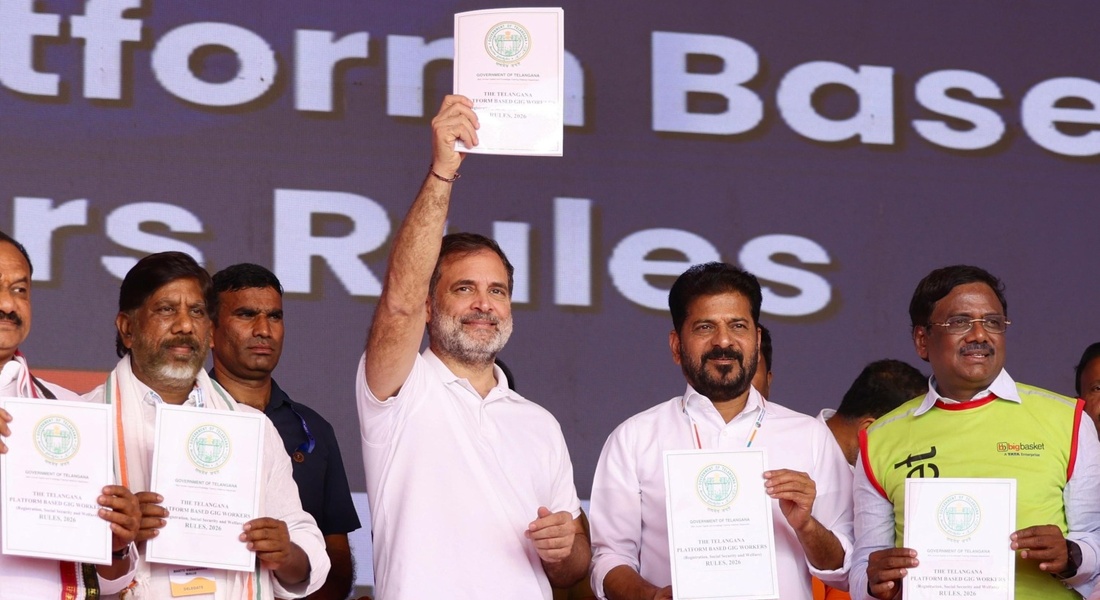
The BJP leader’s criticism came a day after Gandhi addressed the valedictory session of the Bharat Summit 2026 in Hyderabad. Telangana Chief Minister A. Revanth Reddy and delegates from around 70 countries were also present at the event.

Gandhi, meanwhile, portrayed 2014 as a turning point, claiming that the country had witnessed a serious erosion of its democratic system since then. According to Gandhi, the growing flow of money into politics had altered the nature of elections in India.

He also questioned the revision of electoral rolls and alleged irregularities in voter additions and deletions. Citing the Maharashtra Assembly elections, the Congress MP claimed that seven million new voters had been added within three months and alleged that every one of them had voted for the BJP.

Ganjam steps up possible cyclone preparedness

Bhubaneswar: The Ganjam district administration has stepped up preparedness measures to tackle the possible cyclone, with the district under warning for November 18 and 19, accompanied by the possibility of heavy rainfall and strong winds.

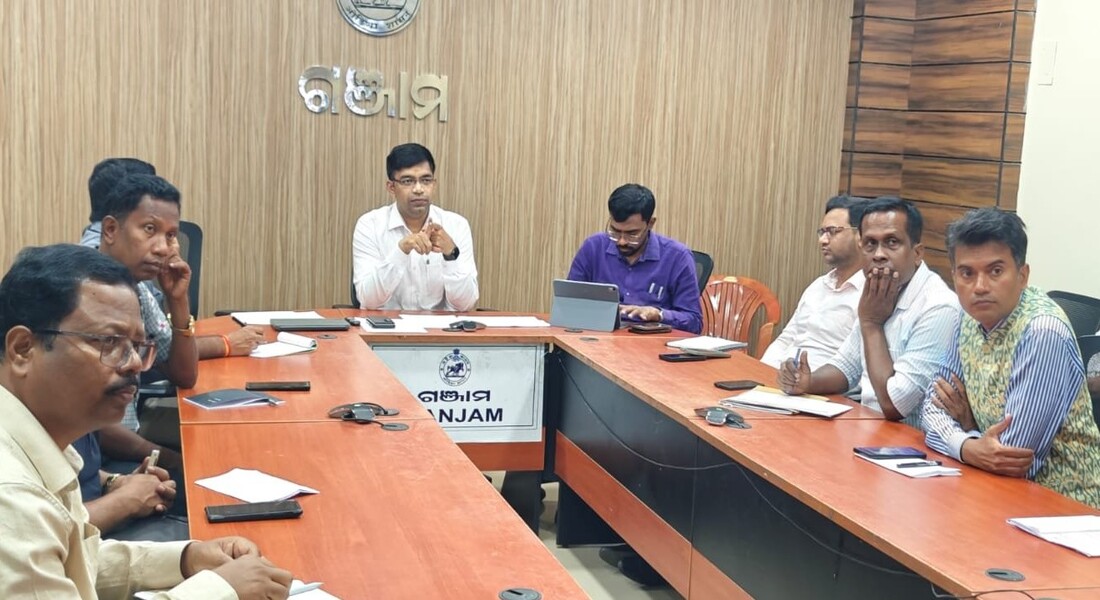
A preparatory meeting of departmental officers was held at Chhatrapur on Saturday under the chairmanship of Collector V. Keerthi Vasan, who directed all departments to remain alert and ensure that necessary arrangements are in place to deal with any eventuality.

Drawing lessons from Cyclone Arnab and the subsequent flood situation, the Collector stressed the need for coordinated action and instructed officials to discharge their responsibilities with utmost urgency.

The administration will arrange for the prompt evacuation of people to safe locations and cyclone shelters whenever required. Field-level officers have been directed to inspect the availability of essential facilities, including drinking water, food, lighting and toilets, at all cyclone shelters.

The Fisheries Department has been asked to ensure that all fishermen currently at sea return by November 16. Fishing activities will not be permitted thereafter.

A public awareness campaign using loudspeakers will begin across all blocks from Sunday. Block Development Officers (will coordinate with elected Panchayat representatives, Self-Help Groups and local residents to ensure that people are informed about the necessary precautions.

The Collector emphasised the administration’s zero-casualty target and called for special attention to the safety of vulnerable groups and livestock. The Health Department and District Social Welfare Department will coordinate the advance shifting of pregnant women to safer locations.

The Animal Resources Development Department will make arrangements for the safe accommodation of livestock, while health centres will be stocked with anti-snake venom injections and other essential medicines.

To maintain uninterrupted drinking water supply, the Rural Water Supply and Sanitation and WATCO departments have been directed to keep water tankers ready, inspect pipelines and carry out necessary repairs.

The Food Supplies Department will ensure adequate stocks of essential relief materials, including flattened rice (chuda), jaggery, biscuits and bottled drinking water.

The Electricity, Fire Services, Telecommunications, Works, Water Resources and Irrigation departments have also been instructed to remain fully prepared. The Collector specifically directed officials to closely monitor drainage systems, including Kharkhari Nala, to ensure the proper discharge of rainwater.

Farmers have been advised to harvest matured crops before the anticipated rainfall. The Agriculture and Irrigation departments will coordinate measures to protect standing crops and ensure proper drainage of excess water.

In the event of a Red Warning, BDOs will submit reports on the ground situation and preparedness in their respective areas twice daily, at 9 AM and 7 PM.

A 24-hour district control room will remain operational, while NDRF, ODRAF and Fire Services personnel will be kept ready for rescue and evacuation operations. The Collector has also directed that no officer leave headquarters without prior permission.

Meanwhile, relief assistance for families affected by the floods following Cyclone Arnab is continuing. The process of providing input assistance and crop insurance benefits for nearly 80,000 hectares of affected agricultural land is underway.

Affected families are being provided 50 kg of rice and financial assistance of Rs 2,500. Some farmers have already received input assistance.

To expedite relief and restoration work following the damage caused by Cyclone Arnab, the Sunday holiday has been cancelled across the district.

The public grievance hearing scheduled for next Monday has also been cancelled.

Appealing to people not to panic over the possibility of the cyclone, the Collector urged them to follow advisories and instructions issued by the administration and move to safe shelters whenever necessary.

Officials from all departments attended the meeting and briefed the Collector on their respective preparedness measures and responsibilities.