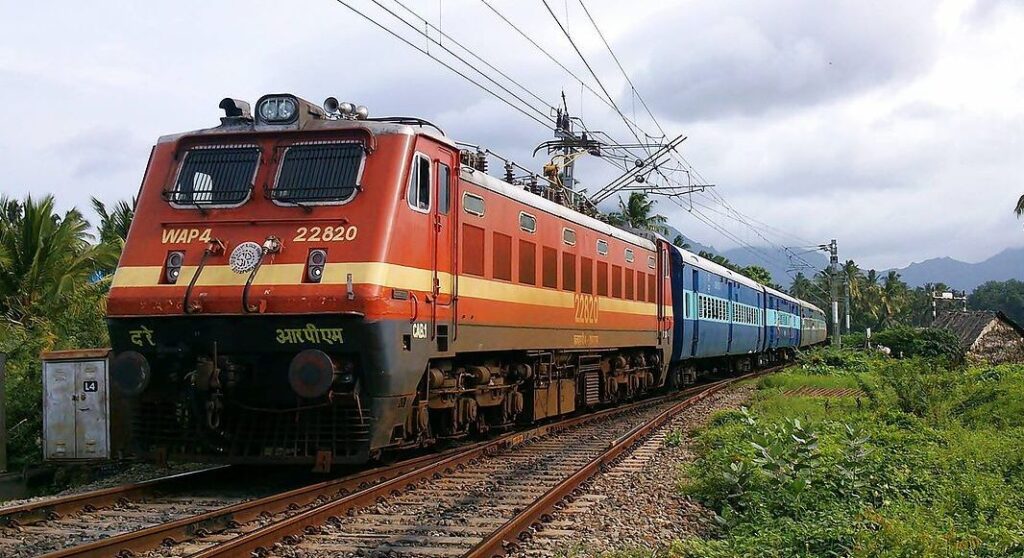
Bhubaneswar: Odisha will benefit from three major railway multi-tracking projects approved by the Cabinet Committee on Economic Affairs (CCEA) at a total estimated cost of Rs 10,783 crore.
The CCEA, chaired by Prime Minister Narendra Modi, approved three projects of the Ministry of Railways. These include the Kharagpur–Jharsuguda (Bagdehi) 4th Line, Katni–Pendra Road 4th Line and Bilaspur (Uslapur)–Pendra Road 3rd Line, according to an official statement.
The projects will increase railway capacity and improve connectivity across Odisha and other parts of eastern and central India.
The Kharagpur–Jharsuguda (Bagdehi) 4th Line is particularly important for Odisha. The additional line capacity is expected to help streamline railway operations, reduce congestion and improve service reliability.
The enhanced connectivity will also support the movement of people, goods and services. It will strengthen access to several important tourist and religious destinations, including Taratarini Temple and an ancient Jagannath temple near Jharsuguda.
The three projects will cover 14 districts across Odisha, West Bengal, Jharkhand, Madhya Pradesh and Chhattisgarh. Together, they will add about 656 km to the existing Indian Railways network.
The expanded network will improve connectivity to around 4,790 villages with a combined population of about 56 lakh.
The projects have been planned under the PM Gati Shakti National Master Plan. The plan focuses on improving multi-modal connectivity and logistics efficiency through integrated planning and consultations with stakeholders.
The government said the projects would support comprehensive development in the regions covered and enhance employment and self-employment opportunities.
The projects will also improve rail connectivity to several prominent tourist destinations across the five states. These include Bandhavgarh Tiger Reserve, Virateshwar Temple, Amarkantak Temple, Jwaleshwar Dham, Achanakmar Tiger Reserve, Khutaghat Dam, Malhar Archaeological Site and Ratanpur Mahamaya Temple.
The upgraded railway routes are also important for transporting commodities such as coal, cement, iron and steel.
The capacity augmentation is expected to generate additional freight traffic of about 27 million tonnes per annum.
According to the government, greater use of railways for transportation will also provide environmental benefits, as rail is an energy-efficient and environment-friendly mode of transport.
The projects are expected to reduce oil consumption by around 12 crore litres and lower carbon dioxide emissions by about 62 crore kg. The estimated reduction in emissions is equivalent to the plantation of around 2.48 crore trees.