
Ganjam and Gajapati bear the brunt of extreme rainfall linked to Cyclone Arnab, with roads inundated, railway services disrupted and power restoration under way across the state.
Bhubaneswar: Odisha is stepping up rescue and relief operations after exceptionally heavy rainfall linked to Cyclone Arnab triggered severe flooding across its southern and other districts, prompting the evacuation of 59,028 people and the deployment of 69 specialised disaster-response teams. Helicopters are being used to evacuate people from severely affected parts of Ganjam district where strong currents have prevented rescue teams from reaching them by boat.
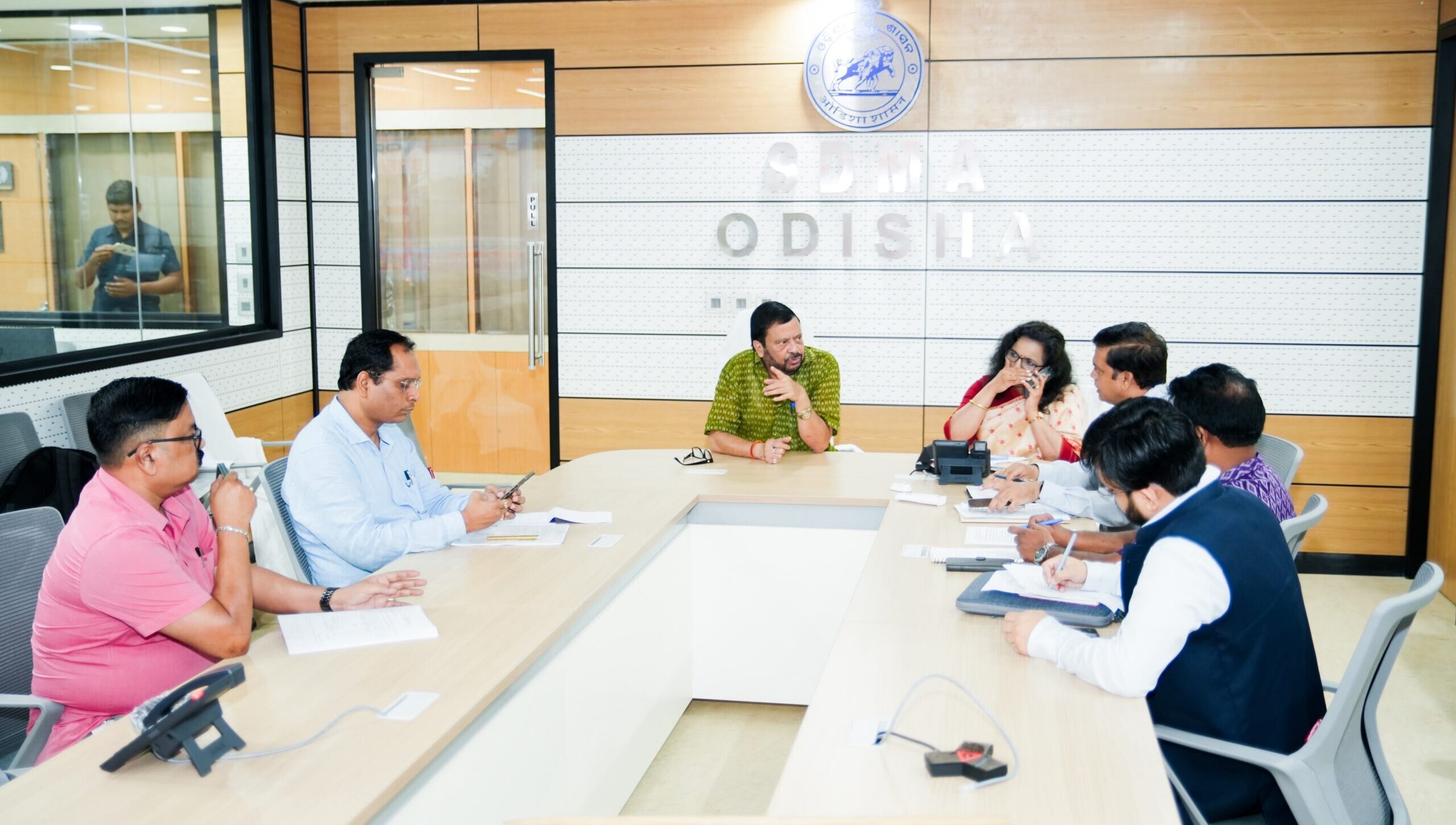
Revenue and Disaster Management Minister Suresh Pujari reviewed the situation throughout Thursday from the State Emergency Operations Centre at the office of the Special Relief Commissioner (SRC). The state government sa₹id the administration was working to ensure that affected people received food, drinking water, shelter and other essential assistance.
Chief Minister Mohan Charan Majhi and Pujari are scheduled to undertake an aerial survey of the affected areas, particularly Ganjam and Gajapati districts. A central team is also expected to visit the two districts to assess the damage and review the situation.
The flooding has affected Ganjam, Gajapati, Malkangiri, Koraput, Nabarangpur, Rayagada, Kalahandi, Nuapada and Kandhamal districts. Ganjam and Gajapati have been among the worst affected.
The scale of rainfall has been exceptional. Patrapur in Ganjam district recorded 546 mm, while G. Udayagiri in Kandhamal received 462.4 mm. Several other locations across Ganjam, Gajapati and Kandhamal recorded more than 200 mm of rainfall.
Earlier district-level updates also reported severe flooding in parts of Ganjam, including areas affected by the rapid rise of the Bahuda river. Heavy rainfall in the river’s catchment area drove up inflows into the Baghalati reservoir, with the inflow reaching 550 cubic metres per second by 11 am on October 28. Four reservoir gates were opened.
Between 11 am and 7 pm on October 28, Patrapur recorded 546 mm of rainfall and Chikiti received 289 mm, according to the department’s briefing. The resulting rise in water levels contributed to flooding in downstream areas.
In Ganjam, the administration has identified 922 vulnerable villages. Of these, 299 villages across 22 blocks have been reported affected. Four SRC powerboats have been deployed, and boat-based rescue operations are continuing where water conditions permit. Authorities are also monitoring Kalinga Ghati and river systems across the district.
In Gajapati, 119 vulnerable villages have been identified across the district’s seven blocks, while 711 villages have been reported affected. The administration is monitoring Gotta Barrage, Badanala and drainage systems. The Vamsadhara river was reported at 52.5 metres, below its danger level of 54.10 metres, at the time of the department’s update. Seven rescue boats have been deployed.
59,028 people evacuated, 830 shelters arranged
The state government said 59,028 people had been evacuated from vulnerable areas across Odisha and 830 shelters arranged to accommodate them.
Gajapati recorded 17,441 evacuees, followed by Malkangiri with 15,477, Ganjam with 11,882 and Nabarangpur with 10,519. The figures for these four districts account for most of the statewide total, with the remainder evacuated from other affected areas.
In Ganjam, 110 permanent shelters have been arranged, alongside temporary facilities. Initial relief supplies include flattened rice, jaggery and polythene sheets. The administration has also arranged cooked food, drinking water and other essentials for people affected by the flooding.
In Gajapati, 298 shelters have been opened, with relief materials kept ready. Rayagada district has arranged 134 shelters, comprising three permanent and 131 temporary facilities. Three SRC powerboats have been stationed at Gunupur, Gudari and K. Singhpur.
An earlier review of the situation in Ganjam and Gajapati reported that 2,328 people in 70 villages in Ganjam remained surrounded by floodwater. Officials were considering aerial evacuation for people who could not be reached by ground teams, with district authorities asked to identify suitable locations. The latest departmental briefing confirms that helicopter evacuations are now being undertaken in vulnerable parts of Ganjam.
Coast Guard helicopters used in rescue
The state government has coordinated with the Indian Coast Guard to facilitate helicopter evacuations. In locations where powerful water currents have prevented National Disaster Response Force (NDRF) and Odisha Disaster Rapid Action Force (ODRAF) teams from reaching residents, aerial operations have been used to move people to safer locations.
The latest briefing said 45 ODRAF teams and seven NDRF teams had been deployed in Ganjam, along with 24 Fire Service teams. Gajapati had 12 ODRAF teams, one NDRF team and 12 Fire Service teams deployed or on standby.
Across Odisha, 60 ODRAF teams and nine NDRF teams — 69 specialised response teams in total — have been deployed. Another 244 Fire and Emergency Services teams are working to remove fallen trees, restore road connectivity, conduct rescues and evacuate people from vulnerable locations.
The government said ministers and senior officials were also working in affected districts. Deputy Chief Minister Kanak Vardhan Singh Deo was in Malkangiri, while Deputy Chief Minister Pravati Parida was in Rayagada. Minister Bibhuti Bhushan Jena was assisting the administration in Ganjam, and Minister Suryabanshi Suraj was in Gajapati. Minister Mukesh Mahaling was in Kalahandi and Minister Rabi Narayan Naik in Kandhamal.
Power restoration underway
Restoration of electricity supply has been identified as a priority. Of 316 affected 33 kV substations across the state, power supply had been restored at 298, according to the department. Approximately 84 per cent of affected electricity connections had also been restored, with work continuing to bring essential services back to normal.
The state government said relief and restoration teams were operating round the clock, with district administrations maintaining heightened vigilance as water levels and road conditions were monitored.
Rail services disrupted near Odisha-Andhra border
Flooding has also disrupted railway operations along the Ichchapuram–Jhadupudi section in the Visakhapatnam Division. The department said nine trains had been cancelled or suspended and 14 diverted, while affected trains were stranded at five locations in Odisha.
Earlier updates from East Coast Railway reported abnormal water levels at railway bridges in the section, including Bridge No. 1052 near Dangueda. Water had risen above the danger mark at two bridges between Ichchapuram and Jhadupudi, affecting train movement along the route.
The state government said it was coordinating with the administrations of Ganjam and Srikakulam districts and railway officials in Visakhapatnam and Bhubaneswar to assist stranded passengers. Ganjam’s district administration had been directed to ensure that passengers received assistance and information about the disruption.
Road connectivity affected
Heavy rain and flooding have disrupted road movement in several districts. In Gajapati, roads were closed at four locations in Mohana, Udayagiri and Rayagada blocks, with water levels under monitoring and restoration work under way.
In Koraput, vehicular movement on the Pattangi–Galigabdar road had been interrupted by flowing floodwater but subsequently returned to normal, according to the department.
Earlier local updates from Ganjam described flooding in low-lying neighbourhoods of Berhampur, including Gajapati Nagar, Sakti Nagar and Nilachal Nagar. Reports also described disruption to routes linking Sorada with Aska, Badagada and Bhanjanagar, as well as waterlogging on the Aska–Berhampur route via Hinjilicut.
Other reports from the district cited inundation in villages, landslides and fallen trees in parts of Mohana, and damage to local road infrastructure. A bridge on the Adangi Nadi was reported to have collapsed. A death near a spillway in Sorada was also reported in earlier updates; the circumstances and official confirmation should be checked with district authorities before publication.
The administration has prioritised the relocation of pregnant women from vulnerable areas to healthcare facilities and safer locations. The department’s latest briefing gave a statewide figure of 3,001 pregnant women shifted to healthcare facilities and 1,188 safe deliveries recorded so far.
Its district-level details separately reported 550 pregnant women shifted and 293 institutional deliveries in Ganjam; 420 women shifted and 33 institutional deliveries in Gajapati; and 236 women shifted and 86 institutional deliveries in Rayagada. The district-level figures do not account for the full statewide totals, and the department’s figures require clarification.
Government assures continued support
Pujari said the administration must reach every affected person and ensure timely delivery of assistance. He has remained in contact with ministers, senior officials and local representatives to monitor conditions and coordinate rescue and relief efforts.
The minister appealed to residents to remain calm, cooperate with the administration and prioritise their safety. The state government said it was maintaining close coordination with the central government, which is extending assistance and preparing to send a team to assess the damage in Ganjam and Gajapati.
With rescue operations continuing, the immediate priorities remain evacuating people from inundated areas, providing food and shelter, assisting stranded rail passengers, restoring electricity and reopening disrupted roads.