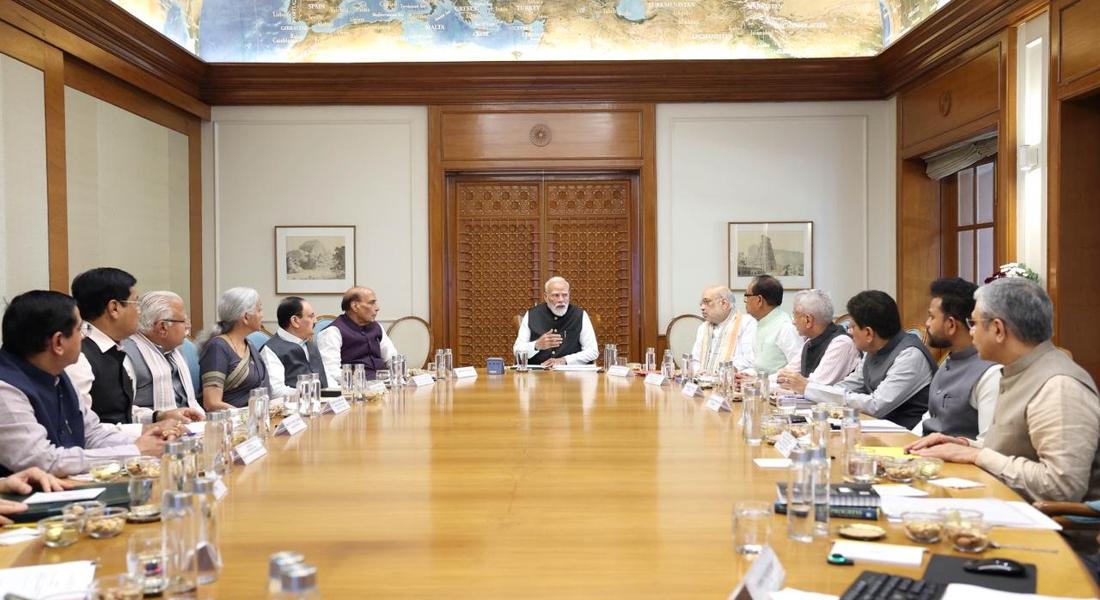

New Delhi: With the ongoing West Asia conflict raising concerns over global supply chains and inflation, Prime Minister Narendra Modi chaired a high-level security meeting late last evening to review its impact on India, with a focus on ensuring uninterrupted supply of essential commodities.
The Prime Minister directed all departments to work in close coordination to minimise disruption for citizens and prevent any shortages. According to an official statement, he also emphasised strict monitoring to curb black marketing and hoarding of essential goods.
The Cabinet Committee on Security (CCS) reviewed potential risks across key sectors, including food, fuel, fertilisers, power, and trade, amid growing global uncertainty triggered by the conflict. The availability of essential resources such as food grains, energy supplies, and fuel was assessed in detail, with the government indicating preparedness to maintain stable supply in the short and medium term.
Special attention was given to the agriculture sector, particularly fertiliser availability ahead of the upcoming Kharif season. The government noted that existing stock levels remain adequate, supported by measures taken in recent years, while also exploring alternative sourcing options to avoid disruptions.
The review also found that coal reserves at power plants are sufficient to meet current electricity demand, with no immediate concerns of shortages.
The Cabinet Secretary presented a comprehensive overview of the evolving global situation and outlined steps already undertaken by various ministries. The government is also examining diversification of import sources for critical sectors such as chemicals, pharmaceuticals, and petrochemicals, while identifying new export markets to cushion potential trade disruptions.
The broader economic outlook — including short-, medium-, and long-term implications of the conflict — was discussed, along with mitigation strategies to safeguard India’s economy.
To ensure a coordinated response, the Prime Minister directed the formation of a group of ministers and senior officials to adopt a whole-of-government approach. Sector-specific teams will also engage with stakeholders to monitor developments and implement timely measures.
Describing the situation as evolving, Modi noted that the impact of the West Asia conflict is being felt globally and stressed the need for continued vigilance and proactive planning.