
Washington reports zero breaches in Iran blockade as intercepted ships turn back, while fresh diplomatic efforts signal potential negotiations ahead
The United States has claimed that its naval blockade of Iranian ports has been fully effective, asserting that no ships have breached the operation since its launch, even as diplomatic signals point to a possible de-escalation in the conflict.
US Central Command (CENTCOM) said the blockade has been “fully implemented,” with forces halting maritime trade into and out of Iran within 36 hours. “In less than 36 hours since the blockade was implemented, US forces have completely halted economic trade going into and out of Iran by sea,” CENTCOM commander Adm. Brad Cooper said.
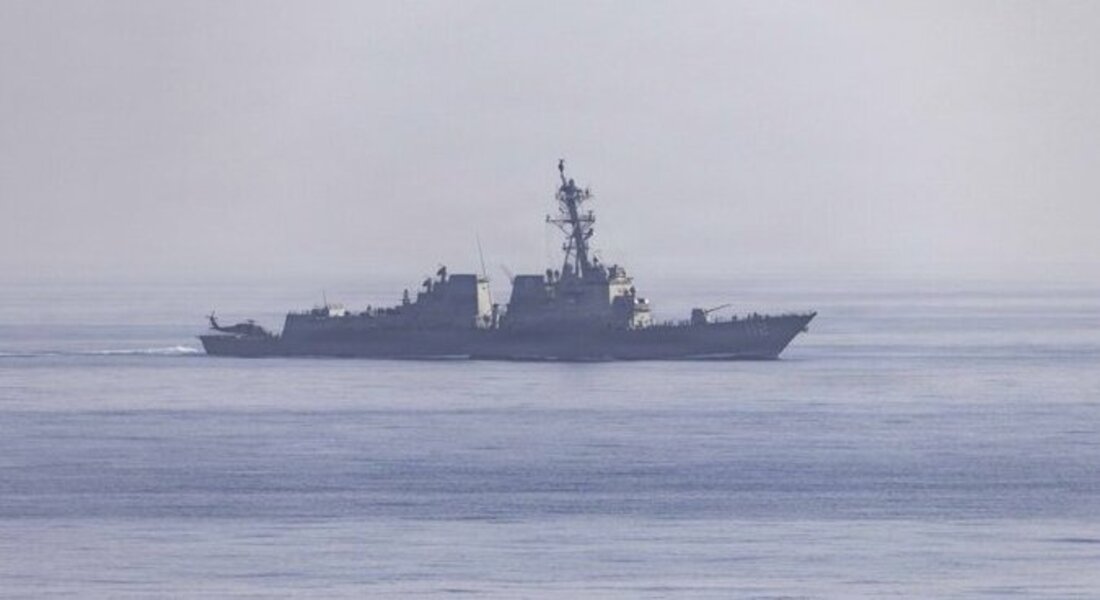
In one of the early enforcement actions, a US destroyer intercepted two oil tankers in the Strait of Hormuz and directed them to turn back, according to a US official cited by CBS News. The official added that the vessels were among several merchant ships warned against proceeding toward Iranian ports during the initial phase of the blockade. At the same time, more than 20 other ships not linked to Iran were able to pass safely through the strait.
China has criticised the US blockade of Iranian ports, calling it a “dangerous and irresponsible” move that could further escalate tensions in the region. Speaking at a press briefing, Chinese Foreign Ministry spokesperson Guo Jiakun warned that increased US military deployment alongside the blockade risks undermining an already fragile ceasefire.
Beijing’s concerns came even as a sanctioned Chinese vessel reportedly transited the Strait of Hormuz on Tuesday. The spokesperson also rejected allegations of China supplying weapons to Iran as “completely fabricated.” In a broader diplomatic signal, President Xi Jinping, during meetings with global leaders, cautioned that the international order was at risk of “falling into disarray” and reiterated that China would play a constructive role in promoting stability in the Middle East.
Despite the escalation, US President Donald Trump indicated that the conflict may be nearing an end. In an interview with Fox Business, he said the war was “very close to over” and suggested that Iran was keen to reach an agreement.
Vice President JD Vance also expressed optimism about diplomatic efforts, stating at a public event that negotiations had made “a ton of progress” despite failing to produce a deal. He said the US is pursuing a broader agreement aimed at preventing Iran from developing nuclear weapons and curbing its support for militant groups, while opening pathways for economic recovery.
Pakistan, which hosted the recent round of talks, signalled that diplomatic engagement is far from over. Finance Minister Muhammad Aurangzeb reportedly informed that Islamabad’s leadership remains committed to continuing dialogue between the two sides. He noted that the recent engagement marked the first direct talks between the US and Iran in decades and said efforts are underway to facilitate further discussions. Trump also indicated that a second round of talks could take place within days.
Meanwhile, the regional dimension of the conflict continues to evolve. Following direct talks, Israeli and Lebanese officials signalled a convergence of positions, particularly on limiting the influence of Hezbollah. Israeli Ambassador to the US Yechiel Leiter said both sides were aligned on reducing Hezbollah’s role, while Lebanese Ambassador Nada Hamadeh Moawad emphasised the need for a ceasefire, humanitarian relief, and respect for sovereignty.
The developments highlight a complex phase in the conflict, where military pressure and diplomatic engagement are unfolding simultaneously. While the US projects operational success in enforcing the blockade, the absence of a formal agreement and continuing regional tensions suggest that the situation remains fluid.