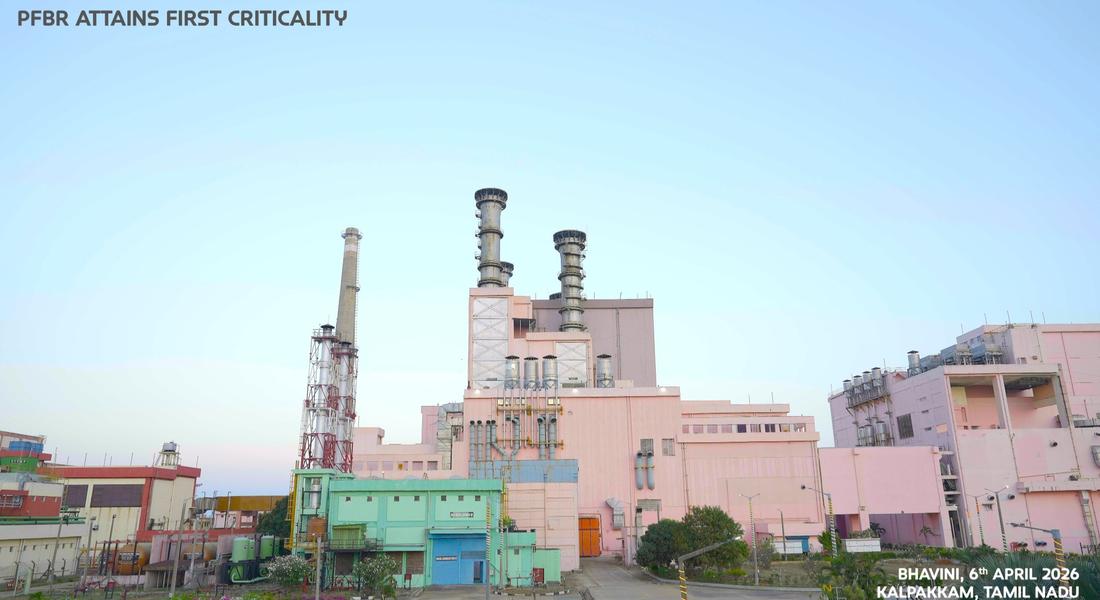

New Delhi: India has marked a significant milestone in its civil nuclear programme as the indigenously developed Prototype Fast Breeder Reactor (PFBR) at Kalpakkam in Tamil Nadu attained first criticality, signalling the start of a controlled nuclear fission chain reaction.
Prime Minister Narendra Modi congratulated the country’s scientists and engineers, calling the achievement a defining step in India’s nuclear journey.
In a post on X, he said the development reflects steady progress in the second stage of India’s three-stage nuclear power programme and highlights the country’s scientific and engineering capabilities.
Today, India takes a defining step in its civil nuclear journey, advancing the second stage of its nuclear programme.
— Narendra Modi (@narendramodi) April 6, 2026
The indigenously designed and built Prototype Fast Breeder Reactor at Kalpakkam has attained criticality.
This advanced reactor, capable of producing more fuel…
The 500 MWe PFBR has been designed and built by Bharatiya Nabhikiya Vidyut Nigam Limited. The reactor is capable of producing more fuel than it consumes, making it a key component in India’s long-term nuclear energy strategy, particularly given the country’s limited uranium and abundant thorium reserves.
The milestone was achieved in the presence of Ajit Kumar Mohanty, the Chairman of the Atomic Energy Commission and the Secretary of the Department of Atomic Energy (DAE).
In a video message, he described the development as a historic step in the peaceful use of atomic energy. He said it marks India’s entry into the second stage of the nuclear programme envisioned by Homi Jehangir Bhabha.
Dr Mohanty noted that the PFBR uses fuel derived from reprocessed spent fuel from first-stage pressurised heavy water reactors. The reactor will also enable recycling of spent fuel, helping close the second-stage fuel cycle and paving the way for utilisation of India’s thorium reserves in the third stage.
“The prototype first breeder reactor utilizes fission material recovered from the reprocessing of spent fuel from first-stage pressurized heavy water reactors. The prototype first breeder reactor will produce more fuel than it consumes. The spent fuel generated in the prototype first breeder reactor will, in turn, be processed and recycled back into the reactor, thereby enabling closure of the second stage fuel cycle,” Mohanty said in the message.
The development is expected to strengthen India’s clean energy roadmap and support its commitment to achieving net-zero emissions by 2070.