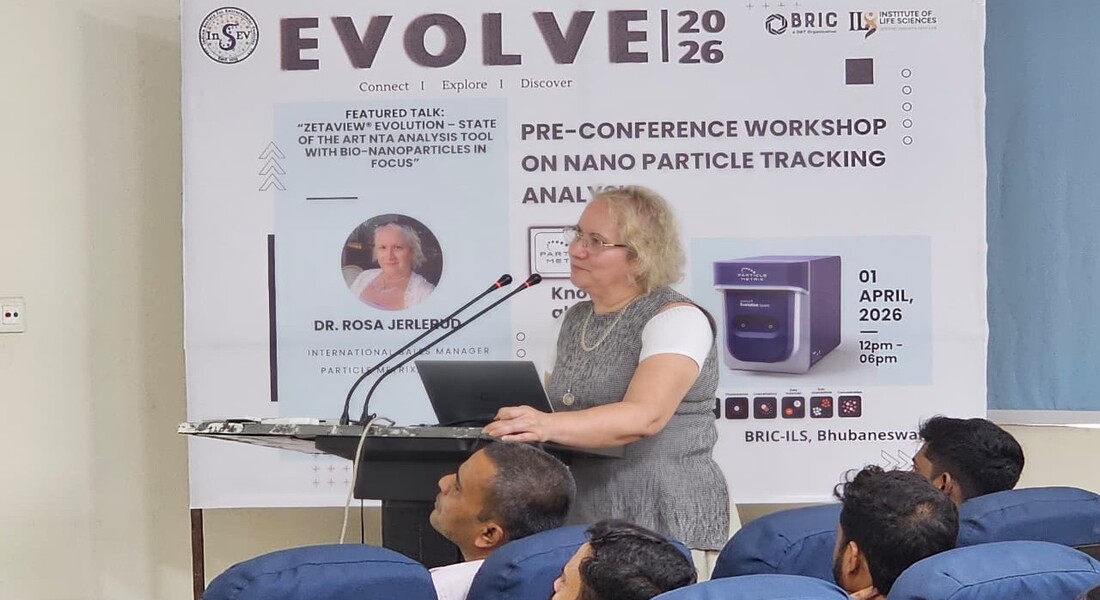

Bhubaneswar: The Institute of Life Sciences (ILS) hosted an international conference from April 2 to 4 in Bhubaneswar, bringing together scientists from India and abroad to examine the role of extracellular vesicles in disease diagnosis and treatment.
Held under the aegis of the Indian Society for Extracellular Vesicles, the conference titled “EVOLVE-2026” saw participation from 180 delegates representing 62 institutions across India. Researchers from countries including France, Germany, Sweden, the UAE, and the USA also attended.
Extracellular vesicles are microscopic, membrane-bound particles released by cells. They play a key role in communication within the body by carrying proteins, lipids, and genetic material between cells, according to an official statement.
The conference focused on the expanding role of extracellular vesicles in both communicable and non-communicable diseases. Researchers discussed their involvement in bacterial and viral infections, as well as conditions such as cancer, neurological disorders, including Parkinson’s disease, and pulmonary fibrosis.
A major area of discussion was the use of extracellular vesicles in advanced therapies. Scientists highlighted their potential as drug delivery systems and their application in tissue regeneration. Particular attention was given to their role in bone repair, especially in cases linked to osteoporosis and bone cancers.
The event also highlighted the growing interest among start-ups in this field. Several Indian start-ups working on therapeutic and diagnostic applications of extracellular vesicles participated. Start-ups from Odisha involved in developing research reagents were also represented.
One such initiative, PolyOrbit, founded by ILS scientist Dr Mamoni Dash, is working on the use of extracellular vesicles and biomaterials for bone repair.
Dr Debasis Dash, Director, ILS, and Prof Sujata Mohanty, President of InSEV, stated that the conference is expected to support the growth of such emerging start-ups and strengthen research collaboration in this domain.
The Indian Society for Extracellular Vesicles provides a platform for researchers, clinicians, and industry experts to collaborate and exchange ideas. As an affiliate of the International Society for Extracellular Vesicles through the Global EV Network, it contributes to advancing India’s presence in this specialised area of research.