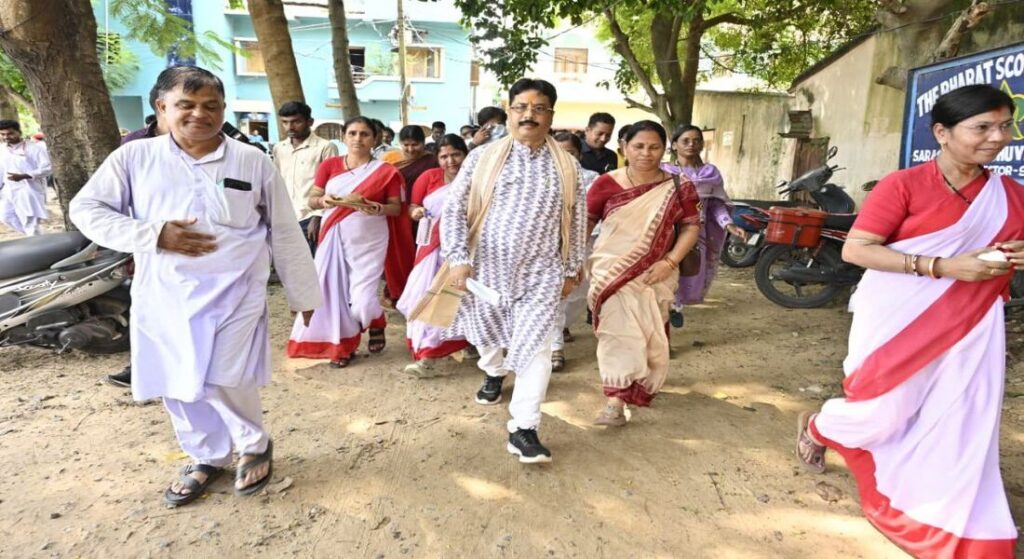
New Delhi: A pioneering Faecal Sludge Management (FSM) initiative led by a transgender self-help group in Khordha district was spotlighted on Tuesday during a national virtual review hosted by the Ministry of Jal Shakti. The group oversees daily operations and upkeep of the district’s Faecal Sludge Treatment Plant (FSTP), managing safe collection, transport, treatment and reuse of sludge. Officials said the model illustrates how community-driven sanitation systems can be both effective and inclusive while generating dignified livelihoods for groups often pushed to the margins.
By placing ownership with a transgender collective, the initiative demonstrates how locally rooted enterprises can widen access to essential services and strengthen social and economic inclusion.
The Khordha effort was one of several community-centered examples shared during the ministry’s online interaction with states and districts on FSM under the Swachh Bharat Mission (Grameen). The session, held on Tuesday, aimed to highlight FSM approaches that go beyond toilet construction and fortify capacities across the full sanitation value chain, according to an official statement.
Union Jal Shakti Minister C.R. Paatil led the engagement, joined by Minister of State V. Somanna, senior officials from the Department of Drinking Water and Sanitation, State Mission Directors, district collectors, members of Panchayati Raj institutions and self-help group representatives.
Participants from Gujarat, Sikkim, Madhya Pradesh, Karnataka, Odisha, Ladakh and Tripura presented a range of scalable practices, including decentralised treatment, community-led operations, rural–urban linkages and systems designed to ensure long-term operations and maintenance of treatment facilities. Several districts reported that FSM efforts have not only elevated rural sanitation outcomes but also created local employment opportunities.
Officials said that sharing such working models will help districts build stronger, more sustainable sanitation systems as the mission expands its focus on safe handling, treatment and reuse of faecal waste across rural India.