At IndiaVerve, we go beyond the noise to bring you meaningful stories of change, resilience and progress—from India to the world stage. Our mission is to bring readers credible, wide-ranging coverage across politics, business, sports, culture, society and more.

Modi, Netanyahu discuss ties, peace efforts in West Asia

New Delhi: Prime Minister Narendra Modi held a phone conversation on Monday with his Israeli counterpart Benjamin Netanyahu.

During the call, both leaders exchanged New Year greetings and extended their wishes for peace and prosperity to the citizens of India and Israel.

Modi and Netanyahu discussed areas of co-operation and agreed to push forward the India–Israel strategic partnership in 2026, describing it as one built on democratic values, confidence, and shared goals, according to an official statement.

In a post on X, the PM said: “We also exchanged views on the regional situation and reaffirmed our shared resolve to fight terrorism with greater determination.”

Netanyahu updated the Indian PM on the progress of the Gaza Peace Plan. Modi conveyed India’s long-standing support for initiatives aimed at securing lasting and equitable peace in West Asia.

They also touched upon broader regional developments and international issues of common concern.

Both sides agreed to maintain regular contact.

Delhi demolition drive turns violent near mosque, five policemen injured

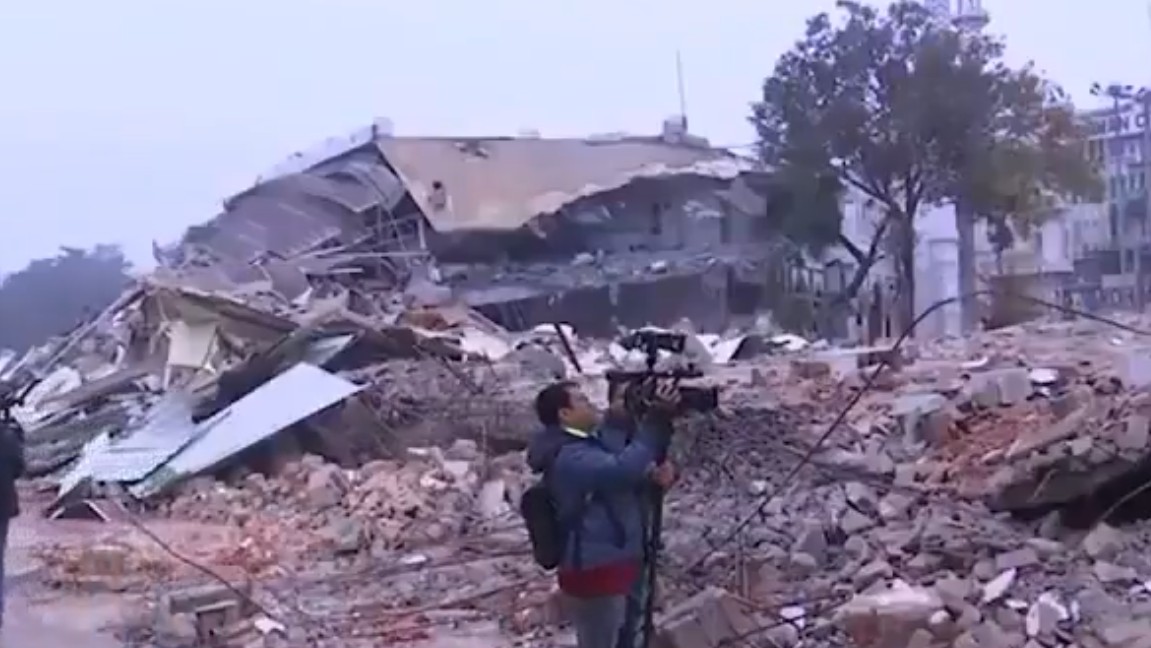
New Delhi: A demolition drive carried out near the century-old Syed Faiz Elahi Mosque in central Delhi’s Ramlila Maidan area turned violent on Wednesday, leaving five Delhi Police personnel injured after a section of locals allegedly pelted stones and glass bottles at officials during the operation.

Police said the Municipal Corporation of Delhi (MCD) was clearing unauthorised structures on land adjoining the mosque and a nearby graveyard at Turkman Gate, in compliance with a Delhi High Court order. While the mosque itself was not touched, tension flared when heavy machinery arrived at the site.

According to Deputy Commissioner of Police (Central) Nidhin Valsan, police had earlier held discussions with local residents to explain that the action was legally mandated and said cooperation was initially smooth. However, a crowd of around 100–150 people later gathered as bulldozers moved in, and a small group allegedly began stone-pelting. Tear gas shells were used to disperse the crowd and restore order.

Police detained five people and registered an FIR against unidentified persons under sections relating to rioting, assault on public servants and obstructing government duty. Officials said 20–25 people were directly involved in the violence, and further identification is underway. Investigators are also examining whether the unrest was pre-planned.

The MCD said the demolition was part of a court-mandated anti-encroachment action. Deputy Commissioner Vivek Kumar said around 36,000 square feet of illegal structures were cleared, including a diagnostic centre, a marriage hall and boundary walls declared encroachments. Nearly 30 bulldozers, 50 dumpers and over 300 civic staff were involved in the overnight operation.

Officials stressed that “extensive coordination” meetings had been held in advance with community representatives to maintain peace.

Police said the situation is now fully under control and normalcy has been restored. Further legal action is underway against those involved in violence.

Odisha’s trans-led FSM model shines

New Delhi: A pioneering Faecal Sludge Management (FSM) initiative led by a transgender self-help group in Khordha district was spotlighted on Tuesday during a national virtual review hosted by the Ministry of Jal Shakti. The group oversees daily operations and upkeep of the district’s Faecal Sludge Treatment Plant (FSTP), managing safe collection, transport, treatment and reuse of sludge. Officials said the model illustrates how community-driven sanitation systems can be both effective and inclusive while generating dignified livelihoods for groups often pushed to the margins.

By placing ownership with a transgender collective, the initiative demonstrates how locally rooted enterprises can widen access to essential services and strengthen social and economic inclusion.

The Khordha effort was one of several community-centered examples shared during the ministry’s online interaction with states and districts on FSM under the Swachh Bharat Mission (Grameen). The session, held on Tuesday, aimed to highlight FSM approaches that go beyond toilet construction and fortify capacities across the full sanitation value chain, according to an official statement.

Union Jal Shakti Minister C.R. Paatil led the engagement, joined by Minister of State V. Somanna, senior officials from the Department of Drinking Water and Sanitation, State Mission Directors, district collectors, members of Panchayati Raj institutions and self-help group representatives.

Participants from Gujarat, Sikkim, Madhya Pradesh, Karnataka, Odisha, Ladakh and Tripura presented a range of scalable practices, including decentralised treatment, community-led operations, rural–urban linkages and systems designed to ensure long-term operations and maintenance of treatment facilities. Several districts reported that FSM efforts have not only elevated rural sanitation outcomes but also created local employment opportunities.

Officials said that sharing such working models will help districts build stronger, more sustainable sanitation systems as the mission expands its focus on safe handling, treatment and reuse of faecal waste across rural India.

Sindhu sails into second round on Malaysia Open comeback

Kuala Lumpur: India’s PV Sindhu made a confident comeback to the international circuit, advancing to the women’s singles last-16 at the Malaysia Open Super 1000 on Wednesday.

Competing in her first tournament since a lengthy break for a foot injury, the two-time Olympic medallist showed strong rhythm and control as she overcame Sung Shuo Yun of Chinese Taipei. Sindhu wrapped up the match 21-14, 22-20 in 51 minutes to book her place in the pre-quarter-finals, according to reports.

Sindhu, 30, had pulled out of the closing stretch of last season’s World Tour events to focus on rehabilitation and training. Her performance in the opener suggested the time away has helped put her back on track heading into a packed 2026 season.

Elsewhere, India’s mixed doubles campaign suffered an early setback. Dhruv Kapila and Tanisha Crasto, world No.17, exited in the round of 32 after a tight three-game clash against Americans Presley Smith and Jennie Gai. The higher-ranked Indian pair fought back to take the second game but eventually slipped 15-21, 21-18, 15-21 after 56 minutes.

All eyes now turn to the men’s doubles court, where world-renowned duo Chirag Shetty and Satwiksairaj Rankireddy are scheduled to open their campaign later in the day against Yang Po-Hsuan and Lee Jhe-Hue of Chinese Taipei.

European leaders affirm Greenland’s status

Copenhagen: A group of top European leaders issued a joint declaration on Tuesday, underscoring Greenland’s strategic importance to Arctic and transatlantic security, while reaffirming that decisions about the territory rest solely with Denmark and the people of Greenland.

The statement, issued by French President Emmanuel Macron, German Chancellor Friedrich Merz, Italian Prime Minister Giorgia Meloni, Polish Prime Minister Donald Tusk, Spanish Prime Minister Pedro Sánchez, UK Prime Minister Keir Starmer, and Danish Prime Minister Mette Frederiksen, placed the Arctic firmly at the centre of Europe’s security priorities. The leaders stressed that collective action through NATO is vital to protecting the region.

The declaration highlighted that the Arctic has become a key operational focus for the alliance, with European members expanding their presence, capabilities, and investments to deter potential threats. Denmark, including Greenland, forms an integral part of NATO territory.

The leaders emphasised that safeguarding the region must align with international law, particularly the UN Charter’s principles of territorial integrity, sovereignty, and respect for established borders. The statement described these rules as universal commitments that Europe remains determined to uphold.

The US was singled out as an essential partner, both as a NATO ally and under the longstanding 1951 defence pact governing American military cooperation with the Kingdom of Denmark.

Reaffirming Greenland’s political status, the leaders stated unequivocally that its future rests in the hands of its own people. They stressed that any decision or policy related to Greenland is the exclusive responsibility of Denmark and Greenland.

Cavity-causing mouth germ linked to Parkinson’s risk, study finds

A common oral bacterium best known for causing tooth decay may also be quietly damaging the brain and increasing the risk of Parkinson’s disease, according to new scientific research from South Korea.

The findings come from a collaborative study led by scientists at Pohang University of Science and Technology (POSTECH), Sungkyunkwan University School of Medicine and Seoul National University, shed light on how microbes in the mouth — once they reach the gut — may trigger inflammation and nerve damage associated with Parkinson’s.

Parkinson’s disease is one of the world’s most common neurodegenerative disorders, affecting up to 2 percent of people over 65. While earlier studies have suggested that gut bacteria play a role, scientists have long struggled to identify which microbes are involved — and how they influence the brain.

The study published in the journal Nature Communications identifies a familiar suspect: Streptococcus mutans, the bacterium responsible for dental caries (cavities). Researchers found that Parkinson’s patients had higher levels of this bacterium in their gut. More importantly, the microbe produces a compound called imidazole propionate (ImP) that can enter the bloodstream and travel to the brain.

Animal experiments showed what happened next. When mice were exposed to the bacterium — or to gut microbes engineered to produce the same chemicals — ImP levels rose in their blood and brain. Over time, the mice developed key features seen in Parkinson’s disease: loss of dopamine-producing brain cells; increased brain inflammation; movement difficulties; higher accumulation of alpha-synuclein protein.

Researchers were also able to block the damage by shutting down a specific brain-signalling pathway known as mTORC1, suggesting a potential new avenue for treatment.

“Our study provides a mechanistic understanding of how oral microbes in the gut can influence the brain,” said Professor Ara Koh of POSTECH, one of the study’s lead authors. “It highlights the potential of targeting the gut microbiota as a therapeutic strategy.”

The research team says the findings strengthen the idea that Parkinson’s may begin in the gut years before symptoms appear — and that preventive strategies might one day include strengthening oral and digestive health.

While further work is needed to confirm the role of this bacterium in humans, neurologists say the study adds to a growing body of evidence linking lifestyle, microbes and long-term brain health.

And for now, the takeaway may sound surprisingly simple: good oral hygiene could be good for your brain too.

Trump says Venezuela to turn over up to 50 million barrels of oil to US

US President Donald Trump has said that Venezuela’s interim leadership will transfer between 30 and 50 million barrels of crude oil to the United States, declaring that the proceeds from the sales will be handled directly by his administration “to benefit the people of both countries.”

In a social media post on January 6, Trump said the oil would be sold at prevailing global prices and claimed the US would oversee how the revenue is used following last week’s dramatic American military operation in Caracas that led to the detention of Venezuelan President Nicolás Maduro. Maduro was later flown to New York to face federal drug-trafficking charges and has pleaded not guilty in court.

“We built Venezuela oil industry with American talent, drive and skill,” Trump was quoted as saying by the USAToday.com. “And the socialist regime stole it from us during those previous administrations, and they stole it through force. This constituted one of the largest thefts of American property in the history of our country.”

Since the raid, former vice president Delcy Rodríguez has been sworn in as interim president in Caracas, while Washington has stepped up engagement with the new administration. Trump has repeatedly highlighted Venezuela’s vast energy reserves — the largest proven oil resources in the world — and has framed the planned oil transfer as part of broader efforts to stabilise the country and reshape bilateral ties.

The president also said the crude would be transported by sea directly to US ports, adding that Energy Secretary Chris Wright is coordinating discussions with oil industry executives on logistics and storage. Only one major American oil company — Chevron — continues to operate in Venezuela after years of political turmoil, sanctions and state control weakened the sector.

Trump has previously argued that Venezuela’s oil assets were effectively seized from American companies under earlier governments in Caracas, a characterisation disputed by some international energy experts. Even so, the oil-for-revenue plan marks one of the most significant interventions by Washington in Venezuela’s economy in recent years and comes amid heightened geopolitical tensions following Maduro’s arrest.

Govt bans strikes in hospitals for six months

Bhubaneswar: The government on Tuesday imposed a six-month ban on strikes by medical and support staff across all state-run health facilities, citing the need to ensure uninterrupted healthcare services.

An order issued by the Home (Special Section) Department stated that stoppage of work by doctors, nursing staff, pharmacists, paramedics, laboratory technicians, and Class-III & Class-IV employees, including contractual workers, could disrupt essential medical care across the state.

The notification covers all government-run hospitals and dispensaries, including district headquarters hospitals, sub-divisional facilities, area hospitals, and community health centres. The restriction also applies to municipal and autonomous institutions receiving state support, such as medical colleges, the Acharya Harihar Regional Cancer Centre,the Regional Spinal Injury Centre, police hospitals, and jail hospitals.

The directive was issued by invoking powers under Section 3 and Section 2 of the Odisha Essential Services (Maintenance) Act, 1988, under which the state can prohibit strikes in vital services to prevent disruption.

The order will remain in force for six months from the date of issue and has been forwarded for publication in the Odisha Gazette. Officials have been instructed to ensure the wide circulation of the notification.