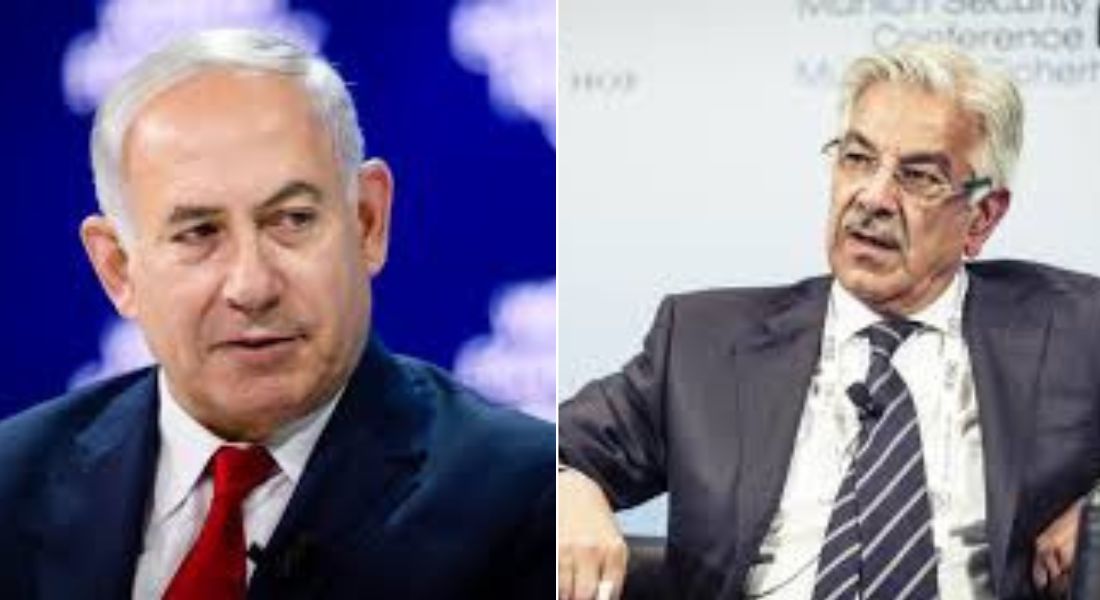

New Delhi: Diplomatic tensions between Pakistan and Israel escalated sharply after Pakistan’s Defence Minister Khawaja Asif criticised Israel’s military actions in Lebanon, prompting strong reactions from Israeli leadership ahead of likely ceasefire negotiations in Islamabad this week.
In a social media post that was later deleted, Asif described Israel as “evil” and a “curse for humanity” while referring to ongoing strikes in Lebanon amid a fragile US-Iran ceasefire. “Innocent citizens are being killed by Israel, first Gaza, then Iran and now Lebanon, bloodletting continues unabated. “I hope and pray that the people who created this cancerous state on Palestinian land to get rid of European Jews [sic] burn in hell,” Asif wrote.
The Prime Minister's Office:
— Prime Minister of Israel (@IsraeliPM) April 9, 2026
Pakistan Defence Minister’s call for Israel’s annihilation is outrageous. This is not a statement that can be tolerated from any government, especially not from one that claims to be a neutral arbiter for peace.
Israel Prime Minister Benjamin Netanyahu condemned the remarks, calling them “outrageous” and saying such statements “cannot be tolerated from any government, especially not from one that claims to be a neutral arbiter for peace.” Israel’s Foreign Minister Gideon Sa’ar also criticised the comments, terming them “blatant antisemitic” rhetoric and warning against language that implies the destruction of Israel.
The exchange marks a rare direct confrontation between the two countries, which do not maintain formal diplomatic relations. Israel has also expressed scepticism over Pakistan’s role as a mediator in ongoing West Asia peace efforts.
The controversy comes against the backdrop of continued Israeli military operations in Lebanon, which have intensified despite a two-week ceasefire agreement between the United States and Iran. Israel has maintained that the ceasefire does not extend to Lebanon, with Netanyahu stating that operations against Hezbollah are separate from the Iran truce.
This position contrasts with claims by Pakistan Prime Minister Shehbaz Sharif, who had indicated that the ceasefire should apply across the region, including Lebanon. Iran has backed Pakistan’s interpretation, while the United States has aligned with Israel in excluding Lebanon from the agreement.
Amid mounting international pressure, Netanyahu has said Israel is willing to begin negotiations with Lebanon “as soon as possible,” focusing on disarming Hezbollah and working towards a broader peace arrangement.
“In light of Lebanon’s repeated appeals to open direct negotiations with Israel, I instructed the cabinet yesterday to begin direct negotiations with Lebanon as soon as possible,” Netanyahu was quoted as saying said in a statement by The Times of Israel.
However, differences remain, with Lebanon reportedly seeking a ceasefire before talks, while Israel has insisted negotiations can proceed alongside ongoing military operations.
The situation has also cast uncertainty over planned diplomatic engagements between the US and Iran. Iranian media reports suggest Tehran may reconsider upcoming talks in Islamabad unless Israeli strikes on Lebanon are halted.
The latest developments underscore the fragility of the current ceasefire framework and highlight widening geopolitical divisions, even as efforts continue to prevent further escalation in the region.