At IndiaVerve, we go beyond the noise to bring you meaningful stories of change, resilience and progress—from India to the world stage. Our mission is to bring readers credible, wide-ranging coverage across politics, business, sports, culture, society and more.

Odisha emerges as frontrunner in healthier rice push

Bhubaneswar: Odisha is moving to the forefront of India’s push for healthier rice varieties, backed by its strong research ecosystem, expanding seed initiatives, and proactive state support, as underlined at a two-day national workshop in Bhubaneswar that began on Monday.

Organised by the International Rice Research Institute (IRRI) in collaboration with the Department of Agriculture & Farmers’ Empowerment, the workshop focused on positioning biofortified and low-glycemic-index rice – including high-zinc, iron-rich and protein-enhanced varieties – as mainstream staples for consumers and markets.

With nearly 11 million tonnes of annual paddy production, Odisha is increasingly seen as a launchpad for scaling nutrition-oriented crops. Participants highlighted progress already underway through participatory varietal selection, farmer-managed on-farm trials, community seed multiplication, and structured value-chain development in partnership with state agencies and scientific institutions.

Speakers noted that Odisha’s institutional strength and policy backing are creating a model other states may emulate. Deliberations centred on linking scientific advances to seed access, ensuring price and market incentives for growers, leveraging farmer-producer organisations, and enabling public procurement of healthier grains.

Experts from ICAR–Central Rice Research Institute, ICAR–Indian Institute of Rice Research, IRRI, Odisha State Seed Corporation, National Seeds Corporation, Agricultural and Processed Food Products Export Development Authority, NABARD, International Food Policy Research Institute, AIIMS Bhubaneswar, ICMR–National Institute of Nutrition, private seed companies, agri-food enterprises, farmer-producer organizations, and civil society organizations contributed insights and field experiences.

Panel members unanimously agreed that consumer awareness will determine whether specialty rice reaches true market scale and stressed that the government must take a proactive lead in driving communication, education, and demand creation across districts.

According to Dr Swati Nayak, Scientist and South Asia Lead for Seed Systems at IRRI, the workshop delivered a practical roadmap for scaling specialty rice, along with policy recommendations, a seed scaling plan, and a market development framework to support sustainable adoption. Strengthened collaboration among government agencies, research institutions, seed corporations, private players, and farmer institutions was identified as a key outcome.

Senior IRRI leadership reiterated that scaling healthier rice strengthens not only nutrition goals but also farmer livelihoods, climate resilience, and informed consumer choice.

Dr. Michael Quinn, Director, Rice Breeding Innovation, IRRI, said that through this unique workshop on positioning and scaling healthier rice, we come together as a collective – government, research institutions, and the One Rice Breeding and Scaling Network – because only the convergence of multidisciplinary expertise can deliver a truly holistic vision.

Dr. Sudhanshu Singh, Director, IRRI South Asia Regional Centre, noted that with a strong focus on variety evaluation, seed system development, and accelerated seed linkages, this is a well-conceived and well-articulated effort.

On the other hand, Dr. R. M. Sundaram, Director, ICAR–Indian Institute of Rice Research, said that the transition from high-yielding rice to healthier and specialty rice marks the next major leap in Indian rice science. “Through science, robust seed systems, and policy engagement, we can scale biofortified rice and make healthier rice the norm – ensuring healthy people, prosperous farmers, and a stronger nation,” he noted.

With momentum building across research labs, farms, markets, and policy circles, Odisha is now positioned to lead India’s transition toward rice that delivers more nutrition and economic opportunity.

ISRO’s PSLV-C62 faces anomaly during third stage

Sriharikota: The country’s first space mission of 2026 ran into difficulty on Monday when the PSLV-C62 rocket experienced a flight anomaly near the end of its third stage, preventing it from completing its planned orbit insertion.

Launched from the Satish Dhawan Space Centre in Sriharikota, the four-stage Polar Satellite Launch Vehicle lifted off on schedule, carrying EOS-N1/Anvesha, an Earth observation payload, along with 15 co-passenger satellites for domestic and international customers.

In a post on X, ISRO announced shortly after liftoff that the vehicle suffered a deviation during the PS3 phase, disrupting the ascent sequence.

While the first and second stages appeared to perform as intended, the guidance error after the third stage meant the mission could not proceed to its final orbital injection burn.

The loss marks an unusual setback for the PSLV family, which has built a reputation as one of ISRO’s most reliable launch platforms. The vehicle has played a central role in the country’s space programme for three decades, putting satellites into Earth observation, navigation, and scientific orbits, in addition to launching commercial spacecraft for global customers.

ISRO Chairman V. Narayanan said the focus now is on a full technical assessment, with findings to guide future missions. Senior officials indicated that additional details would be shared after the initial failure analysis is completed.

Despite the anomaly, ISRO maintains a robust launch calendar.

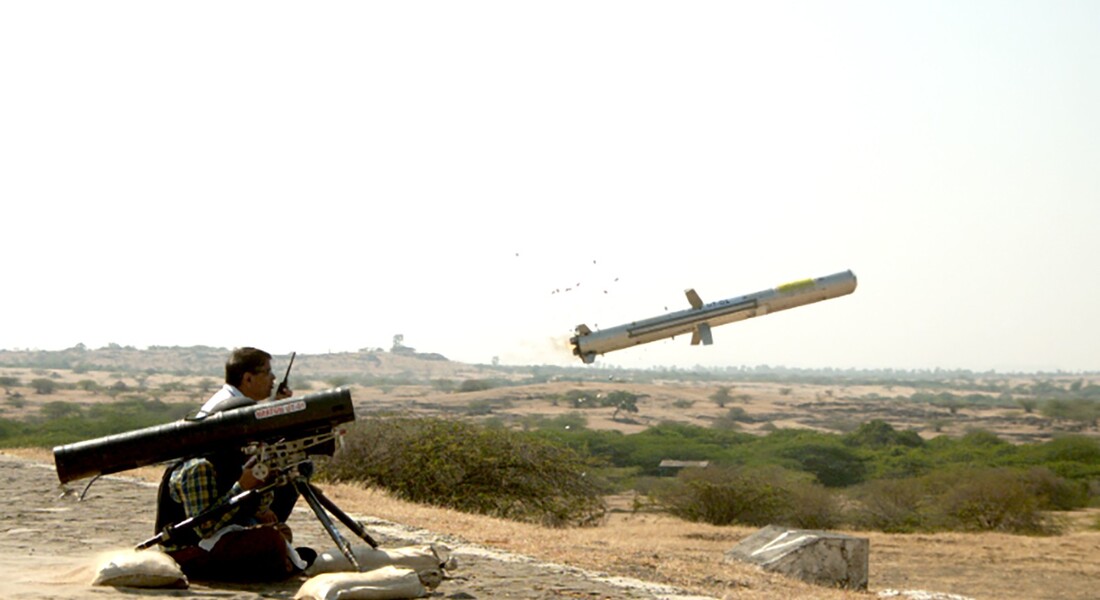
India successfully tests third-generation MPATGM with top-attack capability

Hyderabad: India successfully carried out a test of its third-generation Man Portable Anti-Tank Guided Missile (MPATGM) on Sunday, featuring fire-and-forget and top-attack capabilities. The missile struck a moving target at the KK Ranges in Ahilya Nagar, Maharashtra, the Defence Research & Development Laboratory (DRDL) of DRDO confirmed.

The MPATGM has been fully designed in India and incorporates key homegrown technologies, including an Imaging Infrared homing seeker, electric control actuation, fire control and sighting systems, tandem warhead, and propulsion module. Several DRDO laboratories contributed to the development effort – Research Centre Imarat in Hyderabad, Terminal Ballistics Research Laboratory in Chandigarh, High Energy Materials Research Laboratory in Pune, and Instruments Research & Development Establishment in Dehradun, according to an official statement.

The trial used a thermal target system designed by the Defence Laboratory, Jodhpur, to mimic an armoured vehicle. The missile’s seeker supports both day and night engagements, while its warhead has been developed to counter modern battle tanks. Bharat Dynamics Limited and Bharat Electronics Limited are supporting the programme as development-cum-production partners. The weapon can be launched from a tripod or from a vehicle-mounted platform.

In a post on X, Defence Minister Rajnath Singh applauded DRDO and industry partners for the milestone, calling it a significant step towards strengthening self-reliance in defence manufacturing.

DRDO Chairman and Secretary, Department of Defence R&D, Dr Samir V Kamat, also congratulated the team and said the successful mission clears the path for induction of the MPATGM into service with the Indian Army.

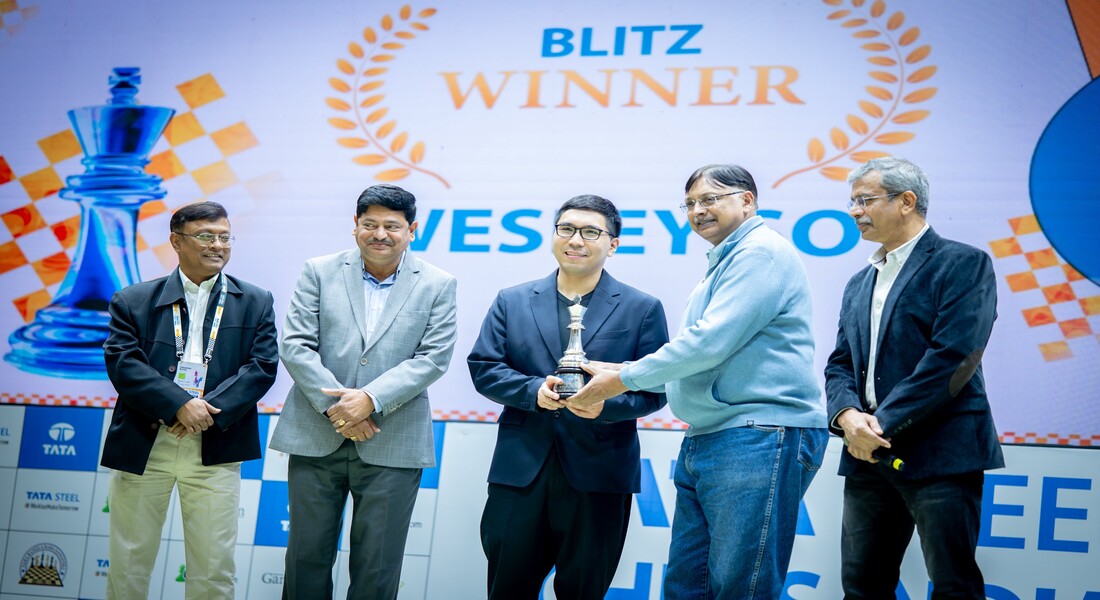
Wesley So, Carissa Yip clinch Tata Steel Chess India Blitz titles

Kolkata: American Grandmaster Wesley So, on Sunday, wrapped up the Open title at the Tata Steel Chess India Blitz with a round still to play, displaying calm control throughout the event. India’s Nihal Sarin pushed him closest and claimed second place, while Arjun Erigaisi joined him on 11 points but settled for third on tiebreaks.

The day featured sharp swings. So punished Vidit Gujrathi after a costly rook oversight, and Wei Yi converted his material advantage against Viswanathan Anand, who finished eighth on eight points. Praggnanandhaa overpowered Hans Niemann with active play, and Sarin secured a vital win over Anand to stay in the hunt, according to reports.

Despite a late scare – blundering an exchange against Aravindh Chithambaram – So always remained just ahead of the field and sealed his triumph with a solid half-point against Niemann, even though he slipped in the final round.

The Women’s tournament was equally tense. Vaishali Rameshbabu overcame Stavroula Tsolakidou, who ultimately placed third, while Aleksandra Goryachkina mounted a strong surge that included a memorable four-queen battle against Nana Dzagnidze.

Vantika Agrawal stole the spotlight late by stringing together four consecutive victories, among them a crucial win over American Carissa Yip, dragging the title race into a playoff.

In the shoot-out, Yip edged ahead by taking the opening game, then steered a long and technical second encounter to a draw – enough to claim the Women’s Blitz crown, with Vantika finishing runner-up.

Modi welcomes German Chancellor Merz, talks and culture mark historic India visit

Ahmedabad: Prime Minister Narendra Modi on Monday rolled out a uniquely Indian welcome for German Chancellor Friedrich Merz, blending diplomacy with culture as the two leaders paid homage to Mahatma Gandhi at Sabarmati Ashram, flew kites on the banks of the Sabarmati River, and held wide-ranging talks aimed at deepening the India–Germany Strategic Partnership.

Chancellor Merz is on his first official visit to India since assuming office, a trip that coincides with 75 years of diplomatic relations between the two countries and 25 years of their strategic partnership. He arrived in Ahmedabad earlier in the day and was received by Gujarat Governor Acharya Devvrat before being escorted to the Sabarmati Ashram, where both leaders offered floral tributes to Mahatma Gandhi and viewed an exhibition on his life and legacy. Merz also signed the visitors’ book at the historic site.

From the Ashram, the leaders moved to the Sabarmati Riverfront to jointly inaugurate the International Kite Festival, a signature Uttarayan celebration in Gujarat. Amid vibrant folk performances and cheering crowds, Modi and Merz donned traditional scarves and joined the festivities by flying kites. The Prime Minister was seen holding a specially designed kite carrying the message “Bharat – Vasudhaiva Kutumbakam,” reflecting India’s philosophy of the world as one family. Spectators waved Indian and German flags, underscoring the growing people-to-people connect between the two nations.

In a post on X, Modi described Sabarmati Ashram as “a powerful reminder of Mahatma Gandhi’s ideals which have given strength to countless people around the world. In Ahmedabad this morning, went to Sabarmati Ashram with the Chancellor of Germany, Mr. Friedrich Merz.”

The cultural engagements were followed by delegation-level talks at the Mahatma Mandir Convention Centre in Gandhinagar. Modi and Merz reviewed progress under the strategic partnership and explored ways to expand cooperation in trade and investment, technology, education, skilling and mobility, defence and security, science and innovation, and green and sustainable development. Regional and global issues of mutual interest also featured in the discussions.

Senior Indian officials, including External Affairs Minister S. Jaishankar, National Security Advisor Ajit Doval and Foreign Secretary Vikram Misri, participated in the meeting, reflecting the importance New Delhi attaches to the relationship with Berlin.

The Ministry of External Affairs said the visit builds on sustained high-level engagement between the two countries and offers an opportunity to reaffirm a shared vision for a forward-looking partnership that benefits both nations and contributes positively to global stability.

Odisha transport minister inspects Rourkela plane crash site, assures probe and safety measures

Rourkela: Odisha Transport Minister Bibhuti Bhusan Jena on Monday visited the site of the emergency crash-landing of a chartered aircraft near Jalda in Rourkela and assured that a thorough investigation is underway to determine the cause of the incident and prevent similar occurrences in the future.

Calling the episode “unfortunate”, the Minister said the state government remains committed to providing the best possible medical care to the injured passengers and crew, while also strengthening aviation safety protocols. “We are deeply concerned about why this incident occurred. A detailed inquiry is being conducted so that such situations are not repeated,” he said after reviewing the site.

In a post on X, Jena shared details of his visit and praised the swift response that helped avert a tragedy. “I reviewed the condition of the damaged aircraft and discussed the investigation process with the officials present. I also thanked the local residents, especially health workers, whose prompt assistance and efforts helped save precious lives,” he wrote.

He also met the passengers and pilots who were injured in the aircraft accident and are undergoing treatment at JP Hospital, and enquired about their health. He discussed with hospital authorities and assured that Odisha government will extend every possible assistance to ensure the injured recover quickly and return home in good health.

He also informed that discussions would be held with senior departmental officials to closely examine the circumstances that forced the aircraft to make an emergency landing.

Earlier, teams from the Directorate General of Civil Aviation (DGCA) and the Aircraft Accident Investigation Bureau (AAIB) carried out a detailed inspection of the site. Officials from Delhi, Kolkata and Bhubaneswar arrived over the weekend and conducted a ground-level assessment as part of the statutory probe.

On Sunday, Odisha Transport Secretary Usha Padhee also visited the area, holding extensive discussions with technical experts on various aspects of the incident. She later went to the hospital to enquire about the condition of the injured passengers and crew.

All six persons injured in the crash-landing remain under medical observation and are reported to be stable. State authorities have said they are extending full cooperation to central aviation agencies as the investigation progresses.

NHAI Sets Four Guinness Records on Bengaluru–Kadapa–Vijayawada Highway Corridor

New Delhi: The National Highways Authority of India (NHAI) has created four Guinness World Records on the under-construction Bengaluru–Kadapa–Vijayawada Economic Corridor, marking a landmark moment in India’s highway engineering and execution capabilities.

Working with concessionaire Rajpath Infracon Private Limited, NHAI achieved the records through large-scale, high-speed bituminous paving operations in Andhra Pradesh. On January 6, two global records were set near Puttaparthi — one for the longest continuous laying of bituminous concrete, covering 28.89 lane kilometres in 24 hours, and another for laying the highest quantity of bituminous concrete, totalling 10,655 metric tonnes within a day.

The momentum continued on January 11 with two more records: continuous laying of 57,500 metric tonnes of bituminous concrete and continuous paving of 156 lane kilometres, equivalent to a three-lane, 52-km stretch. The latter surpassed the previous world record of 84.4 lane kilometres.

The feat, according to an official release, was executed across Package-2 and Package-3 of the corridor using advanced construction machinery, including 70 tippers, five hot-mix plants, a paver and 17 rollers. Quality assurance was carried out with support from institutions such as IIT Bombay and original equipment manufacturers, ensuring adherence to global standards of safety and durability.

The 343-km, access-controlled six-lane corridor is designed for high-speed and safe travel, featuring 17 interchanges, 10 wayside amenities, a 5.3-km tunnel and a 21-km stretch passing through forest terrain. Once completed, it will reduce the distance between Bengaluru and Vijayawada by nearly 100 km and cut travel time by about four hours, bringing the journey down to around eight hours.

Beyond faster travel, the corridor is expected to transform regional connectivity by linking Bengaluru with Vijayawada and improving access between Rayalaseema, coastal Andhra Pradesh and the Koparthy Industrial Node. The record-setting construction, NHAI said, reflects its commitment to building globally benchmarked highway infrastructure that supports economic growth and regional development.

Kohli falls short of century, Rahul’s late surge guides India to beat New Zealand in the first ODI

Vadodara: India began their ODI series against New Zealand with a thrilling four-wicket victory here on Sunday, riding on a masterful 93 from Virat Kohli and a nerveless finish by KL Rahul in a tense chase of 301.

Kohli missed out on what would have been his 85th international hundred, but his 91-ball knock, laced with eight boundaries and a six, anchored India’s pursuit and earned him the Player of the Match award. During the innings, the former captain also became the fastest batter in history to reach 28,000 international runs, achieving the milestone in his 624th innings – 20 fewer than Sachin Tendulkar.

India appeared firmly in control with Kohli at the crease, as he stitched together a 118-run stand with Shubman Gill, who made 56, and added 77 with Shreyas Iyer, who scored 49 on his return from injury. However, the match turned dramatically when Kyle Jamieson removed Kohli, Iyer and Ravindra Jadeja in the space of seven deliveries, reducing India from cruising to suddenly scrambling.

With 59 needed off 53 balls and lower-order batters at the crease, the contest swung back in New Zealand’s favour. Harshit Rana played a bold cameo of 29 off 23 balls, easing the pressure, before Rahul took charge. The wicketkeeper-batter remained unbeaten on 29 from 21 deliveries and sealed the match with a decisive over, striking debutant Kristian Clarke for 4, 4 and 6 to finish the chase with six balls to spare.

Earlier, New Zealand posted 300 for 8 after opting to bat. Devon Conway (56) and Henry Nicholls (62) provided a solid opening stand, while Daryl Mitchell anchored the innings with a counter-attacking 84 off 71 balls. India’s seamers kept the scoring in check, with Harshit Rana removing both openers and Mohammed Siraj and Prasidh Krishna chipping in with key wickets. Kuldeep Yadav dismissed the dangerous Glenn Phillips to prevent late acceleration.

Despite promising partnerships, New Zealand struggled to convert starts into a commanding total, leaving India with a chase that seemed manageable until Jamieson’s burst created late drama.

In the end, Rahul’s composure under pressure ensured India crossed the line, giving the hosts a 1-0 lead in the series and a reminder of their depth in crunch moments.

Trump weighs ‘very strong options’ as protests rock Iran

Washington: The United States is considering “very strong options,” including possible military action, in response to the escalating unrest in Iran, President Donald Trump said, signalling a sharp intensification of Washington’s posture as protests continue to shake the country.

Speaking to reporters aboard Air Force One late Sunday, Trump said the US was closely monitoring the situation and that the military was actively assessing potential responses. “We’re looking at it very seriously. The military is looking at it, and we’re looking at some very strong options. We’ll make a determination,” he said. Trump also claimed that Iran’s leadership had reached out to “negotiate” following his warnings and that a meeting was being arranged, but cautioned that “we may have to act before a meeting,” as reported by Al Jazeera.

The remarks come amid intensifying demonstrations across Iran, where anger over economic hardship and political repression has spilled onto the streets. Tehran has sought to frame the unrest as a foreign-backed attempt to destabilise the country, urging citizens to rally behind the state against what it describes as external interference.

Over the weekend, Iranian opposition figures stepped up lobbying efforts in Washington, arguing that the scale of force used against protesters amounted to crimes against humanity. In a letter addressed to Trump, seven prominent Iranian political, civil and cultural personalities urged him to recognise the depth of repression unfolding inside the country. One opposition group warned that demonstrators might only be able to withstand the current level of police and military violence for a few more days.

Raza Pahlavi, the son of the last shah of Iran Mohammad Reza Pahlavi, who claims to have some control over the protests has also appealed for Trump to act. In a post on X he urged Trump to help Iranian people liberate themselves and Make Iran Great Again!

Iranian President Masoud Pezeshkian struck a conciliatory yet defiant tone in a televised address on Sunday, appealing for unity and cautioning against what he described as an external campaign to exploit domestic discontent. He acknowledged that “80 per cent of the protesters have legitimate complaints” but drew a sharp line between peaceful dissent and what he called “rioters and terrorists” who were burning mosques and shops, according to The Guardian. Pezeshkian accused the United States of “using the economy as a weapon to make us bend down” and urged citizens to “stay and back us.”

The unfolding crisis places Iran at the centre of renewed geopolitical tension, with Washington’s rhetoric raising fears of another flashpoint in the Middle East. While Trump has left open the door to talks, his warning that action could precede diplomacy underscores the volatility of the moment, even as Iran’s leadership struggles to balance repression, reform and national cohesion.

Odisha artist Badal Nayak secures 2nd prize at VBYLD

New Delhi: Chief Minister Mohan Charan Majhi on Sunday congratulated Odisha’s young artist Badal Nayak for winning second place in the painting category at the ongoing Viksit Bharat Young Leaders Dialogue (VBYLD) 2026 in New Delhi.

In a post on X, he said: “I wish him continued success and hope he inspires our youth through creativity and dedication.”

The VBYLD, now in its second edition, serves as a national platform aimed at fostering structured engagement between India’s youth and national leadership. The initiative supports the prime minister’s Independence Day call to involve one lakh young people in politics, irrespective of affiliation, and provide them a space to advance ideas for Viksit Bharat.

The 2026 edition, being held from January 9 to 12, has drawn participation from more than 50 lakh youth across the country through multiple tiers. Participants at the national-level championship have emerged from a three-stage merit-driven selection process that includes a digital quiz, an essay competition, and state-level vision presentations, according to an official statement.

This year’s Dialogue expands on the inaugural edition by introducing Design for Bharat and Tech for Viksit Bharat – Hack for a Social Cause, alongside broader thematic engagement and first-time international participation, further enhancing the reach and impact of the programme.