At IndiaVerve, we go beyond the noise to bring you meaningful stories of change, resilience and progress—from India to the world stage. Our mission is to bring readers credible, wide-ranging coverage across politics, business, sports, culture, society and more.

Ministry of Culture wins top honours for ‘Vande Mataram’ at Republic Day parade

New Delhi: The Ministry of Culture secured a double honour at the Republic Day Parade 2026, with its tableau and cultural presentation both winning top awards.

The ministry’s tableau, titled “Vande Mataram – 150 Years Journey”, won the first prize in the category of Best Tableau among Central Ministries and Departments, according to an official release. The tableau traced the 150-year journey of Vande Mataram, highlighting its role in India’s freedom movement and its lasting place in the nation’s identity.

Through strong visual elements and symbolism, the tableau showed how the national song inspired unity and national awakening across generations. It reflected the continued relevance of Vande Mataram in shaping India’s collective consciousness.

The Ministry of Culture also won a Special Prize for its large-scale cultural dance presentation, “Vande Mataram: The Eternal Resonance of Bharat”. The performance was curated by the Sangeet Natak Akademi in collaboration with the North Zone Cultural Centre, Patiala.

The presentation paid tribute to Rashtrarishi Bankim Chandra Chattopadhyay’s iconic composition that became a rallying cry during the freedom struggle. It featured nearly 2,500 artists from all States and Union Territories, bringing together classical, folk and tribal traditions from across the country.

The choreography depicted Bharat’s journey from its spiritual roots to the sacrifices of freedom fighters and the service of the armed forces. Sanskrit chants, music and dynamic formations added depth to the performance, which concluded with a tribute to the Tiranga as a symbol of unity and pride.

The cultural presentation was led by Dr Sandhya Purecha, Chairperson of the Sangeet Natak Akademi, as overall creative director. Music was composed by Oscar-winning composer M M Keeravani, with additional lyrics by Subhas Sehgal. The voice-over was delivered by actor Anupam Kher, choreography by Santosh Nair, and costume design by Sandhya Raman.

The awards marked a significant recognition of India’s cultural heritage and the enduring legacy of Vande Mataram on the national stage.
Indian scientists develop self-charging device that stores solar energy

New Delhi: Indian scientists have developed a new self-charging solar energy device that can capture sunlight and store it at the same time, marking a major step towards simpler and cleaner power systems.

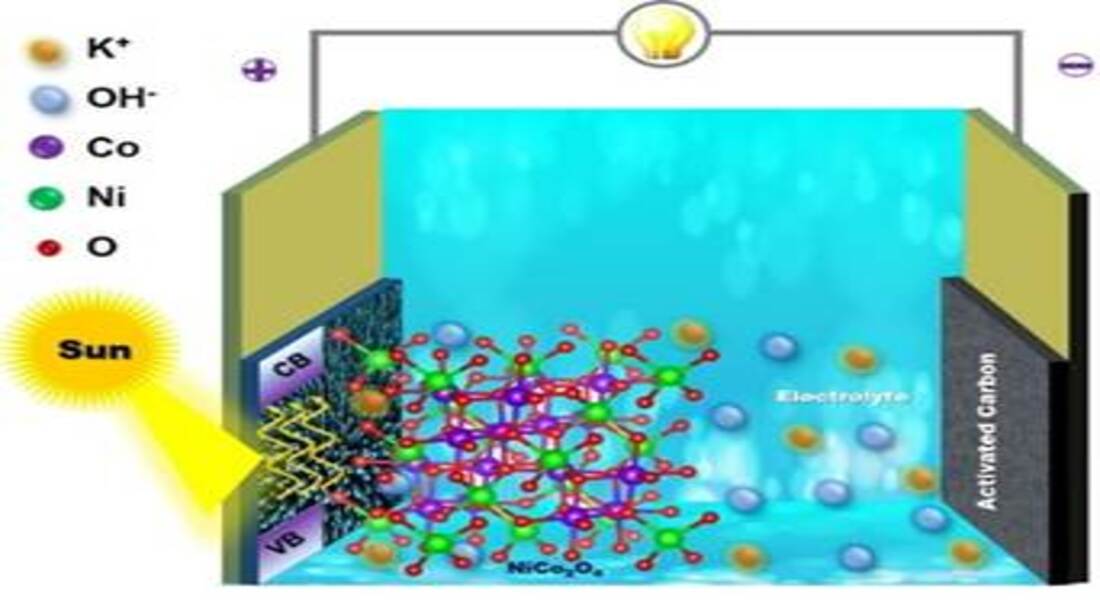
The device, called a photo-capacitor, has been created by researchers at the Centre for Nano and Soft Matter Sciences (CeNS) in Bengaluru, according to an official release. Unlike conventional solar systems that use separate panels and batteries, this single unit performs both energy collection and storage.

Researchers said existing solar setups depend on complex power management electronics to balance energy flow between panels and storage units. This adds cost, increases energy loss, and makes devices bulkier, especially for small and portable applications.

The newly developed photo-capacitor overcomes these challenges by integrating both functions into one compact system. It converts sunlight directly into electrical energy and stores it without the need for external circuitry, according to a Ministry of Science & Technology release.

The team, working under the guidance of Dr Kavita Pandey, used nickel-cobalt oxide nanowires grown on nickel foam through a simple hydrothermal process. These ultra-thin nanowires form a porous three-dimensional network that absorbs light efficiently and stores electric charge at the same time.

Tests showed that the device’s energy storage capacity increased by 54 per cent when exposed to light. Even after 10,000 charge and discharge cycles, it retained 85 per cent of its original capacity, highlighting its durability.

To test real-world use, the scientists built a complete photo-supercapacitor using activated carbon and the nanowire electrode. The device delivered a stable output of 1.2 volts and continued to perform well under different lighting conditions, from indoor light to strong sunlight.

The self-charging solar energy device also showed high stability over repeated photo-charging cycles, indicating it can withstand long-term use. Researchers said this makes it suitable for portable electronics, wearable devices and off-grid power systems.

Theoretical studies conducted alongside experiments revealed why the material performs so well. Nickel substitution in the material reduced the band gap and improved charge movement, enabling faster and more efficient energy storage.

The study, published in the journal Sustainable Energy & Fuels, highlights how combining sunlight capture and storage in a single device could reduce dependence on fossil fuels and traditional batteries.

Scientists believe that with further development, this self-charging solar energy device could support India’s clean energy goals and inspire similar innovations globally.

IOA delegation explores Olympic education partnership with India

New Delhi: India took a key step towards strengthening Olympic education on Friday as a delegation from the International Olympic Academy (IOA) held talks with the Sports Ministry in New Delhi. The discussions focused on building skills, values, and expertise across the country’s growing sports ecosystem.

The IOA delegation was led by its Director, Makis Asimakopoulos, along with Alexandra Karaiskou. They met senior officials of the ministry and the Sports Authority of India, headed by Sports Secretary Hari Ranjan Rao.

During the interaction, the IOA leadership praised India’s long-term sports planning. They expressed interest in supporting Olympic education through structured training and value-based learning programmes, according to an official statement.

The proposed collaboration aims to train coaches, sports science professionals, and physical education teachers. It will focus on Olympism, ethic,s and the broader Olympic movement among young athletes.

Officials discussed joint work with the Indian Olympic Association and the revived National Olympic Academy. The goal is to create India-specific programmes using global best practices.

The IOA delegation also noted India’s growing ambitions in global sports hosting. They welcomed the revival of the National Olympic Academy and expressed readiness for close cooperation with Indian institutions.

The Sports Ministry outlined plans to develop standardised Olympic education curricula. These may include certified courses, masterclasses by international experts, and digital learning platforms.

India may also host a global conclave of National Olympic Academies in the future. Talks are underway for collaboration with the Hellenic Olympic Committee to enable long-term knowledge exchange.

Odisha Parab 2026 opens in Guwahati

New Delhi: Odisha Parab 2026 began in Guwahati on Friday, bringing Odisha’s art, cuisine, and cultural traditions to Assam. Deputy Chief Minister Pravati Parida inaugurated the three-day festival to promote tourism and showcase the state’s heritage beyond its borders.

The event highlights the talent and enterprise of women from four Odisha Self Help Groups. Their Kotpad textiles, Sabai grass handicrafts and traditional Odia food have drawn strong interest from visitors in Assam.

Senior officials from both states attended the inauguration. Odisha Tourism Commissioner-cum-Secretary Balwant Singh and Assam Tourism Development Corporation Managing Director Kumar Padmapani Bora were present at the venue.

Odisha Parab aims to project the State’s tourism potential, creative arts, and culinary diversity. It also seeks to support women entrepreneurs by offering them a wider market and public platform.

The festival is being held at a city hotel in Guwahati from January 30 to February 1. Cultural performances, craft displays, and food stalls form the main attractions of the programme.

In a post on X, Parida said: “Let us come together to encourage and support this inspiring initiative of our women entrepreneurs who are proudly taking Odisha’s identity beyond its borders.”

Govt urges fast consent collection for Jagannath Darshan Yojana

Bhubaneswar: The Jagannath Darshan consent drive has gathered pace after the Odisha Tourism Department asked district collectors to expedite the collection process for the upcoming Shri Jagannath Darshan Yojana (SJDY).

The government plans to launch the new pilgrimage scheme soon, aiming to provide senior citizens and eligible widows with organised opportunities to visit the Jagannath Temple in Puri, according to reports. Under the scheme’s guidelines, people aged 60 to 75 and widows up to 75 years who receive a State or central pension are automatic beneficiaries. However, officials said that submitting a consent form is mandatory to participate in the programme.

In a letter dated January 27, Tourism Director Deepankar Mohapatra wrote to all district collectors stating that consent form collection has not reached satisfactory levels. He said district officials must monitor the process closely and accelerate efforts to meet targets.

Earlier, the Department of Tourism had asked District Social Security Officers to gather consent forms from pensioners on January 15 at the time of pension distribution at the gram panchayat level. However, several districts have lagged in completing this task, prompting the latest reminder from the state government.

Officials said the SJDY aims to select 5,000 beneficiaries in the current financial year (2025–26) and 30,000 in the next year (2026–27). They stressed that collecting consent forms promptly will help finalise the list of participants and ensure smooth implementation of the scheme.

The Department sources highlighted that the pilgrimage programme is intended to offer safe and comfortable travel for beneficiaries. They said the initiative will not only support spiritual fulfilment for elderly residents but also strengthen cultural ties within the state.

The Department has asked collectors, DSSOs, and other officials to take “immediate and necessary action” to complete the consent drive without delay.

Amit Shah highlights Assam development in Dibrugarh

New Delhi: Union Home Minister Amit Shah on Friday highlighted the Centre’s focus on Assam’s economic, infrastructure, and youth-led growth while addressing a public programme in Dibrugarh. He was speaking after laying the foundation stone of the new Assam Legislative Assembly building and inaugurating multiple development projects.

Moreover, Shah said Assam’s tea industry stands to benefit from India’s recently concluded Free Trade Agreement with the EU.

He noted that tea produced in Dibrugarh will now have access to European markets across 27 countries with zero tariffs. He described the region as a key contributor to India’s global identity through its tea exports.

The home minister acknowledged the role of tea garden workers in strengthening the State’s economy and boosting exports, stating that their contribution has helped Assam secure a distinct position in international markets.

Additionally, Shah underlined the government’s emphasis on sports infrastructure, announcing the construction of a state-of-the-art sports complex in Dibrugarh. Built at an estimated cost of nearly Rs240 crore over 106 bighas, the facility will include an indoor stadium, swimming pool, football ground, hostels for athletes, and residential facilities for coaches.

Importantly, he said the complex would provide improved opportunities for young athletes and support Assam’s long-term sports ecosystem.

In a post on X, Shah said: “This world-class sports infrastructure will provide better opportunities for the youth and contribute significantly to building a stronger and greater Assam.”

Meanwhile, Shah announced that the entire Assam Legislative Assembly would be shifted to Dibrugarh, along with the construction of residential flats for all MLAs. He said the move would provide fresh economic momentum to the city, adding that only a few places in the country receive the distinction of becoming a state’s second capital.

Further, addressing flood management, Shah said the Centre plans to control flooding by diverting water from the Brahmaputra into 15 major reservoirs. He noted that the initiative is based on detailed surveys conducted by the Space Application Centre, which identified several large wetlands across Assam.

Shah said Assam has emerged as a priority state for infrastructure development, including railways, waterways, airports, and industrial growth.

In addition, he highlighted peace-building efforts in the North-East, stating that more than 20 peace accords have been signed since 2014, leading to over 10,000 youth laying down arms and contributing to regional stability.

As a result, Shah said Assam is now positioned to attract major investments, including potential semiconductor and chip manufacturing units, which could bring investments worth Rs27,000 crore to the State.

Smithsonian Museum to return Indian sculptures to India

New Delhi: Smithsonian Museum, located in Washington, will return Indian sculptures to the government of India after detailed provenance research confirmed their illegal removal from temple sites in Tamil Nadu.

The Smithsonian’s National Museum of Asian Art said the decision followed a systematic review of its South Asian collection. The investigation traced the origins of three bronzes to sacred temple settings.

The sculptures include Shiva Nataraja from the Chola period, Somaskanda from the 12th century, and Saint Sundarar with Paravai from the Vijayanagar era. All three highlight South India’s long tradition of bronze casting.

India has agreed to place the Shiva Nataraja on long-term loan to the museum. The sculpture will remain on public view with full disclosure of its history, removal, and return, according to a Museum release.

Researchers confirmed in 2023 that the bronzes appeared in temple photographs taken between 1956 and 1959. The images came from the French Institute of Pondicherry archives. The Archaeological Survey of India later validated the findings.

Officials said the Shiva Nataraja originated from a temple in Tanjavur district and entered the museum’s collection in 2002 through a New York gallery. Investigators later found irregular documentation linked to the sale.

The other two sculptures formed part of a major private donation in 1987. Research traced their origins to temples in Mannarkudi and Kallakuruchchi districts of Tamil Nadu.

The museum said it is coordinating with the Indian Embassy to complete the return process. It credited its provenance research team and international partners for their support.

Badbil Ushakuthi cave art: Odisha’s first ASI-recorded site

Bhubaneswar: Tucked away amid the rolling hills of western Odisha, a quiet rock shelter near Sambalpur is rewriting the story of the state’s prehistoric past. The Archaeological Survey of India (ASI) has found and formally recorded Badbil Ushakuthi as Odisha’s first cave art site, marking a landmark moment for archaeology and heritage research in the region.

Located around six kilometres from Badbil village in Sambalpur district, the shelter lies close to the origin of the perennial Champali stream, which continues to sustain communities in the area. Reaching the site today still requires a journey through forested terrain and rocky paths, underscoring how generations of ancient communities may once have lived in close harmony with this landscape.

What makes Badbil Ushakuthi extraordinary is the nature of its art. According to the ASI, nearly 98 per cent of the engravings at the site are vulva motifs, which archaeologists interpret as symbolic representations of female or mother goddesses. In a post on X, the ASI described the site as “a landmark contribution to the understanding of prehistoric art traditions in Odisha,” noting that no cave art site in the state had been formally recorded by the organisation before this discovery.

“The petroglyphs observed at the site consist of pigmented engravings executed in ochre, black, and white. The thematic repertoire includes vulva motifs, paw marks, zoomorphs rendered through both engraving and pigmented engraving techniques, and a solitary rectilinear motif in dark reddish-black pigment,” the ASI said in a post on X. “Evidence of superimposition and multi-layered pigmentation on several motifs suggests continuity in artistic tradition and underscores the sustained cultural significance of both the motifs and the shelter,” it added.

Archaeologists have also recovered important material evidence from the cave floor. These include microlithic tools such as blades, crescents, flakes and fluted cores made from quartz crystal and chert. Polished stone tools, grinding stones, pestles and grinding holes point to a wide range of daily activities, from food processing to tool-making, offering rare insights into Stone Age life in this part of eastern India.

So far, scholars have documented around 120 rock shelters across Odisha, but Badbil Ushakuthi stands apart as the first cave art site officially recorded by the ASI. For historians and local communities alike, the discovery is a reminder that the land beneath familiar villages still holds stories stretching back thousands of years — stories etched patiently into stone by some of the earliest inhabitants of the region.

Hockey India names 33 probables for Rourkela camp

New Delhi: Hockey India (HI) announced 33 probables on Thursday for the Senior Men’s National Coaching Camp in Rourkela, ahead of the FIH Men’s Pro League home leg.

The national camp will run from February 1 to 7 in Odisha. It will help the team prepare for Pro League matches at the Birsa Munda International Hockey Stadium from February 10 to 15.

The Rourkela leg will mark India’s first international assignment of the year. The squad selection follows the recently concluded Hero Hockey India League, which offered competitive exposure to senior and young players, according to a HI release.

Harmanpreet Singh and Amit Rohidas headline India’s defensive options, along with Jarmanpreet Singh, Jugraj Singh, Sanjay, Sumit, Poovanna Chandura Boby, Yashdeep Siwach, Nilam Sanjeep Xess, and Amandeep Lakra.

The goalkeeping group includes Pawan, Suraj Karkera, Mohith Honnenahalli Shashikumar, and Princedeep Singh.

Midfield duties will be handled by Rajinder Singh, Manmeet Singh, Hardik Singh, Moirangthem Rabichandra Singh, Vivek Sagar Prasad, Vishnu Kant Singh, Raj Kumar Pal, Nilakanta Sharma, and Rosan Kujur.

India’s forward line features Abhishek, Sukhjeet Singh, Shilanand Lakra, Mandeep Singh, Araijeet Singh Hundal, Angad Bir Singh, Uttam Singh, Selvam Karthi, Aditya Arjun Lalage, and Maninder Singh.

Chief Coach Craig Fulton said the camp allows planned rotation after a demanding season. He added that the Pro League legs in Rourkela and Hobart will guide future selections.

Jaishankar meets US Ambassador Sergio Gor

New Delhi: External Affairs Minister Dr. S. Jaishankar met US Ambassador Sergio Gor in New Delhi on Thursday to review key areas of Indo–US cooperation ahead of his upcoming visit to Washington.

The discussion covered defence ties, trade engagement, and cooperation on critical minerals, with both sides stressing the need to advance shared strategic interests.

Dr. Jaishankar welcomed Gor and expressed confidence that his tenure would further strengthen bilateral relations.

In a post on X, he said: “Welcomed him and expressed confidence that he would contribute to the strengthening of India – US relations.”

Ambassador Gor welcomed the opportunity to engage with the external affairs minister. He too posted on his X account, saying: “Working towards our common interests. Stay tuned for much more the discussion was substantive and focused on advancing shared priorities between the two countries.”

The interaction comes at a significant time, as New Delhi and Washington continue to expand cooperation across strategic, economic, and technological domains.

Officials indicated that Dr. Jaishankar’s upcoming US visit will build on these discussions and push forward areas of mutual interest.