At IndiaVerve, we go beyond the noise to bring you meaningful stories of change, resilience and progress—from India to the world stage. Our mission is to bring readers credible, wide-ranging coverage across politics, business, sports, culture, society and more.

T20 World Cup: Nepal sign off in style, New Zealand march on as Australia exit

Mumbai: A dramatic day in the T20 World Cup produced contrasting emotions across venues, with Nepal ending their campaign on a high, New Zealand reinforcing their credentials ahead of the Super Eights, and Australia bowing out after a rain-hit washout in Pallekele.

Airee Stars as Nepal Finish with Win

Nepal’s passionate supporters finally had reason to celebrate at Mumbai’s Wankhede Stadium as Dipendra Singh Airee delivered a match-winning performance against Scotland. Chasing 171, Nepal began cautiously before breaking free in the PowerPlay. A burst of boundaries lifted them to 56 without loss — their best-ever PowerPlay score in T20 World Cup matches.

The momentum briefly shifted when Scotland’s off-spinner Michael Leask triggered a collapse, removing three batters in quick succession to leave Nepal under pressure. With the equation tightening, Airee counterattacked in emphatic fashion. Taking on Leask, he hammered consecutive sixes in a decisive over that swung the contest back Nepal’s way.

Airee’s unbeaten half-century came at remarkable speed, ensuring Nepal stayed ahead of the asking rate. Gulshan Jha provided strong support, and despite disciplined yorkers from Scotland at the death, Nepal crossed the line with four balls to spare. Scotland’s total of 170, built around Michael Jones’ fluent 71, ultimately proved insufficient as Nepal secured a seven-wicket victory — a morale-boosting farewell from the tournament for both sides, who finished with one win each.

Phillips Powers New Zealand Again

In Chennai, Glenn Phillips once more emerged as New Zealand’s crisis manager. Facing Canada in their final group fixture, the Black Caps stumbled early after losing Finn Allen and Tim Seifert. Phillips responded with authority, launching a counterattack that wrested control back almost immediately.

Partnering Rachin Ravindra, Phillips cleared the ropes five times in a commanding display of PowerPlay hitting. Ravindra, who had struggled for rhythm in recent outings, settled into the innings and compiled a timely fifty, while Phillips stayed unbeaten to guide New Zealand home comfortably.

Reflecting on his aggressive approach, Phillips underlined the importance of trusting practiced shots under pressure. His form provides New Zealand with valuable stability as they prepare for sterner challenges in Sri Lanka, where slower surfaces and larger boundaries are expected to test batting units.

New Zealand now head into the Super Eights with renewed confidence, though concerns remain over squad fitness. Mitchell Santner missed the Canada game due to illness but is expected to return, while the absence of Michael Bracewell continues to place greater responsibility on Phillips and Ravindra to contribute with both bat and ball.

Rain Washout Ends Australia’s Campaign

Meanwhile, persistent drizzle in Pallekele brought Australia’s T20 World Cup hopes to an abrupt end. Their scheduled clash was abandoned without a toss, a result that mathematically eliminated the former champions from contention.

Zimbabwe, beneficiaries of earlier shared points, moved beyond Australia’s reach and sealed qualification for the Super Eights alongside Sri Lanka. The reshuffle means Zimbabwe step into Australia’s seeded position, setting up fixtures against West Indies, India, and South Africa in the next stage.

Although Australia remain in Sri Lanka for a final group match against Oman, the contest is now a dead rubber. Weather forecasts suggest rain could continue to influence proceedings in Pallekele over the coming days.

India, France elevate ties as Modi, Macron unveil new initiatives

Mumbai: India and France on Tuesday announced a significant upgrade in their bilateral relationship, with Prime Minister Narendra Modi and French President Emmanuel Macron declaring the elevation of ties to a Special Global Strategic Partnership following high-level talks in Mumbai.

Addressing the media after their meeting, Prime Minister Modi described the India–France relationship as “truly special,” noting that France remains one of India’s oldest and most trusted strategic partners. “Today we are elevating our ties to a Special Global Strategic Partnership,” Modi said, underlining what he called unprecedented depth and renewed energy in cooperation between the two nations.

Framing the partnership in a broader geopolitical context, Modi stated, “In today’s uncertain world, the India–France partnership is a partnership for global stability and global progress.” He emphasised that collaboration between the two countries extends beyond diplomacy into defence, innovation, technology, and economic engagement.

A key highlight of the visit was the remote inauguration of India’s first private helicopter assembly line, a joint venture between Airbus and Tata Advanced Systems in Karnataka. Calling the project a symbol of mutual trust, Modi said, “India and France will jointly manufacture in India the world’s only helicopter capable of flying to the heights of Mount Everest.” He added that the helicopters would be exported globally.

Summarising the scale and ambition of bilateral cooperation, Modi remarked, “The India–France partnership knows no boundaries — it can reach from the deep oceans to the tallest mountains.”

The leaders also welcomed progress in economic relations, referencing the recently concluded India–European Union Free Trade Agreement. Modi described 2026 as a “turning point” in India–Europe ties and said the agreement would inject fresh momentum into India–France trade, investment, and mobility.

To facilitate cross-border investments, both sides announced an agreement aimed at avoiding double taxation for individuals and companies. “These initiatives will energise trade, investment and mobility, forming a roadmap for shared prosperity,” Modi noted.

In a push towards deeper societal and technological linkages, the two countries launched the India–France Year of Innovation. “Innovation does not thrive in isolation — it flourishes through collaboration,” Modi said, outlining plans to strengthen cooperation across defence, clean energy, space, emerging technologies, startups, MSMEs, and academic exchanges.

Several new institutional partnerships were also unveiled, including the Indo-French Centre for AI in Health, the Indo-French Centre for Digital Science & Technology, and a National Centre of Excellence for Skilling in Aeronautics. Modi described these as “future-building platforms.”

President Macron, who is visiting India for a three-day trip, reaffirmed France’s commitment to expanding industrial and defence cooperation. He described France’s ties with India as “stable and predictable” and emphasised local manufacturing and technology partnerships.

Both leaders reiterated their shared commitment to democratic values, multilateralism, and a rules-based global order. Modi said India and France “believe in democratic values, the rule of law, and a multipolar world,” while also stressing that “eradicating terrorism in all its forms remains our shared commitment.”

Indian Coast Guard seizes 203kg narcotics off Gujarat

New Delhi: The Indian Coast Guard (ICG), in coordination with the Gujarat Anti-Terrorism Squad (ATS), seized a speedboat carrying 203 kg of suspected narcotics during a late-night operation off the Gujarat coast.

According to ICG, the intercepted vessel had two foreign nationals on board. The operation was launched after the Coast Guard detected suspicious movement at sea.

When challenged by an ICG ship, the suspect boat attempted to flee across the notional International Boundary Line. However, it was pursued and apprehended approximately 188 km southwest of Dwarka.

Officials said the seized boat, along with the apprehended individuals, has been brought to Porbandar for further interrogation and laboratory analysis of the recovered substance.

The joint operation between the ICG and Gujarat ATS is being seen as a major success in efforts to curb maritime smuggling and drug trafficking along the western coast, the ICG said in a post on X.

Authorities stated that the action underscores the government’s commitment to coastal security and its broader campaign against narcotics trafficking.

Naveen Patnaik slams governor’s speech

Bhubaneswar: BJD supremo Naveen Patnaik on Tuesday slammed Governor Dr. Hari Babu Kambhampati’s speech at the Assembly.

Talking to reporters, Patnaik said that the governor’s speech was nothing but “long on words but short on action.”

Addressing the Assembly at the commencement of the Budget Session, Kambhampati reaffirmed the government’s commitment to inclusive development, good governance, and the welfare of every citizen of the State.

In a post on X, he said: “I am confident that this session will pave the way for meaningful deliberations and progressive outcomes for Odisha.”

Meanwhile, Patnaik criticised the State’s law and order situation, saying it is in a dreadful condition. He said that in the whole country, Odisha is the only State where violence is increasing day by day.

NALCO signs MoU with NLC India

Bhubaneswar: National Aluminium Company Limited (NALCO) has signed a Memorandum of Understanding (MoU) with NLC India Ltd (NLCIL) to collaborate on a 1,080 MW thermal captive power project and renewable energy development at Mahabalipuram, Tamil Nadu.

According to a company release, the agreement aims to strengthen NALCO’s long-term and captive power security while advancing sustainable energy solutions.

The MoU was signed in the presence of Jagdish Arora, Director (Projects & Technical), NALCO; Prasanna Kumar Motupalli, Chairman and Managing Director, NLCIL; and other senior officials.

The agreement provides a structured framework for exploring long-term power tie-ups and coal supply arrangements to support NALCO’s operational requirements.

In a post on X, NALCO, a Navratna CPSE under the Ministry of Mines, said the partnership reaffirms the two companies’ shared commitment to energy security, sustainability, and nation-building.

Fadnavis says development, environment can move forward together

Mumbai: Maharashtra Chief Minister Devendra Fadnavis on Tuesday said that under the visionary leadership of Prime Minister Narendra Modi, India has shown the world that development and environmental responsibility can move forward together.

Fadnavis made the statement after inaugurating the ‘Mumbai Climate Week’, the country’s first comprehensive platform dedicated to accelerating climate action at scale.

In a post on X, the CM said: “India has already crossed renewable energy capacity of 260 GW, and Maharashtra is playing a pivotal role by contributing nearly 48 GW. We have set an ambitious target to generate more than 50% of our energy from green sources by 2030.”

Fadnavis, along with Union Minister of Consumer Affairs, Food and Public Distribution & New and Renewable Energy, Pralhad Joshi, presided over the signing and exchange of a Memorandum of Cooperation (MoC), a Letter of Intent (LoI), and four Memorandums of Understanding (MoUs) at the inauguration of Mumbai Climate Week.

The Mumbai Metropolitan Region Development Authority (MMRDA) and the UN Environment Programme exchanged an MoC for technical collaboration on urban heat mitigation, passive cooling, nature-based resilience systems, and climate adaptation frameworks in the Mumbai Metropolitan Region.

MMRDA also signed a strategic partnership with ICLEI – Local Governments for Sustainability to strengthen metropolitan governance for climate action and develop a climate-resilient cities framework in collaboration with urban local bodies.

Another MoU was signed between MMRDA and the Urban Land Institute to establish a global knowledge partnership on metropolitan-scale infrastructure planning, land economics, and low-carbon urban development.

MMRDA entered into a knowledge partnership with India Resources Trust (WRI India) for climate data analytics and modelling, evidence-based decision systems, and the development of a metropolitan greenhouse gas inventory and dashboard.

Additionally, MMRDA signed a strategic agreement with the C40 Cities Climate Leadership Group, focusing on climate implementation accelerators and metropolitan climate finance mobilisation.

NHAI to develop ‘Bee Corridors’ along National Highways

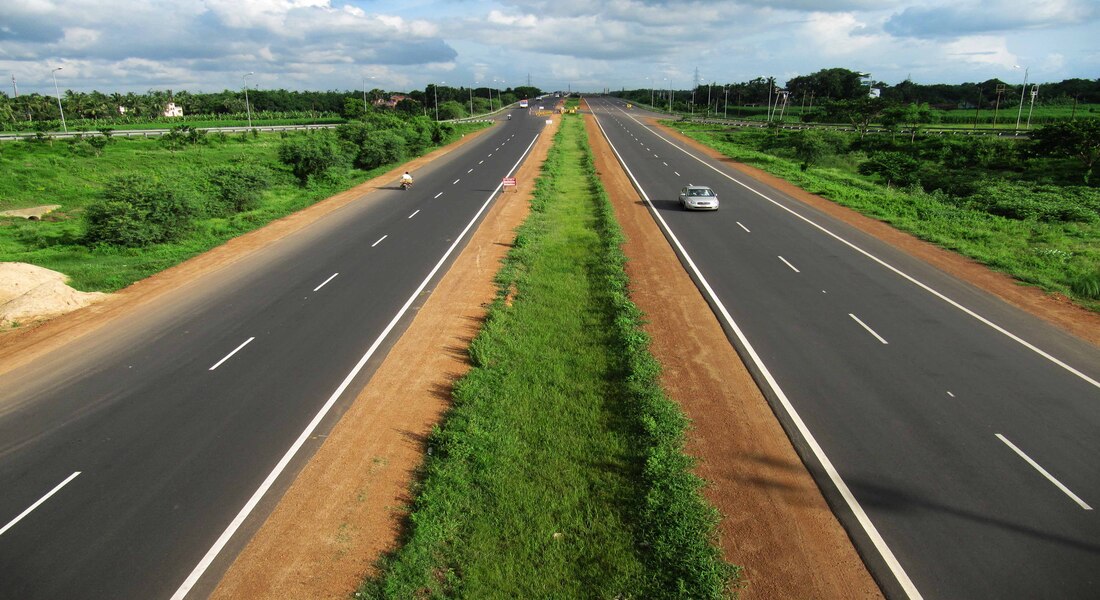
New Delhi: The National Highways Authority of India (NHAI) has announced a first-of-its-kind initiative to develop dedicated pollinator-friendly “Bee Corridors” along National Highways, signalling a shift from ornamental roadside plantations to ecologically driven green infrastructure.

According to an official statement, the programme will create continuous linear stretches of bee-friendly vegetation designed to provide nectar and pollen throughout the year. The move aims to address rising ecological stress on honeybees and other pollinators, whose declining populations have raised concerns over pollination services, agricultural productivity, and broader ecosystem stability.

Under the initiative, NHAI will align its plantation strategy to prioritise species that actively support pollinators. The corridors will include a mix of flowering trees, shrubs, herbs, and grasses. In addition to planting nectar- and pollen-rich species, NHAI will retain certain wild elements, such as allowing flowering weeds to bloom and preserving dead wood or hollow trunks that serve as natural habitats for insects.

To ensure year-round food sources for bees, plant species will be selected for staggered flowering cycles across seasons. Native trees identified for plantation include Neem, Karanj, Mahua, Palash, Bottle Brush, Jamun, and Siris, chosen for their suitability to Indian agro-climatic conditions and ecological benefits.

NHAI field offices nationwide have been tasked with identifying appropriate highway stretches and vacant land parcels for corridor development. The plan envisions clusters of flowering trees planted at intervals of approximately 500 metres to 1 kilometre — aligned with the typical foraging range of honeybees and wild bees.

As part of the rollout, each NHAI field office will develop at least three Bee Corridors during 2026–27. Overall, NHAI has set a target to plant around 40 lakh trees along National Highways in 2026–27, with nearly 60 percent of these plantations to be undertaken under the Bee Corridor component.

Officials say the initiative is expected to deliver multiple benefits, including enhanced biodiversity, improved ecological resilience along transport networks, and support for pollinator conservation. The programme also reinforces NHAI’s broader commitment to environmentally responsible highway development.

The Bee Corridor concept reflects growing recognition globally of the role infrastructure agencies can play in ecological restoration. By integrating pollinator-supportive landscapes into highway design and maintenance, NHAI aims to combine sustainability objectives with long-term environmental outcomes.

Tarique Rahman Takes Oath as Bangladesh Prime Minister

Bangladesh Nationalist Party (BNP) Chairman Tarique Rahman was sworn in as Bangladesh’s new prime minister on Tuesday, marking a significant shift in the country’s political landscape. President Mohammed Shahabuddin administered the oath of office at the South Plaza of the Jatiya Sangsad Bhaban in the afternoon.

Following Rahman’s swearing-in, 25 cabinet ministers and 24 state ministers also took oath. Official sources indicated that allocation of portfolios is expected to be announced shortly.

Earlier in the day, the BNP Parliamentary Party elected Rahman as leader of the parliamentary party at a meeting held at the parliament complex. Lawmakers from BNP and its allies subsequently took oath, consolidating the coalition’s position in the new legislature.

BNP Secretary General Mirza Fakhrul Islam Alamgir described the development as “historic,” stating that the party’s return to power followed what he called a fair electoral process after years of political turmoil.

“In this parliament, with a majority of seats, we have elected our young leader Mr Tarique Rahman as the leader of the parliamentary party,” he was quoted as saying by the DailyStar.

Rahman, 60, recently returned to Bangladesh after spending nearly 17 years in London. His comeback followed the death of his mother, former prime minister Khaleda Zia. Under his leadership, the BNP secured a decisive victory in last week’s general elections, emerging with a clear majority in the seats contested.

The transition comes after a turbulent phase in Bangladesh’s politics. Awami League leader Sheikh Hasina, who had served as prime minister for over 15 years, was removed from office following a student-led uprising in August 2024. An interim administration headed by Nobel laureate Muhammad Yunus had governed the country since then.

With a commanding mandate, Rahman now faces the challenge of stabilising the political environment and addressing concerns over law and order. Analysts note that economic recovery will be a priority, particularly reviving the textile sector, which has struggled amid disruptions in recent years.

Foreign policy is also expected to be closely watched. Observers say the new government will need to recalibrate relations with regional and global partners, including India, while managing Bangladesh’s engagement with China and Pakistan.

India was represented at the ceremony by Lok Sabha Speaker Om Birla, accompanied by Foreign Secretary Vikram Misri. “It’s an important moment that will strengthen people‑to‑people ties and shared democratic values between our two nations,” Birla wrote in a post on X.

In remarks following the election results, Rahman called for national unity and reconciliation. “Our paths and opinions may differ, but in the interest of the country, we must remain united,” he had said, emphasising the need for peace and stability.

Scindia, Ireland minister discuss telecom, AI cooperation

New Delhi: Union Minister for Communications and Development of North Eastern Region, Jyotiraditya M. Scindia, met Jack Chambers, Minister for Public Expenditure, Infrastructure, Public Service Reform and Digitalisation of Ireland, in New Delhi on Tuesday.

Their discussion focused on cooperation in telecom, digital infrastructure, AI, and quantum technologies.

The two leaders also discussed India’s transformative digital journey, from DPI, UPI, and DBT to 5G expansion. Both sides explored deeper cooperation in quantum communications, AI, regulatory innovation, and rural broadband.

During the meeting, Scindia sought Ireland’s support for India’s candidature at the International Telecommunication Union.

“India and Ireland, as dynamic innovation-driven democracies, can build a strong and future-ready digital partnership,” Scindia said in a post on X.

On Monday, Jitin Prasada, Minister of State for Commerce and Industry and Electronics and Information Technology, met Chambers to discuss strengthening India–Ireland ties.

During the meeting, the two leaders explored cooperation in digital public infrastructure, governance reforms, emerging technologies, and investment linkages. The discussions focused on expanding collaboration in trusted technology, resilient supply chains, and innovation-driven growth.

Both sides emphasised the potential to deepen engagement between India and Ireland, particularly in digital transformation and technology partnerships.

Education ministry showcases AI roadmap at India AI Impact Summit

New Delhi: The Ministry of Education hosted a dedicated session titled “Ministry of Education – Pushing the Frontier of AI in India” at Bharat Mandapam on Tuesday as part of the ongoing India AI Impact Summit 2026, underlining the government’s push to embed artificial intelligence across learning, skilling and research ecosystems.

Union Education Minister Dharmendra Pradhan attended the session, which also saw the presence of Minister of State for Education and Skill Development Jayant Chaudhary. Senior officials, academic leaders, researchers and founders of AI-driven education startups participated in discussions centred on scaling AI adoption in classrooms and institutions.

Addressing the gathering, Pradhan described the Summit as a pathbreaking initiative envisioned by Prime Minister Narendra Modi to accelerate India’s AI journey. He said India’s rapid strides in emerging technologies were drawing global attention and expressed confidence that AI would play a transformative role in strengthening India’s position as a global knowledge leader. He linked AI’s growing role in education to the broader vision of Viksit Bharat 2047.

Pradhan, according to an official release, emphasised that “AI in education and education in AI are deeply intertwined,” urging students and young professionals to leverage AI tools to educate, innovate and create impactful solutions. He noted that India’s youth were approaching technology with fresh thinking, which he said would be critical in shaping the country’s future digital and knowledge economy.

Jayant Chaudhary said deliberations at the Summit had been insightful, highlighting conversations around structured AI integration spanning foundational education, skilling, advanced research and global leadership. He added that visits to the Ministry of Education and Skill India pavilions showcased practical and scalable AI solutions designed around India’s needs.

Officials noted that the Ministry of Education has, over the past decade, laid the groundwork for AI-enabled education through digital platforms, policy reforms and institutional capacity-building initiatives. Following last year’s Union Budget announcement, a Centre of Excellence in AI for Education was established at IIT Madras to drive research, innovation and applied use cases.

The Ministry also undertook consultations with academia, industry and civil society to shape a national roadmap for AI integration. Recent engagements included discussions with AI startup founders in the education sector and the two-day Bharat Bodhan AI Conclave 2026, which brought stakeholders together to advance responsible AI adoption.

The session highlighted India’s shift from policy formulation to implementation at scale, with speakers pointing to the use of digital public infrastructure, Centres of Excellence, curriculum redesign, teacher training and collaboration with industry and startups.

The panel featured leaders from academia, industry and the investment ecosystem, including Zoho Corporation Founder and CEO Sridhar Vembu, technologist Vibhu Mittal, Peak XV Partners Managing Director Rajan Anandan, IIT Kanpur Director Manindra Agrawal, IIT Madras Director V. Kamakoti and IIT Bombay Professor Sunita Sarawagi. The discussion was moderated by IIT Jammu Director Manoj S. Gaur.

Participants examined how governance frameworks, national learning platforms, indigenous AI innovation and responsible deployment of frontier AI models could collectively reshape educational outcomes. The focus, speakers said, should remain on systemic interventions rather than isolated pilot projects.

The Ministry said the session aimed to strengthen collaboration among government, academia and industry while refining India’s AI-in-education strategy.