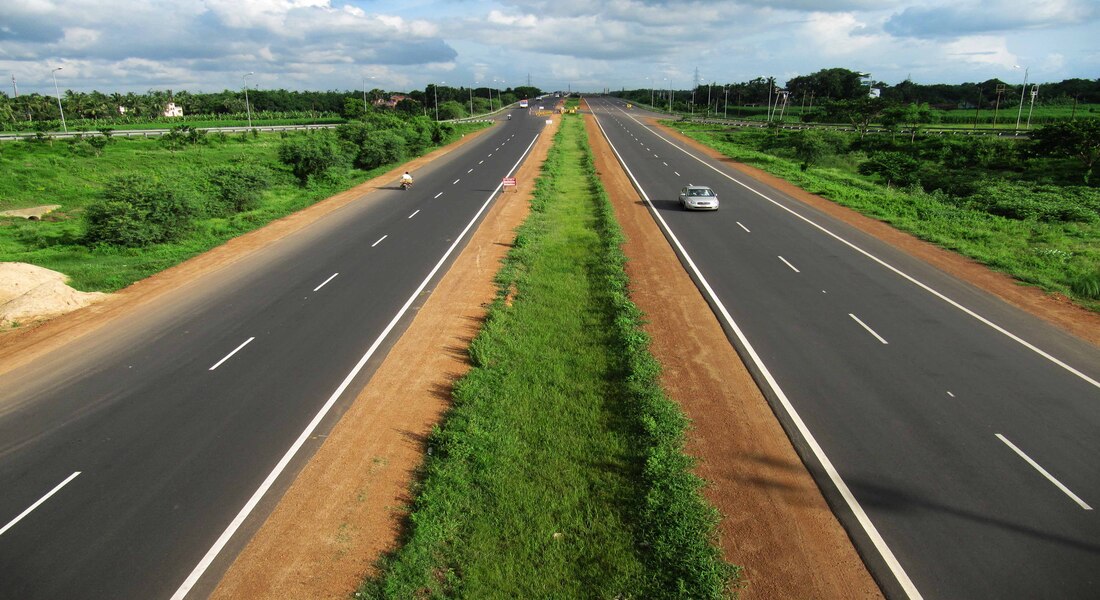

New Delhi: The National Highways Authority of India (NHAI) has announced a first-of-its-kind initiative to develop dedicated pollinator-friendly “Bee Corridors” along National Highways, signalling a shift from ornamental roadside plantations to ecologically driven green infrastructure.
According to an official statement, the programme will create continuous linear stretches of bee-friendly vegetation designed to provide nectar and pollen throughout the year. The move aims to address rising ecological stress on honeybees and other pollinators, whose declining populations have raised concerns over pollination services, agricultural productivity, and broader ecosystem stability.
Under the initiative, NHAI will align its plantation strategy to prioritise species that actively support pollinators. The corridors will include a mix of flowering trees, shrubs, herbs, and grasses. In addition to planting nectar- and pollen-rich species, NHAI will retain certain wild elements, such as allowing flowering weeds to bloom and preserving dead wood or hollow trunks that serve as natural habitats for insects.
To ensure year-round food sources for bees, plant species will be selected for staggered flowering cycles across seasons. Native trees identified for plantation include Neem, Karanj, Mahua, Palash, Bottle Brush, Jamun, and Siris, chosen for their suitability to Indian agro-climatic conditions and ecological benefits.
NHAI field offices nationwide have been tasked with identifying appropriate highway stretches and vacant land parcels for corridor development. The plan envisions clusters of flowering trees planted at intervals of approximately 500 metres to 1 kilometre — aligned with the typical foraging range of honeybees and wild bees.
As part of the rollout, each NHAI field office will develop at least three Bee Corridors during 2026–27. Overall, NHAI has set a target to plant around 40 lakh trees along National Highways in 2026–27, with nearly 60 percent of these plantations to be undertaken under the Bee Corridor component.
Officials say the initiative is expected to deliver multiple benefits, including enhanced biodiversity, improved ecological resilience along transport networks, and support for pollinator conservation. The programme also reinforces NHAI’s broader commitment to environmentally responsible highway development.
The Bee Corridor concept reflects growing recognition globally of the role infrastructure agencies can play in ecological restoration. By integrating pollinator-supportive landscapes into highway design and maintenance, NHAI aims to combine sustainability objectives with long-term environmental outcomes.