At IndiaVerve, we go beyond the noise to bring you meaningful stories of change, resilience and progress—from India to the world stage. Our mission is to bring readers credible, wide-ranging coverage across politics, business, sports, culture, society and more.

Heavy bombing hits Tehran on day seven, over 1,300 reported dead

New Delhi: More than 1,300 people have been killed in Iran since the start of the US-Israel military campaign, with heavy bombardment striking Tehran and several other cities on the seventh day of the conflict, according to Iranian authorities and international organisations.

Intense airstrikes pounded the Iranian capital early Friday as Israeli forces launched what they described as a new phase of attacks targeting “regime infrastructure”. At the same time, the United States confirmed that B-2 stealth bombers carried out strikes on deeply buried ballistic missile launch facilities using specialised “penetrator” bombs.

Explosions were reported across several parts of Tehran, including locations linked to Iran’s military and political establishment, as well as residential areas and the vicinity of Tehran University, according to field reports cited by Al Jazeera.

Iran’s Noor News reported that residential buildings in the capital had been hit, while footage posted online by Foreign Ministry spokesperson Esmail Baghaei showed damage to an elementary school near Niloufar Square. Baghaei said the school had been struck during the bombardment. UNICEF said that at least 181 children were among those killed in the conflict so far.

Iranian President Masoud Pezeshkian said diplomatic mediation efforts should focus on the United States and Israel, whom he accused of initiating the conflict. “We are committed to lasting peace in the region yet we have no hesitation in defending our nation’s dignity and sovereignty,” Pezeshkian wrote on X.

Strikes were also reported in other cities including Shiraz, Qom, Isfahan and Kermanshah. According to the Iranian Red Crescent, the overall death toll from attacks since the start of the war has reached at least 1,332.

Meanwhile, Israel’s military said its air force destroyed six Iranian missile launchers overnight before they could be used against Israeli territory. The Israeli Defence Forces also claimed to have destroyed three advanced Iranian air defence systems during the latest operations.

“50 Israeli Air Force fighter jets dismantled Ali Khamenei’s underground military bunker beneath the Iranian regime’s leadership compound in Tehran,” Israel Defense Forces said in a post on X.

In the central Iranian city of Qom, Israeli forces issued evacuation warnings for residents in the Shokouhiyeh industrial zone, instructing them to leave the area ahead of potential strikes.

US Central Command said American forces were continuing operations against Iranian military targets. Admiral Brad Cooper, commander of CENTCOM, earlier said B-2 bombers had dropped dozens of 2,000-pound bunker-penetrating bombs on underground missile launchers.

US Defence Secretary Pete Hegseth indicated that the intensity of the attacks could increase in the coming days. “It’s more fighter squadrons, more capabilities, more defensive systems and more bomber pulses,” he said, warning that the campaign was expected to intensify.

In a further escalation, Iranian military authorities said their forces had struck a “US-owned” oil tanker off the coast of Kuwait. Iranian state radio reported that the vessel caught fire following the attack.

The war began after joint US and Israeli strikes targeted Iran’s leadership and military infrastructure, including an attack that killed Supreme Leader Ayatollah Ali Khamenei earlier in the campaign. Since then, the conflict has spread across the region, with Iran launching missile and drone strikes and warning that it is prepared to confront any further escalation.

Meanwhile, in Lebanon, the conflict has also intensified as Israeli air strikes continued to target several areas across the country. At least 123 people have been killed and 683 injured in Israeli attacks since the start of the week, Al Jazeera reported citing the Lebanese Ministry of Public Health.

Fresh strikes hit multiple towns in southern Lebanon early Friday, while Hezbollah warned residents in Israeli settlements within about five kilometres of the northern border to evacuate amid rising hostilities along the frontier.

Odisha candidates feature in UPSC Civil Services 2025 merit list

Bhubaneswar: Odisha marked its presence in the Civil Services Examination 2025 merit list declared by the Union Public Service Commission (UPSC) on Friday. Satwik Satyakam Debata secured the 100th rank, while Amrit Mohapatra achieved the 121st rank in the prestigious examination.

The UPSC, in a press note, announced that a total of 958 candidates (659 men and 299 women) have qualified in the Civil Services Examination 2025 after clearing the multi-stage selection process.

The final merit list was prepared on the basis of the written examination held in August 2025 and the Personality Test interviews conducted between December 2025 and February 2026.

The recommended candidates will be appointed to the Indian Administrative Service, Indian Foreign Service, Indian Police Service, and various Central Services under Group ‘A’ and Group ‘B’.

Anuj Agnihotri secured the first rank in the examination. Rajeshwari Suve M ranked second in the examination, while Akansh Dhull secured the third position.

Among the other candidates in the top 10, Raghav Jhunjhunwala secured the fourth rank. Ishan Bhattnagar stood fifth, followed by Zinnia Aurora in sixth place. A R Rajah Mohaedeen secured the seventh rank.

Pakshal Secretary secured the eighth position, Astha Jain stood ninth, and Ujjwal Priyank completed the top ten list with the tenth rank.

Amit Shah says India is nearing end of Naxalism

Bhubaneswar: Union Home Minister Amit Shah on Friday said the government is determined to eliminate Naxalism from the country by March 31, 2026. He said security forces have intensified operations and expressed confidence that the goal will be achieved within the timeline.

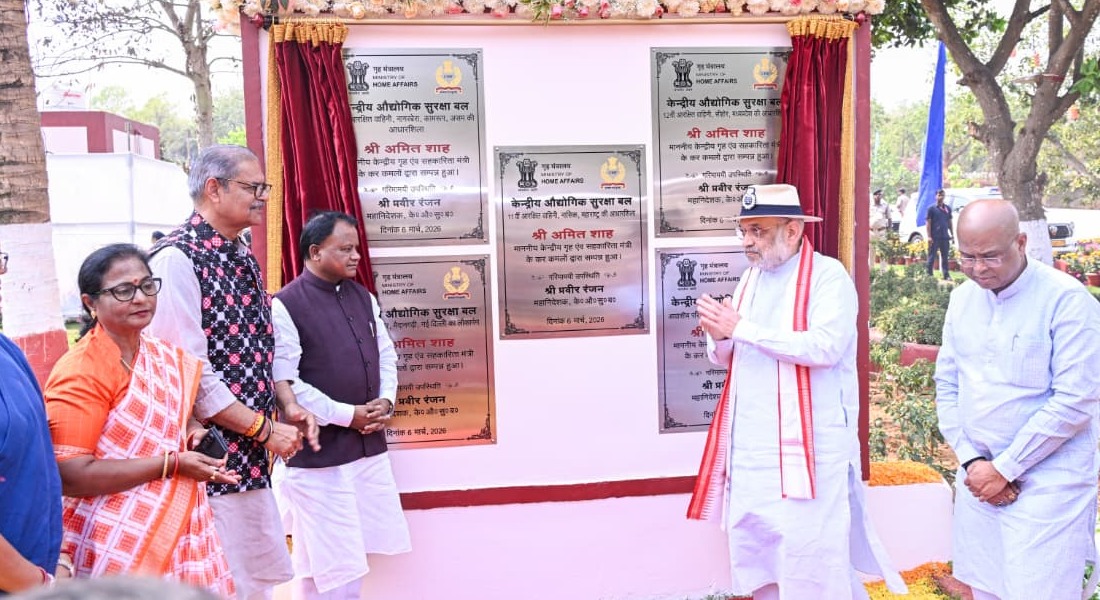
Addressing the 57th Raising Day ceremony of the Central Industrial Security Force (CISF) in Mundali, Odisha, Shah said the force has made a significant contribution to anti-Naxal operations in Odisha, Chhattisgarh, and Telangana. He said the country is now on the verge of becoming free from Naxalism.

Shah said attempts to create a Red Corridor from Tirupati to Pashupatinath will fail, and security forces will establish their dominance in the affected regions.

The minister said the CISF has emerged as a strong pillar of industrial security after completing 56 years of service. He further said the journey of the force from its inception to its current stature reflects dedication and courage.

Shah noted that India’s ambition to become the world’s largest economy requires rapid industrial development. He said such development needs a secure environment and added that the CISF plays a vital role in protecting key industrial and strategic assets across the country.

The home minister said the Ministry of Home Affairs has recently decided to entrust the security of all ports in the country to the CISF. He went on to say that the force has consistently acted as a shield for national infrastructure and economic activity.

Shah also highlighted the sacrifices made by CISF personnel in safeguarding critical installations, according to an official statement. He said the force has maintained an unwavering commitment to its duties over the years.

Shah added that over the past 56 years, the CISF has demonstrated its efficiency as a force by receiving 13,693 medals for gallantry and distinguished service.

During the event, projects worth Rs 890 crore related to CISF infrastructure were launched. Shah laid the foundation stone for three residential complexes in Kamrup, Nashik, and Sehore and inaugurated two residential complexes in Rajarhat and Delhi. These facilities aim to improve living conditions for CISF personnel and their families.

Shah said the CISF currently provides security to 70 airports and 361 important institutions across the country. He also noted that the force has been designated as the nodal agency for drone security.

The minister also said the CISF will strengthen security along the country’s maritime infrastructure after taking charge of port security. He added that the government has asked the force to develop a hybrid security model to provide protection to private industrial groups using modern technology.

Odisha Chief Minister Mohan Charan Majhi, Union Minister Dharmendra Pradhan, Union home secretary, the director general of CISF, and other dignitaries attended the ceremony.

Rajnath Singh flags global supply chain disruptions

New Delhi: Defence Minister Rajnath Singh on Friday said disturbances in the Persian Gulf region are directly affecting oil and gas supply and disrupting global supply chains. He said the resulting uncertainties are impacting the global economy and international trade.

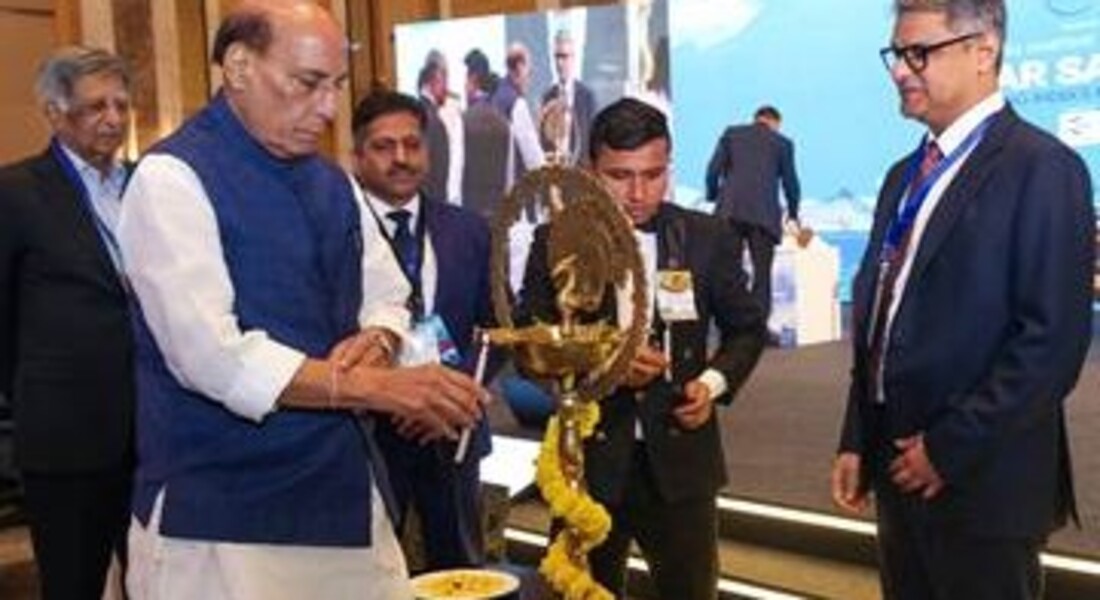
Speaking at “Sagar Sankalp – Reclaiming India’s Maritime Glory,” a defence and maritime dialogue held in Kolkata, Singh said the current global situation remains abnormal and warned that such instability risks becoming the new normal.

Singh also said that disturbances in the global environment have begun to disrupt supply chains across sectors. He added that the current global scenario remains abnormal and expressed concern that such abnormal conditions are gradually becoming the new normal.

Singh described technological dynamism as a defining feature of the modern era, according to an official statement. He said technology is transforming every sphere of life, and its impact is particularly visible in the defence sector.

He highlighted a series of structural and policy reforms undertaken by the government to strengthen defence production both qualitatively and quantitatively. These reforms focus on transparency, financial discipline, performance benchmarking, and stronger research and development. He said defence public sector undertakings remain a key pillar of the government’s self-reliance vision.

In the shipbuilding sector, he noted that Garden Reach Shipbuilders & Engineers and other shipyards have received special attention to strengthen the domestic industrial ecosystem.

Singh pointed out that the government’s efforts are producing positive results. He said domestic defence production crossed a record Rs 1.50 lakh crore in FY 2024-25, while defence exports reached an all-time high of about Rs 24,000 crore.

He added that exports are expected to touch around Rs 29,000 crore by April 2026, and the government aims to achieve Rs 50,000 crore in defence exports by FY 2029-30.

The minister also acknowledged the growing role of the private sector. He said private industry currently contributes about 25% of defence platforms, equipment, and accessories manufactured in the country. He expressed confidence that the share could rise to 50% of total defence production by value in the coming years.

Singh further stated that all warships and submarines currently on order for the Indian Navy are being built in Indian shipyards, covering design, engineering, construction, and lifecycle support. He described this as a major step towards defence self-reliance and said the concept of a builder’s navy has now become a practical reality.

He also praised the contribution of MSMEs, start-ups, and indigenous vendors in building large defence platforms. According to him, the construction of a warship involves joint efforts from multiple stakeholders, which creates a conglomerate effect.

He explained that such collaboration increases efficiency, reduces risks, and promotes innovation across the defence manufacturing ecosystem.

Singh said India’s maritime domain can remain safe and prosperous if the country advances with coordinated planning, technology adoption, and institutional synergy. He added that the operational readiness of the Indian Navy, along with initiatives towards self-reliance, shows that India’s defence sector is moving in the right direction.

He also said the government aims to place India among the top 10 shipbuilding nations by 2030, with a long-term goal of entering the top five by 2047.

IAF Su-30MKI crash in Assam claims two lives

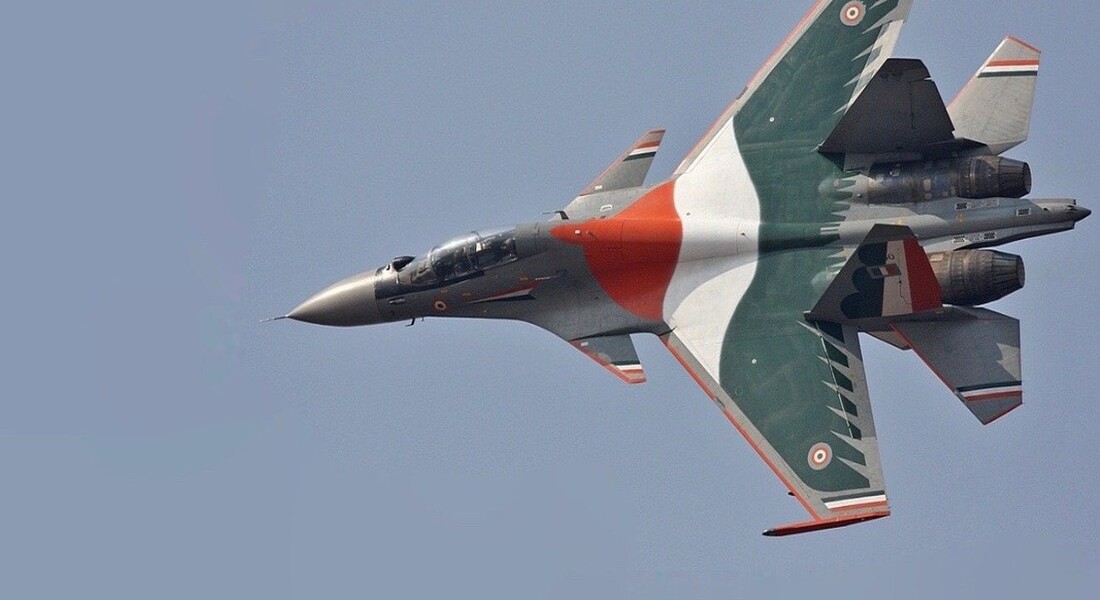
New Delhi: The Indian Air Force (IAF) on Friday confirmed the tragic loss of Squadron Leader Anuj and Flight Lieutenant Purvesh Duragkar, who sustained fatal injuries when their Sukhoi Su-30MKI fighter jet crashed during a training mission.

In a post on X, the IAF expressed deep condolences and extended support to the bereaved families.

The incident occurred in Karbi Anglong, Assam, roughly 60 km from Jorhat on Thursday. Communication with the Russian-origin aircraft was lost at 7:42 pm, officials said. Search operations are currently underway in the area.

The Su-30MKI is a two-seater, long-range fighter jet originally developed by Russian manufacturer Sukhoi. It is now produced under licence by Hindustan Aeronautics Limited for the IAF. First inducted into service in 1997, the IAF currently operates a fleet of over 260 Su-30MKI jets.

US grants India 30-day waiver to buy Russian oil amid Iran crisis

New Delhi: India has received a temporary 30-day waiver from the United States allowing its refiners to continue purchasing Russian crude oil, as global energy markets face disruption due to the escalating conflict in West Asia and supply constraints in the Gulf region.

The announcement was made by US Treasury Secretary Scott Bessent, with the Treasury Department’s Office of Foreign Assets Control issuing a licence permitting the delivery and sale of Russian-origin crude and petroleum products already loaded on vessels as of March 5, 2026 for shipment to India.

According to the US Treasury, the authorization will remain valid until April 3, 2026, and applies even to shipments involving vessels affected by existing sanctions regimes. The move is aimed at preventing further volatility in global energy markets at a time when oil supplies are under pressure.

Bessent described India as an “essential partner” of the United States and said the short-term measure was designed to ensure continued oil flows into global markets. In a message posted on X, he said the waiver would allow Indian refiners to purchase Russian oil already stranded at sea and was unlikely to significantly benefit the Russian government.

On Thursday, Russian Ambassador to India Denis Alipov said that Moscow was open to supply crude oil to India given the energy security situation that has emerged due to the instability in the region.

“We have been open to supplying crude oil to India,” Alipov told reporters, responding to questions on Russian crude in the context of the ongoing conflict in the region.

The 30-day waiver to India to buy Russian crude comes as the US seeks to stabilise energy supplies following disruptions linked to the ongoing US-Israel conflict with Iran and the blockade of the Strait of Hormuz. The narrow maritime passage is a critical global chokepoint through which nearly 20 per cent of the world’s oil supply is transported.

Oil production in parts of the Middle East has also been affected by recent strikes on major energy facilities. Among the installations reportedly impacted are Saudi Aramco’s Ras Tanura refinery and Iraq’s Rumaila oil field, both key components of global crude supply.

Washington had imposed sanctions last November on major Russian oil companies such as Lukoil and Rosneft as part of pressure on Moscow over the Ukraine conflict. As a result, India’s imports of Russian crude had declined to around 1.1 million barrels per day in January, the lowest level since late 2022, before recovering in February.

The latest tensions in the Gulf have also pushed up international oil prices. Brent crude rose to around $83 per barrel on Friday amid concerns over supply disruptions linked to the closure of the Strait of Hormuz.

Despite the rise in global crude prices, government sources have indicated that there are currently no plans to increase petrol or diesel prices in India.

Lakshya Sen finishes runner-up at All England Open 2026

New Delhi: India’s Lakshya Sen saw his determined run at the All England Open Badminton Championships end in the final after a straight-games loss to Chinese Taipei’s Lin Chun-Yi on Sunday.

The Indian shuttler, ranked No. 12 in the men’s singles standings, went down 21-15, 22-20 to world No. 11 Lin Chun-Yi in the summit clash at Utilita Arena Birmingham. The match lasted just under an hour, according to olympics.com.

Lakshya produced a strong campaign throughout the tournament. He stunned world No. 1 and defending champion Shi Yuqi of China in the opening round. The Indian also defeated sixth-ranked Li Shi Feng, the reigning Asian Games champion, in the quarter-finals.

He then survived a gruelling 97-minute semi-final against Canada’s Victor Lai on Saturday. Lakshya battled cramps and blisters during that match but still secured a place in the final.

Lin Chun-Yi, who had earlier beaten former world champion and Paris 2024 Olympic silver medallist Kunlavut Vitidsarn in the semi-final, started strongly in the title clash. The Chinese Taipei player relied on powerful smashes and quickly gained control of the opening game.

Lakshya had already spent more than five and a half hours on court during the tournament. The physically demanding schedule made it difficult for him to match Lin’s intensity.

The Indian shuttler responded well in the second game. The Paris 2024 Summer Olympics semi-finalist used clever shot placement and court craft to counter Lin’s power. Lakshya even opened a 9-4 lead before Lin fought back and forced a tense finish.

Lakshya saved a match point during a dramatic closing phase. However, Lin eventually sealed the contest in straight games.

The victory extended Lin Chun-Yi’s head-to-head record against Lakshya Sen to 5-0. He had also beaten the Indian in the quarter-finals of the India Open earlier this year before going on to win the title.

This marked Lakshya’s second loss in an All England final in four years. He had also reached the title clash in 2022 but lost to Viktor Axelsen.

India’s only All England champions remain Prakash Padukone and Pullela Gopichand.

Government launches go-homestay portal to boost community tourism

Bhubaneswar: Deputy Chief Minister Pravati Parida on Thursday launched the Go-Homestay Portal in Bhubaneswar to strengthen community-based tourism in the State.

The portal was inaugurated at a city hotel during a State-level workshop on the Odisha Homestays Establishment Scheme-2025. The workshop aimed to inform stakeholders about the scheme and its implementation, according to an official release.

Speaking at the event, Parida said homestays offer more than accommodation. She said they open doors to Odisha’s culture, traditions, and local hospitality. She added that the Go-Homestay Portal will bring transparency and make it easier for people to start homestays.

The deputy CM said the initiative will support rural households, women, and local entrepreneurs. She further said tourism-led development will help create new income opportunities in villages.

The workshop included presentations on the scheme’s operational guidelines. Technical experts also gave a live demonstration of the portal. Representatives from Homestays of India and Svanir Wilderness Homestay conducted expert sessions.

Experienced homestay owners joined panel discussions and shared their success stories and best practices.

Officials also discussed the action plan and district-level responsibilities for implementing the scheme.

Among those present were Tourism Commissioner-cum-Secretary Balwant Singh, Tourism Director Deepankar Mohapatra, and State Mission Director-cum-CEO of Odisha Livelihoods Mission Monica Priyadarshini. District officials, financial institutions, PRI members, homestay owners, and tourism experts also attended the programme.