At IndiaVerve, we go beyond the noise to bring you meaningful stories of change, resilience and progress—from India to the world stage. Our mission is to bring readers credible, wide-ranging coverage across politics, business, sports, culture, society and more.

PM Modi urges responsible debate on LPG amid global crisis

New Delhi: Prime Minister Narendra Modi on Thursday urged responsible public discussion on LPG availability and energy supply, cautioning against misinformation at a time when global conflicts are disrupting supply chains and triggering an international energy crisis.

Addressing the iTV Network’s NXT Summit in New Delhi, Prime Minister Modi said some people are trying to “create panic to push their own agenda” around the LPG shortage issue in the country. “I do not want to make political comments about them at this time. But I will certainly say that by doing so, they are getting exposed before the public themselves and are also doing great damage to the country,” he said.

He added that the ongoing geopolitical tensions have affected energy markets worldwide and called for fact-based dialogue on issues such as LPG supply. He assured that the government is working continuously with global partners and domestic agencies to manage disruptions and protect citizens from the impact of global challenges.

Highlighting India’s efforts to strengthen energy security, the Prime Minister said LPG connections in the country have expanded significantly over the past decade—from about 14 crore in 2014 to nearly 33 crore today—bringing clean cooking fuel to the vast majority of households.

Modi said the government is pursuing a multi-pronged strategy to reduce dependence on imports and expand domestic energy infrastructure. This includes increasing LNG terminal capacity, expanding the gas pipeline network from 3,500 km to around 10,000 km, and strengthening bottling and distribution systems to manage rising demand.

He also stressed that India’s growth story continues to inspire global confidence despite international crises. “If you want to be part of the future, you have to be in India,” he said, adding that the country is moving beyond incremental progress to what he described as the “next level” of development.

Emphasising the country’s long-term development vision, Modi said India is currently on a collective journey towards building a “Viksit Bharat”. He noted that the aspiration of 140 crore citizens is driving the nation’s transformation and that the goal of becoming a developed nation has become a shared national mission.

ALSO READ: India secures fuel supply amid West Asia conflict: Minister Puri

Referring to the government’s broader economic push, Modi said India’s rapid progress in digital payments, infrastructure and technological innovation is helping the country move to the “next level” of development.

He also highlighted advances in sectors such as renewable energy, semiconductors, space exploration and quantum technology, saying these initiatives are positioning India as a major force in the emerging global order.

The Prime Minister reiterated that the government will continue to take steps to shield farmers and citizens from global economic disruptions while ensuring that India’s development momentum remains strong.

Iran’s new Supreme Leader calls for unity, vows continued attacks, Hormuz closure

Iran’s newly appointed Supreme Leader Ayatollah Seyyed Mojtaba Khamenei has issued his first public message since assuming office, calling for national unity and declaring that the Strait of Hormuz should remain closed as the conflict involving Iran, the United States and Israel continues to escalate.

In a statement, which was read on Iran’s state broadcaster Press TV on Thursday, Khamenei said the Iranian people had shown determination in defending the country and must continue to remain united amid the ongoing war.

“The will of the people is to continue effective defense, and their presence on the scene must be maintained. The Strait of Hormuz must remain closed,” Khamenei said.

Khamenei began his message by offering prayers and paying tribute to his predecessor, Ayatollah Ali Khamenei, who was killed in joint United States–Israeli strikes at the start of the conflict that erupted on February 28.

He expressed condolences to the Iranian people and the wider Muslim community, particularly to families affected by the ongoing war and those who lost relatives during the attacks.

Addressing the nation, Khamenei said he had learned about his appointment as Supreme Leader through state media following a vote by Iran’s Assembly of Experts.

“I, Seyyed Mojtaba Hosseini Khamenei, learned the result of the Assembly of Experts’ vote through the Islamic Republic’s media, just like all of you,” he said in the message broadcast by Press TV.

Reflecting on the responsibilities of the position, the new leader said succeeding figures such as Imam Ruhollah Khomeini and his predecessor Ayatollah Ali Khamenei carried enormous responsibility.

“Sitting in a position once occupied by two great leaders, Imam Khomeini and Martyr Khamenei, is a daunting task,” he said, adding that fulfilling such responsibility would require both divine guidance and public support.

Khamenei also praised Iran’s military forces for defending the country during the conflict, saying their actions had prevented Iran from being dominated or divided during the attacks.

In his remarks, he signalled that Iran would continue resisting what it describes as external aggression and emphasised the need for unity among Iranians at a time of war.

The statement marks the first official message from Mojtaba Khamenei since he was appointed Supreme Leader following the death of his father, who had ruled Iran for nearly four decades.

Earlier today, Iran’s security chief Ali Larijani issued a stern warning to the United States and its allies, saying Tehran would continue its response until those responsible for the conflict “regret their miscalculation.” In a post on X, Larijani criticised US President Donald Trump’s remarks about securing a quick victory, stating that while wars may be easy to start, they cannot be won through rhetoric alone.

Separately, Trump said preventing Iran from obtaining nuclear weapons remained a higher priority for Washington than concerns over rising oil prices triggered by the closure of the Strait of Hormuz, a key global shipping route. The Israeli military also claimed it had carried out a strike on Iran’s Taleghan complex, alleging the facility had been linked to past nuclear weapons research and explosive testing under the covert “AMAD” programme.

Mortal remains of Odia worker brought back from Qatar

Bhubaneswar: The mortal remains of an Odia worker who died in Qatar have been brought back to Odisha through coordinated efforts by the Central government and the State government.

The deceased, Kuna Khuntia, was a resident of Khallikote block in Ganjam district. He had travelled to Qatar around four months ago to work as a labourer in a private company.

His family received news of his death on March 6. According to information shared with the family, Khuntia reportedly died suddenly while resting in his room.

Following the incident, the family appealed to the Odisha government to help bring back his mortal remains, according to a government release.

After the matter came to the attention of authorities, the Ministry of External Affairs, the Office of the Chief Resident Commissioner of the Government of Odisha in New Delhi, the Directorate of Odisha Paribar under the Odia Language, Literature and Culture Department, the Labour and Employees’ State Insurance Department, and the district administration of Ganjam coordinated efforts to facilitate the return of the body.

The mortal remains arrived on Thursday morning at Biju Patnaik International Airport.

On the occasion, Khallikote MLA Purna Chandra Sethy and Officer on Special Duty of the Directorate of Odisha Paribar Pritish Panda were present at the airport. They made arrangements to send the body to Khuntia’s native village in Ganjam district.

Odisha has sufficient LPG and fuel stock, says Krushna Chandra Patra

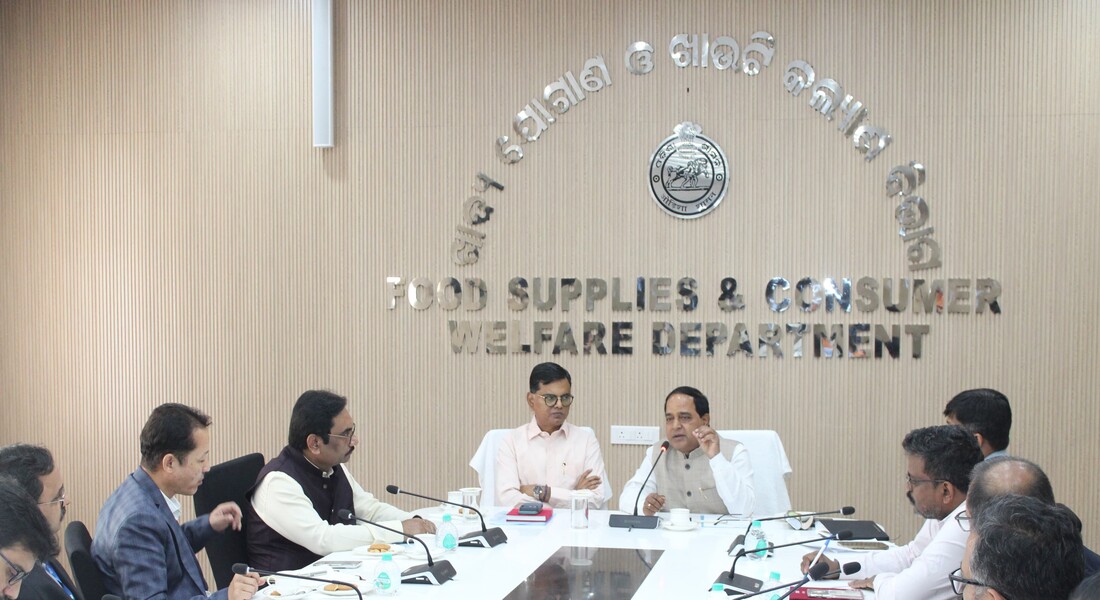
Bhubaneswar: Minister of Food Supplies and Consumer Welfare Krushna Chandra Patra on Thursday assured the public that there is sufficient stock of cooking gas and fuel available in Odisha.

Patra chaired a high-level meeting at Lokseva Bhavan to review the availability and supply chain of Liquefied Petroleum Gas (LPG), petrol, and diesel across the state.

The government has reviewed the supply and distribution of LPG across the state and urged citizens not to panic about availability, he said.

The minister conducted a detailed review of the distribution process to LPG distributors and retail outlets and directed officials to stay vigilant so that consumers do not face any hardship.

To strengthen monitoring, district collectors have been instructed to submit daily reports on the supply situation in their respective areas, according to an official release.

Addressing concerns linked to the situation in the Middle East, the minister urged residents of Odisha to remain alert but calm. He also warned against black marketing and hoarding of fuel.

Departmental officers have been deployed to conduct raids, and the minister directed authorities to take strict legal action if any cases of illegal hoarding or black marketing come to light.

Sanjay Kumar Singh, Principal Secretary of the Food Supply & Consumer Welfare Department, said officials are maintaining detailed records of daily fuel requirements and supply levels.

He said district collectors will provide daily updates on the fuel situation. Marketing officers have also been asked to closely monitor sensitive government institutions such as SCB Medical College and Hospital and major educational institutions.

Singh added that the state government is taking all necessary steps to ensure domestic consumers do not face any disruption in their daily lives.

Centre supports telecom expansion in Odisha: Minister Scindia

New Delhi: Union Minister for Communications and Development of North Eastern Region Jyotiraditya M. Scindia on Thursday informed the Rajya Sabha that the Central government is supporting telecom operators to expand mobile connectivity in rural and remote parts of Odisha.

In a written reply in the House, the minister said the Digital Bharat Nidhi (DBN) promotes universal access to telecommunications by supporting services in underserved rural, remote, and urban areas across the country.

As of February 28, 2026, a total of 34,780 mobile towers have been planned under 12 DBN-funded projects to provide connectivity to 46,331 villages in underserved rural and remote areas nationwide, according to an official statement.

Out of these, 5,182 mobile towers have been planned for Odisha to connect 7,157 villages, the minister added.

Scindia further stated that the plan includes 4,470 mobile towers across 13 districts of the state whose areas are notified under the Fifth Schedule of the Constitution, which covers regions with significant tribal populations.

The minister also informed the House that, as of February 28, 2026, the government has disbursed Rs 2,229.35 crore from the DBN to telecom operators to expand mobile services in rural and remote areas of Odisha.

Out of this amount, Rs 1,859.95 crore has been allocated for districts notified under the Fifth Schedule to strengthen connectivity in these regions.

India secures fuel supply amid West Asia conflict: Minister Puri

New Delhi: Union Minister for Petroleum and Natural Gas Hardeep Singh Puri on Thursday informed the Lok Sabha that India has taken several steps to safeguard fuel supplies amid disruptions in global energy markets caused by the ongoing conflict in West Asia.

Making a statement in the House, the minister said the government is closely monitoring the evolving situation and has ensured the continued availability of petroleum products across the country.

Puri noted that the global energy market is facing an unprecedented situation. The disruption of shipping through the Strait of Hormuz, a key route for nearly 20% of the world’s crude oil, natural gas, and LPG, has created major uncertainty in global supply chains.

Despite the disruption, he said India’s crude supply position remains secure. Before the crisis, about 45% of India’s crude imports passed through the Hormuz route. However, the country has diversified its sources over the years, according to an official statement.

According to the minister, non-Hormuz sources now account for nearly 70% of India’s crude imports, compared with 55% before the conflict. India currently imports crude from 40 countries, up from 27 in 2006-07. He said this diversification has strengthened the country’s energy security.

Puri assured the House that there is no shortage of petrol, diesel, kerosene, aviation turbine fuel, or fuel oil. Retail outlets across the country remain fully stocked, and supply chains are functioning normally. The government has also issued additional allocations of PDS kerosene to states.

On natural gas, the minister said supplies are being managed through prioritised allocation. India produces around 90 MMSCMD of natural gas domestically. Although imports from some Gulf sources were affected, the shortfall has largely been addressed through alternative LNG cargoes arriving through other supply routes.

Domestic piped gas for households and CNG for vehicles continue to receive full supply, while industrial users and fertiliser plants are receiving regulated allocations to maintain essential production.

The minister also outlined steps taken to secure the LPG supply. Earlier, around 60% of India’s LPG imports came from Gulf countries such as Qatar, the UAE, Saudi Arabia, and Kuwait. The government has now diversified procurement by securing cargoes from the US, Norway, Canada, Algeria, and Russia.

Refineries have also been directed to maximise LPG output. As a result, LPG production has increased by 28% in the last five days, he said.

Puri emphasised that the government’s top priority is to ensure an uninterrupted cooking gas supply to over 33 crore households, particularly poor and vulnerable families. The standard delivery cycle for domestic LPG cylinders remains 2.5 days, unchanged from pre-crisis levels.

To prevent hoarding and black marketing, the government has introduced several demand-management measures. These include a minimum booking gap of 25 days in urban areas and 45 days in rural regions. The Delivery Authentication Code system is also being expanded to ensure transparent distribution.

The government has also regulated commercial LPG sales temporarily to prevent diversion and ensure fair distribution to genuine users such as restaurants and hospitality businesses.

To reduce pressure on LPG and gas supply, alternate fuels such as kerosene, fuel oil, biomass and RDF pellets are being made available for commercial and industrial use during the crisis period.

Meanwhile, the Ministry of External Affairs (MEA) on Thursday said India has remained in close contact with Iran in recent days on matters related to maritime movement and energy security.

MEA spokesperson Randhir Jaiswal said External Affairs Minister Dr. S. Jaishankar has spoken with Iran’s foreign minister several times over the past few days.

“Iran’s foreign minister and India’s Jaishankar have had three phone calls in recent days to discuss safe passage of ships and energy security,” Jaiswal told reporters.

Adi-Vaani app supports Santali language, says Minister Uikey

New Delhi: Union Minister of State for Tribal Affairs Durgadas Uikey informed the Lok Sabha on Thursday that Adi-Vaani, an AI-powered translation platform, is being used for the documentation and digitalization of tribal languages across India.

Currently, the platform supports the following languages: Santali (Odisha), Gondi (Chhattisgarh), Mundari (Jharkhand), and Bhili (Madhya Pradesh), Uikey said.

Two more languages, Kui (Odisha) and Garo (Meghalaya), are in the development phase. In the second phase of the project, the government proposes to include seven additional languages: Katkari (Maharashtra), Koya (Andhra Pradesh), Kokborok (Tripura), Betta Kuruba (Karnataka), Thodou Kuki and Tangkhul (Manipur), and Chodri (Gujarat), according to an official statement.

Uikey highlighted that tribal languages and cultural traditions are under pressure due to modernization and socio-economic changes. The Adi-Vaani project aims to document, preserve, and provide digital access to these languages in a phased manner.

Documentation activities will be coordinated with State Tribal Research Institutes, and timelines will depend on collaboration with local communities and the scope of fieldwork.

The initiative seeks to progressively expand coverage to additional tribal languages across the country.

Over 81% rural households have now tap water under Jal Jeevan Mission: Minister

New Delhi: More than 81 percent of rural households in India now have tap water connections, with over 12.58 crore additional homes covered under the Jal Jeevan Mission since its launch in 2019, the Lok Sabha was informed on Thursday.

In a written response to a parliamentary question, Minister of State for Jal Shakti V. Somanna said that as of March 3, 2026, around 15.82 crore rural households, which is about 81.71 percent of the total 19.36 crore rural households in the country, have been provided with tap water supply in their homes under the Jal Jeevan Mission (JJM) – Har Ghar Jal.

The scheme, launched in August 2019, aims to ensure assured supply of safe drinking water in adequate quantity and prescribed quality to every rural household through functional tap connections.

At the start of the mission, only 3.23 crore rural households, or about 16.7 percent, had tap water connections. Since then, more than 12.58 crore additional rural households have been connected under the programme, the minister said.

The minister said work is currently underway to extend tap water supply to the remaining 3.54 crore rural households across different states and Union Territories. According to the details provided by the minister, Jharkhand, Kerala and Sikkim are among the states where more than 40 percent of rural households are still without tap water connections.

To ensure the quality of drinking water supplied under the mission, the Bureau of Indian Standards’ BIS 10500 norms have been adopted as the benchmark. States and Union Territories can use up to two percent of their annual allocation under the scheme for water quality monitoring and surveillance activities.

These include strengthening water quality testing laboratories, procuring equipment and chemicals, hiring trained personnel and conducting community-based monitoring using field test kits, along with awareness programmes on water quality.

The government has also issued a “Concise Handbook for Monitoring Water Quality of Piped Drinking Water Supply to Rural Households” in December 2024 to guide states in testing water quality at different stages, including at the source, treatment plants, storage facilities and distribution points.

The ministry also conducts periodic assessments of the functionality of tap water connections through independent third-party agencies.

According to the Functionality Assessment conducted in 2024, 98.1 percent of households in surveyed villages had tap connections, while 87 percent reported receiving water in the previous week. About 84 percent households said they receive water as per schedule and 80 percent households reported receiving the minimum prescribed supply of 55 litres per capita per day.

The survey also found that 76 percent households were receiving water free from bacteriological contamination and 81 percent of water sources were free from chemical contamination. Overall, about 76 percent of household tap connections were found to be fully functional in terms of quantity, quality and regularity of supply.

India rejects Pakistan’s allegations of backing Afghan attacks

New Delhi: India on Thursday rejected Pakistan’s allegations that it supported Afghan groups in attacks on Pakistani soil, describing the claims as entirely baseless.

The Ministry of External Affairs (MEA) accused Islamabad of attempting to deflect attention from its own internal security issues.

MEA spokesperson Randhir Jaiswal, in his weekly briefing, said Pakistan has long blamed India for its own problems.

“We reject such baseless allegations. It has become second nature for Pakistan to blame India for its misdeeds. As a state sponsor of terrorism for decades, Pakistan has zero credibility when it comes to cross-border terrorism. No amount of storytelling is going to alter this reality, nor is anyone fooled by Pakistan’s assumed victimhood,” Jaiswal said in a video post on X.

The comments came after Pakistani officials claimed Indian support for Afghan militants involved in attacks inside Pakistan. Islamabad has repeatedly made similar allegations in the past but has not provided verifiable evidence.

Tensions along the Pakistan-Afghanistan border have escalated in recent weeks. Pakistani airstrikes in eastern Afghanistan targeted camps of the Tehreek-e-Taliban Pakistan and Islamic State-Khorasan, which Afghan authorities said resulted in civilian casualties and violated their sovereignty.

India maintains that Pakistan’s claims are part of a recurring effort to externalise its domestic security failures, rather than addressing the root causes of militant violence within its borders. The MEA has consistently highlighted this pattern, calling it an attempt to shift blame and project a false image of victimhood.

Conflict straining health systems across Middle East, says WHO

Geneva: The escalating conflict in the Middle East is placing severe pressure on health systems across the region, with rising casualties, displacement and repeated attacks on healthcare facilities, the World Health Organization said.

In a statement, the WHO on Wednesday said the crisis, now more than ten days into the latest phase of hostilities, is not only increasing the number of injuries and deaths but also disrupting essential health services and creating serious public health risks.

According to national health authorities, Iran has reported more than 1,300 deaths and over 9,000 injuries since the conflict intensified. In Lebanon, at least 570 people have been killed and more than 1,400 injured. Israeli authorities have reported 15 deaths and 2,142 injuries.

The WHO also expressed concern about attacks on health facilities and medical workers. Since February 28, the agency has verified 18 attacks on healthcare in Iran, resulting in the deaths of eight health workers. In Lebanon, 25 attacks on health facilities have been recorded during the same period, leaving 16 people dead and 29 injured.

“These attacks not only cost lives but deprive communities of care when they need it most,” the agency said, stressing that health workers, patients and medical facilities must be protected under international humanitarian law.

The conflict has also triggered large-scale displacement, further worsening public health conditions. More than 100,000 people in Iran have relocated to safer areas within the country, while up to 700,000 people have been internally displaced in Lebanon.

Many displaced families are living in crowded shelters with limited access to safe water, sanitation and hygiene facilities, raising concerns about the spread of respiratory infections, diarrhoeal diseases and other communicable illnesses, particularly among women and children.

Environmental risks are also emerging. The WHO noted that fires at petroleum facilities and damaged infrastructure in Iran have exposed nearby communities to toxic smoke and pollutants that could lead to respiratory problems, eye and skin irritation and contamination of water and food sources.

Healthcare services across the region are also being disrupted. In Lebanon, 49 primary healthcare centres and five hospitals have closed following evacuation orders issued by the Israeli military.

In the occupied Palestinian territory, movement restrictions and checkpoint closures in the West Bank have delayed ambulance services and mobile clinics. In Gaza, medical evacuations have remained suspended since February 28, while hospitals continue to operate under severe shortages of medicines, medical supplies and fuel.

The crisis is also affecting humanitarian supply chains. Temporary airspace restrictions have slowed the movement of emergency medical supplies from the WHO’s global logistics hub in Dubai. More than 50 emergency shipments meant to support over 1.5 million people across 25 countries are currently facing delays.

The WHO warned that the escalation comes at a time when humanitarian needs in the Eastern Mediterranean region are already among the highest in the world. Around 115 million people in the region require humanitarian assistance, while health emergency appeals remain about 70 percent underfunded.

Calling for urgent action, the agency urged all parties involved in the conflict to protect civilians and healthcare facilities, allow uninterrupted humanitarian access and pursue efforts to de-escalate the fighting.