Hormuz blockade, rising oil prices, airline losses and civilian toll highlight widening global and humanitarian impact of the escalating Iran conflict
The Iran conflict entered a critical phase as US President Donald Trump issued a stark ultimatum to Tehran, warning of direct attacks on energy infrastructure if the Strait of Hormuz is not reopened.
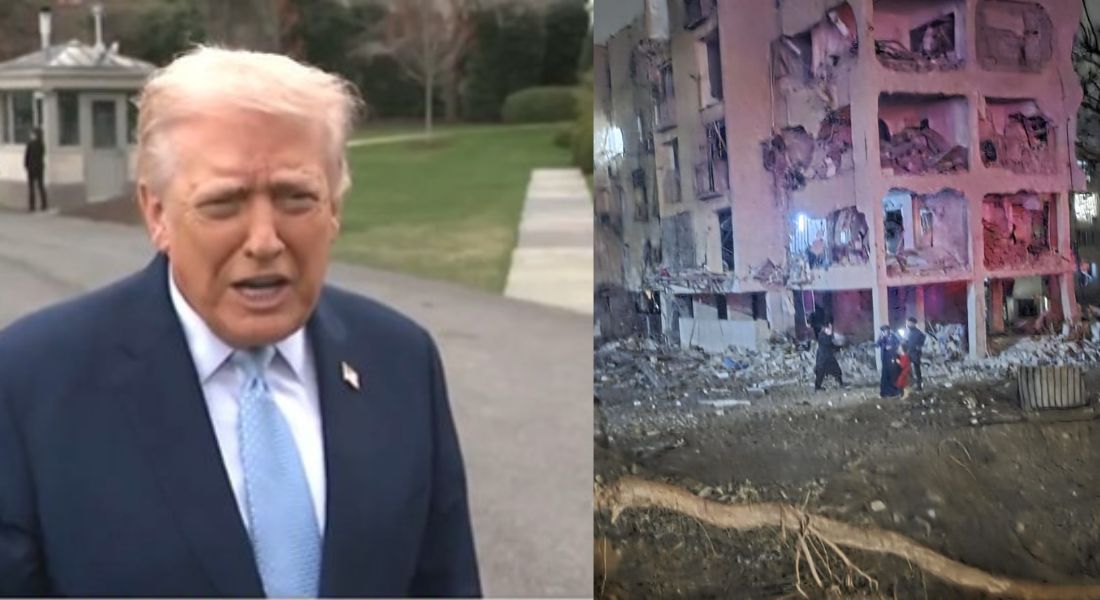
According to CNBC, Trump said the United States would “hit and obliterate” Iran’s power plants if the key shipping route is not fully reopened within 48 hours. In a post on Truth Social, he wrote: “If Iran doesn’t FULLY OPEN… the Strait of Hormuz… the United States of America will hit and obliterate their various POWER PLANTS.”
The warning marks a sharp shift in tone, coming shortly after Trump had indicated that the US was “getting very close” to winding down military operations. He also reiterated that he is not in favour of a ceasefire, stating, “We could have dialogue, but I don’t want to do a ceasefire… you don’t do a ceasefire when you’re literally obliterating the other side,” CNBC reported.
The conflict, now in its fourth week, has seen continued exchanges of attacks between Iran and Israel. Iranian strikes reportedly hit areas near Israel’s main nuclear research facility, injuring dozens, following reports of US-Israeli attacks on Iran’s Natanz nuclear site.
Iran has responded with strong warnings. Iranian military has reportedly said that any further attacks on its energy infrastructure would lead to retaliation targeting US-linked energy, technology, and desalination facilities across the region.
Meanwhile, more than 100 people were injured after Iranian ballistic missile strikes hit the southern Israeli cities of Dimona and Arad, with at least 11 reported to be in serious condition, The Times of Israel reported, adding that Israeli air defence systems failed to intercept at least two missiles. Among the critically injured were a 12-year-old boy and a five-year-old girl.
Following the attacks, Prime Minister Benjamin Netanyahu and Israel Defense Forces Chief Lt Gen Eyal Zamir vowed to continue military operations on “all fronts”, while the Israeli Air Force launched fresh strikes targeting infrastructure in Tehran. Israeli Defence Minister Israel Katz has also signalled further escalation, saying attacks on Iran would “increase significantly” in the coming days.
ALSO READ: PM Modi speaks with Iran president, condemns attacks on critical infrastructure
At the centre of the crisis is the Strait of Hormuz, a critical global energy corridor through which nearly a fifth of the world’s oil and liquefied natural gas supplies pass. Iran’s restrictions on the strait have disrupted global trade, pushing oil prices higher and raising fears of inflation across economies.
The economic impact is already visible. According to a report by the Financial Times, the world’s 20 largest airlines have lost around $53 billion in market value since the war began, with rising fuel costs and disrupted flight routes creating the industry’s biggest crisis since the pandemic.
On the ground, the humanitarian toll continues to rise. Reports indicate that more than 200 cities in Iran have been hit by US-Israeli strikes, with over 1,400 people killed. Civilian areas, including homes, schools, hospitals and aid facilities, have also been affected, highlighting the widening impact of the conflict.
With threats of direct attacks on energy infrastructure, disruption of global supply chains, and rising civilian casualties, the crisis is rapidly evolving into a broader geopolitical and economic confrontation.