At IndiaVerve, we go beyond the noise to bring you meaningful stories of change, resilience and progress—from India to the world stage. Our mission is to bring readers credible, wide-ranging coverage across politics, business, sports, culture, society and more.

Silver for Pranati Nayak in Tashkent vault competition

New Delhi: Odisha’s experienced gymnast Pranati Nayak has added another international medal to her career tally after securing the silver medal in the women’s vault event at the FIG World Challenge Cup held in Tashkent, Uzbekistan.

Pranati registered a combined score of 12.825, built on two vault attempts of 12.950 and 12.700, which placed her second on the podium in a competitive final, according to reports.

The Indian gymnast showed consistency across both routines to secure her position among the top finishers, underlining her continued presence in elite international gymnastics competitions.

Her compatriot Protistha Samanta also competed in the final and finished sixth with a total score of 12.650 after two vaults.

The result adds another international medal to Pranati’s career and strengthens India’s representation in artistic gymnastics on the global stage through the FIG World Challenge Cup circuit.

Odisha clarifies thermal power policy changes will not impact existing electricity tariffs

Bhubaneswar: The Odisha government has clarified that the proposed amendments related to thermal power projects will apply only to upcoming generating units and will not impact existing independent power producers currently supplying electricity under already signed Power Purchase Agreements.

According to the clarification, the present system of power availability to the state at variable cost will continue under the existing arrangements. The government also stated that the proposed policy changes will not affect the current Bulk Supply Price or the Retail Supply Tariff paid by electricity consumers in the state.

Officials said the proposed revision has been framed after reviewing the present industrial and economic environment, to attract fresh investment into the power sector and support faster industrial growth.

The revised framework is intended to create a more investment-friendly environment by improving investor confidence and encouraging new industrial projects, while maintaining safeguards for public interest.

The government noted that new thermal power projects often lead to the growth of ancillary industries, transport services, logistics networks, engineering operations and local supply chains, generating economic activity across several sectors.

It further stated that such projects create employment opportunities for local communities during both construction and operational stages, while also benefiting MSMEs, contractors, transport operators, and service providers connected to industrial activity.

According to the government, expansion in industrial and commercial operations is also expected to strengthen state revenue through GST collection and other statutory sources, improving the government’s capacity to invest in infrastructure and welfare programmes.

Reiterating its position, the state government said it remains committed to protecting consumer interests while also promoting industrial development, employment generation, and long-term economic growth.

Modi links global partnerships and technology push with youth employment at Rozgar Mela

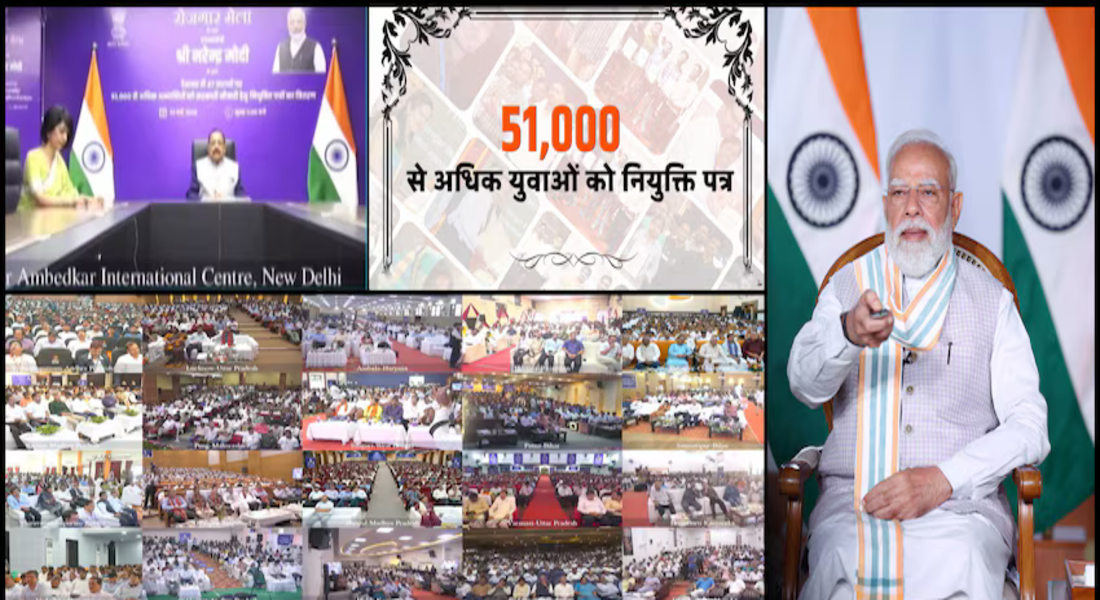
New Delhi: Prime Minister Narendra Modi on Saturday linked India’s expanding global partnerships and industrial growth directly with job creation, while distributing more than 51,000 appointment letters to newly recruited candidates under the 19th Rozgar Mela programme through video conferencing.

Addressing the newest entrants into government service, Modi said the country’s push in sectors such as semiconductors, artificial intelligence, electronics manufacturing, green energy, and shipbuilding was aimed at creating long-term employment opportunities for India’s youth.

He said the newly appointed candidates would become part of the larger mission of building a developed India by 2047.

The PM noted that the recruits would serve across key sectors, including railways, banking, defence, health, and education, adding that their role would be important in strengthening public service delivery and governance.

During his address, Modi referred extensively to his recent diplomatic visit to five countries, saying India’s growing international engagements are opening new economic and employment avenues for young professionals.

According to an official statement, discussions held with countries such as the Netherlands, Sweden, Norway, the UAE, and Italy focused on emerging sectors that are expected to drive global growth in the coming decades.

He said agreements related to semiconductors, digital innovation, clean energy, maritime infrastructure, defence technology, and advanced manufacturing were designed to strengthen India’s industrial ecosystem while creating employment opportunities for skilled youth.

Highlighting India’s semiconductor ambitions, Modi cited the partnership between ASML and Tata Electronics, saying the agreement would help generate thousands of jobs and strengthen India’s position in the global chip manufacturing supply chain. He added that partnerships in AI and supercomputing would further accelerate technological advancement in the country.

The PM also pointed to increasing investments in clean energy, green hydrogen, electronics manufacturing, and aviation maintenance infrastructure, saying these sectors were emerging as major employment generators for engineers, technicians, and skilled workers.

Speaking on manufacturing growth, Modi said the Production Linked Incentive scheme had boosted domestic electronics production and helped expand India’s manufacturing value chain. He added that both public and private sector investments were contributing to large-scale employment generation.

Modi further underlined the government’s focus on infrastructure expansion, including roads, railways, airports, ports, and digital connectivity. According to him, improved connectivity has transformed economic activity in villages and smaller towns by helping farmers, traders, and students gain better access to markets and services.

Army orders inquiry after Cheetah helicopter crash in Ladakh

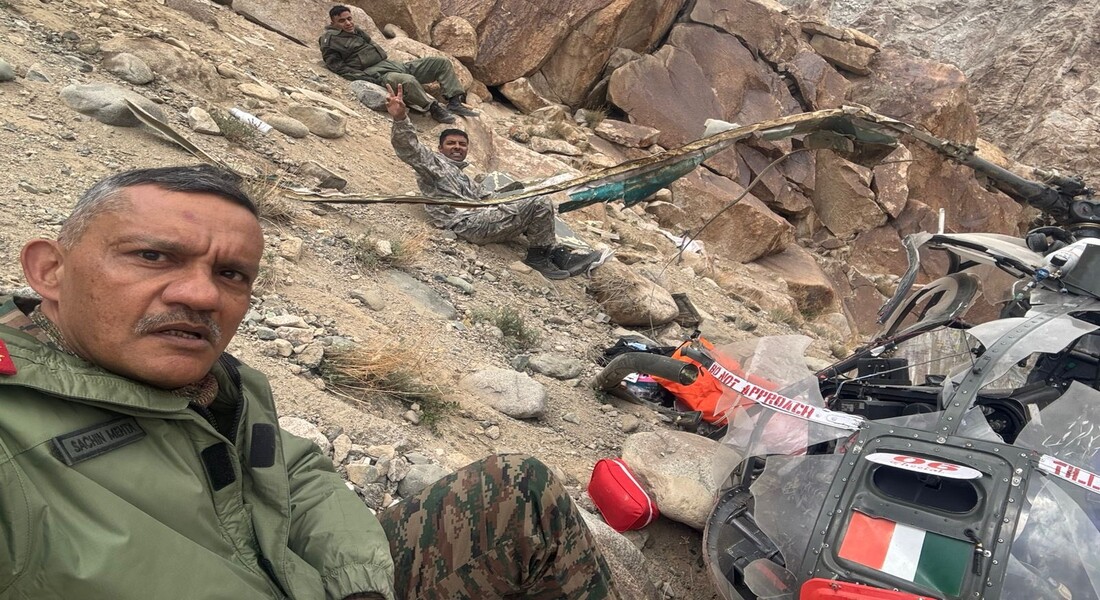
New Delhi: A routine operational sortie in the Ladakh sector turned into a mishap after an Indian Army Cheetah helicopter went down on May 20, resulting in injuries to two pilots and Division Commander Major General Sachin Mehta, according to officials familiar with the development.

Army authorities said all three injured personnel are safe and remain in stable condition following the accident. The incident occurred during operations in the high-altitude Ladakh region, though officials have not yet shared specific details about the circumstances leading to the crash.

To ascertain the cause of the mishap, the Army has ordered a Court of Inquiry, according to reports.

The accident has also drawn widespread attention online after a selfie reportedly taken by Major General Mehta following the crash surfaced on social media platforms and quickly went viral.

The latest incident has once again highlighted concerns regarding the ageing fleet of Cheetah helicopters, which have been serving the Indian armed forces since the 1970s. The helicopters are frequently deployed for transport, surveillance, and logistical support missions in difficult terrains and high-altitude sectors, including Ladakh and the Siachen Glacier.

The Cheetah fleet played a significant operational role during Operation Meghdoot in 1984, when Indian forces secured key positions in the Siachen Glacier region against Pakistani troops.

Over the years, several accidents involving Cheetah helicopters have been reported, leading to repeated debates over the safety and operational reliability of the ageing aircraft fleet.

The Indian military is gradually replacing the older helicopters with the indigenous Light Utility Helicopter developed by Hindustan Aeronautics Limited as part of its ongoing modernisation programme.

Odisha government reiterates comprehensive transfer guidelines for government employees

Bhubaneswar: The Odisha government has issued a fresh set of comprehensive guidelines on the transfer and posting of government employees, reiterating key administrative principles aimed at ensuring transparency, uniformity, and efficiency across departments and subordinate offices.

The instructions were issued by the General Administration and Public Grievance Department through a notification dated May 22, addressed to all departments of the government, heads of departments, revenue divisional commissioners, and district collectors.

According to the notification, transfer and posting of government employees are currently regulated under Book Circular No. 42 dated April 18, 1967, along with subsequent instructions issued by the department from time to time. The government reiterated that transfers should ordinarily be carried out between April 15 and June 15 every year.

The order clarified that transfer powers remain vested with the appointing authority during the permitted transfer period. However, if transfers are required outside the stipulated period, approval from the next higher authority will be mandatory. The provision applies to all categories of services.

The government stated that inconsistencies had been noticed in the implementation of existing transfer norms, leading to deviations from prescribed principles. In view of this, the state government decided to restate the core guidelines for strict compliance.

Under the revised directions, officers will ordinarily be transferred after completing three years at a station, although authorities retain the power to order transfers earlier in the public interest.

The guidelines further state that Group ‘A’ and Group ‘B’ state cadre officers will not be allowed to remain in a particular district for more than six years. Each revenue district will be treated as a separate unit for this purpose.

Similarly, Group ‘C’ employees cannot remain in a particular block or tahasil for more than six years.

The government has also reiterated restrictions on posting officers in their home districts in sensitive positions belonging to Group ‘A’ and Group ‘B’ categories. Administrative departments will decide which posts are considered sensitive. A reference list of sensitive posts issued earlier through a circular dated July 29, 1991, has also been attached to the guidelines.

At the same time, officers not holding sensitive posts may be posted in their home districts or preferred districts two years before retirement, subject to the restrictions applicable to sensitive posts.

The guidelines also provide relaxation for officers serving in the KBK region. Officials completing six years of continuous service in KBK areas may be considered for posting in their home districts or any preferred district, again subject to conditions related to sensitive posts.

In cases where both husband and wife are employed under the Odisha government, efforts may be made to post them at the same station, provided restrictions relating to sensitive posts are observed.

The government has also issued directions regarding non-transferable services, including ministerial cadres in the Secretariat and heads of department offices. It stated that no employee should remain in the same seat for more than three years, except under special circumstances.

The order additionally states that transfer and posting notifications should normally specify which officer will relieve another. If such details are absent, the transferred officer must hand over responsibilities to another officer at the same station under orders of the immediate superior authority before joining the new posting.

Authorities issuing transfer orders have also been advised to clearly mention relieving and joining timelines wherever necessary.

The government said any relaxation of these principles can only be made in the public interest, on administrative grounds, or in hardship cases, with reasons recorded in writing by the competent authority.

Departments have been asked to frame or revise their own transfer policies in line with the newly reiterated principles to meet specific functional requirements.

The notification stated that all departments and subordinate offices must follow the instructions “scrupulously in letter and spirit.” It further clarified that all previous instructions inconsistent with the latest guidelines would stand modified to that extent.


KIIT signs UN partnerships to expand global volunteering opportunities for students

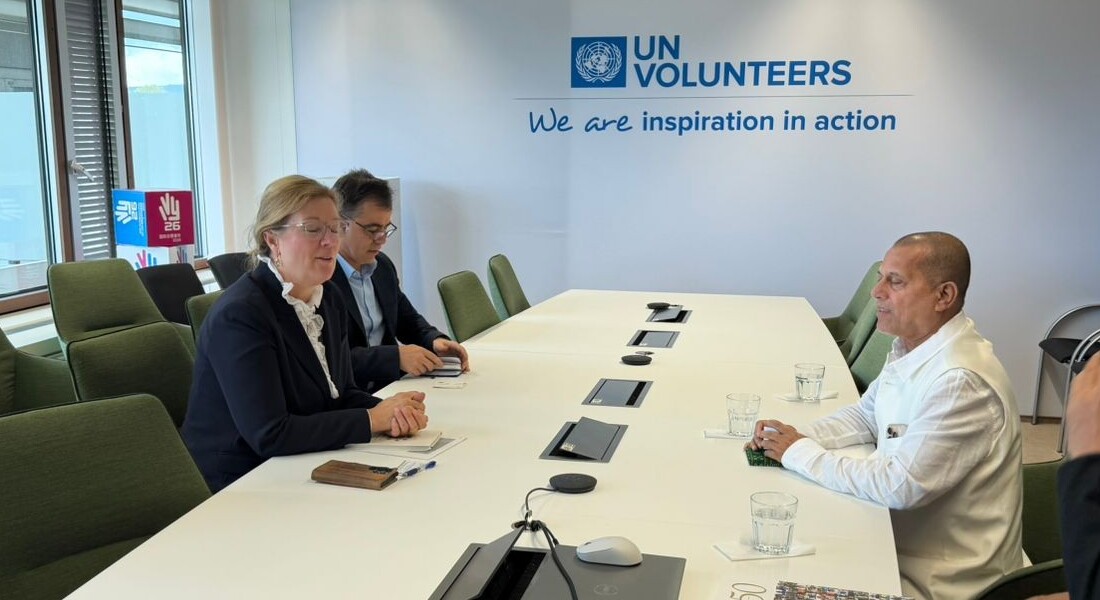
Bhubaneswar: KIIT has signed two international Memorandums of Understanding (MoUs) with UN Volunteers (UNV) and UN System Staff College (UNSSC) to create global volunteering and leadership opportunities for students of KIIT and KISS.

The agreements were signed during the visit of KIIT and KISS founder Achyuta Samanta to Germany.

According to the university, the partnership with the UNV programme is aimed at providing students with international exposure while encouraging participation in volunteer-driven social initiatives across global platforms.

Dr. Samanta said the initiative would help students contribute meaningfully to society through volunteerism and added that KIIT has become the first university in South Asia to establish such a pathway with UNV for youth volunteering.

During the visit, discussions were also held with UNV leadership on future collaboration in areas linked to youth engagement, service-oriented learning, and global community participation.

In another development, KIIT agreed with the UNSSC through the Nelson Mandela Global Academy for Social Change. The collaboration is expected to support programmes focused on leadership, peace-building, dialogue, social transformation, and humanitarian values for young learners.

Dr. Samanta said education should extend beyond academics and help nurture compassion, responsibility, and a commitment towards humanity. He also thanked the UN bodies for partnering with KIIT and expressed confidence that the collaborations would open new global learning avenues for students of KIIT and KISS.

The MoU signing and related discussions were attended by Louise Chamberlain, Deputy Executive Coordinator of UN Volunteers; Sukhrob Khoshmukhamedov, Chief of External Relations and Communications Section at UN Volunteers; and Silke Weinlich, Deputy Director of Learning and Knowledge Services at UNSSC.

Odisha signs heritage conservation pact with IIT Kharagpur, SPA Bhopal

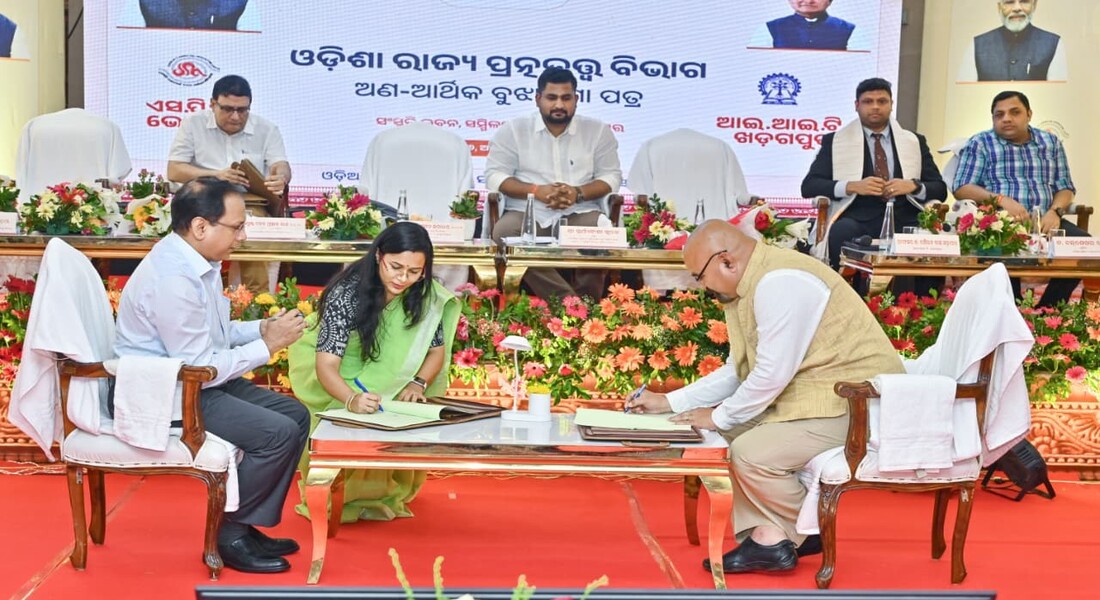
Bhubaneswar: The Odisha government on Friday signed an important non-financial Memorandum of Understanding (MoU) with the Indian Institute of Technology (IIT) Kharagpur and the School of Planning and Architecture (SPA) Bhopal to strengthen the preservation and digital documentation of the state’s cultural and archaeological heritage.

The agreement was signed at Sanskruti Bhavan in Bhubaneswar between the Odisha State Archaeology Department and the two national institutions.

Under the collaboration, advanced technologies, including LiDAR, 3D animation, digital mapping, Geographic Information Systems, and remote sensing, will be used for the conservation and digital archiving of Odisha’s major monuments, temples, and historical sites.

Speaking on the occasion, Minister of Odia Language, Literature and Culture, Suryabanshi Suraj, said the initiative was aimed at ensuring long-term protection of the state’s rich cultural and archaeological legacy.

In a post on X, the minister said the partnership represented a meaningful integration of tradition and technology that would help preserve Odisha’s heritage for future generations.

He added that the government wants cultural institutions in the state to adopt modern technological practices while remaining deeply rooted in the values and traditions of Odia civilisation.

According to the minister, the initiative has the potential to position Odisha as a leading model in heritage management and conservation in the country.

He also thanked the authorities and experts of both institutions for joining hands with the state government in the project.

New US immigration policy may force green card applicants to process cases abroad

New Delhi: The US government has introduced a new immigration policy that could require many foreign nationals seeking green cards to complete their applications outside the country through American consulates and embassies.

The change was announced by the US Citizenship and Immigration Services (USCIS) in a policy memorandum released on Friday, according to theguardian.com.

The agency said immigration officers would examine requests individually while deciding whether exceptional relief should be granted in specific cases.

Under the updated guidance, temporary visa holders in the US who are pursuing permanent residency may be directed to return to their home countries and continue the green card process through the US State Department instead of completing it from within the country.

The Department of Homeland Security (DHS), which oversees USCIS, defended the move by saying the immigration system should operate in line with existing legal procedures rather than encouraging what it described as loopholes.

For more than six decades, eligible immigrants already living in the United States have been able to seek permanent residency through a process known as adjustment of status, allowing them to remain in the country while their applications are reviewed.

The new USCIS policy marks a major shift in that long-standing practice and has triggered criticism from immigration attorneys, aid organisations and policy experts.

Analysts warned that the revised process could create fresh uncertainty for immigrants already living and working in the United States, particularly families with mixed immigration status.

According to estimates cited by the Cato Institute, more than one million immigrants in the country are currently waiting for green cards as the US immigration system continues to face a large backlog of pending visa and residency applications.

Critics of the policy say applicants may be forced to leave behind employment, housing, and family members while waiting for decisions on their cases abroad, with no clear timeline for re-entry into the US.

WHO raises Congo ebola risk to “very high” as outbreak accelerates

New Delhi: The World Health Organization (WHO) has raised its national risk assessment for the Ebola outbreak in the Democratic Republic of the Congo (DRC) to “very high,” citing a sharp rise in suspected cases and deaths alongside operational challenges in affected areas.

WHO officials said the outbreak has expanded rapidly within a week, with suspected cases increasing to around 750 and suspected deaths rising to 177, compared to 246 cases and 65 deaths reported earlier.

The outbreak is primarily concentrated in Ituri province in the northeast of the country. However, a small number of cases have also been reported in other parts of the DRC, along with two confirmed cases in neighbouring Uganda, according to theguardian.com.

WHO Director-General Dr Tedros Adhanom Ghebreyesus described the situation as “deeply worrisome,” noting the pace of transmission and challenges faced by health responders on the ground.

On Thursday, tensions escalated outside a hospital in Rwampara, where tents and medical supplies set up for Ebola treatment were set on fire during unrest involving members of the local community and health workers.

The incident reportedly followed objections from residents after they were prevented from retrieving the body of a man who had died at the hospital. Ebola safety protocols require strict infection-control measures, including regulated handling and burial of bodies to prevent further spread of the virus.

WHO representatives said the attack would significantly affect response operations in the area. The treatment facility was intended to isolate Ebola patients from other hospital cases, and efforts were underway to restore functionality within a short timeframe.

WHO officials also highlighted growing mistrust among some communities toward external responders, which they said is affecting containment efforts. Building trust and improving community engagement was identified as a key priority in the response strategy.

Despite the national escalation to “very high” risk, the WHO maintained that the regional risk remains high, while the global risk continues to be assessed as low.

Dr Anne Ancia, WHO representative in the DRC, said the incident in Rwampara would “significantly jeopardise” response efforts, though she expressed confidence that the treatment centre could resume operations soon.

She also said the response team was still working to bring the outbreak under control, even as transmission continues in affected areas.

Odisha invokes ESMA, bans strikes in power sector for 6 months

Bhubaneswar: The government of Odisha has imposed a six-month prohibition on strikes in the state’s electricity services under the Odisha Essential Services (Maintenance) Act (ESMA), 1988, in a move aimed at ensuring uninterrupted power supply across generation, transmission, and distribution systems.

The restriction covers all key power utilities and establishments, including GRIDCO, OPTCL, OHPC, OPGC, TPCODL, TPNODL, TPSODL, TPWODL, and other power-related organisations operating in the state.

According to the official order issued by the Home (Special Section) Department, the state government said it was satisfied that prohibiting strikes in the electricity sector was necessary in the public interest to maintain industrial stability and ensure smooth power operations.

The notification defines “strike” under the provisions of the Act to include coordinated work stoppages, refusal to work under a common understanding, and unauthorised absence from duty as part of collective action.

Invoking powers under Section 3(1) read with Section 2 of the Odisha ESMA, the government declared that the ban on strikes will remain in force for six months from the date of issue.

The order is aimed at safeguarding uninterrupted electricity supply, particularly amid ongoing high demand conditions, and ensuring continuity in essential services across Odisha.

Deputy Chief Minister and Energy Minister Kanak Vardhan Singh Deo said the move reaffirms the government’s commitment to maintaining a stable and reliable power ecosystem, stressing that uninterrupted electricity is critical for the state’s development and public welfare.

In a post on X, he said: “Recognizing its critical importance, the government of Odisha has invoked the Odisha Essential Services (Maintenance) Act, 1988, to prohibit strikes in the generation, transmission, and distribution of electricity across GRIDCO, OPTCL, OHPC, OPGC, and all DISCOMs.”