At IndiaVerve, we go beyond the noise to bring you meaningful stories of change, resilience and progress—from India to the world stage. Our mission is to bring readers credible, wide-ranging coverage across politics, business, sports, culture, society and more.

Govt tightens paddy procurement system for Kharif season

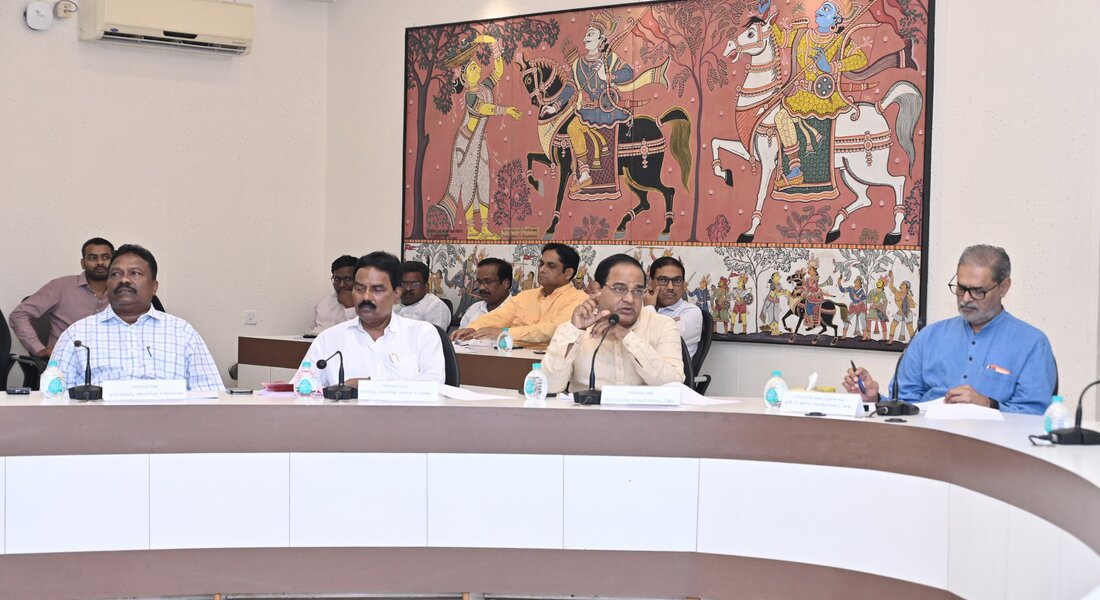
Bhubaneswar: The Odisha government on Monday announced a series of measures to strengthen and streamline the paddy procurement process for the upcoming Kharif Marketing Season 2025-26, with Deputy Chief Minister Kanak Vardhan Singh Deo stressing that the interests of small and marginal farmers would receive top priority.

The decisions were taken during a high-level inter-ministerial committee meeting held in Bhubaneswar under the chairmanship of Singh Deo. Ministers from the Food Supplies & Consumer Welfare, Revenue & Disaster Management, Cooperation, and Panchayati Raj & Drinking Water departments, along with senior officials, attended the meeting.

Addressing the meeting, the Deputy Chief Minister directed officials to ensure transparency and strict monitoring during paddy procurement operations across the state.

To curb middlemen activities and illegal trading, the government has decided to introduce stricter enforcement measures. District collectors will conduct daily reviews of procurement activities, while Odisha’s borders will be sealed to prevent paddy from neighbouring states from entering procurement mandis within the state, according to an official release.

The government has also made iris-based identity verification mandatory at mandis to ensure proper authentication of farmers. Officials said paddy weighing will only be permitted inside designated mandis to prevent irregularities.

A 24-hour timeline has been fixed for resolving farmers’ grievances, with nodal officers assigned to monitor complaints. Farmers will also be able to directly register complaints through the toll-free helpline number 1967.

The state government further announced infrastructure upgrades at procurement centres to improve facilities for farmers. Each Paddy Procurement Centre (PPC) will be equipped with drinking water facilities, toilets, rest sheds, lighting arrangements and tarpaulin covers to protect paddy from rain.

Vehicle Tracking System (VTS) technology will also be introduced for proper monitoring and transportation of paddy vehicles. Weighing machines at procurement centres will undergo verification to ensure accuracy and transparency.

Officials informed the meeting that compared to last year, paddy procurement in Odisha has increased by 5.48 per cent, while the number of participating farmers has gone up by 14 per cent.

In view of the higher procurement volume, the Food Corporation of India (FCI) has been asked to construct additional warehouses in major paddy-producing regions to strengthen storage capacity.

Senior officials present at the meeting included Food Supplies & Consumer Welfare Principal Secretary Sanjay Kumar Singh, Cooperation Department Commissioner-cum-Secretary Rajesh Prabhakar Patil, and Agriculture & Farmers’ Empowerment Commissioner-cum-Secretary Sachin Ramchandra Jadhav, along with officials from related departments.
Odisha scholar Mahendra Kumar Mishra receives Padma Shri award

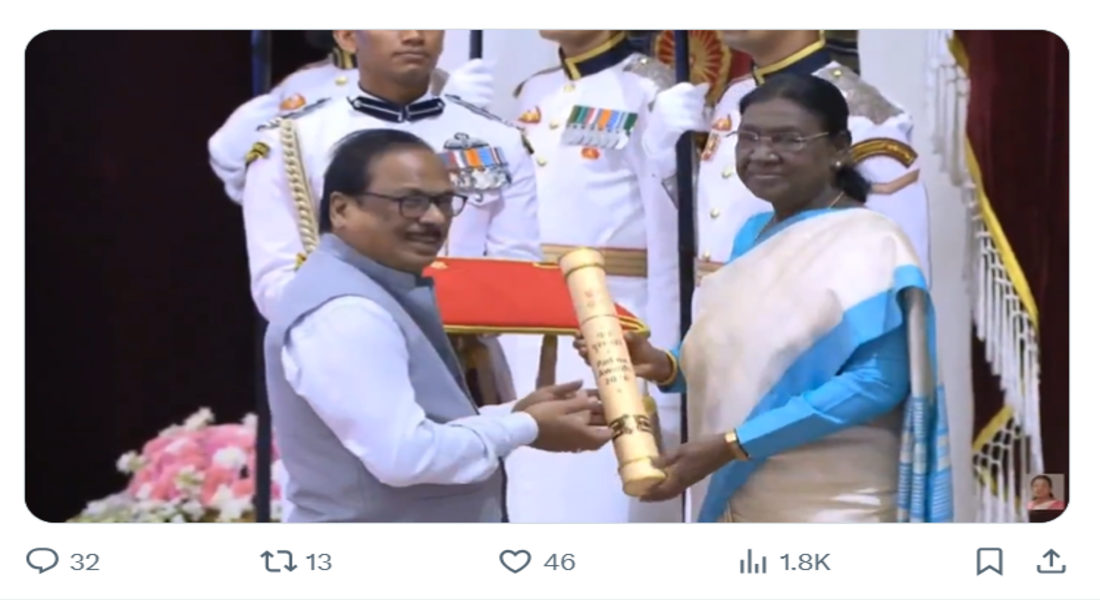
Bhubaneswar: Odisha’s eminent scholar and litterateur Dr. Mahendra Kumar Mishra was honoured with the prestigious Padma Shri award by President Droupadi Murmu on Monday at a special ceremony held at Rashtrapati Bhavan in New Delhi.

The award, regarded as India’s fourth-highest civilian honour, was presented in recognition of Mishra’s contribution to literature and education.

The ceremony was attended by top national leaders, including Prime Minister Narendra Modi and Union Home Minister Amit Shah, according to an official statement.

Meanwhile, Chief Minister Mohan Charan Majhi congratulated Mishra for receiving the prestigious award and for bringing immense pride and honour to the entire state.

In a post on X, he said: “Heartfelt congratulations and best wishes to Odisha’s eminent researcher and litterateur, Dr. Mahendra Kumar Mishra, who received the Padma Shri award for the year 2026 from the Hon’ble President of India at a special ceremony held at Rashtrapati Bhavan in New Delhi.”

Majhi added: “This prestigious recognition for his contribution to the fields of literature and education is a matter of immense pride and honour for the entire state. I pray to Mahaprabhu Shri Jagannath for his good health, well-being, and continued success in the years ahead.”

According to a President’s Office statement, Mishra is a linguist, folklorist, and educationist who has dedicated more than four decades to preserving endangered tribal voices while embedding them in modern pedagogy, earning global acclaim for voicing the Indian knowledge system embedded in the tribal and rural population of India.

He has promoted many tribal organisations and youths for the promotion of tribal language, culture, and education for tribal development.

Nirmala Sitharaman launches SIDBI initiatives to boost MSME growth

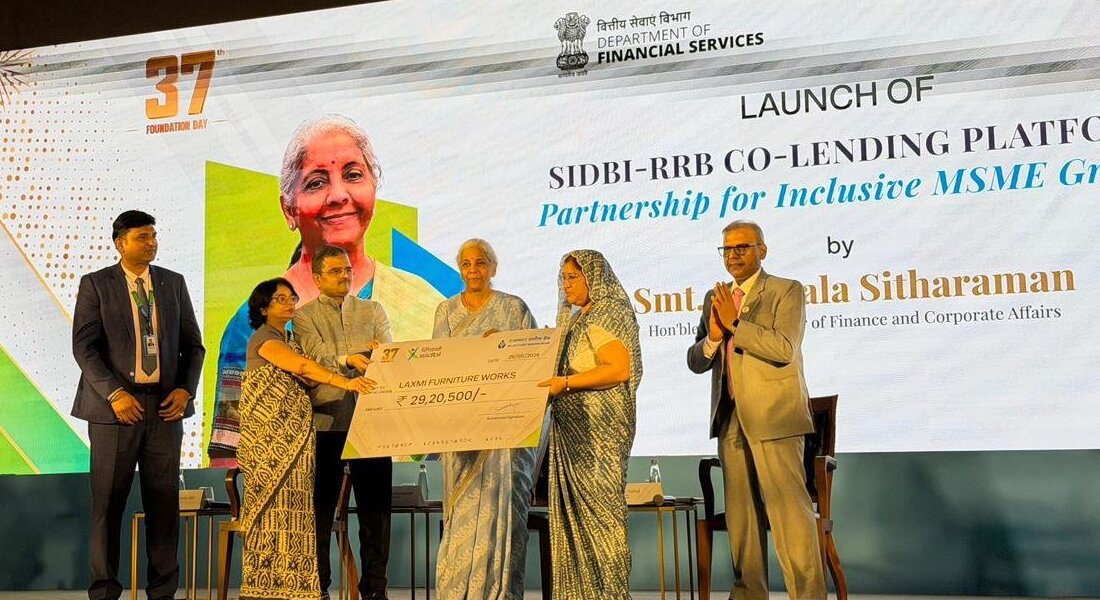
Mumbai: Union Finance Minister Nirmala Sitharaman on Monday launched a series of new initiatives aimed at strengthening India’s Micro, Small, and Medium Enterprises (MSME) ecosystem during the SIDBI Foundation Day programme held in Mumbai.

The initiatives introduced by Sitharaman are focused on improving credit access, modernising rural enterprises, promoting technology adoption, and enhancing financing support for micro, small, and medium enterprises across the country.

Among the major announcements was the launch of the SIDBI-RRB Co-Lending Platform, which seeks to improve MSME credit penetration in semi-urban and rural regions. The platform combines SIDBI’s digital and MSME financing capabilities with the grassroots reach of Regional Rural Banks to facilitate seamless credit delivery, Sitharaman’s office said in a series of posts on X.

Sitharaman also launched the Modernization of Rural Enterprises Programme, a cluster-based intervention designed to support non-farm rural enterprises through credit and additional assistance for technology upgrades, quality improvement, and market access. The programme is expected to benefit units involved in activities such as jaggery production, pottery, flour milling, oil extraction, and brass craftsmanship.

Another key initiative unveiled at the event was the Micro Credit Card Scheme for Micro Enterprises. Under the scheme, Udyam-registered micro enterprises will be able to access revolving credit of up to Rs 5 lakh without mandatory primary security, backed by a 75% guarantee cover. The scheme aims to support small manufacturers, shopkeepers, and micro entrepreneurs requiring working capital support.

The minister also launched the SIDBI MSME Exchange – Machinery Portal, a digital platform integrating machinery discovery with institutional financing support to help MSMEs accelerate capital investment and technology adoption.

Highlighting the importance of the MSME sector, Sitharaman said MSMEs contribute nearly 35% of manufacturing output, 48% of exports, and around 31% of India’s GDP. She noted that the sector includes more than 7.47 crore entrepreneurs and provides employment to over 32 crore people across the country.

Referring to the Union Cabinet’s decision earlier this year to approve an additional equity support of Rs 5,000 crore to Small Industries Development Bank of India, Sitharaman said the move would help the institution strengthen its balance sheet and add 25 lakh new MSME beneficiaries by 2028.

She said the government’s focus is to ensure that SIDBI can raise lower-cost funds and pass on the benefits to entrepreneurs through wider, cheaper, and more accessible credit.

Sitharaman also underlined the need for flexible financing models tailored to different business cycles instead of adopting a uniform repayment structure for all enterprises.

“Standard products cannot serve non-standard businesses,” she said, while highlighting the challenges faced by sectors such as agriculture-linked enterprises, tourism businesses, exporters, and women entrepreneurs.

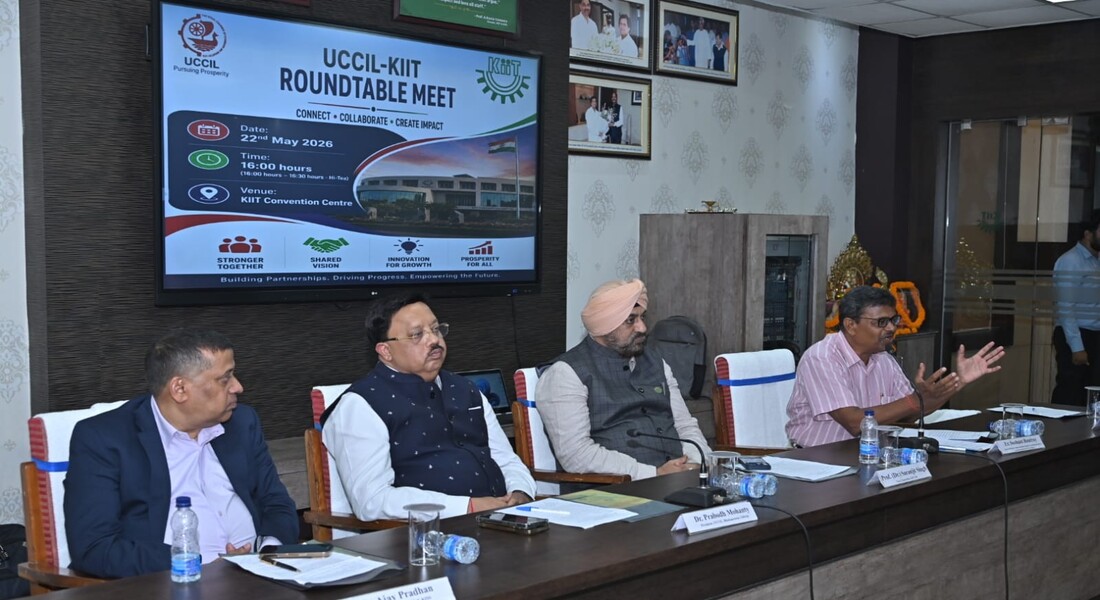
KIIT, UCCIL discuss industry-academia partnership for Odisha growth

Bhubaneswar: KIIT Deemed to be University and Utkal Chamber of Commerce and Industry Limited (UCCL) have initiated discussions to strengthen industry-academia collaboration aimed at supporting Odisha’s expanding manufacturing and industrial ecosystem.

A recent roundtable meeting between the two institutions brought together academic leaders, industry representatives, researchers, and members of UCCIL to explore cooperation in areas including workforce reskilling, internships, applied research, supply chain optimisation, and technology adoption, KIIT said in a release.

Welcoming the participants, Dr. Ajay Pradhan, Vice President of the Institute Industry Innovation Initiative (i4) at KIIT and KISS, said the initiative seeks to build a meaningful partnership by aligning the university’s educational, research, and incubation capabilities with the practical needs of industries in Odisha.

He said the proposed collaboration would focus on workforce reskilling and upskilling, industry-oriented research projects, and structured internship and placement opportunities for students.

Highlighting KIIT’s academic strength, Dr. Pradhan stated that the university can provide skilled technical manpower across multiple levels, ranging from ITI and polytechnic graduates to engineering and management professionals capable of contributing directly to industrial operations and projects.

He also noted that industry participation would help make academic research and teaching more market-oriented and outcome-driven.

As part of the short-term roadmap, KIIT and UCCIL proposed setting up dedicated working groups on skill development, research and development, internships, and supply chain management. These groups are expected to prepare action plans within the next 90 days.

The discussions also included plans to introduce pilot reskilling programmes and internship batches with measurable outcomes linked to employability and productivity enhancement.

Dr. Pradhan further proposed a long-term “Institute Industry Innovation Partnership” framework involving regular roundtable interactions, an industry advisory council for curriculum and research planning, shared laboratories, guest faculty exchanges, and industry-sponsored research initiatives.

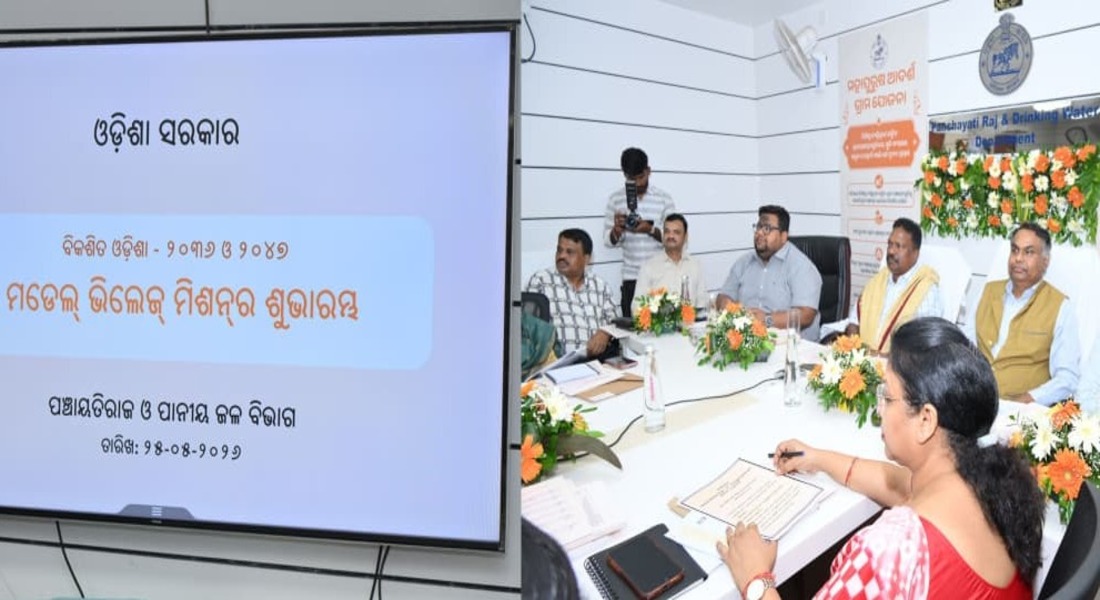
Odisha launches two flagship schemes to transform rural villages

Bhubaneswar: In a major push towards rural transformation under the vision of ‘Vikshit Odisha 2036’, the Odisha government on Monday launched two key initiatives — the Model Village Mission and Mahapurusha Adarsha Grama Yojana (MAGY) — aimed at improving infrastructure, basic amenities and livelihoods in villages across the state.

The schemes were formally launched by Rural Development, Panchayati Raj & Drinking Water Minister Rabi Narayan Naik through video conferencing with district administrations.

The Model Village Mission has been designed to strengthen rural infrastructure and provide urban-like amenities in villages while promoting self-sustaining and self-governing communities. The initiative seeks to ensure access to essential public services and community spaces in rural Odisha.

Under the first phase of the mission, the government plans to cover headquarters villages of all 6,733 gram panchayats in the state by 2029. A baseline survey will be conducted to identify infrastructure gaps and assess the availability of essential amenities at the village level.

To facilitate the survey, the minister released a comprehensive survey format prepared in consultation with several departments, including Health & Family Welfare, School & Mass Education, Women & Child Development, Fisheries & Animal Resources Development, and Energy.

With the launch of the survey process, implementation of the Model Village Mission officially began across Odisha. Naik stressed the need for coordinated and time-bound execution to ensure meaningful transformation of rural areas.

For effective implementation and monitoring, the government has constituted a State-Level Task Force headed by Panchayati Raj & Drinking Water Commissioner-cum-Secretary Girish S.N., involving all key stakeholder departments. Similar district-level task forces led by collectors have also been formed.

Alongside the Model Village Mission, the minister also launched the Mahapurusha Adarsha Grama Yojana (MAGY), which aims to promote holistic development in the native gram panchayats of eminent personalities who have contributed significantly to Odisha’s social, cultural, literary and political history.

The scheme will be implemented over three years from 2026–27 to 2028–29 and is expected to cover around 100 to 150 gram panchayats across the state. In its first phase, the programme will be rolled out in 15 gram panchayats linked to 16 prominent personalities across 12 districts.

MAGY will prioritise infrastructure projects such as roads, piped drinking water, healthcare facilities, anganwadi centres, playgrounds, digital connectivity and solar energy systems. The scheme will also support memorial parks and restoration of ancestral houses linked to notable personalities.

Apart from infrastructure, the programme will focus on skill development, digital literacy, social security and livelihood generation to ensure inclusive rural growth.

According to the government, both schemes will be implemented through convergence of various state and central welfare programmes, with committees at state, district and block levels overseeing monitoring and coordination.

Naik said the initiatives would not only accelerate sustainable rural development but also help preserve and honour the legacy of Odisha’s eminent personalities.

Opposition slams Odisha government over Berhampur attack

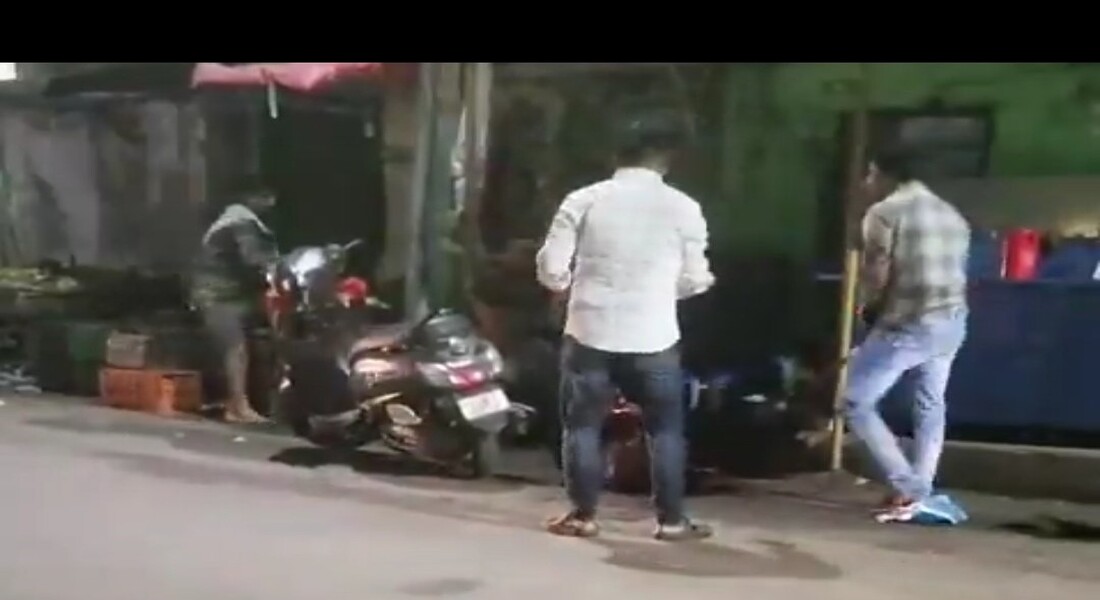
Bhubaneswar: BJD supremo Naveen Patnaik on Monday strongly criticised the Odisha government over the recent violent attack in Berhampur, alleging a collapse of law and order in the state.

Reacting to the brutal assault on a young man at Ambika Nagar in Berhampur’s Badabazar area, Patnaik described the visuals of the incident as “extremely disturbing” and said such repeated crimes were creating fear among people across Odisha.

In a post on X, the former chief minister said people were yet to recover from the recent assault on a young man and a woman in Berhampur when another shocking incident surfaced from the city.

Patnaik alleged that criminals were carrying out offences openly on public roads despite repeated warnings of police action, claiming it reflected the failure of the law-and-order machinery.

“A sense of lawlessness and fear is prevailing across the state,” he said, while urging the government to move beyond “big speeches” and take concrete measures to ensure public safety and maintain the rule of law.

Joining the attack, Odisha Congress President Bhakta Charan Das also targeted the BJP government, saying the latest violence in Berhampur had once again exposed the deteriorating law-and-order situation in the state.

In a post on X, Das alleged that rising crime and repeated administrative failures under the BJP government had weakened public confidence in governance and safety.

Meanwhile, the prime accused in the attack, identified as Jaga Sahu, sustained injuries during a police encounter in Berhampur.

Jaga and one of his associates had allegedly brutally attacked a man in the Ambika Nagar area, an incident that drew widespread criticism after visuals captured by bystanders went viral on social media.

Acting swiftly, the Berhampur police launched a manhunt to nab the accused. According to reports, Jaga attempted to flee and allegedly tried to hurl a bomb at the police team during the search operation.

In response, the police opened fire, injuring Jaga in both legs.

Rahul Gandhi attacks centre over fuel prices, NEET paper leak row

New Delhi: Congress leader Rahul Gandhi on Monday launched a sharp attack on the Centre over rising fuel prices and the NEET paper leak controversy, accusing the Narendra Modi government of burdening citizens while remaining silent on issues affecting students and youth.

Targeting Modi over the increase in petrol and diesel prices, Gandhi alleged that fuel rates were being raised in phases to avoid public backlash.

Calling the PM “Inflation Man Modi”, the Congress leader claimed he had been warning about an “economic storm” for months and alleged that the government delayed the fuel price hike until after the elections.

“Promises during elections, and attacks on people’s pockets afterwards,” Gandhi said in a post on X, while criticising the Centre’s economic policies.

Petrol and diesel prices witnessed another increase on Monday, the fourth revision in the past 10 days, as global crude oil markets remained under pressure due to escalating tensions in West Asia.

State-owned oil marketing companies announced fresh hikes in fuel rates across several parts of the country, with petrol and diesel becoming costlier by more than Rs 2 per litre in many states.

The latest revision comes against the backdrop of continued uncertainty surrounding the Strait of Hormuz, a strategically important shipping route for global crude oil supplies. Concerns over possible disruptions in the region have contributed to volatility in international oil prices in recent days.

Meanwhile, the Congress MP also raised the issue of the NEET paper leak controversy, saying the future of nearly 22 lakh students was at stake while the government continued to remain silent on the matter.

Demanding accountability, Gandhi said the protests would continue until Union Education Minister Dharmendra Pradhan resigns and a foolproof mechanism is introduced to prevent examination paper leaks in the future.

The remarks come amid continuing political sparring between the opposition and the BJP-led NDA government over inflation, unemployment, and alleged irregularities in competitive examinations.

BJD Rajya Sabha MP Debashish Samantaray resigns from party

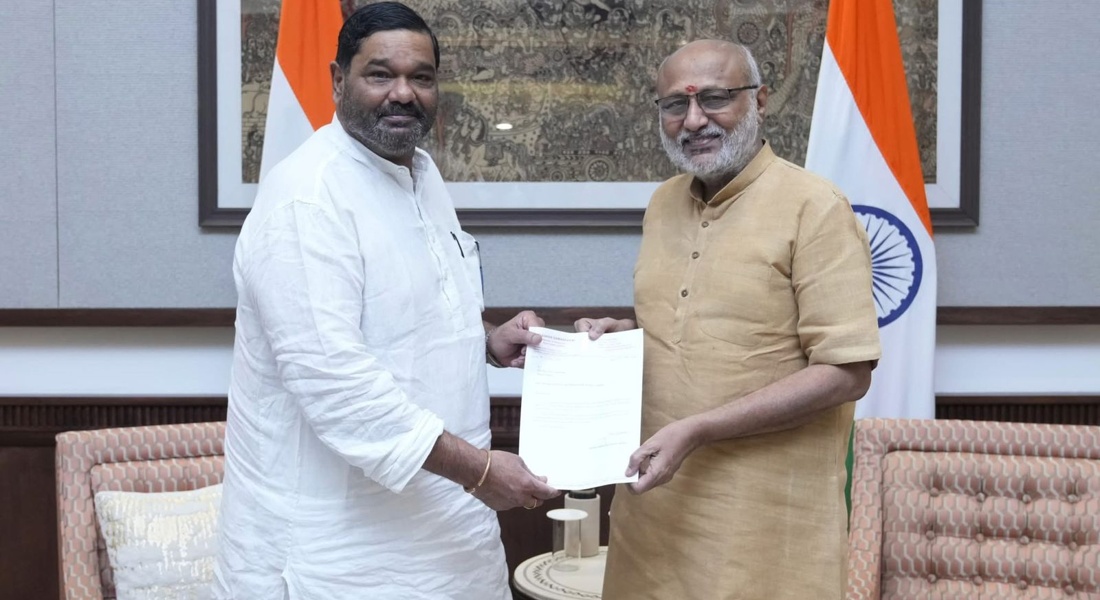
Bhubaneswar: Senior Biju Janata Dal (BJD) leader Debashish Samantaray on Monday resigned from the party’s primary membership, alleging neglect and inadequate recognition within the party, amid mounting speculation over a possible shift to the Bharatiya Janata Party (BJP).

In a resignation letter addressed to BJD supremo Naveen Patnaik, the Rajya Sabha MP said he had taken the “hard decision” in public interest after feeling “systematically belittled” in the party in recent times.

“I feel that, of late, I have been systematically belittled in the party and that the party does not require my services,” Samantaray wrote in the letter.

The parliamentarian, who represents Odisha in the Rajya Sabha, expressed gratitude to Patnaik for nominating him to the Upper House and for allowing him to serve the people of the undivided Cuttack district and to raise issues concerning Odisha at the national level.

Samantaray also stated that he had worked for the party with “utmost conviction and commitment” over the years and had always remained dedicated to the interests of the regional outfit.

The resignation comes at a politically significant time for the BJD, which has been witnessing internal churn following recent electoral setbacks and organisational restructuring efforts. Following his resignation, the BJD’s strength in the Rajya Sabha has come down to five members

Samantaray currently serves as a member of the Committee on Public Undertakings, the Standing Committee on Housing and Urban Affairs, and the Consultative Committee for the Ministry of Road Transport and Highways.

Meanwhile, media reports said that Samantaray is most likely to join the BJP. It is also reported that he will join the ruling party in the presence of Odisha Chief Minister Mohan Charan Majhi and other senior party leaders in New Delhi.

Trump asks negotiators ‘not to rush’ as US-Iran deal talks continue

US Secretary of State Marco Rubio said progress has been made on reopening the Strait of Hormuz, but cautioned that negotiations remain ongoing.

New Delhi: US President Donald Trump has said he has instructed American negotiators “not to rush into a deal” with Iran, signalling a more cautious approach even as Washington indicates progress in talks aimed at easing tensions in West Asia.

Trump’s remarks came days after he suggested that a potential agreement between the United States and Iran had been “largely negotiated”, fuelling speculation that a diplomatic breakthrough could be imminent.

In a post on Truth Social, Trump said discussions with Tehran remained “constructive” but stressed that negotiators should proceed carefully. “I have told our negotiators not to rush into a deal,” Trump wrote, adding that “both sides must take their time and get it right.”

According to media reports, the framework currently under discussion could include a 60-day extension of the ceasefire, partial reopening of the Strait of Hormuz and fresh negotiations over Iran’s nuclear programme. However, several contentious issues — including sanctions relief, access to frozen Iranian funds and limits on Tehran’s nuclear activities — are reportedly expected to be addressed in later stages.

Speaking to reporters in New Delhi on Monday before leaving for Agra, US Secretary of State Marco Rubio said negotiations had made meaningful progress, particularly regarding the reopening of the Strait of Hormuz, a critical global shipping route. “Work is still in progress. We thought we might have some news last night, maybe today,” Rubio said.

He added that Washington had a “pretty solid thing on the table” regarding efforts to reopen the waterway and begin “a very real, significant, time-limited negotiation on the nuclear matters.”

Rubio acknowledged that while there had been broad international support for efforts to end the conflict in West Asia, the diplomatic process remained challenging. “Hopefully we can pull it off,” he said.

The Strait of Hormuz, through which nearly one-fifth of the world’s oil and liquefied natural gas passes, was effectively blocked by Iran following joint US-Israel strikes launched on February 28. Tehran’s response triggered disruptions in maritime trade and pushed global oil prices sharply higher.

Following a ceasefire agreement reached in early April, the US imposed a blockade on Iranian ports — a measure Trump has said will remain in place until any agreement is “reached, certified, and signed”.

Trump also reiterated Washington’s key demand that Iran must not acquire nuclear weapons. Tehran, however, has repeatedly maintained that its nuclear programme is intended solely for peaceful purposes.

Iranian Foreign Ministry spokesperson Esmail Baghaei recently suggested the two sides remained simultaneously “very close and very far” from an agreement, reflecting the fragile nature of the negotiations.

The reported deal has also triggered political divisions within the US. Republican Senator Ted Cruz reportedly described the proposal as “a disastrous mistake”, while Senate Armed Services Committee Chairman Roger Wicker warned that extending a ceasefire would undermine gains achieved through recent military operations.

However, Representative Mike Lawler, a member of the House Foreign Affairs Committee, defended the administration’s strategy, saying Washington had succeeded in bringing Iran into what he described as “a real negotiation”.

Europe condemns Russia after deadly Ukraine strikes reportedly involving Oreshnik missile

New Delhi: European leaders have strongly condemned Russia following Moscow’s latest large-scale missile and drone assault on Ukraine, which reportedly involved the Oreshnik hypersonic missile and renewed concerns over escalation in the ongoing war.

The criticism came after Russian strikes on Kyiv and other Ukrainian regions on Saturday night killed at least four people and injured around 100, according to Ukrainian authorities and media reports. Ukrainian President Volodymyr Zelensky said the capital bore the brunt of the attack, although several other areas were also hit.

Explosions echoed across Kyiv through the night as Russia launched hundreds of drones alongside dozens of missiles. Residential buildings, a school, an opera house and a museum were among the structures damaged in the strikes, the BBC reported.

Zelensky condemned the assault, accusing Moscow of deliberately targeting civilian areas. In a Telegram post cited by international media, the Ukrainian president described Russia’s actions as irrational, saying: “They are genuinely deranged.”

The latest strikes drew sharp criticism from European Union foreign policy chief Kaja Kallas, who described Russia’s reported use of the Oreshnik missile as “reckless nuclear brinkmanship”.

According to The Guardian, Kallas said Moscow had “hit a dead-end on the battlefield” and was now “terrorizing Ukraine with deliberate strikes on city centres”. Calling the attacks “abhorrent acts of terror meant to kill as many civilians as possible,” she warned that the reported use of a missile system capable of carrying nuclear warheads amounted to political intimidation.

Russia’s Defence Ministry said the strikes were carried out in response to what it claimed were Ukrainian attacks on civilian infrastructure. Moscow also confirmed the use of the Oreshnik intermediate-range ballistic missile, describing it as retaliation for an alleged Ukrainian strike on a student dormitory in Starobilsk, a town in Russian-occupied eastern Ukraine, that killed 21 people. However, Ukraine said its forces had targeted an elite Russian drone military unit in the area and denied attacking civilians, according to the BBC.

The Oreshnik missile, reportedly capable of travelling at more than 10 times the speed of sound, is considered difficult to intercept and can carry both conventional and nuclear warheads. Reports suggest Russia has now used the weapon multiple times during the conflict.

The attack came days after Zelensky warned that Russia appeared to be preparing a major offensive and could deploy advanced missile systems.

Meanwhile, Russian regions bordering Ukraine also reported retaliatory strikes. The BBC reported that missile attacks damaged energy infrastructure in Russia’s Belgorod region, disrupting electricity and water supply in some areas, though no casualties were reported. Drone activity was also reported in the Yaroslavl region northeast of Moscow.

Russia launched its full-scale invasion of Ukraine in February 2022, and the conflict has continued with periodic escalations, mounting casualties and growing international concern over broader regional instability.