At IndiaVerve, we go beyond the noise to bring you meaningful stories of change, resilience and progress—from India to the world stage. Our mission is to bring readers credible, wide-ranging coverage across politics, business, sports, culture, society and more.

Chief Secy reviews finances, plans outreach for governance milestones

Bhubaneswar: Odisha Chief Secretary Anu Garg on Thursday chaired a high-level secretaries’ meeting to review the financial performance of various departments up to May 2026 and discuss preparations for a statewide outreach campaign marking two years of the state government.

Held at Kharavela Bhawan, the meeting focused on budget expenditure, revenue collection, governance priorities and public engagement programmes planned to showcase developmental achievements and welfare initiatives.

At the outset, the Chief Secretary reviewed key achievements recorded across departments during May and praised Odisha’s performance in securing five national honours at the National Panchayat Awards 2025 held in New Delhi. She also acknowledged the increase in foreign tourist arrivals to Odisha in 2025 and the state’s progress under the Prime Minister Surya Ghar Yojana aimed at energy conservation.

Garg further appreciated recent agreements facilitated by the Electronics and IT Department between the Odisha government and technology firms Intel and ThreeDGS, which are expected to boost industrial and technological growth while generating investment and employment opportunities. The performance of OPGC in strengthening Odisha’s power security also came in for praise.

The meeting reviewed departmental financial performance against budget allocations till May 2026, including expenditure and revenue mobilisation across sectors. Officials noted increased spending in departments such as Water Resources, Rural Development, Fisheries and Animal Resources, Handloom Development, and Commerce and Transport compared to the corresponding period last year.

The Chief Secretary directed departments to accelerate expenditure, particularly in infrastructure development and revenue-generating sectors, while ensuring timely implementation of projects.

The meeting also stressed prioritising action on key directives and observations issued by Chief Minister Mohan Charan Majhi through official review notes. Departments were instructed to furnish relevant inputs for the upcoming 11th Governing Council meeting of NITI Aayog, scheduled to be chaired by Prime Minister Narendra Modi in New Delhi on June 11.

Officials discussed preparations for extensive public outreach programmes to mark two years of the Odisha government, aimed at strengthening citizen engagement and highlighting governance achievements. Additional Chief Secretary of the Information and Public Relations Department Hemant Sharma presented a detailed roadmap for state-wide programmes to be organised from state to gram panchayat levels.

According to the plan, awareness campaigns, exhibitions, discussions, project visits and public meetings will be conducted to highlight key achievements of both the state and central governments, along with Odisha’s three-year development roadmap.

As part of the outreach effort, Chief Minister Mohan Charan Majhi is expected to address the public through a press conference on June 9 on the implementation of central welfare schemes during the Narendra Modi-led government’s 12 years in office. Another media interaction will focus on Odisha government’s governance achievements over two years.

The meeting also discussed preparations for a major state-level event scheduled at Rairangpur on June 20 to mark the government’s second anniversary, where President of India Droupadi Murmu and Prime Minister Modi are expected to attend.

A five-day exhibition on central and state government schemes is planned in Bhubaneswar from June 12 to 16, while International Yoga Day celebrations on June 21 and student-led cleanliness drives involving universities and colleges will also be organised.

During the meeting, Cuttack Collector Dattatraya Bhausaheb Shinde made a presentation titled “Developed Odisha, Dynamic Cuttack”, outlining major development initiatives in the district, including tourism, textile parks, temple development, SCB Medical redevelopment and irrigation and road infrastructure projects.

The Odisha State Road Transport Corporation (OSRTC) also received appreciation for its performance. Officials highlighted that reforms, digital transformation, cashless ticketing, improved interstate connectivity and fuel-saving measures helped the corporation move into profit during the 2025–26 financial year.

Odisha eyes stronger coastal security through coordinated approach

Bhubaneswar: Odisha is set to strengthen its coastal security architecture through greater inter-agency coordination, technology integration and improved infrastructure, Chief Secretary Anu Garg said on Thursday while addressing the State-Level Coastal Security Conference–2026 organised by the Coastal Security Wing of Odisha Police.

Held at Police Bhawan in Bhubaneswar, the conference focused on enhancing Odisha’s coastal security framework in view of emerging challenges and the rapid expansion of maritime infrastructure across the state.

Addressing the valedictory session as chief guest, Garg said coastal security would play a crucial role in the vision of a “Prosperous Odisha”, particularly as the state witnesses rapid growth in ports, fish landing centres, industrial projects and maritime infrastructure.

She underlined the need for a coordinated strategy involving multiple government departments, security agencies and institutions connected to coastal activities to ensure an effective and future-ready security mechanism.

“A safe and strong coastal security system can only be achieved through integrated efforts,” Garg said, stressing that all stakeholders must function as a cohesive team to safeguard Odisha’s long coastline and maritime interests.

The Chief Secretary also reiterated the state government’s commitment to enhancing the capabilities of the Coastal Security Wing through improved infrastructure, skilled manpower and the use of advanced technologies. She said Odisha’s coastline would be made more secure and resilient through better resources, stronger coordination and modern surveillance systems.

The conference brought together senior police officials from four coastal states — Kerala, Andhra Pradesh, Karnataka and West Bengal — who shared their experiences and best practices in coastal policing and maritime surveillance. Officials said the exchange of ideas and innovative approaches made the deliberations more meaningful and outcome-oriented.

Representatives from 18 departments and agencies associated with coastal security also participated in the conference, reflecting the emphasis on multi-sectoral coordination.

Speaking at the event, Additional Chief Secretary of the Home Department Hemant Sharma highlighted the importance of continuous coordination, intelligence-sharing and effective use of modern security equipment to strengthen coastal security systems.

He also stressed the need to foster stronger engagement with people residing in coastal areas, saying local communities can play an important role in improving vigilance and strengthening the security ecosystem.

Director General of Police (Crime Branch) Vinaytosh Mishra emphasised the importance of technology-driven monitoring, intelligence gathering and collaborative mechanisms to further strengthen Odisha’s coastal defence preparedness.

Earlier, Additional Director General of Police (Railways & Coastal Security) Arun Kumar Bothra delivered the welcome address and outlined the objectives of the conference. He highlighted various initiatives being undertaken to modernise and reinforce coastal security systems in the state.

The conference concluded with a vote of thanks by AIGP (Coastal Security) Satyajit Mishra, who acknowledged the contribution of participating departments, delegates and security agencies in making the event successful.

Officials said the conference served as an important platform to assess existing challenges and explore practical measures for strengthening Odisha’s preparedness against maritime threats.

Hariharan-Arjun keep India alive in Indonesia Open as singles campaign ends

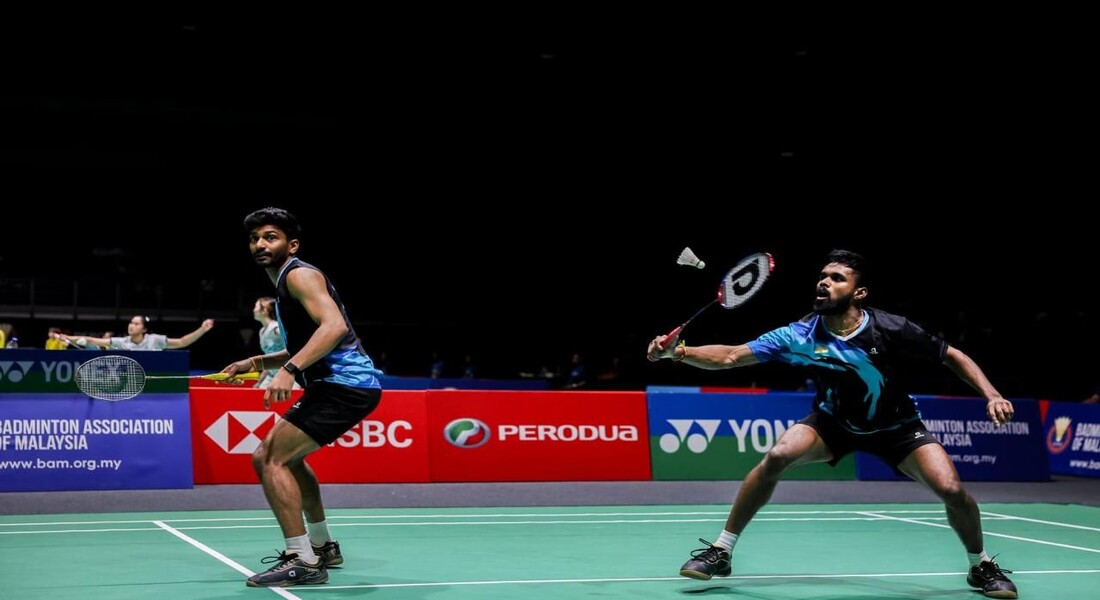
New Delhi: India’s challenge in the singles events at the Indonesia Open came to an end on Thursday, but the men’s doubles pair of Hariharan Amsakarunan and Ruban Kumar Rethinasabapathi Arjun ensured the country remained in contention with a gritty quarter-final berth.

With Indian singles players exiting the tournament, Hariharan and Arjun emerged as the lone bright spot, battling back from a game down to secure a hard-fought victory over Malaysia’s A. Tai and K. X. Kang in the men’s doubles pre-quarterfinals, according to reports.

The Indian duo lost the opening game 16-21 but responded strongly to take the second 21-15. They then held their nerve in a closely contested decider to seal a 16-21, 21-15, 21-19 win and advance to the last eight.

Earlier, PV Sindhu’s campaign ended in the women’s singles Round of 16 after a straight-game defeat to world No. 1 An Se Young of South Korea.

The two-time Olympic medallist stayed competitive for long stretches of the opening game and produced several attacking winners. However, An once again proved superior in the key moments, claiming a 21-17, 21-15 victory to move into the quarter-finals.

Sindhu’s defeat extended the South Korean star’s dominance over the Indian shuttler and ended India’s hopes in the women’s singles draw.

India’s remaining singles challenge rested on Ayush Shetty, who made a promising start against Hong Kong China’s Lee Cheuk Yiu in the men’s singles pre-quarterfinals.

The 21-year-old took the opening game 21-16 with an assured display and looked set for a major upset. However, Lee gradually gained control of the rallies and levelled the contest by winning the second game 21-13.

Ayush began the deciding game positively, but the experienced Hong Kong player produced a strong run of points to take command and eventually completed a 16-21, 21-13, 21-14 comeback victory.

Petroleum minister says India ensured uninterrupted fuel supplies amid global disruptions

New Delhi: Union Petroleum and Natural Gas Minister Hardeep Singh Puri on Thursday said India maintained uninterrupted supplies of petroleum products despite global disruptions and energy market uncertainties, crediting timely policy interventions and effective management for ensuring normalcy across the country.

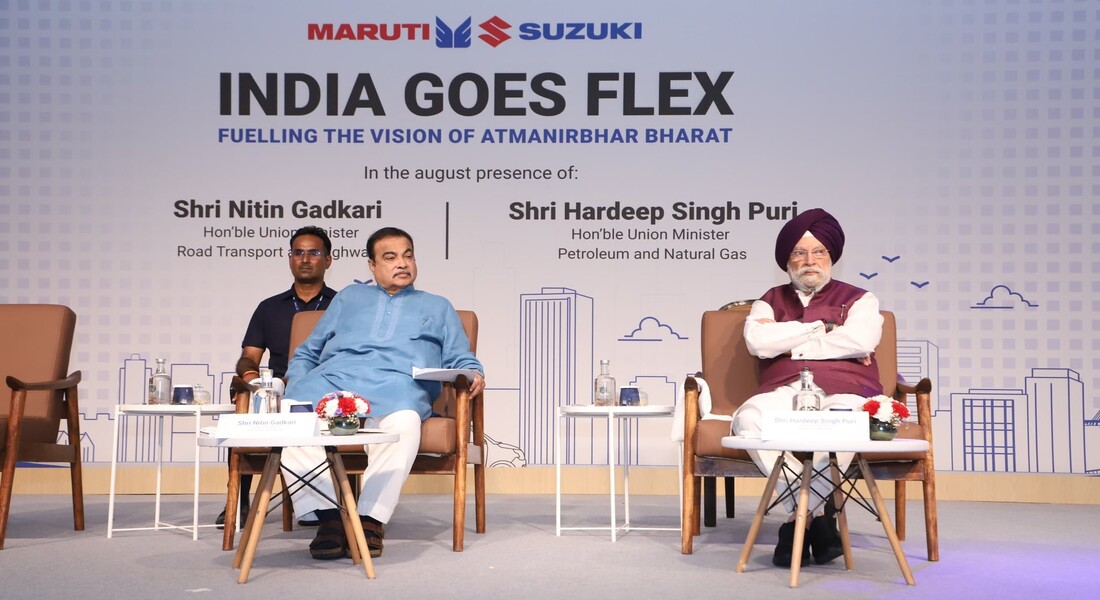
Speaking at the launch of India’s first flex-fuel passenger vehicle by Maruti Suzuki in New Delhi, Puri said nearly 60% of India’s LPG imports passed through the Strait of Hormuz before military hostilities began on February 28. Despite the challenges, he said there was no disruption in fuel availability.

“There was not a single dry-out anywhere in the country. People continued travelling normally by road and air. India maintained near-normalcy despite global disruptions,” the minister said.

He added that attempts were made to spread misinformation and create artificial shortages, but the situation remained fully under control.

Puri credited Prime Minister Narendra Modi’s leadership for balancing the three pillars of India’s energy strategy – availability, affordability, and sustainability.

On availability, he said India ensured uninterrupted supplies of crude oil, LPG, and natural gas despite global volatility. Domestic LPG production increased from 32 TMT per day before the crisis to nearly 52 TMT per day. The government also expanded the use of piped natural gas and CNG, according to an official statement.

On affordability, the minister said India witnessed one of the lowest fuel price increases globally. He recalled the Centre’s decision to reduce excise duty on petrol and diesel by Rs 10 per litre to provide relief to consumers.

Highlighting sustainability, Puri said India’s ethanol blending programme has emerged as one of the country’s most successful energy transition initiatives. He noted that ethanol blending rose from less than 1.5% in 2013-14 to 20% in 2025-26, achieving the target five years ahead of schedule.

He said ethanol procurement increased from about 38 crore litres in the ethanol supply year 2013-14 to more than 1,040 crore litres, while ethanol production capacity expanded from 421 crore litres in 2014 to nearly 2,000 crore litres in 2026.

According to the minister, the programme has helped reduce crude oil imports, save foreign exchange, lower emissions, and increase farmers’ income.

Puri also said India can now produce ethanol from multiple feedstocks, including broken grains, agricultural waste, bamboo and seaweed.

The minister made the remarks while launching India’s first flex-fuel passenger vehicle, manufactured by Maruti Suzuki. Union Road Transport and Highways Minister Nitin Gadkari was also present at the event.

Puri described the launch as the beginning of a new chapter in India’s energy transition. He said flex-fuel vehicles, which can run on ethanol-petrol blends ranging from E20 to E100, have the potential to significantly expand ethanol-based mobility in the country.

Over 1 crore voters covered in Odisha SIR drive by Day 6

Bhubaneswar: Odisha’s ongoing Special Intensive Revision (SIR) of electoral rolls has crossed a major milestone, with enumeration forms distributed to more than one crore voters by the sixth day of the campaign, the Chief Electoral Officer’s (CEO) office said on Thursday.

Launched to make the voter list more transparent, updated and error-free, the state-wide exercise has witnessed strong public participation across both urban and rural areas, including remote and tribal-dominated regions.

According to official data available till 6 pm on Thursday, a total of 1,02,32,279 voters — accounting for 30.64 per cent of the state’s total electorate — have been successfully provided with enumeration forms under the campaign.

The revision process, which began on May 30, is being conducted across all Assembly constituencies in the state through extensive door-to-door verification by Booth Level Officers (BLOs).

As many as 45,255 BLOs have been deployed statewide to ensure smooth implementation of the campaign. Officials said BLOs are visiting households to distribute pre-printed enumeration forms and collect voter information to facilitate fresh enrolments, corrections and removal of ineligible entries from electoral rolls.

Under the process, each voter is being provided with two copies of the pre-printed enumeration form (Annexure-III). After the forms are filled up, BLOs retain one copy while returning the second, duly signed, to the voter as an acknowledgement receipt for future reference.

To maximise participation and public awareness, district administrations have intensified outreach activities across Odisha. Awareness vehicles are travelling through villages, while urban areas are witnessing microphone announcements, hoardings, LED displays and social media campaigns aimed particularly at engaging young voters.

Traditional folk communication methods, including pala, daskathia and dengura performances, are also being used in rural areas to spread awareness about the voter list revision process.

In addition, speech, drawing and rangoli competitions are being organised to encourage new and young voters to register themselves in the electoral process.

The Election Department has clarified that no additional documents are being collected from voters during the enumeration process, making participation simpler and hassle-free.

Voters can also download the forms from the Election Commission’s official website, voters.eci.gov.in, fill them up and upload the details online if they prefer.

Officials said 33,026 Booth Level Agents (BLAs), appointed by recognised political parties, are also assisting BLOs at the field level to ensure transparency and better coordination during the campaign.

The CEO’s office said special measures are being taken to ensure that no eligible voter is left out of the electoral rolls during the ongoing revision exercise.

Odisha highlights disaster resilience model at BRICS DRR meeting in Puri

Bhubaneswar: Odisha Chief Minister Mohan Charan Majhi on Thursday said the state’s disaster management framework, built on preparedness, resilient infrastructure, and community participation, has gained global recognition.

He was addressing the BRICS Disaster Risk Reduction (DRR) Working Group Technical Meeting held in Puri.

Delegates, experts, and representatives from BRICS nations came together to deliberate on strengthening resilience against rising climate and disaster risks at the meeting.

In a post on X, he said the discussions highlighted disaster risk reduction as a key pillar of sustainable development, economic stability, and human security, while emphasising the need for stronger global cooperation, innovation, and technology-driven solutions.

Majhi further said Odisha is proud to share its “globally acknowledged disaster management model”, which is based on preparedness, resilient infrastructure, and active community participation.

He said the state remains committed to the principle of “Zero Casualty”, guided by the vision of Prime Minister Narendra Modi.

Highlighting ongoing infrastructure initiatives, the CM said the recently approved Coastal Highway project will further strengthen evacuation systems, emergency response mechanisms, and disaster preparedness along Odisha’s coastline.

He expressed confidence that the outcomes of the Puri deliberations will contribute to shaping future global frameworks on disaster risk reduction and help build a safer, more resilient, and sustainable world.

The BRICS Disaster Risk Reduction Working Group meeting brought together experts and representatives from member nations to exchange ideas on improving preparedness and response mechanisms in the face of increasing climate-related disasters.

Rajnath Singh enhances financial powers of armed forces, boosts defence procurement efficiency

New Delhi: Defence Minister Rajnath Singh on Thursday released the revised Delegation of Financial Powers for the Defence Services, significantly enhancing the financial authority of field commanders to accelerate procurement, improve operational readiness, and strengthen defence infrastructure development.

According to the Ministry of Defence, financial powers have been increased by up to 100% and in some cases, more than doubled. The move is aimed at enabling faster conclusion of contracts and quicker execution of projects across the armed forces.

The revised framework also doubles financial powers for indigenisation and research and development within the military ecosystem. This is intended to promote Aatmanirbharta in defence, reduce dependency on foreign original equipment manufacturers, and strengthen domestic capability development, according to an official statement.

The ministry stated that the revised delegation will facilitate procurement worth over Rs 1.25 lakh crore through the revenue route, based on current budgetary allocations.

Special financial powers for Army, Air Force, and Naval commanders have been significantly enhanced, along with a 100% increase in the ceiling for urgent operational requirements. The reforms are expected to improve responsiveness in critical operational situations.

The new framework also introduces provisions to promote joint-service procurement, allowing lead services to undertake acquisitions with higher delegated authority than existing norms. In addition, new Competent Financial Authorities have been created to further decentralise procurement of goods and services across the defence establishment.

The financial powers were last revised in 2021. The government said the latest revision was necessitated by the expansion of force levels and increased operational and sustenance expenditure, in line with higher budget allocations.

Officials said the revised delegation, along with the updated Defence Procurement Manual notified in October 2025, will streamline defence acquisition processes and enable faster decision-making, ensuring the timely availability of resources for the armed forces.

Piyush Goyal pitches India as trusted investment destination

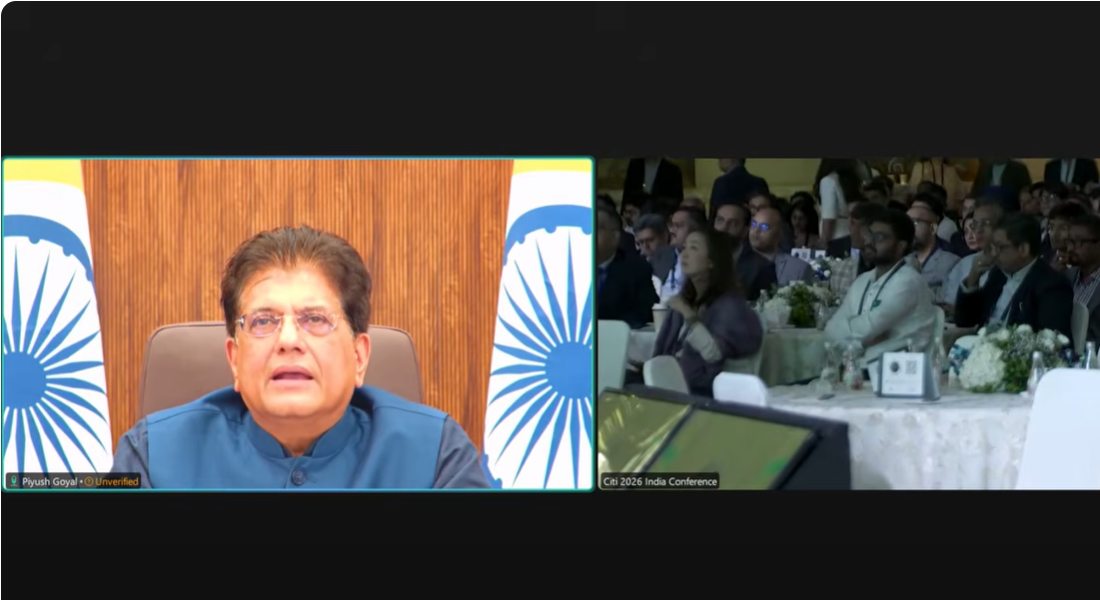
Mumbai: Union Commerce and Industry Minister Piyush Goyal on Thursday projected India as a trusted global investment destination, highlighting the country’s economic growth, expanding trade network, manufacturing potential, and ongoing reforms aimed at attracting long-term capital and strengthening industrial development.

Delivering the keynote address virtually at the Citi India Conference 2026 in Mumbai, Goyal said India is recognised as the world’s fastest-growing economy and expressed confidence that it would maintain this position for more than two decades. He said the country has consistently turned global crises into opportunities by adapting its business processes and strategies to changing geopolitical and economic conditions.

The minister said his recent meetings with investors and business leaders in Canada and the US reflected growing international confidence in India’s economic prospects.

Referring to his visit to Canada with what he described as the largest Indian business delegation to travel there, Goyal said investors had shown strong interest in a proposed India-Canada Free Trade Agreement (FTA). In contrast, pension funds, insurance companies, and institutional investors expressed interest in expanding investments in India, according to an official statement.

He added that discussions with leading investment firms and nearly 50 companies in New York reinforced the perception of India as a trusted partner, a safe investment destination, and a credible manufacturing hub, backed by democratic institutions, the rule of law, technological capabilities, and a large consumer market.

According to Goyal, long-term global capital is increasingly looking towards India. He said discussions with investors in New York and Toronto repeatedly highlighted confidence in India’s future growth trajectory, adding that investors are now focused on how quickly they can participate in the country’s growth story.

To illustrate India’s long-term investment potential, Goyal cited the examples of Hyundai and JCB. He noted that Hyundai entered India in 1999 with an investment of around USD 200 million and subsequently built significant value through manufacturing operations. He also pointed to JCB’s expansion in India, saying the company now exports India-made products to nearly 130 countries while serving domestic demand.

Highlighting India’s growing integration with global markets, Goyal said the country has signed nine FTAs over the last three to three-and-a-half years, covering 38 developed economies. He said these agreements are helping expand market access, facilitate trade, support talent mobility, and attract investments, including the establishment of Global Capability Centres.

The minister informed participants that the Oman FTA came into effect on June 1. He added that at least two to three more substantive FTAs are expected to become operational within the next six months, while another three to four major trade agreements could be concluded in the coming year. He said all nine recently concluded agreements are expected to be operationalised within the next nine to ten months.

Inviting global investors to participate in India’s growth journey, Goyal said the country is not only a large consumer market but also an emerging centre for innovation, design, and advanced manufacturing. He urged investors to bring patient, long-term capital to support India’s transition towards future technologies and new industries.

NBCC bags Rs 37.74 crore Odisha livestock infrastructure project

Bhubaneswar: State-owned NBCC (India) Ltd has secured a Rs 37.74 crore contract from the Odisha government’s Fisheries and Animal Resources Development (F&ARD) Department for the construction and expansion of veterinary and livestock infrastructure across multiple districts in the state.

The project involves the development of a wide range of animal healthcare and support facilities aimed at strengthening veterinary services and livestock management in rural and semi-urban areas.

These include regional veterinary hospitals, polyclinics, PCR rooms, diagnostic laboratories, veterinary dispensaries, sub-block veterinary dispensaries, livestock aid centres, livestock resource centres, and administrative offices.

According to a regulatory filing by NBCC, the work has been awarded by the F&ARD Department, Odisha, and carries an estimated value of Rs 37.74 crore, excluding Goods and Services Tax.

The project is expected to enhance access to veterinary healthcare, improve disease diagnosis capabilities, and support livestock-based livelihoods across the state.

The expansion of veterinary infrastructure is also seen as a step towards strengthening Odisha’s animal husbandry ecosystem and improving service delivery to farmers and livestock owners.

NBCC, a Navratna Central Public Sector Enterprise under the Ministry of Housing and Urban Affairs, continues to expand its project portfolio through assignments in infrastructure development, construction, and project management consultancy across the country.

US House passes war powers resolution on Iran conflict amid fresh strikes

New Delhi: The US House of Representatives has voted 215-208 to pass a war powers resolution requiring President Donald Trump to seek congressional approval before continuing military operations against Iran, or withdraw American forces from the conflict.

Four Republicans broke with their party to support the measure alongside Democrats – Thomas Massie of Kentucky, Brian Fitzpatrick of Pennsylvania, Warren Davidson of Ohio, and Tom Barrett of Michigan. The vote came nearly two weeks after House Republicans had postponed an earlier attempt, citing insufficient votes to block it, according to theguardian.com.

The resolution passed even as US and Iranian forces exchanged fresh missile and drone strikes on Wednesday, deepening uncertainty around ongoing diplomatic efforts to end the conflict.

Iran’s Foreign Minister Abbas Araghchi said no meaningful progress had been achieved in negotiations, while also warning that any Israeli strike on Beirut would trigger a full-scale resumption of hostilities.

Iranian state media claimed that Iran had targeted a US military vessel approaching its waters in the Gulf of Oman. US Central Command swiftly denied the claim, stating that Iran was lying and that all American military assets continued to operate without obstruction.

Separately, Israel and Lebanon agreed to renew their fragile ceasefire and establish pilot security zones in southern Lebanon from which Hezbollah operatives would be barred. Following a fourth round of US-mediated talks in Washington, both sides said the ceasefire depended on a complete halt to Hezbollah fire and the withdrawal of its fighters from areas south of the Litani River.

The Lebanese army is expected to assume full control of the designated zones, though the operational details of the arrangement have not been made clear.

On the diplomatic front, Trump said he was seeking to separate the Iran negotiations from the Lebanon conflict, describing them as fundamentally different situations. He said the US had for the first time held direct communication with Hezbollah, and that both sides had agreed to a temporary halt in hostilities.

Tehran, however, maintained that any deal ending the broader Middle East war must also address the fighting in Lebanon.