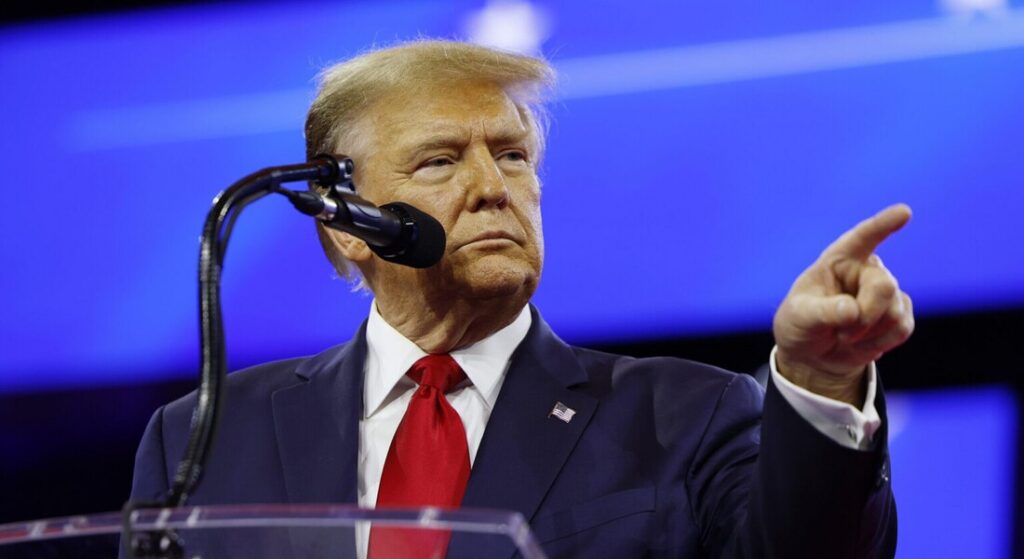
New Delhi: The US House of Representatives has voted 215-208 to pass a war powers resolution requiring President Donald Trump to seek congressional approval before continuing military operations against Iran, or withdraw American forces from the conflict.
Four Republicans broke with their party to support the measure alongside Democrats – Thomas Massie of Kentucky, Brian Fitzpatrick of Pennsylvania, Warren Davidson of Ohio, and Tom Barrett of Michigan. The vote came nearly two weeks after House Republicans had postponed an earlier attempt, citing insufficient votes to block it, according to theguardian.com.
The resolution passed even as US and Iranian forces exchanged fresh missile and drone strikes on Wednesday, deepening uncertainty around ongoing diplomatic efforts to end the conflict.
Iran’s Foreign Minister Abbas Araghchi said no meaningful progress had been achieved in negotiations, while also warning that any Israeli strike on Beirut would trigger a full-scale resumption of hostilities.
Iranian state media claimed that Iran had targeted a US military vessel approaching its waters in the Gulf of Oman. US Central Command swiftly denied the claim, stating that Iran was lying and that all American military assets continued to operate without obstruction.
Separately, Israel and Lebanon agreed to renew their fragile ceasefire and establish pilot security zones in southern Lebanon from which Hezbollah operatives would be barred. Following a fourth round of US-mediated talks in Washington, both sides said the ceasefire depended on a complete halt to Hezbollah fire and the withdrawal of its fighters from areas south of the Litani River.
The Lebanese army is expected to assume full control of the designated zones, though the operational details of the arrangement have not been made clear.
On the diplomatic front, Trump said he was seeking to separate the Iran negotiations from the Lebanon conflict, describing them as fundamentally different situations. He said the US had for the first time held direct communication with Hezbollah, and that both sides had agreed to a temporary halt in hostilities.
Tehran, however, maintained that any deal ending the broader Middle East war must also address the fighting in Lebanon.