
New Delhi: Union Petroleum and Natural Gas Minister Hardeep Singh Puri on Thursday said India maintained uninterrupted supplies of petroleum products despite global disruptions and energy market uncertainties, crediting timely policy interventions and effective management for ensuring normalcy across the country.
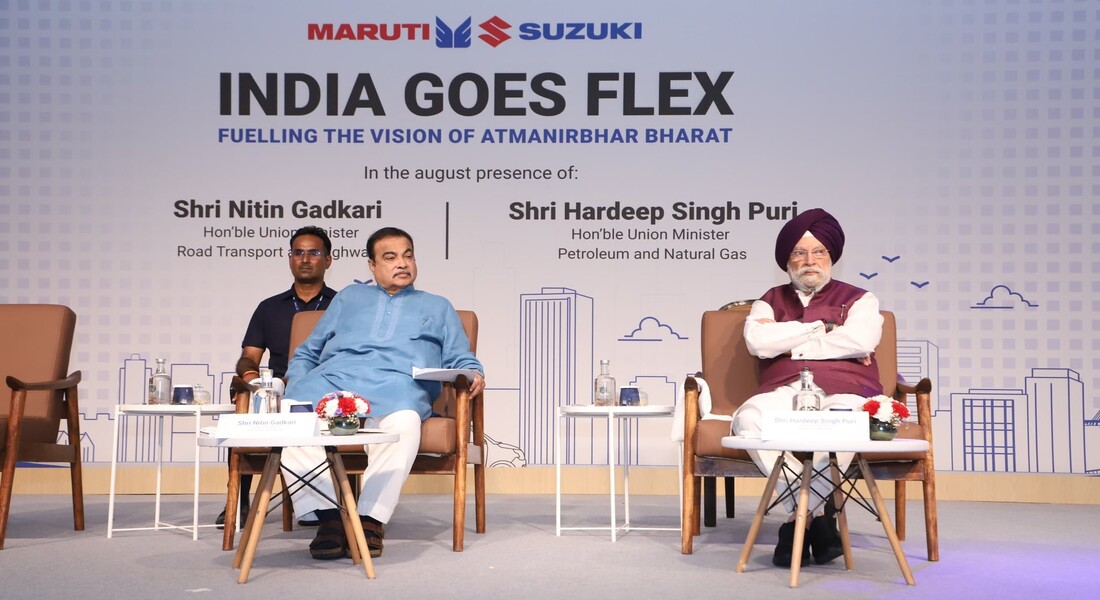
Speaking at the launch of India’s first flex-fuel passenger vehicle by Maruti Suzuki in New Delhi, Puri said nearly 60% of India’s LPG imports passed through the Strait of Hormuz before military hostilities began on February 28. Despite the challenges, he said there was no disruption in fuel availability.
“There was not a single dry-out anywhere in the country. People continued travelling normally by road and air. India maintained near-normalcy despite global disruptions,” the minister said.
He added that attempts were made to spread misinformation and create artificial shortages, but the situation remained fully under control.
Puri credited Prime Minister Narendra Modi’s leadership for balancing the three pillars of India’s energy strategy – availability, affordability, and sustainability.
On availability, he said India ensured uninterrupted supplies of crude oil, LPG, and natural gas despite global volatility. Domestic LPG production increased from 32 TMT per day before the crisis to nearly 52 TMT per day. The government also expanded the use of piped natural gas and CNG, according to an official statement.
On affordability, the minister said India witnessed one of the lowest fuel price increases globally. He recalled the Centre’s decision to reduce excise duty on petrol and diesel by Rs 10 per litre to provide relief to consumers.
Highlighting sustainability, Puri said India’s ethanol blending programme has emerged as one of the country’s most successful energy transition initiatives. He noted that ethanol blending rose from less than 1.5% in 2013-14 to 20% in 2025-26, achieving the target five years ahead of schedule.
He said ethanol procurement increased from about 38 crore litres in the ethanol supply year 2013-14 to more than 1,040 crore litres, while ethanol production capacity expanded from 421 crore litres in 2014 to nearly 2,000 crore litres in 2026.
According to the minister, the programme has helped reduce crude oil imports, save foreign exchange, lower emissions, and increase farmers’ income.
Puri also said India can now produce ethanol from multiple feedstocks, including broken grains, agricultural waste, bamboo and seaweed.
The minister made the remarks while launching India’s first flex-fuel passenger vehicle, manufactured by Maruti Suzuki. Union Road Transport and Highways Minister Nitin Gadkari was also present at the event.
Puri described the launch as the beginning of a new chapter in India’s energy transition. He said flex-fuel vehicles, which can run on ethanol-petrol blends ranging from E20 to E100, have the potential to significantly expand ethanol-based mobility in the country.