At IndiaVerve, we go beyond the noise to bring you meaningful stories of change, resilience and progress—from India to the world stage. Our mission is to bring readers credible, wide-ranging coverage across politics, business, sports, culture, society and more.

Health Ministry expands QR code tracking for vaccines, antimicrobials and cancer drugs

New Delhi: The Union Health Ministry has expanded the scope of QR Code-based drug tracking by bringing all vaccines, antimicrobials, anti-cancer medicines, and narcotic and psychotropic drugs under Schedule H2 of the Drugs Rules, 1945.

The move aims to strengthen the quality, safety, and integrity of India’s pharmaceutical supply chain by improving traceability and authentication of medicines, according to an official statement.

Under the amended rules, manufacturers will be required to print or affix a Bar Code or Quick Response (QR) Code on the primary packaging label of these medicines. In cases where there is insufficient space, the code can be placed on the secondary packaging.

The QR Code will store key product details that can be accessed through software applications. Information embedded in the code will include the unique product identification code, generic and brand names, manufacturer details, batch number, manufacturing and expiry dates, manufacturing licence number, and excipient information where applicable.

The QR Code-based identification system was previously limited to the country’s top 300 pharmaceutical brands. The latest amendment significantly widens coverage to include all vaccines, antimicrobials, anti-cancer medicines, and narcotic and psychotropic drugs covered under the Narcotic Drugs and Psychotropic Substances Act, 1985.

According to the ministry, the enhanced track-and-trace mechanism will enable authentication of medicines at different stages of the supply chain and improve monitoring of drug movement. The measure is expected to strengthen regulatory oversight and help curb the circulation of counterfeit and substandard medicines.

The initiative is also expected to support efforts to combat Anti-Microbial Resistance by improving the identification and monitoring of fake or poor-quality antimicrobial products.

To allow adequate preparation time for manufacturers and stakeholders, the ministry has introduced phased implementation timelines. The provisions for vaccines, anti-cancer medicines, and narcotic and psychotropic drugs will come into effect from July 1, 2027. The provisions relating to antimicrobials will be implemented from July 1, 2028.

Amazon to invest additional USD 13 billion in India’s AI and cloud infrastructure by 2030

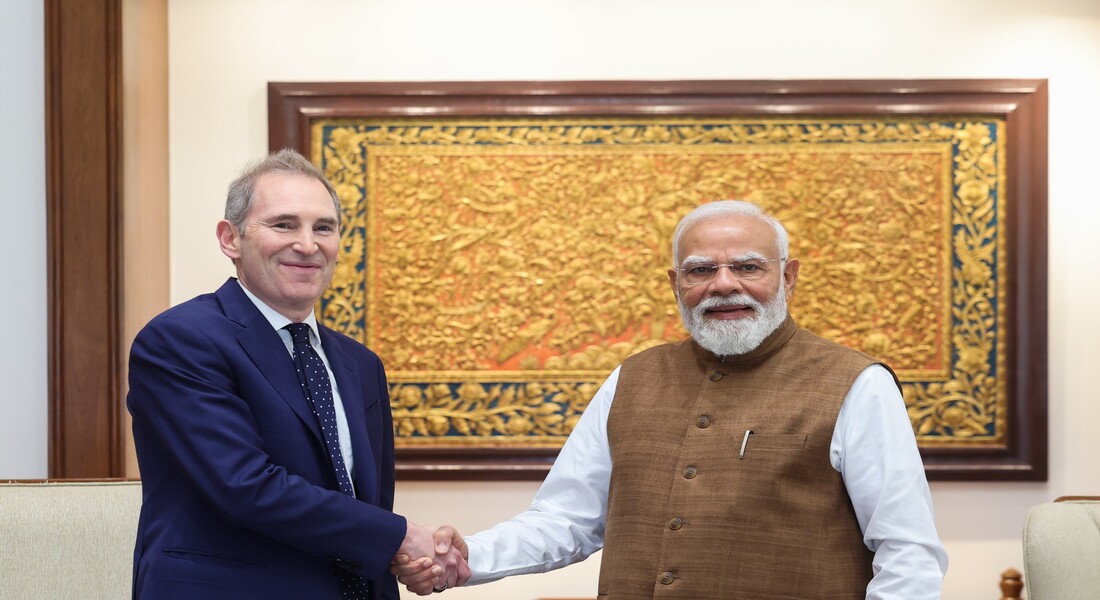
New Delhi: Prime Minister Narendra Modi on Thursday met Amazon CEO Andy Jassy in New Delhi, where the global technology and e-commerce giant announced plans to invest an additional USD 13 billion in Artificial Intelligence (AI) and cloud infrastructure in India by 2030.

The fresh investment will raise Amazon’s total planned spending on AI and cloud infrastructure in India to more than USD 21 billion between 2026 and 2030, making the company one of the largest global investors in the sector in the country.

The investment will be used to expand Amazon Web Services (AWS) data centre capacity in Mumbai and Hyderabad, according to a statement by Amazon.

The expansion is expected to provide startups, businesses, and government organisations with greater access to AI technologies, cloud services, custom AI chips, and advanced developer tools.

During the meeting, Jassy reaffirmed Amazon’s long-term commitment to India and highlighted the country’s growing importance in the company’s global operations. Amazon currently operates across multiple sectors in India, including e-commerce, cloud computing, AI, and entertainment.

The company said its cumulative investments in India from 2010 to 2030 will exceed USD 88 billion. Amazon also plans to continue strengthening the logistics network that supports its e-commerce and quick commerce businesses.

As part of its expansion strategy, the company intends to launch more than 20 new fulfilment centres and over 100 last-mile delivery stations this year. The move is aimed at improving delivery speeds and reliability across the country, particularly in tier-3 and tier-4 cities, while offering deliveries within minutes, hours, and the next day, depending on customer requirements.

Amazon has also introduced ‘Sammaan’, a dedicated initiative focused on the welfare and well-being of tens of thousands of delivery associates working across its e-commerce and quick commerce network.

According to the company, Amazon has digitised 12 million small businesses in India since entering the market, enabled more than USD 20 billion in cumulative ecommerce exports, and supported around 2.8 million jobs. It has also trained over 10 million people in cloud-related skills.

Looking ahead, Amazon plans to invest a total of USD 48 billion across its Indian businesses through 2030. The company said its future priorities remain aligned with national goals related to AI adoption, digital transformation, exports, and employment generation.

By 2030, Amazon aims to support 3.8 million jobs, facilitate USD 80 billion in cumulative exports, extend AI-related benefits to 15 million small businesses, and provide AI education to four million government school students.

Speaking after the meeting, Andy Jassy said Amazon has witnessed strong growth in India, particularly across its ecommerce, AI, and cloud businesses. He said the company’s investment plans are designed to meet rising demand while supporting India’s goals of expanding AI access, digitising small businesses, creating jobs, and boosting exports.

Jassy added that Amazon remains committed to supporting Prime Minister Modi’s vision of a “Viksit Bharat” and “Atmanirbhar Bharat” and intends to be a long-term partner in India’s growth journey.

Early humans may have carried fire into caves 1.8 million years ago, study finds

New research from South Africa suggests early human ancestors transported and maintained naturally occurring fire inside caves nearly 1.8 million years ago, reshaping evolutionary history.

Long before humans learned how to create fire, they may already have mastered something almost as remarkable — carrying it, protecting it and using it as part of everyday life.

A new archaeological study suggests that early human ancestors were bringing naturally occurring fire deep into caves nearly 1.8 million years ago, pushing back the timeline of controlled fire use by hundreds of thousands of years. The discovery offers fresh insight into one of the defining moments in human evolution and suggests that our ancestors possessed more advanced behavioural skills than previously believed.

According to researchers from the Hebrew University of Jerusalem and an international team of scientists, evidence recovered from South Africa’s Wonderwerk Cave indicates that early hominins repeatedly transported fire from natural sources into the cave and maintained it there. The findings have been published in the peer-reviewed journal PLOS One.

The research forms part of an ongoing collaboration led by Dr. Liora Kolska Horwitz of the Hebrew University of Jerusalem’s National Natural History Collections and Prof. Michael Chazan of the University of Toronto, together with researchers from Spain, Argentina, Canada, the United States, South Africa, Portugal and Israel.

Wonderwerk Cave, located in South Africa’s Kalahari Desert, has long been regarded as one of the world’s most important archaeological sites. In 2012, researchers reported evidence of fire use at the cave dating back about one million years. The latest excavations have extended that timeline, revealing traces of fire in archaeological deposits dating between 1.07 million and 1.79 million years ago.

To reach their conclusions, scientists employed a newly developed, non-destructive technique capable of detecting ancient burning in fossilised bones. The method analyses the light-emitting properties of bones exposed to intense heat and was combined with chemical analysis to identify burned remains with high confidence.

Researchers examined hundreds of tiny fossil bones left behind by owls that once nested inside the cave. These naturally accumulated remains served as an independent record of environmental conditions over thousands of years.

The study found clear evidence of burning approximately 30 metres inside the cave, in layers associated with early Acheulean stone tools believed to have been used by Homo erectus. Because the burned bones were discovered well beyond the reach of natural wildfires and in areas without guano deposits that could have ignited spontaneously, researchers concluded that the fire had most likely been carried into the cave by early humans.

The findings do not suggest that these early humans had mastered fire-making. Instead, researchers believe they probably collected fire from naturally occurring sources such as lightning strikes or wildfires on the African savanna before transporting it into the cave and keeping it alive for some time.

“Evidence of fire from such ancient sites is often subtle and difficult to detect,” said Dr. Liora Kolska Horwitz. “Our study provides new tools for identifying traces of ancient burning and reveals that fire was repeatedly present deep inside Wonderwerk Cave.”

She added, “These discoveries show that early humans were not simply passive observers of natural fires. They were actively engaging with fire and incorporating it into their lives.”

Researchers believe the ability to transport and maintain fire would have offered several advantages, including warmth, protection from predators, light after sunset and, eventually, the possibility of cooking food. They also suggest that owl pellets inside the cave may have served as fuel, explaining why many of the tiny rodent bones showed signs of burning.

Beyond rewriting the timeline of fire use, the study introduces a powerful new analytical tool that archaeologists hope will help uncover similar evidence at ancient sites around the world. The researchers believe the technique could significantly improve our understanding of when and how one of humanity’s most transformative technologies first became part of everyday life.

NIRL, OREDA sign JV for 1000 MW green energy project in Odisha

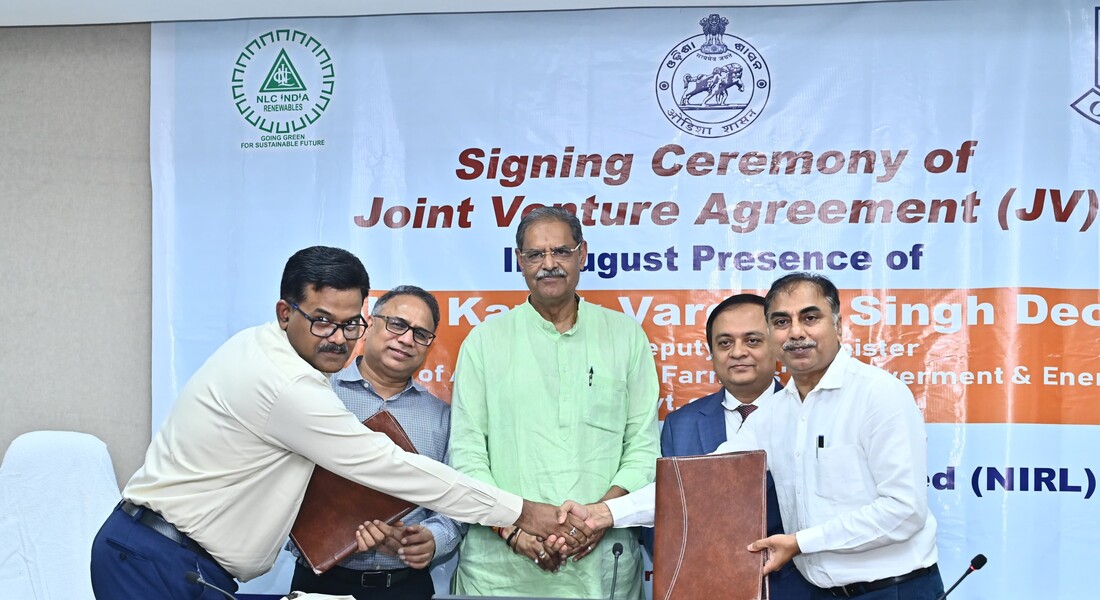
Bhubaneswar: NLC India Renewables Limited (NIRL), a wholly owned subsidiary of NLC India Limited, has signed a Joint Venture Agreement (JVA) with OREDA Ltd. to establish, operate, and maintain 1,000 MW of green energy capacity in Odisha in the first phase.

The agreement was signed in Odisha by NIRL Chief Executive Officer Devendra Pratap Singh and OREDA CEO and Special Secretary, Department of Energy, government of Odisha, Saidutta Biplab Keshari Pradhan.

The ceremony was attended by Deputy Chief Minister Kanak Vardhan Singh Deo, OREDA Chairman and Additional Chief Secretary (Energy) Vishal Kumar Dev, NLC India Limited Director (Finance) Dr. Prasanna Kumar Acharya, along with senior officials from both organisations.

Under the JV, the two entities will jointly develop 1,000 MW of green energy projects across Odisha, along with allied activities including forward and backward integration in the green energy sector, NLC India said in a press release.

The initiative is subject to techno-commercial feasibility studies and necessary approvals from respective boards, the government, the Ministry of Coal, and other competent authorities.

NIRL, the renewable energy arm of NLC India Limited, has been expanding its presence in the clean energy sector through solar, wind, hybrid projects, pumped hydro storage, battery energy storage systems, green hydrogen, waste-to-energy projects, and other emerging renewable technologies.

Speaking on the occasion, NLC India Limited Chairman and Managing Director Prasanna Kumar Motupalli said the partnership with OREDA marks a significant milestone in the company’s strategic diversification into clean and sustainable energy.

He also highlighted that the collaboration will focus on deploying multiple renewable technologies, including solar, wind, hybrid systems, pumped hydro storage, battery storage, green hydrogen, and future emerging renewable energy solutions.

The collaboration between NIRL and OREDA is seen as a major step towards strengthening India’s clean energy ecosystem and aligns with the national vision of “Viksit Bharat” and net-zero carbon emissions, reinforcing both organisations’ commitment to sustainable development, technological advancement, and nation-building through green energy solutions.

Venezuela declares emergency after twin quakes kill 32

New Delhi: Venezuela has declared a state of emergency after twin earthquakes struck the country, killing at least 32 people and injuring around 700 others, while triggering an international humanitarian response amid fears that the casualty toll could rise further.

The back-to-back tremors caused extensive damage in the capital, where several buildings collapsed, forcing authorities to shut down the country’s main airport as rescue teams scrambled to search for survivors trapped under debris.

Interim President Delcy Rodríguez said emergency services were continuing rescue operations and that assistance teams from several countries were expected to arrive in the coming hours. She also acknowledged offers of support from foreign governments, including the US.

The disaster has prompted a swift international response. US Secretary of State Marco Rubio said Washington was deploying search-and-rescue teams, medical resources, and humanitarian aid to support recovery efforts. Separately, US President Donald Trump described the initial reports from Venezuela as deeply concerning and indicated that Washington was prepared to assist the country.

Support has also come from across Latin America. El Salvador’s President Nayib Bukele expressed solidarity with the Venezuelan people. At the same time, Ecuadorian President Daniel Noboa announced the immediate dispatch of humanitarian assistance, saying emergency relief efforts should transcend political differences.

Meanwhile, exiled Venezuelan opposition leader María Corina Machado urged national unity and solidarity as the country grapples with the disaster’s aftermath, according to theguardian.com.

The earthquakes were also felt across neighbouring Colombia, highlighting the scale of the seismic event. Although Venezuela lies near several geological fault lines, major earthquakes remain relatively uncommon compared with countries along the Pacific Ring of Fire, such as Mexico and Chile, where seismic activity is more frequent.

The disaster has further complicated communication challenges in Venezuela, with mobile phone outages reported in several regions. The disruptions have heightened anxiety among families trying to contact loved ones, including millions of Venezuelans living abroad.

Despite widespread destruction, there were no immediate reports of major damage to Venezuela’s oil sector, a critical pillar of the country’s economy. Authorities near the oil-producing region around Lake Maracaibo reported no injuries linked to energy infrastructure, while energy firms began assessing facilities and accounting for employees. However, industry sources warned that prolonged power outages could affect crude oil production if electricity supplies are not restored quickly.

Rescue operations are continuing across affected areas as authorities work to assess the full extent of the damage and determine whether the death toll will rise in the coming days.

FIFA World Cup: Brazil blank Scotland; Reach Round of 32

South American giants Brazil reached the Round of 32 of the FIFA World Cup 2026 with a convincing 3-0 win over Scotland at Miami Stadium.

Vinicius Junior scored twice, while Matheus Cunha also found the net as Brazil claimed the top spot in Group C.

Meanwhile, Morocco registered a hard-fought 4-2 win over Haiti to finish second in Group C. Bono’s own goal gave Haiti a 1-0 lead in the 10th minute, but Achraf Hakimi equalised for Morocco in the 39th minute.

Isidor’s spectacular strike in the 43rd minute restored Haiti’s lead at 2-1, but the African nation once again levelled the score through a Saibari goal in the 46th minute.

Two more goals in the second half ensured Morocco secured a memorable victory. Morocco will face the winner of Group F in Monterrey on June 29.

In Group A, co-hosts Mexico registered their third straight victory in the tournament by defeating Czechia 3-0. The first half frustrated both sides as it failed to produce a single goal.

Mateo Chavez opened the scoring for Mexico in the 55th minute, and six minutes later, Julian Quinones doubled the advantage from close range.

Alvaro Fidalgo’s stunning strike in injury time ensured Mexico finished top of Group A.

A Thapelo Maseko stunner in the second half ensured South Africa finished second in Group A.

Other results: Group B: Switzerland 2, Canada 1; Bosnia and Herzegovina 3, Qatar 1.

PM Modi reviews Rs 30,000 crore infrastructure projects

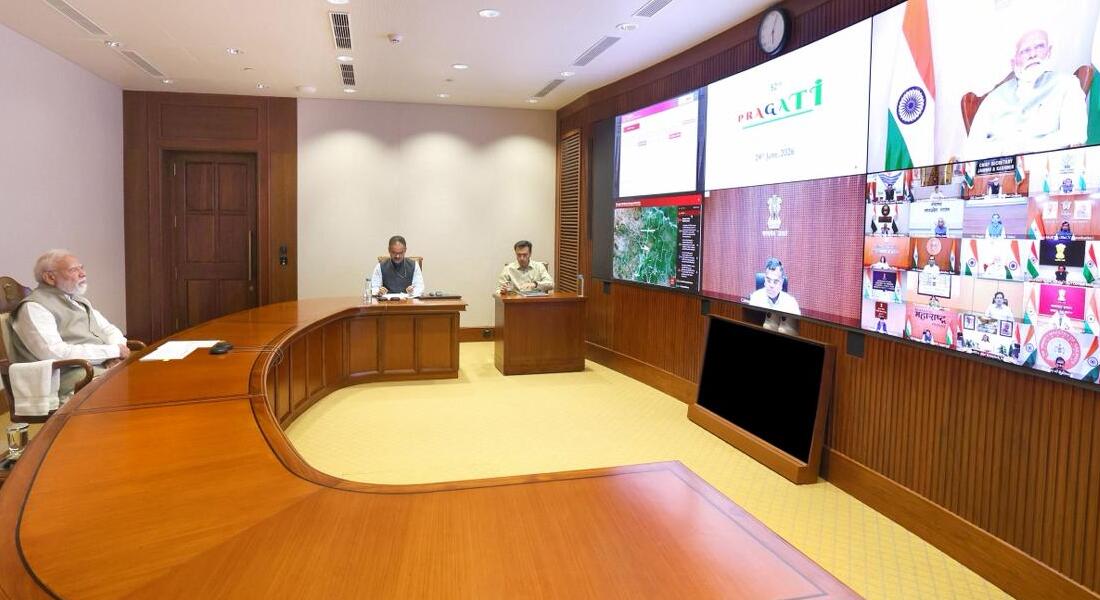
New Delhi: Prime Minister Narendra Modi on Wednesday chaired the 52nd meeting of PRAGATI, the ICT-enabled platform designed to promote proactive governance and ensure the timely implementation of projects through coordinated efforts between the Centre and states.

During the meeting held at Seva Teerth, the PM reviewed four major infrastructure projects spanning the road, power, industrial corridor, and metro rail sectors. The projects, spread across four states, involve an investment of around Rs 30,000 crore.

The review focused on project timelines, inter-agency coordination, issue resolution, and measures required for timely completion. The projects are expected to boost economic growth, improve regional connectivity, support industrial development, and enhance public welfare.

Modi stressed that delays in infrastructure projects lead to cost overruns and deprive citizens and industries of timely benefits. He directed the concerned ministries and state governments to address pending issues in mission mode and closely monitor project execution at the highest level.

The PM also highlighted the importance of the PM GatiShakti National Master Plan in improving infrastructure planning and execution. He called for regular updates of project details, utility information, infrastructure layers, clearances, and field-level data on the platform, according to an official statement.

According to Modi, keeping the portal updated with real-time information would help identify bottlenecks early, improve coordination among agencies, and support informed decision-making.

The meeting also reviewed the TB Mukt Bharat Abhiyan. Modi emphasised the use of advanced digital technologies, including Artificial Intelligence, to strengthen the campaign. He suggested involving NCC cadets and MY Bharat volunteers in awareness drives, patient follow-up, and community mobilisation efforts.

Another key agenda item was the growing concern over cybercrime and digital arrest-related fraud. Modi expressed concern over the misuse of digital platforms to cheat citizens and called for coordinated, sensitive, and time-bound action by all stakeholders.

He said citizens should not be forced to approach multiple departments for grievance redressal and stressed the need for clear accountability, quicker response mechanisms, and stronger coordination among law enforcement agencies, banks, and digital platforms.

Modi also noted that timely intervention is critical in cyber fraud cases to prevent financial losses and maintain public confidence. He urged all stakeholders to strengthen prevention, reporting, investigation, and grievance redressal systems.

Modi also asked states to work towards implementing e-Zero FIR mechanisms to enable faster registration and response in cyber fraud cases.