At IndiaVerve, we go beyond the noise to bring you meaningful stories of change, resilience and progress—from India to the world stage. Our mission is to bring readers credible, wide-ranging coverage across politics, business, sports, culture, society and more.

Odisha holds workshop on administrative data for public service delivery

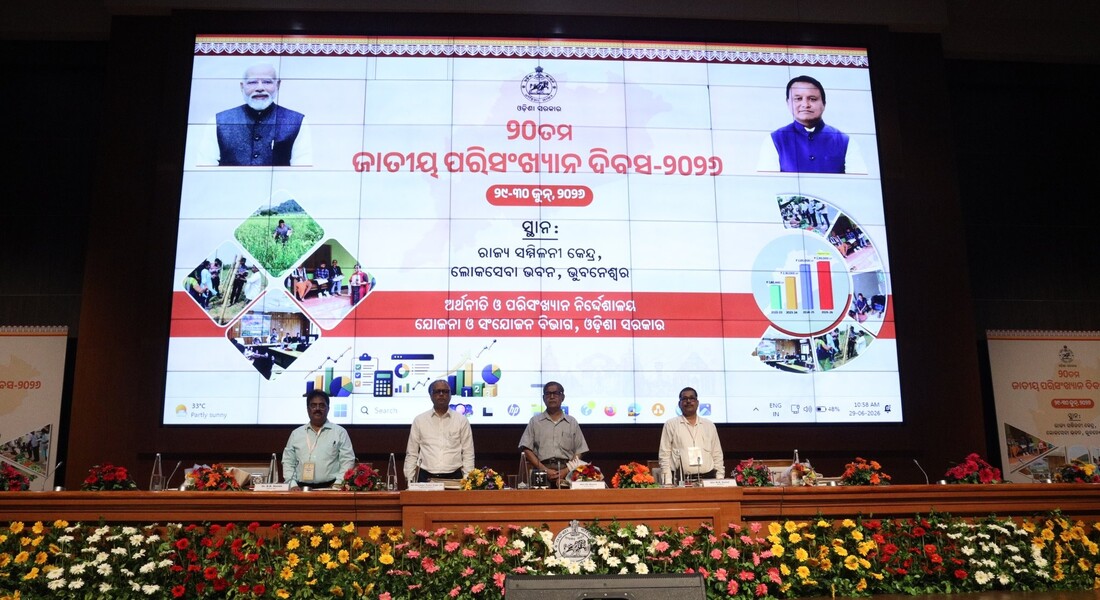
Bhubaneswar: The Directorate of Economics and Statistics (DE&S), under the Planning and Convergence Department, on Monday inaugurated a two-day workshop on “Harnessing Administrative Data for Efficient Public Service Delivery” at the State Convention Centre, Lok Seva Bhawan, on the occasion of the 20th National Statistics Day.

The workshop was organised in alignment with the Ministry of Statistics and Programme Implementation initiative to unlock the potential of administrative data for evidence-based governance.

The event began with a floral tribute to Professor Prasanta Chandra Mahalanobis, regarded as the architect of modern statistical systems in India.

Development Commissioner-cum-Additional Chief Secretary Deoranjan Kumar Singh attended as the chief guest and stressed the need to strengthen the statistical system across all departments.

He said the true tribute to Mahalanobis lies in following his vision. He also underlined the importance of validating administrative data through cross-verification with survey data.

Director of Economics and Statistics Dr. Bijay Bhusan Nanda delivered the welcome address and highlighted various digital initiatives undertaken by DE&S to modernise Odisha’s statistical ecosystem.

On the occasion, Singh launched several digital platforms, including the Data Catalogue and Metadata Management Portal, the STATOdisha mobile application, the e-Tathya progress reporting system, the Integrated Inventory and Asset Management System, the CAPI MIS dashboard, the RIPAE&S website and Learning Management System, the Library Management System, and a GIS-enabled statistical dashboard.

Several key publications were also released, including the Energy Statistics Report 2025, Women and Men Odisha Report 2025, Annual Activity Report 2025-26, EARAS technical reports (2023-24 and 2024-25), First Census of Water Bodies report, Samikhya Journal 2026, district statistical handbooks for 13 districts, Annual Survey of Industries report 2021-22, and Index of Industrial Production 2024.

Three District Planning and Monitoring Units (DPMUs) – Sambalpur, Dhenkanal, and Mayurbhanj – were honoured with the Best Performing DPMU Award for excellence in statistical work.

The two-day workshop also featured discussions on digital transformation of the statistical system, metadata management, data quality assurance, quantum-secure data protection, environmental statistics, and the use of administrative data in policymaking.

Experts from the World Bank, central government, academic institutions, development partner organisations, and various state departments shared national and international best practices. Presentations were also made by the Forest and Environment Department, State Pollution Control Board, Geological Survey of India, and GRIDCO.

The workshop concluded with a consensus on building a modern, technology-enabled statistical system with stronger coordination, interoperability, and institutional collaboration to support timely and evidence-based decision-making.
India wins 5 medals at Global Skills Challenge Australia 2026

New Delhi: India won five medals, including three gold, one silver and one bronze, at the Global Skills Challenge Australia 2026, delivering a strong performance ahead of the 48th WorldSkills Competition in Shanghai later this year.

The international competition, held from June 23 to 29, brought together nearly 600 competitors, experts, translators, and officials from 16 WorldSkills member nations, including Australia, India, Austria, China, the US, Japan, France, and South Korea.

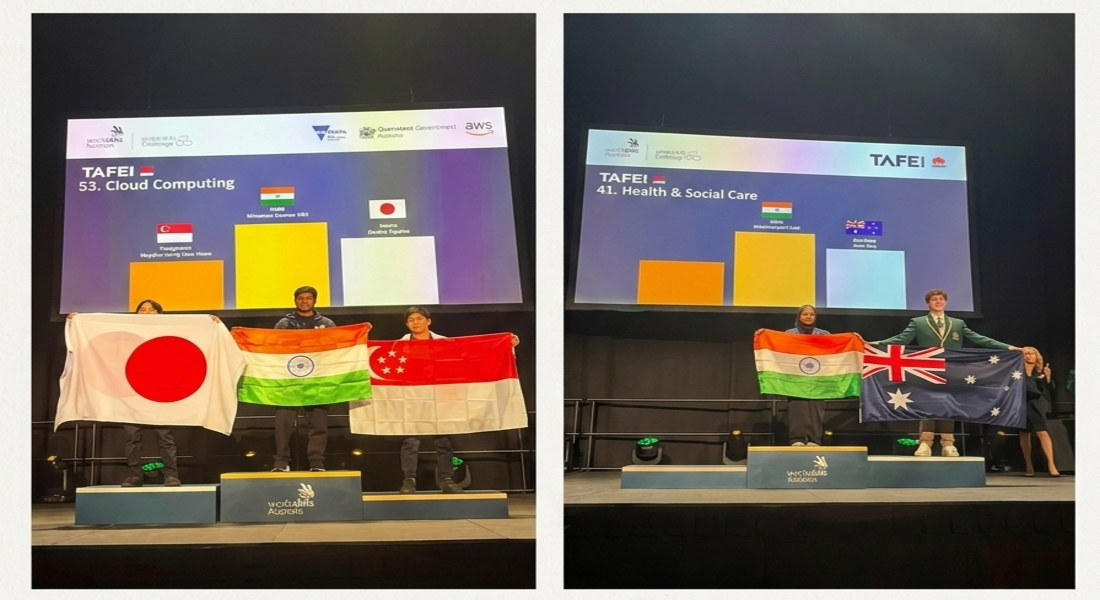
Leading India’s medal tally was Pavan Bhadravati Suresha from Karnataka, who won gold in Additive Manufacturing. Mausam Kumar Giri of Bihar secured gold in Cloud Computing, while Vishnupriya Sunil from Delhi claimed gold in Health and Social Care.

Harsh Ramesh Pawar of Maharashtra won the silver medal in 3D Digital Game Art, while Muskan from Haryana secured bronze in Painting and Decorating, according to an official statement.

The medal-winning performances highlighted India’s growing competitiveness in advanced manufacturing, digital technologies, creative industries, and service-sector skills. Other Indian competitors also delivered strong performances across multiple categories, gaining valuable international exposure.

Congratulating the contingent, Minister of State (Independent Charge) for Skill Development and Entrepreneurship and Minister of State for Education Jayant Chaudhary said the achievement was a proud moment for the country and reflected the talent, determination and hard work of India’s Skill Champions, experts, mentors and industry partners.

“Team India’s outstanding haul of 3 Gold, 1 Silver and 1 Bronze medals at the Global Skills Challenge 2026 is a proud moment for the nation. Beyond these remarkable achievements, the competition has provided invaluable exposure to global standards and strengthened our preparations for the WorldSkills Competition in Shanghai,” he said.

The 30-member Indian contingent, comprising 15 competitors and 15 experts, represented the country in 15 skill categories covering advanced manufacturing, digital technologies, construction trades, creative industries and service-sector skills.

Designed as a full-scale simulation of the WorldSkills Competition, the Global Skills Challenge allowed Indian participants to compete under international standards, assessment systems, and real-world conditions. The experience helped strengthen their technical preparedness for the WorldSkills Competition in Shanghai.

During the event, participants were evaluated using the internationally recognised Competition Information System, the same framework used at WorldSkills competitions. The contest also gave Indian competitors practical experience in handling competition pressure, adapting to international equipment, and meeting global quality and performance standards.

India competed in 3D Digital Game Art, Additive Manufacturing, Automobile Technology, Beauty Therapy, Bricklaying, Cloud Computing, Floristry, Graphic Design Technology, Hairdressing, Health and Social Care, Industrial Mechanics, Painting and Decorating, Restaurant Service, Wall and Floor Tiling, and Web Technologies.

Rajasthan, Haryana sign Yamuna Water Project agreement

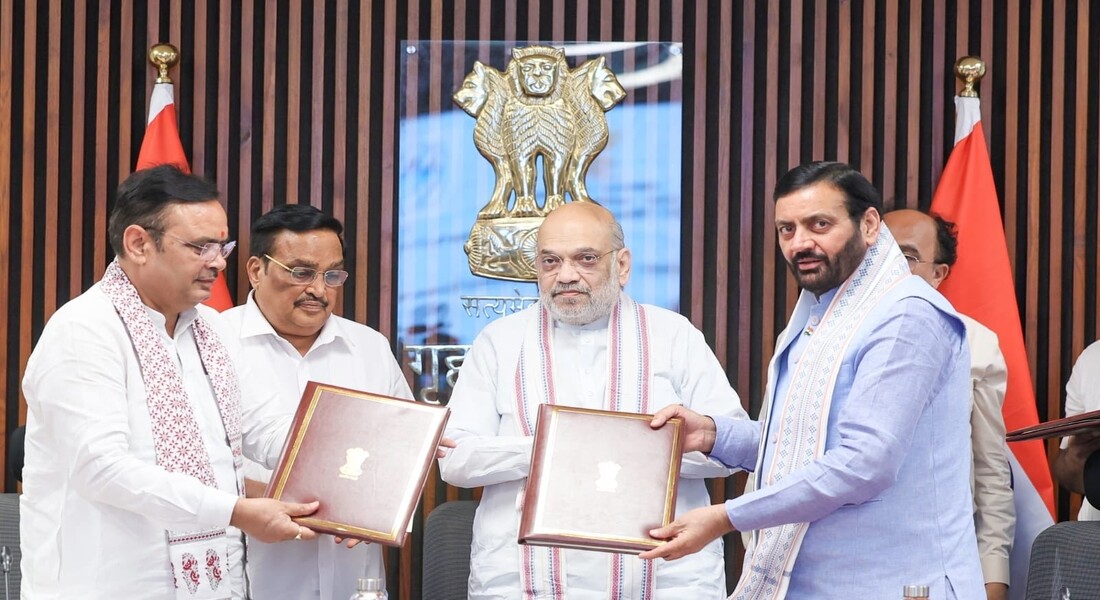
New Delhi: Rajasthan and Haryana on Monday signed an agreement to implement the Yamuna Water Project, which will facilitate the conveyance of Rajasthan’s allocated share of Yamuna waters through an underground pipeline system from the Western Yamuna Canal.

The agreement was signed in the presence of Union Home Minister and Minister of Cooperation Amit Shah, Rajasthan Chief Minister Bhajan Lal Sharma, Haryana Chief Minister Nayab Singh Saini, Union Jal Shakti Minister C.R. Patil and senior officials from the Central government and the two state governments.

Addressing the gathering, Shah said the agreement resolves a nearly three-decade-old water-related issue affecting the people of Rajasthan and Haryana. He described it as an example of Prime Minister Narendra Modi’s mantra of “Solution through Dialogue” and said it reflected the spirit of cooperative federalism.

Under the agreement, around 580 Million Cubic Meters of water will be supplied from the Yamuna Canal to Rajasthan through three underground pipelines between July and October.

The pipelines, each measuring more than 3.6 metres in diameter, will provide drinking water to people in both Rajasthan and Haryana, according to an official statement.

Shah said the agreement clearly defines financial responsibilities, cost-sharing, water allocation, water release protocols and maintenance arrangements. It also includes provisions for infrastructure operation and maintenance, monitoring systems, transparency measures and a dispute resolution mechanism.

He said the agreement, prepared by the governments of Rajasthan and Haryana along with the Central Water Commission, is expected to remain free from disputes for many decades. Shah also credited Patil, saying the issue was resolved within a few days under his chairmanship.

According to Shah, the project will provide drinking water to the districts of Sikar, Churu, and Jhunjhunu in Rajasthan, as well as the Bhiwani and Fatehabad areas of Haryana.

He said the project would significantly help address the drinking water shortage in both states, particularly Rajasthan. Water that was previously going to waste will now be used to meet drinking water needs and stored in large ponds to help recharge groundwater.

The project will enable Rajasthan to utilise the water allocated to it under the 1994 Memorandum of Understanding on the sharing of utilisable surface waters of the Upper Yamuna Basin.

According to the agreement, the project is expected to benefit millions of people by ensuring a reliable drinking water supply and supporting socio-economic development in the arid and semi-arid regions of Rajasthan. It also lays the foundation for the timely implementation of the project through coordinated efforts of the Central Government and the participating state governments.

Odisha to establish cooperative society in every Gram Panchayat

Bhubaneswar: Odisha Cooperation Minister Pradeep Bal Samanta on Monday said the process of establishing at least one Agricultural Credit Cooperative Society, Dairy Cooperative Society or Fisheries Cooperative Society in every Gram Panchayat is underway.

He also said existing Primary Agricultural Cooperative Societies (PACS) are being transformed into Multi-Purpose PACS to undertake diversified business and productive activities.

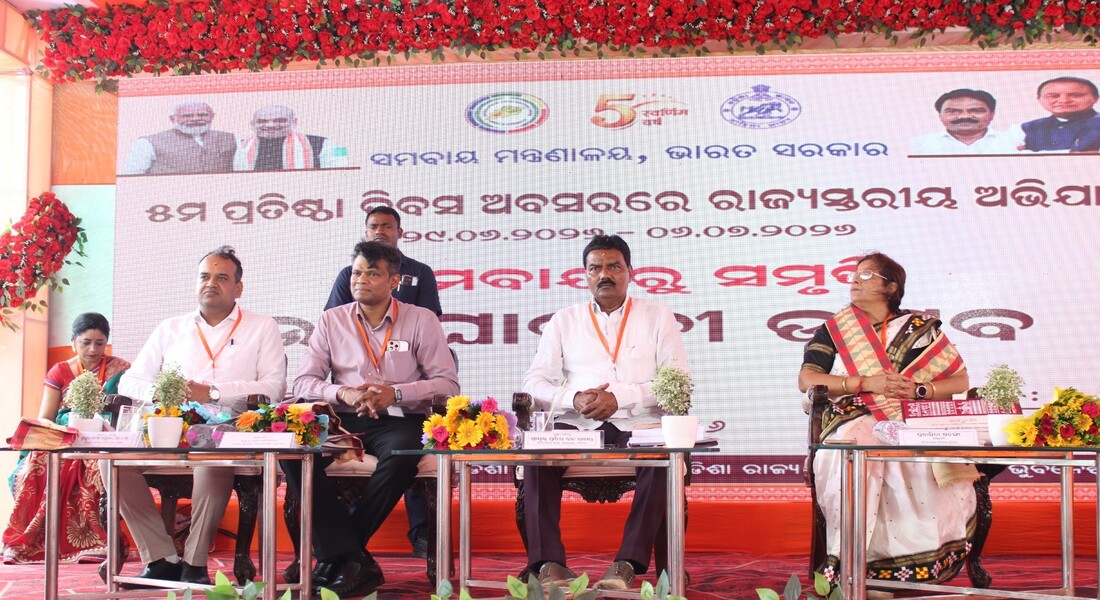
He made the announcements while inaugurating the 5th Foundation Day celebrations of the Ministry of Cooperation at Cooperative Bhavan in Bhubaneswar.

The event was organised by the Odisha State Cooperative Union under the directions of the Department of Cooperation, government of Odisha.

Samanta also said the Odisha Cooperative Policy-2026 has been prepared in alignment with the National Cooperative Policy-2025 as the state seeks to strengthen the cooperative movement under the vision of “Sahkar Se Samriddhi” (Prosperity through Cooperation).

The celebrations marked the beginning of a nationwide campaign to be observed from June 29 to July 6, commemorating five years of the Ministry of Cooperation. The campaign aims to connect people with the cooperative movement and spread awareness about the ministry’s achievements across the country.

According to the organisers, the campaign will focus on strengthening PACS, honouring farmers, promoting Green Cooperatives through tree plantation, encouraging greater participation of students, youth and women in the cooperative sector, establishing new cooperatives for the younger generation, and promoting the use of Artificial Intelligence and modern technology in cooperative institutions.

Before the public meeting, Samanta hoisted the Cooperative Flag at the Cooperative Bhavan premises.

Speaking at the same venue, Registrar of Cooperative Societies Manish Agrawal said cooperative institutions can be transformed into profitable and sustainable organisations.

Addressing the gathering, K. Sudarshan Chakraborty, Director of Agricultural Marketing and Member Secretary of the OSAM Board, said strengthening infrastructure is essential to make Odisha’s cooperative movement more vibrant.

He added that the Department of Cooperation has given top priority to infrastructure development over the past two years.

The meeting was presided over by Odisha State Cooperative Union Chairperson Prabasini Sadangi, who thanked the minister, the secretary of the Department of Cooperation, and the registrar of Cooperative Societies for entrusting the Union with organising the inaugural event.

On the occasion, Samanta and other dignitaries released a special edition of “Samabaya Samachar” and the Cooperative Circular Book published by the Odisha State Cooperative Union.

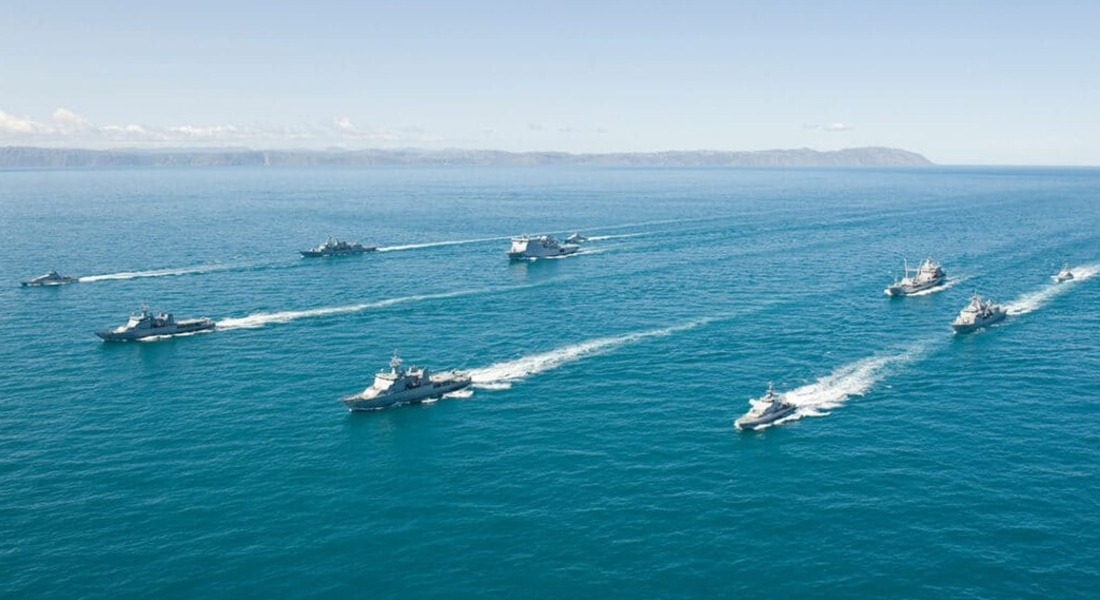
US and Iran agree to halt strikes, Qatar talks set to ease Hormuz tensions

The two sides will meet in Doha to resolve disputes over the Strait of Hormuz after renewed military exchanges threatened their fragile ceasefire agreement.

The United States and Iran have agreed to halt military strikes “for now” and resume diplomatic engagement with a fresh round of talks in Qatar on Tuesday, in a move aimed at preventing the collapse of the fragile ceasefire reached earlier this month.

The decision follows several days of renewed military exchanges that tested the 11-day-old Memorandum of Understanding (MoU) signed by the two countries to end months of conflict. The latest tensions centred on differing interpretations of provisions governing navigation through the strategically vital Strait of Hormuz.

According to Axios.com, a senior US official said, “We decided to stop all the kinetic activity,” referring to the suspension of military strikes and other offensive operations.

Another US official told Axios.com that “both sides will stand down ‘for now'” and that “vessels can move freely” as technical-level discussions continue. The report added that officials from both countries are scheduled to meet in Doha, Qatar, on Tuesday to resolve outstanding issues.

The planned meeting was originally expected to take place in Switzerland and focus primarily on Iran’s nuclear programme. However, the recent escalation prompted both sides to shift the venue to Doha and redirect discussions towards restoring stability in the Strait of Hormuz.

The waterway has emerged as the principal flashpoint in the fragile peace process. Under the MoU, Iran committed to making its best efforts to ensure the safe passage of commercial vessels through the Strait, while the United States agreed to lift its blockade of Iranian ports.

During negotiations in Switzerland last week, the US delegation, led by Vice President JD Vance, reportedly agreed with Tehran to establish a direct “hotline” between the US military and Iran’s Islamic Revolutionary Guard Corps (IRGC) to coordinate commercial shipping through the Strait of Hormuz.

However, Axios.com reported that the hotline had not become operational as of Saturday, even as Iran resumed insisting that ships coordinate their passage through the waterway. The delay reportedly contributed to renewed tensions and competing interpretations of the agreement.

Recent military exchanges further strained the ceasefire after Washington accused Tehran of attacking commercial vessels near the Strait, while Iran warned that any violations of the agreement would halt diplomatic engagement.

According to CNN and Axios.com, despite the latest confrontation, both governments have now agreed to pause military operations to allow diplomacy to continue.

The multinational maritime security body overseen by the US Navy reported that commercial shipping through the Strait has continued despite heightened security concerns. It said 89 US-assisted commercial transits had taken place over the past 72 hours, although that remains below the historical average of 138 vessels per day.

The Doha talks are expected to focus on implementing mechanisms to guarantee uninterrupted commercial navigation through one of the world’s most important energy corridors while preserving the broader framework of the US-Iran peace agreement.

Heavy rain to lash large parts of India this week as monsoon advances further: IMD

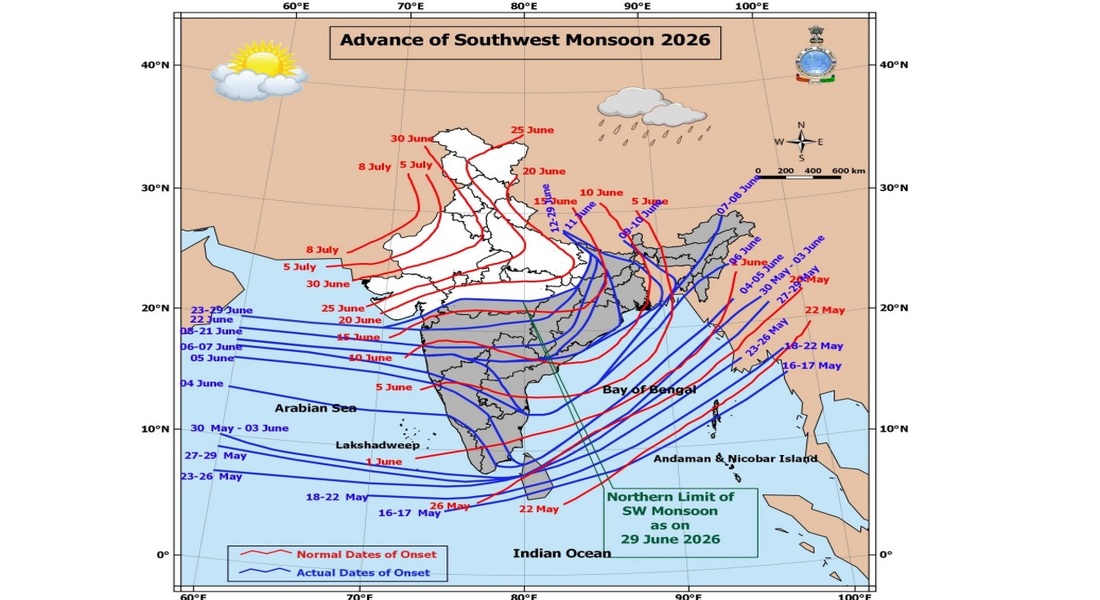
New Delhi, June 29: The India Meteorological Department (IMD) on Monday forecast widespread heavy to very heavy rainfall across large parts of the country over the next seven days as the southwest monsoon continues its advance into northern and central India. Several states are likely to experience thunderstorms, lightning, gusty winds and isolated spells of extremely heavy rainfall till July 5.

According to the IMD’s latest All India Weather Summary and Forecast Bulletin, conditions remain favourable for the further advance of the southwest monsoon into more parts of Gujarat, Madhya Pradesh, Uttar Pradesh, Uttarakhand, Himachal Pradesh, Jammu and Kashmir, Ladakh, southeast Rajasthan and adjoining areas over the next few days. A fresh western disturbance is also expected to affect northwest India from July 2, enhancing rainfall activity over the region.

The weather office has forecast fairly widespread to widespread rainfall over Odisha from June 30 to July 5, with isolated heavy rainfall on June 29-30 and July 5. The state is also likely to witness isolated very heavy rainfall between July 1 and July 4, accompanied by thunderstorms, lightning and gusty winds reaching speeds of 40-50 kmph, gusting up to 60 kmph.

Heavy to very heavy rainfall is also expected over parts of Konkan and Goa, Madhya Maharashtra, Kerala and Mahe, Bihar, Uttarakhand, Himachal Pradesh, Madhya Pradesh, coastal Karnataka, Sub-Himalayan West Bengal and Sikkim, Assam and Meghalaya, and Arunachal Pradesh on different days during the forecast period. Isolated extremely heavy rainfall is likely over Konkan and Goa, Madhya Maharashtra, coastal Karnataka, Odisha, and parts of the northeast on selected days.

The IMD has warned of thunderstorms accompanied by lightning and gusty winds across many regions, including Uttar Pradesh, Rajasthan, Punjab, Haryana, Delhi, Jharkhand, West Bengal, Gujarat, Madhya Pradesh, Telangana, Tamil Nadu, Kerala and several northeastern states. East Rajasthan may also experience thundersqualls with wind speeds of 50-60 kmph, gusting up to 70 kmph on some days, while duststorm activity has been forecast over western Rajasthan between July 2 and July 5.

Despite the advancing monsoon, isolated heatwave conditions are likely to persist over Haryana, Chandigarh and Delhi through June 30 and over East Uttar Pradesh on June 29. However, the IMD has forecast a gradual fall of 4-5 degrees Celsius in maximum temperatures across northwest India by July 4. Maharashtra is expected to witness a temperature drop of 3-4 degrees Celsius by July 3, while temperatures in Gujarat and Madhya Pradesh are also likely to decline gradually later this week.

The weather bulletin noted that heavy to very heavy rainfall with isolated extremely heavy rainfall was recorded in several parts of the country during the past 24 hours. Significant rainfall was reported from Arunachal Pradesh, Assam and Meghalaya, Sub-Himalayan West Bengal and Sikkim, Konkan and Goa, Bihar, Madhya Maharashtra and coastal Karnataka, while Odisha also recorded heavy rainfall at isolated places.

In view of the rough sea conditions, the IMD has advised fishermen not to venture into several parts of the Arabian Sea, Bay of Bengal and the Andaman Sea over the coming days as squally weather and strong winds are expected to prevail across these maritime regions.

Snana Purnima rituals begin in Puri, marking the start of Rath Yatra festivities

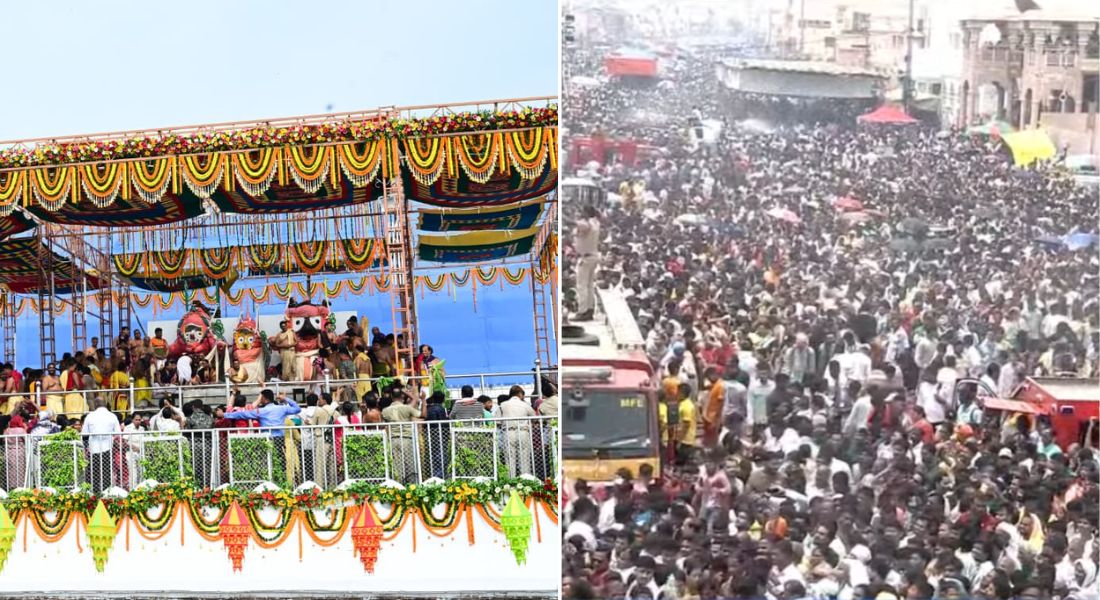
Puri: The sacred Snana Purnima rituals commenced at the Shree Jagannath Temple here on Monday, marking the ceremonial beginning of the annual Rath Yatra of Lord Jagannath, Lord Balabhadra and Devi Subhadra. Lakhs of devotees from across the country thronged the pilgrim town to witness the grand bathing ceremony, one of the most significant rituals in the Jagannath tradition.

Amid chants of prayers and devotional fervour, the three sibling deities—Lord Balabhadra, Lord Jagannath and Devi Subhadra—along with Sudarshan, were ceremonially brought out from the sanctum sanctorum in the traditional Pahandi procession and placed on the Snana Mandap, where the sacred bathing ritual began.

On Snana Purnima, observed on the full moon day of the Hindu month of Jyestha, the deities are ceremonially bathed with 108 pots of sacred water drawn from the temple’s golden well. The water is prepared with sandalwood, fragrant flowers, herbs and other medicinal ingredients, symbolising purification and healing.

Snana Purnima is the only occasion in the year when the sibling deities are brought out of the sanctum for public darshan on the Snana Mandap, allowing thousands of devotees to offer prayers and seek their blessings.

Following the ceremonial bath, the deities will be adorned in the famous Hati Besha (Elephant Attire), in which Lord Jagannath, Lord Balabhadra and Devi Subhadra are decorated with elephant-like features resembling Lord Ganesha. The unique attire is believed to symbolise wisdom, strength, protection and the removal of obstacles ahead of the annual chariot festival.

As per tradition, the deities are believed to fall ill after the elaborate bathing ritual and will remain away from public view during the 15-day Anasara period. During this time, they are offered herbal medicines and a simple diet while devotees worship the Anasara Pata, a traditional painted representation of the deities. They will reappear before devotees during Netrotsav, a day before the Rath Yatra.

The rituals formally set in motion preparations for this year’s Rath Yatra, during which the sibling deities will travel in their majestic chariots from the Shree Jagannath Temple to the Gundicha Temple.

Meanwhile, the Odisha Government, Odisha Police and the Shree Jagannath Temple Administration (SJTA) have made elaborate arrangements to ensure the smooth and safe conduct of the festival.

Security has been significantly strengthened in and around the temple with an extensive surveillance network comprising 152 CCTV cameras inside the shrine, around 250 cameras outside the temple and 30 additional cameras along the route up to Market Chhak. Senior police officers, including Central Range Inspector General of Police Dr Satyajeet Nayak and Puri Superintendent of Police Prateek Singh, reviewed the security, traffic and crowd management arrangements ahead of the festival.

To facilitate orderly movement of pilgrims, all roads leading directly to the temple have been declared no-vehicle zones. Devotees are entering the temple through the Lion’s Gate and exiting through the North Gate, while shaded barricaded queue systems have been set up to ensure convenience.

Heavy traffic movement was witnessed at the Pipili Toll Gate as lakhs of devotees travelled towards Puri. Additional police personnel and traffic management teams have been deployed to regulate the flow of buses, private vehicles and two-wheelers, while emergency services have been given priority on the busy highway leading to the holy town.

Canada knock South Africa out of FIFA World Cup

Canada registered a hard-fought 1-0 win over South Africa in the Round of 32 of the FIFA World Cup 2026.

Stephen Eustaquio’s 92nd-minute goal eliminated the African nation at Los Angeles Stadium.

Both sides produced some eye-catching moments throughout the match, but it was the co-hosts, Canada, that prevailed in the end.

Canada will next face the winner of the Netherlands vs Morocco match at Houston Stadium.

For the first time, South Africa reached the knockout stage of the World Cup.

Eustaquio was named the Michelob Ultra Superior Player of the Match for his crucial goal.

Later, he said: “We worked a lot to get this victory. We really wanted to give this win to all the Canadians. We just kept believing and kept pushing. It was an amazing goal, but when I shot I felt everyone shot with me. Everybody put a little bit of power on it and it went to the back of the net, so I’m very happy. We will try to make Morocco and Netherlands see our game and feel, if they go through, they’re going to get the hardest game they’re going to face in this World Cup.”

National Inter-State Athletics Championships 2026 conclude with record-breaking performances

Bhubaneswar: The 65th National Inter-State Senior Athletics Championships 2026 concluded on Sunday at the Kalinga Stadium after five action-packed days of record-breaking performances by hundreds of athletes.

On the final day, javelin thrower Rohit Yadav won the men’s event with a massive throw of 87.05m.

The 25-year-old athlete became the second-best javelin thrower on the global top list, behind Sri Lankan Rumesh Tharanga Pathirage (92.62m).

Rohit surpassed his previous best of 83.04m, set in 2023.

Yashvir Singh (83.72m) and Sachin Yadav (82.32m) finished second and third, respectively.

Kerala’s international jumper Sreeshankar Murali won the gold medal in the men’s long jump event with a leap of 8.38m.

Murali also won the Best Male Athlete award for his outstanding performance (1,221 points), while the Best Female Athlete award went to Ancy Sojan (1,191 points).

Uttar Pradesh won the men’s team trophy (71 points), while Haryana bagged the women’s team trophy (82 points). The overall team championship award went to Tamil Nadu (138 points).

Results: Men: 400m: (AG Q Time 45.97 secs): Vishal TK (Tamil Nadu) 45.43 secs, Manu TS (Kerala) 45.60 secs, Jay Kumar (Uttar Pradesh) 45.73 secs,

10,000m: (AG Q Time 29:00.00): Abhishek Pal (Uttar Pradesh) 30:03.88 secs, Sawan Barwal (Himachal Pradesh) 30:08.08 secs, Shailesh Kushwaha (Karnataka) 30:23.13 secs.

3000m steeplechase: (AG Q Time 8:36.57 secs): Balkishan (Haryana) 8:50.18 secs, Sharuk Khan (Uttar Pradesh) 8:53.18 secs, Shubham Bhandare (Maharashtra) 8:54.90 secs.

4x400m relay: Tamil Nadu 3:9.32 secs, Karnataka 3:09.51 secs, Kerala 3:09.51 secs.

Women: 400m: (AG Q Time 53.72 seconds): Prachi (Uttar Pradesh) 53.24 secs, Kiran Pahal (Haryana) 53.45 secs, Devyaniba Zala (Gujarat) 53.46 secs.

10,000m: (AG Q Time: 33:50.00): Seema (Himachal Pradesh) 34:28.75 secs, Soniya (Uttarakhand) 34:35.22 secs, Ravina Gayakwad (Maharashtra) 35:44.45 secs.

3000m steeplechase: (AG Q Time 9:47.53 secs): Ankita (Uttarakhand) 9:44.05, Khushbu Gupta (Uttar Pradesh) 19:38.47, Kumari Parru (Rajasthan) 10:52.28.

Heptathlon: (AG Q Mark 5605 points): Pooja (Haryana) 5619 points, Anamika KA (Kerala) 5466 points, Khushi (Haryana) 5438 points. 4x400m relay: Tamil Nadu 3:35.87 secs, Karnataka 3:36.18 secs, Kerala 3:39.70 secs.