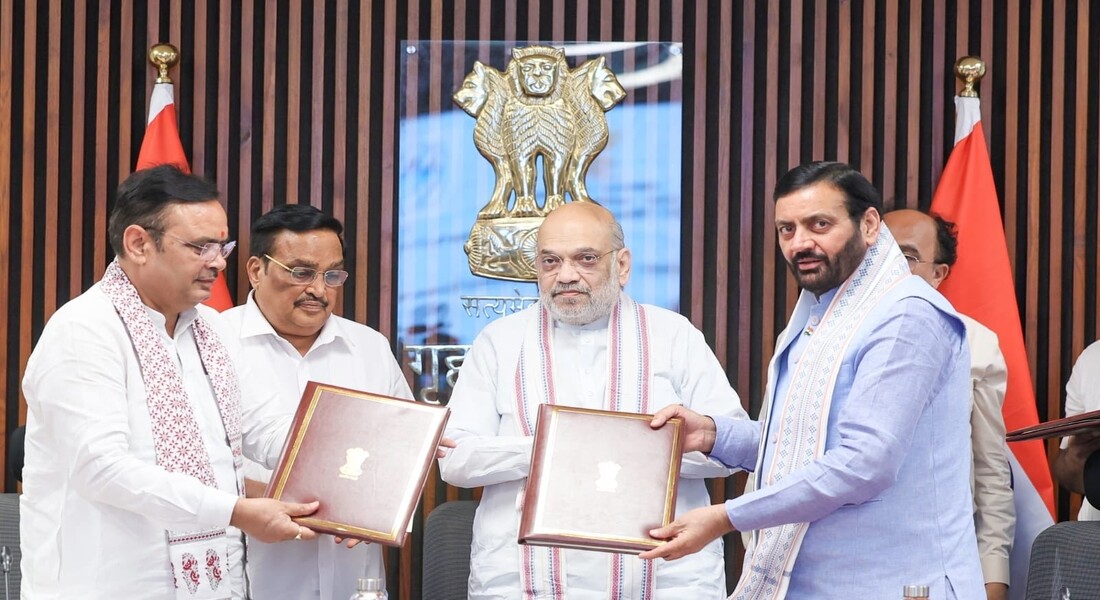

New Delhi: Rajasthan and Haryana on Monday signed an agreement to implement the Yamuna Water Project, which will facilitate the conveyance of Rajasthan’s allocated share of Yamuna waters through an underground pipeline system from the Western Yamuna Canal.
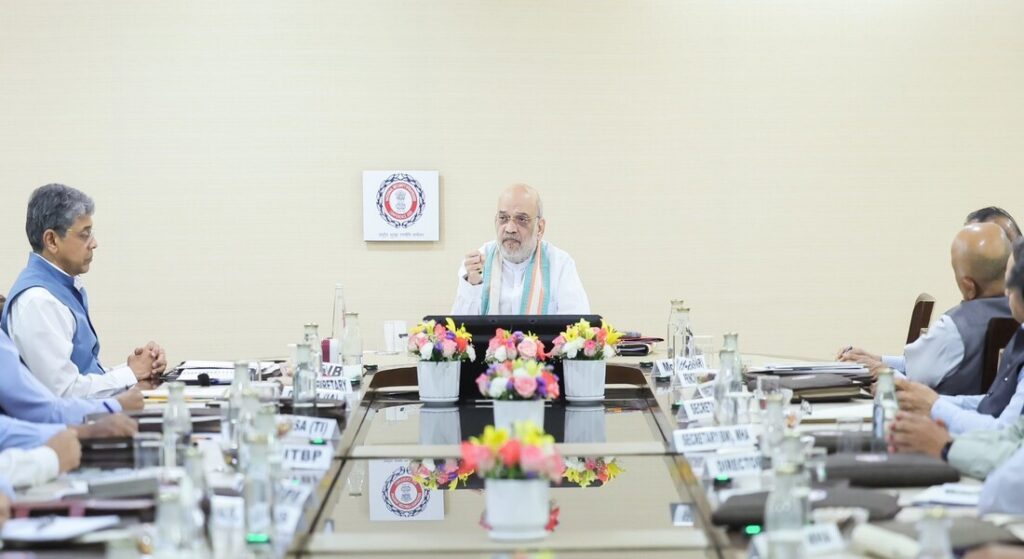
The agreement was signed in the presence of Union Home Minister and Minister of Cooperation Amit Shah, Rajasthan Chief Minister Bhajan Lal Sharma, Haryana Chief Minister Nayab Singh Saini, Union Jal Shakti Minister C.R. Patil and senior officials from the Central government and the two state governments.
Addressing the gathering, Shah said the agreement resolves a nearly three-decade-old water-related issue affecting the people of Rajasthan and Haryana. He described it as an example of Prime Minister Narendra Modi’s mantra of “Solution through Dialogue” and said it reflected the spirit of cooperative federalism.
Under the agreement, around 580 Million Cubic Meters of water will be supplied from the Yamuna Canal to Rajasthan through three underground pipelines between July and October.
The pipelines, each measuring more than 3.6 metres in diameter, will provide drinking water to people in both Rajasthan and Haryana, according to an official statement.
Shah said the agreement clearly defines financial responsibilities, cost-sharing, water allocation, water release protocols and maintenance arrangements. It also includes provisions for infrastructure operation and maintenance, monitoring systems, transparency measures and a dispute resolution mechanism.
He said the agreement, prepared by the governments of Rajasthan and Haryana along with the Central Water Commission, is expected to remain free from disputes for many decades. Shah also credited Patil, saying the issue was resolved within a few days under his chairmanship.
According to Shah, the project will provide drinking water to the districts of Sikar, Churu, and Jhunjhunu in Rajasthan, as well as the Bhiwani and Fatehabad areas of Haryana.
He said the project would significantly help address the drinking water shortage in both states, particularly Rajasthan. Water that was previously going to waste will now be used to meet drinking water needs and stored in large ponds to help recharge groundwater.
The project will enable Rajasthan to utilise the water allocated to it under the 1994 Memorandum of Understanding on the sharing of utilisable surface waters of the Upper Yamuna Basin.
According to the agreement, the project is expected to benefit millions of people by ensuring a reliable drinking water supply and supporting socio-economic development in the arid and semi-arid regions of Rajasthan. It also lays the foundation for the timely implementation of the project through coordinated efforts of the Central Government and the participating state governments.