At IndiaVerve, we go beyond the noise to bring you meaningful stories of change, resilience and progress—from India to the world stage. Our mission is to bring readers credible, wide-ranging coverage across politics, business, sports, culture, society and more.

INS Mahendragiri joins Indian Navy’s Eastern Fleet

New Delhi: The Indian Navy on Saturday inducted the indigenously built stealth frigate INS Mahendragiri into its Eastern Fleet, marking another milestone in India’s drive for self-reliance in defence manufacturing.

The frontline warship was inducted during a ceremony attended by Defence Minister Rajnath Singh, who said the vessel reflects India’s growing capabilities in indigenous warship design, shipbuilding and defence production.

INS Mahendragiri is the sixth Project 17A stealth frigate to join the Indian Navy in just 18 months. It follows the induction of INS Nilgiri, INS Udaygiri, INS Himgiri, INS Taragiri, and INS Dunagiri. The warship was designed by the Navy’s Warship Design Bureau and built by Mazagon Dock Shipbuilders Limited in Mumbai, according to an official statement.

With more than 75% indigenous content, the 6,670-tonne warship can achieve speeds of up to 28 knots. It is designed to undertake a wide range of operations, including fleet air defence, anti-surface warfare, anti-submarine warfare, maritime interdiction, surveillance, and humanitarian assistance and disaster relief.

The frigate is equipped with advanced stealth features, modern sensors, network-centric combat systems, and state-of-the-art weapon systems. It can be armed with BrahMos supersonic surface-to-surface missiles, medium-range surface-to-air missiles, torpedo launchers, an Integrated Anti-Submarine Defence System, an electronic warfare suite, a close-in weapon system, and a multi-role helicopter.

Addressing the ceremony, Rajnath said the warship would strengthen India’s maritime security and safeguard the country’s interests not only along its coastline but also across the deep oceans. He described INS Mahendragiri as a symbol of India’s commitment to building a technologically advanced and combat-ready Navy.

The defence minister further said emerging technologies such as artificial intelligence, drones, cyber warfare, hypersonic weapons, unmanned systems and space-based capabilities are changing the nature of warfare. However, he stressed that conventional military strength remains the foundation of national defence, saying future wars may involve artificial intelligence.

He said the government is pursuing a balanced approach by investing in next-generation technologies while continuing to strengthen conventional defence capabilities. Referring to Operation Sindoor, he said it demonstrated the effective integration of conventional and modern military capabilities to safeguard national security.

Highlighting the strategic importance of the Indo-Pacific, Rajnath Singh reaffirmed the government’s commitment to the vision of Security and Growth for All in the Region. He said India remains a trusted security partner and net security provider in the region, with the Indian Navy playing a key role in humanitarian assistance, anti-piracy operations and evacuation missions.

Referring to the recent West Asia conflict, the minister said that under Operation Urja Suraksha, the Indian Navy safely escorted 18 merchant vessels carrying essential cargo worth over Rs 9,000 crore, protecting the country’s economic interests.
Odisha signs MoU to establish Centre of Excellence for low-carbon construction

Bhubaneswar: In a major push towards sustainable urban development, the Odisha government on Saturday signed a tripartite Memorandum of Understanding (MoU) to establish the Centre of Excellence on Low Carbon Construction Materials and Sustainable Development.

The initiative aims to promote research, innovation, capacity building and the adoption of sustainable construction practices to support climate-resilient urban infrastructure and cleaner, greener cities across the state.

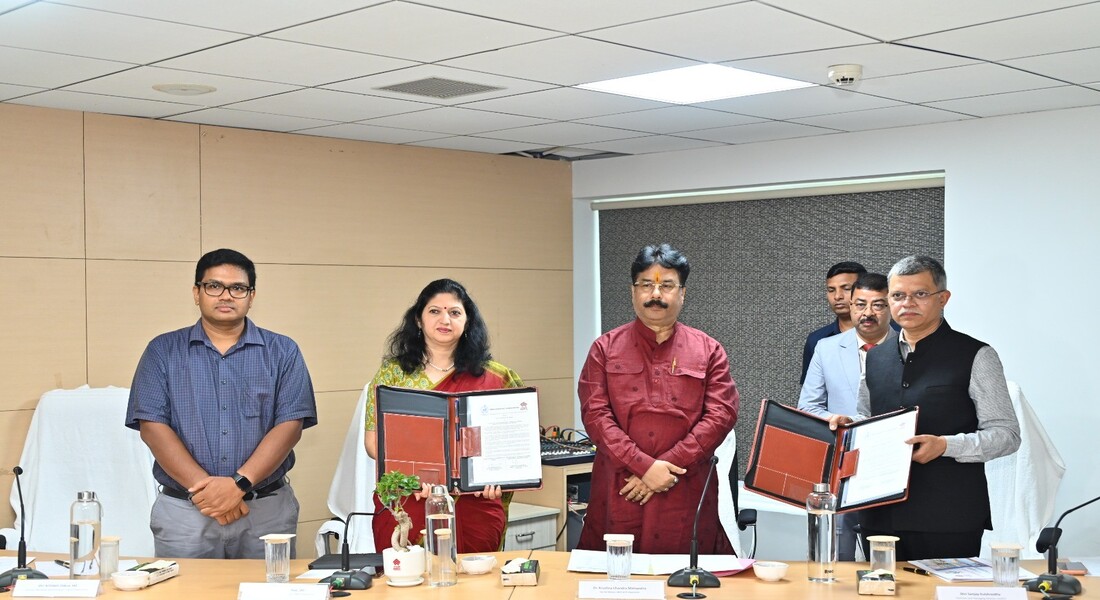
The MoU was signed between the Odisha Urban Academy (OUA), IIT Bhubaneswar, and Development Alternatives in the presence of Housing & Urban Development and Public Enterprises Minister Dr. Krushna Chandra Mahapatra and Additional Chief Secretary Usha Padhee.

The agreement was signed by OUA Director Suvendu Sahu, Professor Dinakar Pasla of IIT Bhubaneswar’s School of Infrastructure, and Development Alternatives CEO Shashtant Patara. The programme began with a welcome address by Binaya Kumar Dash, Special Secretary, Housing & Urban Development Department and Mission Director, SBM (Urban).

Speaking at the event, Dr. Mahapatra said the initiative aligns with Chief Minister Mohan Charan Majhi’s vision of transforming Odisha into a Viksit Odisha by 2036, while contributing to the national goal of Viksit Bharat 2047.

He further said urban development should focus not only on creating physical infrastructure but also on improving quality of life through environmentally responsible planning, quality public infrastructure, and efficient civic services.

The minister described the Centre of Excellence as a knowledge and innovation hub that will strengthen sustainable urban development in Odisha through research, policy support and technological innovation.

As its first major initiative, the Centre will prepare a comprehensive roadmap for Construction and Demolition Waste Management covering the rapidly urbanising region of Bhubaneswar, Cuttack, Khordha, Jatni and Pipili.

The project will assess construction and demolition waste generation, develop an integrated waste management strategy, promote innovative recycling technologies, strengthen institutional capacity and prepare a Detailed Project Report. The framework is expected to become a scalable model for implementation in other urban centres across Odisha.

Under the partnership, IIT Bhubaneswar will provide research and technical expertise, while Development Alternatives will support implementation and promote sustainable construction technologies. The OUA will lead capacity building, policy support and knowledge dissemination among Urban Local Bodies and other stakeholders.

Addressing the gathering, Padhee highlighted the need for strong institutional collaboration to tackle emerging urban challenges. She said integrating sustainable construction practices, scientific waste management and evidence-based planning into the urban development framework would be crucial for building resilient, resource-efficient and environmentally sustainable cities.

Dr. Mahapatra further said the Centre’s mandate would gradually expand beyond low-carbon construction materials and C&D waste management to include urban air quality monitoring, solid waste management, water quality assessment and other sustainability-related interventions.

He expressed confidence that the Centre of Excellence would play a key role in supporting Odisha’s transition towards climate-resilient and future-ready urban development while creating replicable models for cities across the state.

India, New Zealand elevate ties to Strategic Partnership

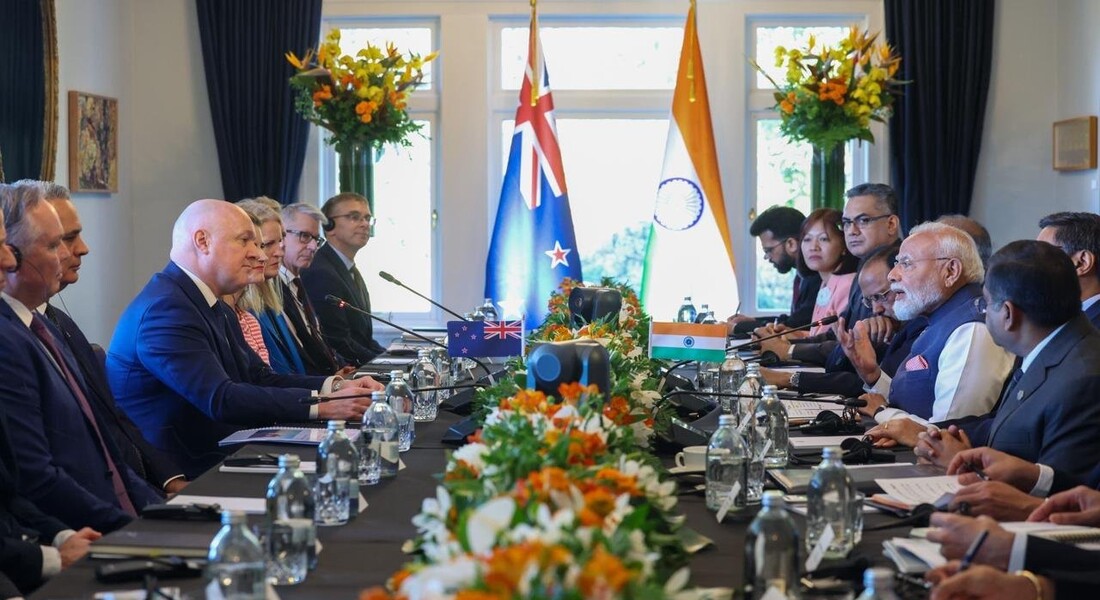
New Delhi: India and New Zealand have elevated their bilateral relationship to a Strategic Partnership and adopted a roadmap to guide cooperation until 2030, marking a major milestone during Prime Minister Narendra Modi’s first visit to the country in four decades.

During the visit, Prime Minister Modi and his New Zealand counterpart, Christopher Luxon, held bilateral talks and reviewed progress made since Luxon’s visit to India in March 2025. They also endorsed the India-New Zealand Strategic Partnership: Roadmap to 2030, which outlines cooperation across political, economic, defence and people-to-people sectors.

The two countries also welcomed the signing of a comprehensive India-New Zealand Free Trade Agreement (FTA). They agreed to work towards its early implementation and set a target of doubling two-way trade in goods and services to NZD 7 billion (around Rs 35,000 crore) by 2030.

India and New Zealand agreed to deepen defence and maritime cooperation through new arrangements on maritime security, hydrography and logistics support. They also decided to establish an annual Maritime Security Dialogue and strengthen cooperation in counter-terrorism, cyber security, and law enforcement, according to an official statement.

The leaders also agreed to expand collaboration in agriculture, education, science, clean energy, innovation, and disaster management. They welcomed new agreements in tourism, animal husbandry, and dairying, while encouraging the launch of direct non-stop flights between the two countries.

On maritime cooperation, both sides discussed efforts to strengthen the recognition of seafarer competency certificates. They said enhanced recognition would improve seafarer mobility, boost cooperation between maritime authorities and support the resilience of the maritime industries in both countries.

The two prime ministers reaffirmed their commitment to a free, open and rules-based Indo-Pacific and supported reforms of the United Nations Security Council. New Zealand also reiterated its support for India’s permanent membership of a reformed and expanded UNSC.

The leaders condemned terrorism in all its forms and agreed to strengthen cooperation against terrorism and violent extremism through a Joint Working Group on Counter-Terrorism. They also called for greater international action against terror financing and safe havens.

Modi thanked the government and people of New Zealand for the warm hospitality extended during the visit. Both leaders agreed to maintain the momentum of high-level engagements and ensure timely implementation of the initiatives outlined in the Roadmap to 2030.

World Bank approves USD 890 million financing for India’s rooftop solar programme

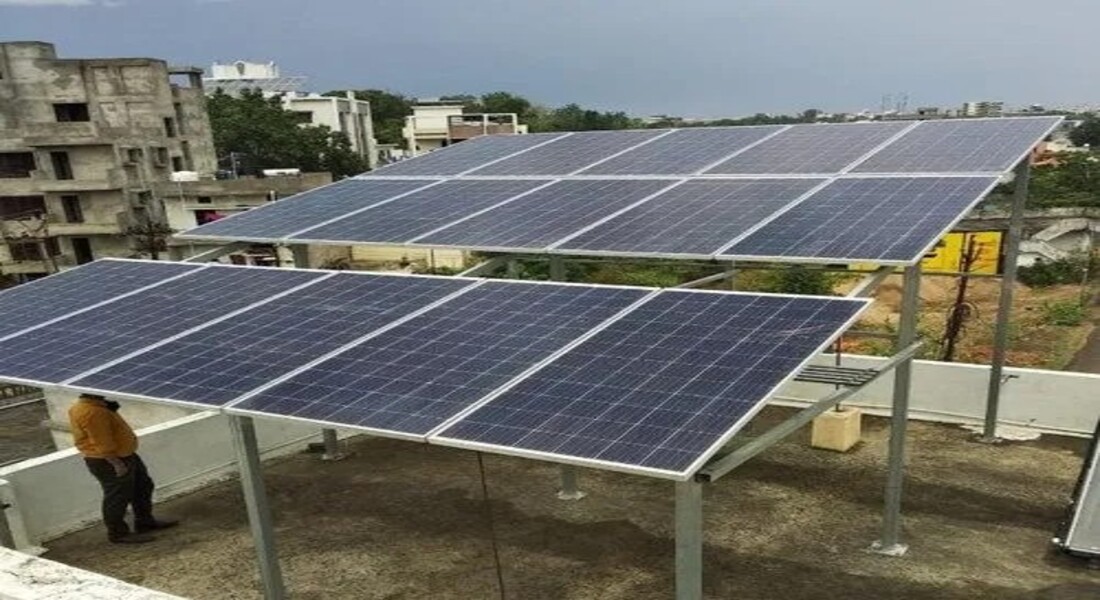
New Delhi: The World Bank’s Board of Executive Directors has approved a USD 890 million financing package to support India’s national rooftop solar programme.

The programme aims to expand clean energy access to millions of households and create around 1.7 million jobs across the renewable energy manufacturing, installation and services value chain.

The funding will support the Indian government’s PM Surya Ghar: Muft Bijli Yojana, which aims to install rooftop solar systems in 10 million rural and urban households. The programme is expected to reduce household electricity bills, promote clean energy adoption and encourage domestic manufacturing of rooftop solar equipment, the bank said in a press release.

India has committed to achieving net-zero emissions by 2070 and increasing the share of non-fossil fuel-based energy to 60% of its electricity mix by 2035. While utility-scale solar capacity has expanded rapidly, the adoption of residential rooftop solar has remained relatively limited.

Paul Procee, Acting Country Director for India at the World Bank, said the institution had been supporting India’s rooftop solar sector for more than a decade. He said the World Bank had mobilised over USD 2 billion, helping expand installed solar capacity from 500 MW to more than 27 GW. Procee added that the new financing would help India scale up residential rooftop solar while creating employment opportunities across the supply chain and installation ecosystem.

The financing package includes a USD 820 million loan from the International Bank for Reconstruction and Development (IBRD), a USD 60 million concessional loan from the Clean Technology Fund, and a USD 10 million grant from the IBRD’s Livable Planet Fund.

In addition, the World Bank will mobilise USD 4.2 billion in private financing through commercial loans to help households install rooftop solar systems.

Moez Cherif, Task Team Leader of the programme, said the initiative would transform the residential rooftop solar market by removing financial barriers and strengthening the capacity of distribution companies, banks and vendors to deliver integrated service solutions. He added that collateral-free financing would enable households to install rooftop solar systems and significantly reduce their monthly electricity bills.

SIRD&PR uses game-based learning to train Sarpanches on Gram Panchayat planning

Bhubaneswar: The State Institute for Rural Development and Panchayati Raj (SIRD&PR) used an innovative game-based exercise to train Sarpanches on preparing effective Gram Panchayat Development Plans (GPDP).

The exercise demonstrated how local bodies can balance development priorities, limited financial resources, and fixed timelines while addressing the needs of villagers.

A special session on the role of project management in GPDP preparation was held during a two-day training programme organised by SIRD&PR. The session was conducted by Deputy Director Santosh Kumar Patra.

A total of 63 Sarpanches from Balasore, Boudh, Jagatsinghpur, Kalahandi, Kandhamal, Kendrapara, Keonjhar, and Sonepur districts attended the programme.

As part of the exercise, participants were divided into two groups. Each group was given a budget of Rs 500 and asked to select one member as the King and another as the Queen. They were then given 20 minutes to purchase materials such as paper, scissors, staplers, glue, erasers, safety pins, and sketch pens to prepare costumes.

After the activity, trainers explained the project management principles behind the exercise. The Rs 500 budget represented the limited financial resources available to Gram Panchayats. The selection of materials highlighted the need to identify local priorities and use available funds wisely. The 20-minute deadline reflected the time constraints involved in planning and implementing development projects.

The training programme also focused on ways to increase the Own Source Revenue of Gram Panchayats. Participants were introduced to different sources of revenue and the importance of planning and efficient utilisation of available resources.

The programme aimed to equip Sarpanches with the knowledge and practical skills needed to prepare realistic, need-based and result-oriented Gram Panchayat Development Plans.

The participating Sarpanches expressed confidence that they would work towards increasing the Own Source Revenue of their respective Panchayats, building self-reliant local bodies and contributing to the vision of ‘Bikashita Gaon, Bikashita Odisha’.

FIFA World Cup: Spain to face France in semi-finals

European champions Spain reached the semi-finals of the FIFA World Cup following a hard-fought 2-1 victory over Belgium at Los Angeles Stadium.

Spain will meet France at Dallas Stadium on July 15.

Fabian Ruiz broke the deadlock for Spain in the 30th minute, but Charles De Ketelaere equalised for Belgium with a powerful header in the 41st minute.

Mikel Merino netted the winner in the 88th minute, giving his side plenty of reason to celebrate.

Spain’s Lamine Yamal was adjudged the Superior Player of the Match.

Speaking to reporters after the match, Spain’s Coach Luis de la Fuente said: “It’s the character of the team. It’s an honour to coach a team so committed and eager to improve. It’s fair to think we can beat France. We’re going to work hard for it. We’re the only team that has managed to beat them twice. A great team is going to face another great team.”

Spain midfielder Mikel Merino said: “I’m thrilled. I doubt it will happen again. We’re two matches away from winning a World Cup. It’s a dream come true. Hopefully we can achieve it. Everyone is watching these matches. Being able to bring this joy is a source of pride. Against France, at this stage, we couldn’t expect anything less than an elite team.”

Sarvesh Kushare finishes third at Monaco Diamond League

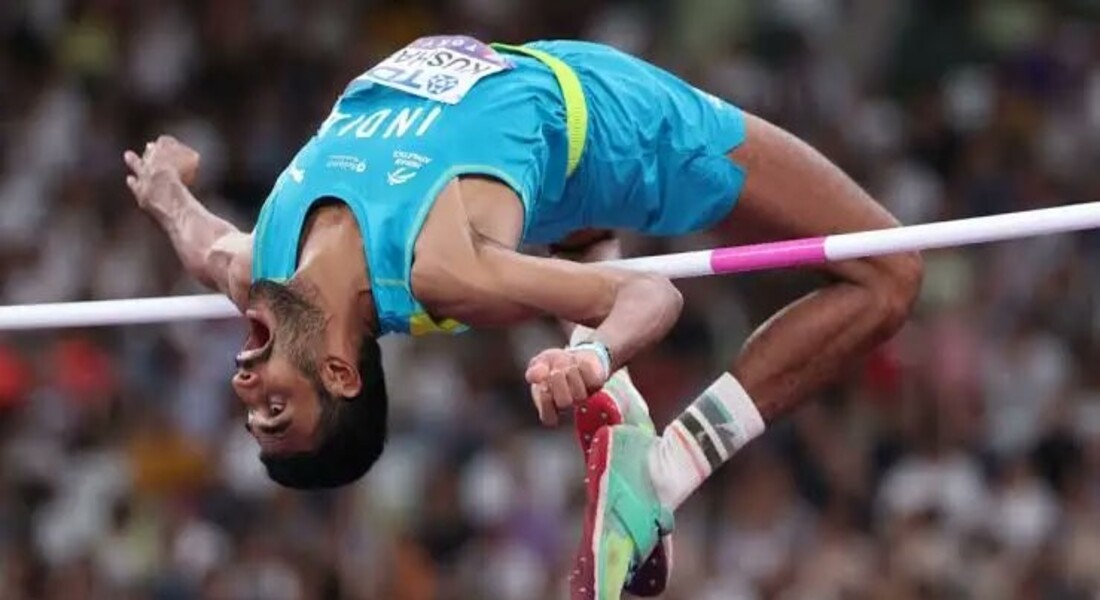
New Delhi: Indian high jumper Sarvesh Kushare delivered a memorable performance by securing third place in the men’s high jump event at the Monaco Diamond League 2026 on Friday.

The Monaco meet marked the 31-year-old’s first appearance on the Diamond League circuit. With the podium finish, he became only the fourth Indian athlete to secure a top-three finish at a Diamond League meet, after Vikas Gowda, Neeraj Chopra and Murali Sreeshankar.

Kushare has been in outstanding form this season. Last month, he set a new national record of 2.31m at the National Inter-State Senior Athletics Championships in Bhubaneswar, surpassing Tejaswin Shankar’s eight-year-old mark.

Competing at the Stade Louis II in Fontvieille, Kushare cleared 2.12m, 2.16m, 2.20m, 2.23m, and 2.26m on his first attempts to remain in contention for the top three alongside Great Britain’s Jack Kimani and Ukraine’s Oleh Doroshchuk, according to reports.

The Asian Athletics Championships silver medallist could not clear 2.28m in three attempts, which confirmed his third-place finish.

Kushare also finished ahead of Italy’s Gianmarco Tamberi and Qatar’s Mutaz Barshim, the joint Olympic champions from Tokyo 2020. Tamberi placed seventh with a clearance of 2.23m, while Barshim finished eighth after clearing 2.20m.

Ukraine’s Oleh Doroshchuk won the competition with a best jump of 2.32m, while Jack Kimani of Great Britain finished second with a clearance of 2.30m.

Kushare, who became the first Indian high jumper to reach the final of the World Athletics Championships in Tokyo last year, has also been named in India’s 32-member athletics squad for the 2026 Commonwealth Games.