At IndiaVerve, we go beyond the noise to bring you meaningful stories of change, resilience and progress—from India to the world stage. Our mission is to bring readers credible, wide-ranging coverage across politics, business, sports, culture, society and more.

India’s exports rise 11.37% to USD 232.73 billion in April-June

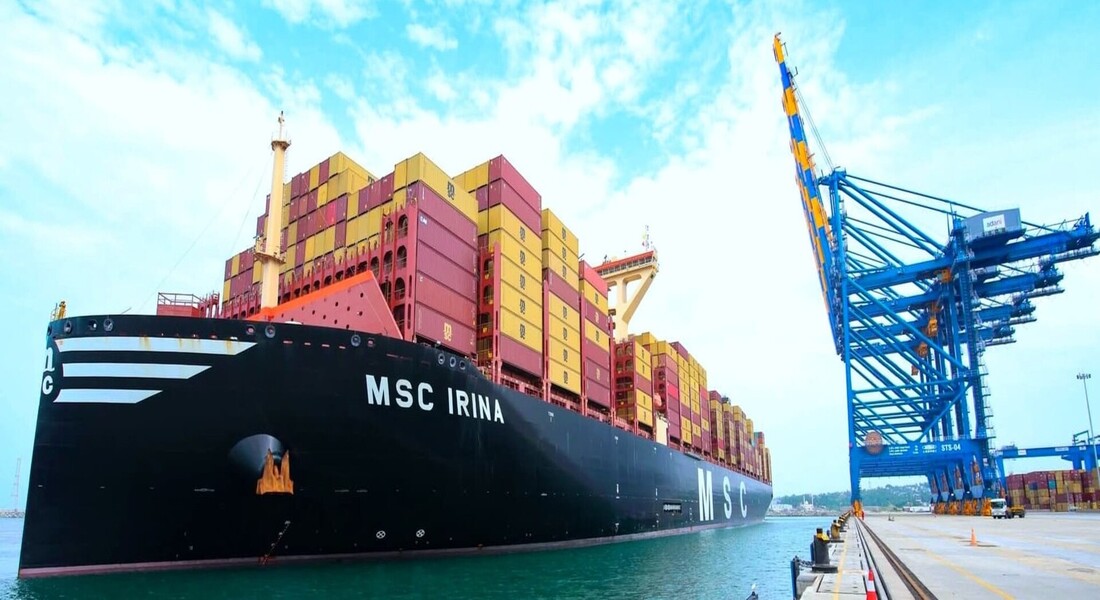
New Delhi: India’s cumulative exports of merchandise and services grew 11.37% year-on-year to an estimated USD 232.73 billion during the first quarter of 2026-27, driven by strong growth in merchandise exports, particularly engineering goods, gems and jewellery, electronic goods, organic and inorganic chemicals, and rice.

According to data released by the Commerce Ministry, total exports stood at USD 208.98 billion during the April-June period of 2025-26.

Merchandise exports rose 15.92% to USD 129.32 billion during April-June 2026-27 from USD 111.57 billion a year earlier. Non-petroleum exports also increased 12.44% to USD 106.30 billion, according to an official statement.

In June 2026 alone, India’s total exports, including merchandise and services, were estimated at USD 73.45 billion, up 9.48% from the corresponding month last year. Total imports during the month increased 26.85% to USD 88.76 billion.

Merchandise exports in June climbed to USD 40.41 billion, compared with USD 34.98 billion in June 2025. Merchandise imports rose to USD 70.84 billion from USD 54.08 billion a year earlier.

Engineering goods remained the biggest contributor to export growth in June, with shipments rising 20.74% to USD 11.48 billion. Gems and jewellery exports surged 34.64% to USD 2.41 billion, while electronic goods exports increased 18.93% to USD 4.93 billion. Exports of organic and inorganic chemicals grew 19.42% to USD 2.77 billion, and rice exports rose 16.48% to USD 1 billion.

Several other sectors also posted strong growth during June, including other cereals, handicrafts, meat, dairy and poultry products, iron ore, plastics and linoleum, tobacco, marine products, petroleum products, drugs and pharmaceuticals, cotton yarn and fabrics, processed food items, man-made yarn and fabrics, and fruits and vegetables.

During the April-June period, merchandise imports increased to USD 216.18 billion from USD 180.31 billion a year ago. As a result, the merchandise trade deficit widened to USD 86.86 billion, compared with USD 68.75 billion in the same period last year.

Services exports also registered growth during the quarter. Estimated services exports for April-June 2026-27 reached USD 103.41 billion, up from USD 97.41 billion in the corresponding period last year. Services imports stood at USD 53.97 billion, resulting in a services trade surplus of USD 49.43 billion.

Overall imports, including merchandise and services, were estimated at USD 270.15 billion during April-June 2026-27, registering a growth of 17.55% over the same period last year.

Among export destinations, Singapore, Tanzania, South Africa, Sri Lanka, and China recorded the highest value growth during the April-June quarter. On the import side, Russia, China, Oman, the US, and Brazil emerged as the fastest-growing sources of imports during the period.


Jurassic Park star Sam Neill dies at 78

Bhubaneswar: Acclaimed New Zealand actor Sam Neill, who won global recognition for portraying Dr Alan Grant in the Jurassic Park franchise, has died at the age of 78.

His family confirmed the news through a statement posted on his official Instagram account on Monday.

“It is with immense sadness that the whānau of Sam Neill share the news of his passing on Monday 13th July, in Sydney, Australia. Sam was surrounded by family and passed with the dignity that has characterised his whole life,” the statement said.

It added: “The loss was sudden and unexpected but blessed by the fact that Sam remained cancer free. They would like to express their deepest gratitude to the staff at St Vincent’s Private Hospital for their incredible care. More details will be shared later, but for now, on behalf of the family, we ask that you respect their privacy as they navigate this immeasurable loss.”

No cause of death was announced. Neill had been diagnosed with stage three angioimmunoblastic T-cell lymphoma in 2022. He later shared that he was cancer-free following treatment, according to reports.

The announcement triggered an outpouring of tributes from colleagues and fans across the world, who remembered Neill for his versatility and enduring screen presence.

Born in Omagh, Northern Ireland, in 1947, Neill moved to New Zealand with his family during childhood. Although he initially studied law, he soon turned to acting and began performing in theatre before making his way into films.

His breakthrough came with the 1977 film Sleeping Dogs, which opened the door to an international career. He later earned acclaim for performances in My Brilliant Career, The Piano, Dead Calm, The Hunt for Red October, and many other films.

Neill became a household name in 1993 after starring as palaeontologist Dr Alan Grant in Steven Spielberg’s blockbuster Jurassic Park. He reprised the role in Jurassic Park III and Jurassic World Dominion, introducing the iconic character to a new generation of audiences.

Away from the big screen, Neill built a successful television career with roles in Peaky Blinders, The Tudors and The Twelve. He also received a Golden Globe nomination for his performance in the miniseries Reilly, Ace of Spies.

During a career spanning more than five decades, Neill appeared in over 150 film and television productions. He was widely regarded as one of New Zealand’s most celebrated actors and leaves behind a lasting legacy in global cinema.

Odisha’s Astik Pradhan wins second medal at Asian U23 Athletics Championships

Bhubaneswar: Astik Pradhan’s impressive run at the Asian U23 Athletics Championships in China continued as the Odia sprint sensation clinched his second medal, winning silver in the men’s 4x400m relay.

Pradhan, along with Sharan Megavarnam, Setu Mishra and Aman Choudhary, clocked 3:04.24 to finish second.

China claimed the gold medal in 3:03.46, while Qatar secured bronze with a time of 3:06.19.

Odisha Sports and Youth Services Minister Suryabanshi Suraj congratulated the Indian quartet on their remarkable achievement.

In a post on X, he said: “At the Asian U-23 Athletics Championship 2026 held in China, the Indian 4×400m relay team secured the silver medal with a timing of 3:04.24 minutes. Astik Pradhan of Odisha, along with Sharan Megavarnam, Setu Mishra and Aman Choudhary, was part of this silver medal-winning team. Heartfelt wishes and congratulations to all.”

Earlier, the quartet of Astik Pradhan, Sandra Mol Sabu, Sethu Mishra and Shravani Sachin Sangle had won the gold medal in the mixed 4x400m relay.

India concluded its campaign with 16 medals, including three gold, to finish fourth in the overall standings.

Over 13,000 personnel deployed for Rath Yatra as Odisha Police conducts mock drill in Puri

Puri: With just three days to go for the world-famous Rath Yatra of Lord Jagannath, Odisha Police has intensified its preparations here, deploying more than 13,000 personnel and conducting a comprehensive mock drill to test emergency response, crowd management and coordination among different agencies.

The large-scale exercise was conducted as part of preparations to ensure the safety and security of lakhs of devotees expected to converge on the pilgrim city for the annual festival on July 16. According to Odisha Police, every possible measure is being taken to ensure a safe and secure Rath Yatra for devotees.

As part of the operational preparations, Puri Police also conducted a dummy car-dragging rehearsal at the RO Ground to strengthen coordination and assess readiness for the smooth conduct of the festival. Such rehearsals are aimed at preparing personnel for the complex crowd and operational challenges associated with the pulling of the three chariots during the grand event.

Safety arrangements have also been stepped up along the Puri coast, which attracts a large number of visitors during the festival. Puri Police conducted a special briefing for lifeguards at Puri Beach to strengthen coordination and preparedness for tourist safety during the Rath Yatra period.

The latest exercises follow a high-level security review chaired by Odisha Director General of Police Yogesh Bahadur Khurania at the Puri Town Hall on July 11. During the meeting, the DGP said the police administration was fully prepared to ensure an incident-free, orderly and well-managed Rath Yatra.

With lakhs of devotees expected to visit Puri, eight new parking facilities have been prepared at different locations across the city. The police have also installed cameras at key points from Uttara Square to Puri, along the Puri-Konark road and at several important intersections to strengthen traffic management and facilitate the movement of pilgrims.

Special emphasis has been placed on crowd control, orderly darshan and the safe pulling of the chariots. Experienced police officers have been assigned to Rath Yatra duty, while personnel have been instructed to treat devotees with patience, courtesy and a service-oriented approach.

Senior police officials have also stressed the need for seamless coordination in managing traffic, VIP movement, crowd control and security cordons. Personnel deployed for the festival have been directed to remain at their designated duty points even during adverse weather conditions and to maintain continuous communication with other agencies.

The multi-layered security arrangements reflect the scale of preparations for one of India’s largest religious gatherings. With the mock drill, operational rehearsal, lifeguard briefing, enhanced surveillance and deployment of over 13,000 police personnel, authorities are focusing on preparedness and coordination to ensure that devotees have a safe and orderly experience during Rath Yatra 2026.

US, Iran exchange fresh strikes as Gulf tensions escalate, oil prices surge

Iran claims attacks on US military facilities across the Gulf after Washington launches new waves of strikes targeting Iranian military assets amid renewed fighting over the Strait of Hormuz.

The United States and Iran exchanged fresh waves of attacks across the Gulf region into Monday, sharply escalating hostilities as Tehran claimed strikes on US military facilities in several countries and Washington targeted dozens of sites across Iran. The renewed fighting sent oil prices higher and rattled Asian stock markets.

Iran’s Islamic Revolutionary Guard Corps (IRGC) claimed on Monday that its forces had struck US military facilities in Bahrain and destroyed radar systems in Oman. In a statement carried by its Sepah news outlet, the Guards said military infrastructure in Juffair, Bahrain, had been targeted, while long-range airborne and ship-detection radar systems were destroyed in Oman. These claims could not be independently verified.

Bahrain, home to the US Navy’s Fifth Fleet, sounded missile warning sirens for a second time on Monday and urged residents to seek shelter. There was no immediate report of casualties or damage.

Jordan’s military said its air defence systems intercepted and shot down four Iranian missiles that entered the country’s airspace early Monday. However, there were no reports of injuries or property damage.

Kuwait’s armed forces also said they were intercepting “hostile aerial targets” within the country’s airspace as Iran carried out retaliatory attacks on US interests in the region, according to a statement published by the state-run KUNA news agency.

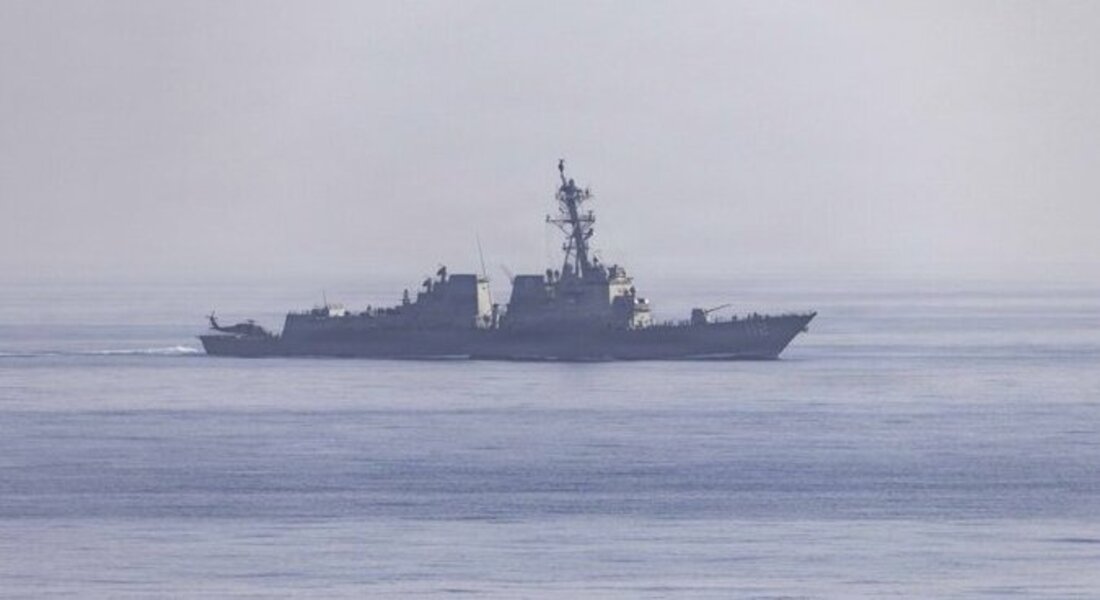
The Iranian attacks followed a fresh round of US strikes on Iran. US Central Command (CENTCOM) said it had hit dozens of targets at multiple locations with precision munitions to degrade Tehran’s ability to threaten international shipping through the Strait of Hormuz.

According to CENTCOM, the targets included Iranian air defence systems, coastal radar sites, missile and drone capabilities and small boats. The US military said it used fighter aircraft, naval vessels and one-way attack aerial and sea drones. Earlier, American forces said they had struck approximately 140 targets in a heavier round of attacks.

The latest escalation followed an Iranian attack on a commercial vessel in the Strait of Hormuz early Sunday. The ship reportedly caught fire, forcing its crew to abandon it, with one crew member reported missing.

Iran’s Foreign Ministry accused Washington of undermining months of diplomatic efforts to reduce tensions, saying the latest American strikes had rendered recent peace initiatives futile and contributed to renewed insecurity in the Strait of Hormuz.

At least one person was killed and four others injured after a projectile struck an agricultural water pumping station in Mahshahr in Iran’s Khuzestan province, according to Al Jazeera. Citing local officials, the report said the person killed was a guard at the facility.

Iran’s IRNA news agency reported continuing drone attacks on US bases in the region, while Tehran claimed that its forces had destroyed an American military drone fleet in Bahrain. There was no independent confirmation of the claim.

Meanwhile, the renewed hostilities shook financial markets. Brent crude rose 4.7 per cent to $79.59 a barrel, while US benchmark crude gained 4.8 per cent to $74.85. Japan’s Nikkei 225 fell 2.2 per cent, while South Korea’s Kospi dropped 8.2 per cent.

The escalation has further undermined an interim understanding between Washington and Tehran aimed at ending the war and renewed concerns over the security of the Strait of Hormuz, one of the world’s most critical energy shipping routes.