
Iran claims attacks on US military facilities across the Gulf after Washington launches new waves of strikes targeting Iranian military assets amid renewed fighting over the Strait of Hormuz.
The United States and Iran exchanged fresh waves of attacks across the Gulf region into Monday, sharply escalating hostilities as Tehran claimed strikes on US military facilities in several countries and Washington targeted dozens of sites across Iran. The renewed fighting sent oil prices higher and rattled Asian stock markets.
Iran’s Islamic Revolutionary Guard Corps (IRGC) claimed on Monday that its forces had struck US military facilities in Bahrain and destroyed radar systems in Oman. In a statement carried by its Sepah news outlet, the Guards said military infrastructure in Juffair, Bahrain, had been targeted, while long-range airborne and ship-detection radar systems were destroyed in Oman. These claims could not be independently verified.
Bahrain, home to the US Navy’s Fifth Fleet, sounded missile warning sirens for a second time on Monday and urged residents to seek shelter. There was no immediate report of casualties or damage.
Jordan’s military said its air defence systems intercepted and shot down four Iranian missiles that entered the country’s airspace early Monday. However, there were no reports of injuries or property damage.
Kuwait’s armed forces also said they were intercepting “hostile aerial targets” within the country’s airspace as Iran carried out retaliatory attacks on US interests in the region, according to a statement published by the state-run KUNA news agency.
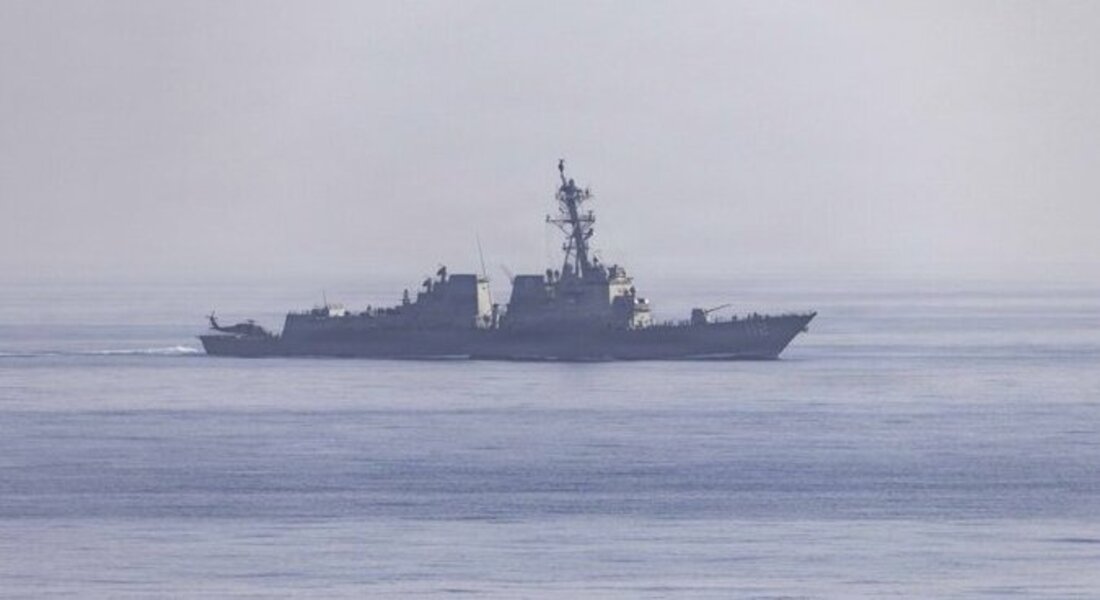
The Iranian attacks followed a fresh round of US strikes on Iran. US Central Command (CENTCOM) said it had hit dozens of targets at multiple locations with precision munitions to degrade Tehran’s ability to threaten international shipping through the Strait of Hormuz.
At 5 p.m. ET today, U.S. Central Command forces began launching more strikes against Iran to continue degrading their ability to attack civilian mariners and commercial ships freely transiting the Strait of Hormuz. The Commander in Chief has directed the strikes to hold Iranian…
— U.S. Central Command (@CENTCOM) July 12, 2026
According to CENTCOM, the targets included Iranian air defence systems, coastal radar sites, missile and drone capabilities and small boats. The US military said it used fighter aircraft, naval vessels and one-way attack aerial and sea drones. Earlier, American forces said they had struck approximately 140 targets in a heavier round of attacks.
The latest escalation followed an Iranian attack on a commercial vessel in the Strait of Hormuz early Sunday. The ship reportedly caught fire, forcing its crew to abandon it, with one crew member reported missing.
Iran’s Foreign Ministry accused Washington of undermining months of diplomatic efforts to reduce tensions, saying the latest American strikes had rendered recent peace initiatives futile and contributed to renewed insecurity in the Strait of Hormuz.
At least one person was killed and four others injured after a projectile struck an agricultural water pumping station in Mahshahr in Iran’s Khuzestan province, according to Al Jazeera. Citing local officials, the report said the person killed was a guard at the facility.
Iran’s IRNA news agency reported continuing drone attacks on US bases in the region, while Tehran claimed that its forces had destroyed an American military drone fleet in Bahrain. There was no independent confirmation of the claim.
Meanwhile, the renewed hostilities shook financial markets. Brent crude rose 4.7 per cent to $79.59 a barrel, while US benchmark crude gained 4.8 per cent to $74.85. Japan’s Nikkei 225 fell 2.2 per cent, while South Korea’s Kospi dropped 8.2 per cent.
The escalation has further undermined an interim understanding between Washington and Tehran aimed at ending the war and renewed concerns over the security of the Strait of Hormuz, one of the world’s most critical energy shipping routes.