At IndiaVerve, we go beyond the noise to bring you meaningful stories of change, resilience and progress—from India to the world stage. Our mission is to bring readers credible, wide-ranging coverage across politics, business, sports, culture, society and more.

Deep depression batters Odisha; flood threat intensifies as rivers swell

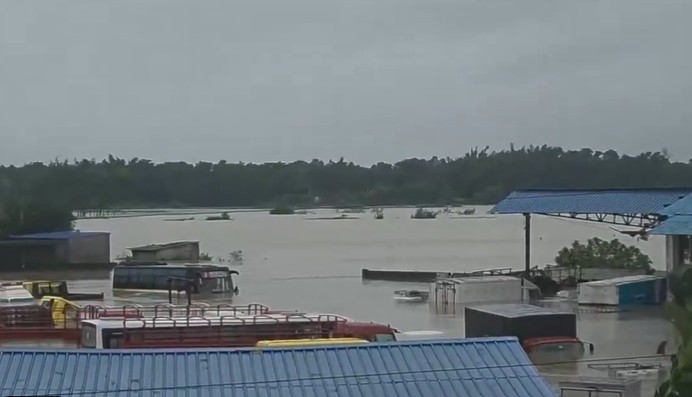
Bhubaneswar: Odisha remained in the grip of an intense monsoon spell on Tuesday as a deep depression over northern part of the state continued to trigger widespread heavy rainfall, raising the threat of flooding in several districts. With rivers swelling rapidly and low-lying areas inundated, the state government has stepped up preparedness, deploying disaster response teams and placing district administrations on high alert.

According to the India Meteorological Department (IMD), the deep depression over north coastal Odisha and adjoining Gangetic West Bengal moved west-northwestwards at a speed of around 12 kmph during the past six hours. The weather system was centred near Baripada and is expected to continue moving across north Odisha, south Jharkhand and north Chhattisgarh over the next 24 hours.

Under its influence, the IMD has forecast widespread rainfall with isolated heavy to extremely heavy showers across Odisha over the next few days. The weather office has issued Red and Orange warnings for several districts, urging authorities and residents to remain vigilant.

As a precautionary measure, all government and private schools remained closed on Tuesday in Balasore, Bhadrak, Mayurbhanj, Keonjhar and Sambalpur districts.

The incessant rainfall has pushed several rivers towards danger levels, significantly increasing flood risks. The Water Resources Department has warned of a major flood in the Baitarani River by Tuesday evening, while flooding is also expected in the Salandi and Jalaka rivers as water levels continue to rise.

The Jalaka River crossed the danger mark at Mathani in Balasore district on Tuesday morning. Officials said the danger level at the gauge station is 6.50 metres, while the river was flowing at 6.51 metres, raising fears of flooding in downstream villages. Heavy rainfall in the upper catchment areas of Mayurbhanj district has further aggravated the situation.

Balasore district witnessed the heaviest rainfall in the state during the past 24 hours. Balasore town recorded an extraordinary 246.6 mm of rainfall, while Nilagiri received 239 mm, Jaleswar 236.8 mm, Remuna 222 mm, Govindpur 213.8 mm and Rajghat 202 mm. In neighbouring Mayurbhanj district, Betanati recorded 202 mm of rainfall and Balimundali received 174.2 mm.

Keonjhar district was also severely affected after incessant rainfall since Monday evening triggered flood-like conditions, particularly in Telkoi block. Around five feet of water reportedly flowed over the bridge across the Samakoi River, completely cutting off road connectivity between the Telkoi block headquarters and nearly ten gram panchayats.

The overflowing river also snapped road links connecting Telkoi with Dhenkanal, Angul and Cuttack, leaving hundreds of vehicles stranded on both sides of the submerged bridge.

ALSO READ: Odisha reviews disaster preparedness ahead of deep depression landfall

State Revenue and Disaster Management Minister Suresh Pujari said the government was closely monitoring the evolving situation. He said flooding during the monsoon was not new for Odisha and that district administrations, ODRAF, Fire Services and other emergency response agencies had been kept ready to respond to any eventuality.

The minister said heavy rainfall had been recorded in several districts, including Sundargarh, Sambalpur, Jharsuguda, Bargarh, Balasore, Bhadrak, Jajpur, Keonjhar, Mayurbhanj, Dhenkanal, Angul, Deogarh, Boudh, Sonepur, Nuapada and Bolangir, while rainfall activity had also continued in south Odisha.

Authorities have advised people living in low-lying and riverbank areas to remain alert as the deep depression continues to move inland. Officials said the situation is being monitored round the clock, with rescue and relief teams on standby in vulnerable districts.


7.1-magnitude earthquake strikes Japan’s Kumamoto, causes widespread damage

Tokyo: A powerful magnitude 7.1 earthquake struck Japan’s Kumamoto Prefecture in the Kyushu region on Tuesday, causing widespread damage, triggering fires, disrupting power supply and injuring several people.

The earthquake struck at 4:27 p.m. local time and registered the maximum shindo 7 intensity on Japan’s seismic scale, the highest level of ground shaking. About 30 minutes later, a strong aftershock measuring up to lower 5 on the same scale rattled the region again, prompting authorities to warn residents to remain on high alert for further powerful tremors, The Japan Times reported.

Television footage aired by public broadcaster NHK showed several buildings collapsing near the epicentre. Fire officials in the city of Uki reported receiving numerous emergency calls as multiple fires broke out following the quake. Roads and transport infrastructure also suffered extensive damage, with sections of highway overpasses on the Kyushu Expressway in Yatsushiro reportedly damaged and part of a pedestrian bridge collapsing. There were also unconfirmed reports of an explosion at a partially collapsed shopping mall in the town of Kashima.

Prime Minister Sanae Takaichi urged people in the affected areas to remain vigilant as authorities assessed the extent of the damage. She said reports of injuries had already been received but did not specify the number of casualties.

The Japan Meteorological Agency warned that earthquakes of similar intensity could continue to occur over the next week, particularly during the next two to three days. Officials explained that the latest earthquake originated from a shallow inland epicentre, a type of seismic activity that often leads to numerous aftershocks. They also said it was too early to determine whether the quake was linked to the devastating Kumamoto earthquakes of 2016, although the epicentre was located about 20 kilometres from the Hinagu fault zone associated with the earlier disaster.

Authorities initially issued a tsunami advisory for coastal areas along the Ariake and Yatsushiro seas, urging residents to stay away from the shoreline. However, the advisory was lifted later in the evening after no significant tsunami threat was detected.

The report said more than 48,000 households in Kumamoto Prefecture lost electricity following the earthquake. Power utility Kyushu Electric appealed to residents not to approach damaged or fallen power lines and to report any electrical hazards immediately.

The earthquake was felt across several neighbouring prefectures, including Nagasaki, Fukuoka, Saga, Miyazaki and Kagoshima.

The latest disaster comes just over a decade after the devastating 2016 Kumamoto earthquakes, which claimed 278 lives, injured nearly 2,800 people and caused extensive damage to the historic Kumamoto Castle. Restoration work on the landmark is still underway and is expected to continue until 2052.

India finishes third at ISSF World Cup 2026 in Hangzhou

India finished third with four medals, including one gold, at the International Shooting Sport Federation (ISSF) World Cup 2026 in Hangzhou on Tuesday.

The Indian pair of Sonam Maskar and Himanshu Dhillon won bronze in the 10m air rifle mixed team event with a score of 441.2 points.

Maskar won her first ISSF World Cup medal in two years. She had bagged silver in the 10m air rifle and 10m air rifle mixed team events at the ISSF World Cup 2024 in Cairo, according to reports.

This was Dhillon’s maiden World Cup medal.

Gold went to China’s Wang Zifei and three-time Olympic medallist Sheng Lihao, who scored 505.0 points, while their compatriots Du Yuchen and Tokyo 2020 gold medallist Zhang Changhong bagged silver with 504.6.

Meanwhile, India’s Udaivir Singh Jaijee and Pragati Dubey, as well as Bhowneesh Mendiratta and Kirti Gupta, failed to qualify for the trap mixed team final.

Hosts China topped the medal table with 18 medals, including seven gold, while the USA finished second with four medals ( 2 gold).

Odisha moves SC against release of animated film Mahaprabhu Jagannath

Bhubaneswar: The Odisha government has approached the Supreme Court (SC), seeking to restrain the release of the animated film ‘Mahaprabhu Jagannath’. The state argued that the film’s release could trigger law and order problems, even though the Central Board of Film Certification (CBFC) had already granted it clearance.

The matter was mentioned before a bench headed by Chief Justice Surya Kant, along with Justices Joymalya Bagchi and V Mohana, on Tuesday. Odisha Advocate General Pitambar Acharya flagged the possibility of unrest in the state and requested an urgent hearing, according to LiveLaw.

He informed the court that the Shree Jagannath Temple Administration had also filed a separate application, urging the Centre to revoke the film’s CBFC certificate.

According to a LiveLaw report, the Advocate General told the bench that the film depicted Lord Jagannath in an animated form, and said the state had sought a modification of the earlier SC order that had permitted the film’s release after Rath Yatra.

The development comes about two weeks after a separate SC bench, comprising Justices B V Nagarathna and R Mahadevan, had allowed the film’s all-India release on or after July 28, specifically after the conclusion of Rath Yatra festivities. That bench had observed that animation and fictional depictions could not erode devotion, and had noted that the CBFC had examined the film against statutory parameters before certifying it.

The dispute originated after the Orissa High Court stayed the film’s release following a public interest litigation. The High Court had pointed to the risk of hurting religious sentiments and disturbing public order, citing depictions said to be inconsistent with texts such as the Skanda Purana and Brahma Purana, as well as established temple traditions.

Petitioners had objected to fictionalised episodes, childhood portrayals, certain dialogues, and battle sequences shown in the film.

Reports indicate that the Gajapati Maharaja of Puri and the Shree Jagannath Temple Administration had suggested changes to the film after a special screening, and that the producers had not fully incorporated these suggestions.

The filmmakers, Ele Animations Pvt Ltd, have maintained that the project is a fictional animated work intended for children and general audiences, and carries a disclaimer to that effect. They have argued that the film is protected under the constitutional right to freedom of speech and expression. The film, based on an earlier web series, had originally been scheduled for theatrical release earlier in July but has faced repeated legal challenges since.

Assam floods: PM Modi meets MPs, reviews situation

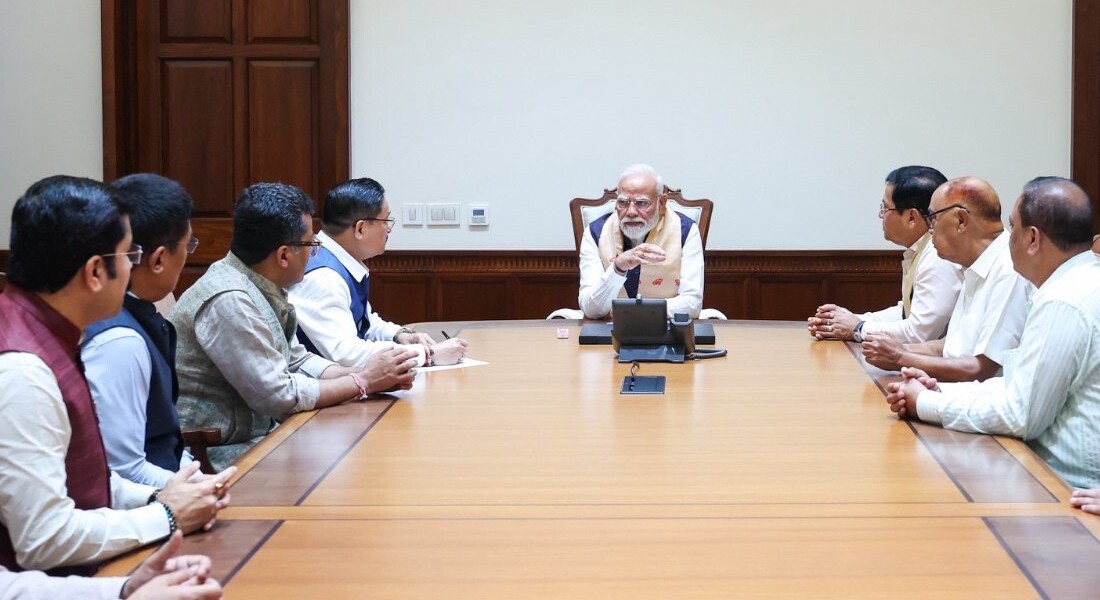
New Delhi: Prime Minister Narendra Modi met Members of Parliament from Assam on Tuesday and discussed the flood situation prevailing in various parts of the state.

He said the Centre is working closely with the Assam government to assist those affected. The PM prayed for the safety and well-being of everyone impacted by the floods.

Sharing details of the meeting on X, Modi noted that he had discussed the flood situation with the state’s MPs and reiterated the Centre’s coordination with the state government.

Meanwhile, Assam Chief Minister Himanta Biswa Sarma said power had been restored to a majority of the flood-affected areas. He said all rescued persons were being sheltered in relief camps equipped with food, medical facilities, and dedicated children’s areas.

In a series of posts on X, the CM said the state administration would continue working round the clock to ensure a swift response, and would subsequently present a comprehensive rehabilitation roadmap rooted in the principles of Jan Bhagidari.

He added that measures to strengthen anti-flood and anti-erosion infrastructure were being promptly scaled up.

Sarma said the state had used geo-tube technology to complete 60% of restoration work on the Kakodonga, Bhogdoi, Jhanji, and Charaipani embankments in Jorhat.

Separately, Assam Industries, Commerce and Public Enterprises Minister Bimal Borah said water levels across major rivers were continuing to recede, indicating a gradual improvement in the flood situation.

He added that the district recorded 22.89 mm of rainfall in the last 24 hours.

The floods have affected 25 districts across Assam, namely Goalpara, Cachar, Lakhimpur, Dhemaji, Dibrugarh, Jorhat, Biswanath, Charaideo, Nalbari, Bajali, Chirang, Kokrajhar, Bongaigaon, Baksa, Sivasagar, Darrang, Sonitpur, Tinsukia, Udalguri, Golaghat, Nagaon, Karbi Anglong, Kamrup, Kamrup Metro, and Hojai. A total of 77 revenue circles and 2,157 villages have been hit, impacting a population of 11,44,733.

Authorities have set up 215 relief camps, where 71,223 people are currently sheltered, along with 1,690 relief distribution centres operating across the state.

The floods have claimed 68 lives so far, with Sivasagar recording the highest toll at 30, followed by Charaideo at 20, Jorhat at 9, Dhemaji at 3, Karbi Anglong and Golaghat at 2 each, and Sonitpur and Kamrup at 1 each. Eight people remain missing, including 7 from Sivasagar and 1 from Dhemaji.

The damage assessment shows 1,180 houses fully destroyed and 9,926 partially damaged, while 29,983 people have been evacuated so far.