At IndiaVerve, we go beyond the noise to bring you meaningful stories of change, resilience and progress—from India to the world stage. Our mission is to bring readers credible, wide-ranging coverage across politics, business, sports, culture, society and more.

Mandaviya urges CWG 2026 medallists to mentor future athletes

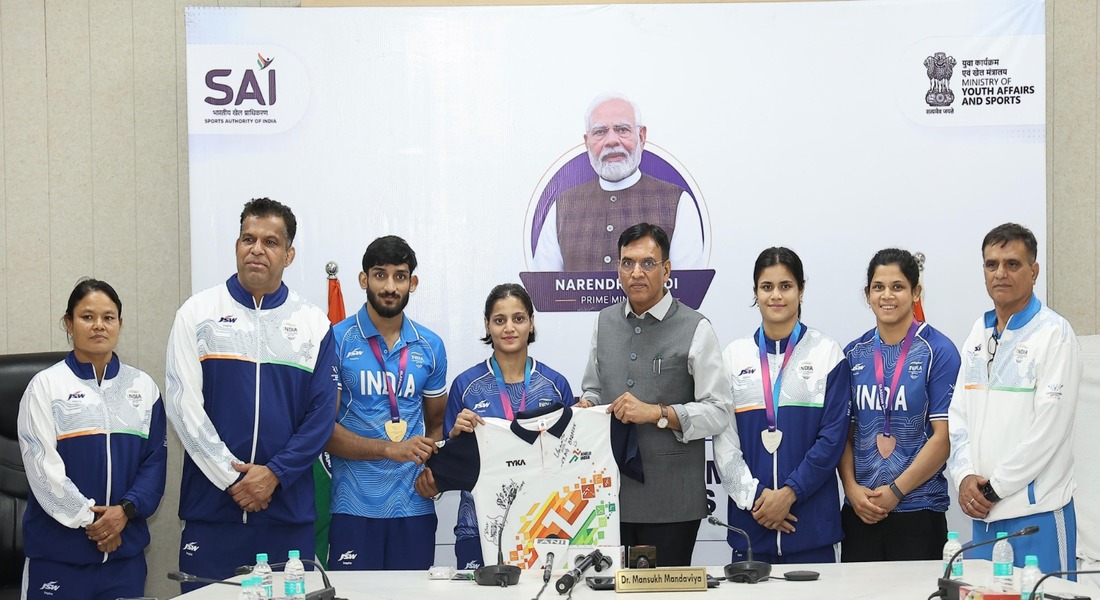
New Delhi: Union Sports Minister Dr. Mansukh Mandaviya on Tuesday urged India’s Commonwealth Games medallists to look beyond their competitive careers and contribute to the country’s sporting future by mentoring young athletes and establishing sports academies after retirement.

Felicitating medal winners from boxing, judo and para-athletics after their return from the Commonwealth Games 2026 in Glasgow, the minister said athletes should not view medals merely as a means to secure government jobs. Instead, he said they should focus on strengthening Indian sport by nurturing the next generation of talent.

He said the Centre’s expanded Khelo India programme, backed by an investment of Rs 36,000 crore, would ensure sustained support for sports development across the country.

The minister encouraged athletes to use the initiative to develop grassroots talent and build a stronger sporting ecosystem, according to an official statement.

Looking ahead to the 2026 Asian Games, Dr. Mandaviya urged the athletes to carry forward the confidence gained in Glasgow. He said gold medallists should maintain their high standards, while silver and bronze winners should strive to climb to the top of the podium.

The Union minister also stressed the importance of coaches in shaping successful careers, saying athletes should always acknowledge the dedication and guidance of their mentors.

During the felicitation ceremony, Dr. Mandaviya honoured India’s boxing contingent, which topped the boxing medal tally with 10 medals, including seven gold and three silver.

The gold medals were won by Preeti Pawar (54kg), Jaismine Lamboria (57kg), Sakshi Chaudhary (51kg), Priya Ghanghas (60kg), Arundhati Choudhary (70kg), Sachin Siwach (60kg) and Ankush Panghal (80kg). Jadumani Singh (55kg), Olympic medallist Lovlina Borgohain (75kg) and Narender Berwal (90+kg) won silver medals. The seven gold medals also marked the best-ever Commonwealth Games performance by Indian women boxers.

The minister also felicitated the Indian judo contingent after it registered the country’s best-ever Commonwealth Games campaign in the sport. India won four medals from 12 events, including two historic gold medals, improving on its three-medal haul at the 2022 Games.

Khelo India athletes Asmita Dey and Harsh Singh created history by becoming India’s first Commonwealth Games gold medallists in judo. Asmita became the first Indian woman judoka to win a Commonwealth Games gold medal, while Harsh became the first Indian male judoka to achieve the feat.

The para-athletics contingent was also felicitated for its outstanding performances in Glasgow, which marked a watershed moment for Indian para sport.

The medal winners received cash awards of Rs 30 lakh for gold, Rs 20 lakh for silver and Rs 10 lakh for bronze during the felicitation ceremony.
Odisha signs 10 MoUs to overhaul state’s healthcare system

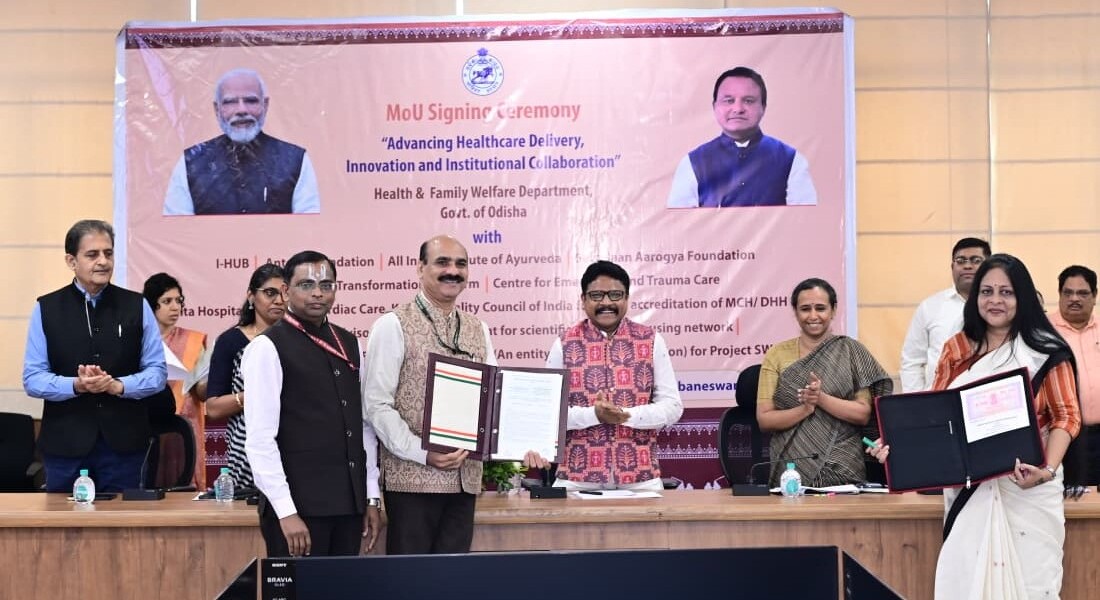
Bhubaneswar: In a historic step towards providing improved healthcare to the people of Odisha, the state’s Health and Family Welfare Department has signed 10 Memoranda of Understanding (MoUs) with several leading institutions.

The agreements aim to bring extensive changes to healthcare services, infrastructure, and research across the state.

The institutions include Gujarat’s I-Hub, Antara Foundation, the All India Institute of Ayurveda, Adani Group’s Sevadaan Arogya Foundation, the Health System Transformation Platform, AIIMS Delhi’s Centre for Emergency and Trauma Care, and Kochi’s Amrita Hospital for pediatric cardiac care, among others.

The MoU signing programme was held at the Kharavela Bhawan conference hall in Bhubaneswar. Departmental ministers and senior officials were present on the occasion.

Health and Family Welfare Minister Dr. Mukesh Mahaling said the agreements would mark the beginning of a new era in maternal and child health, emergency medical care, Ayurveda, laboratory accreditation, and health administration.

He said the state government aimed to make the healthcare sector more robust, quality-driven, and welfare-oriented.

As per the MoU signed with AIIMS Delhi’s Trauma Care Centre, a medical college at a district headquarters will be adopted as a Centre of Excellence for Trauma Care. Arrangements will be made to upgrade trauma care facilities across the state under this partnership.

The All India Institute of Ayurveda will work to advance medicines prepared using traditional Indian knowledge systems, along with Ayurvedic treatment methods, in Odisha.

Under the collaboration, free treatment for children’s heart diseases will be provided with support from Amrita Hospital. The Sevadaan Arogya Foundation will build “rest houses” for patients’ relatives at six medical colleges. Modern medicine storage warehouses will be set up across all 30 districts in partnership with the International Finance Corporation.

I-Hub Gujarat will promote innovation and startups in the health sector, while Tata Steel and the Kaivalya Foundation’s “Project Swasthya” will work to reduce maternal and child mortality rates in the state. The Quality Council of India will provide NABL accreditation to laboratories at district headquarters hospitals.

Separately, Dr. Mahaling also inaugurated the modernised Tele-MANAS room of the Mental Health Institute (MHI) at SCB Medical College, Cuttack, through virtual mode on the same day.

The minister said reaching quality mental healthcare to every citizen and building a healthy, empowered society was the government’s main goal.

He said the use of technology to expand mental healthcare across Odisha would help create awareness, enable early identification of problems, and encourage people to seek help without hesitation.

President Murmu receives handloom gifts during Odisha visit

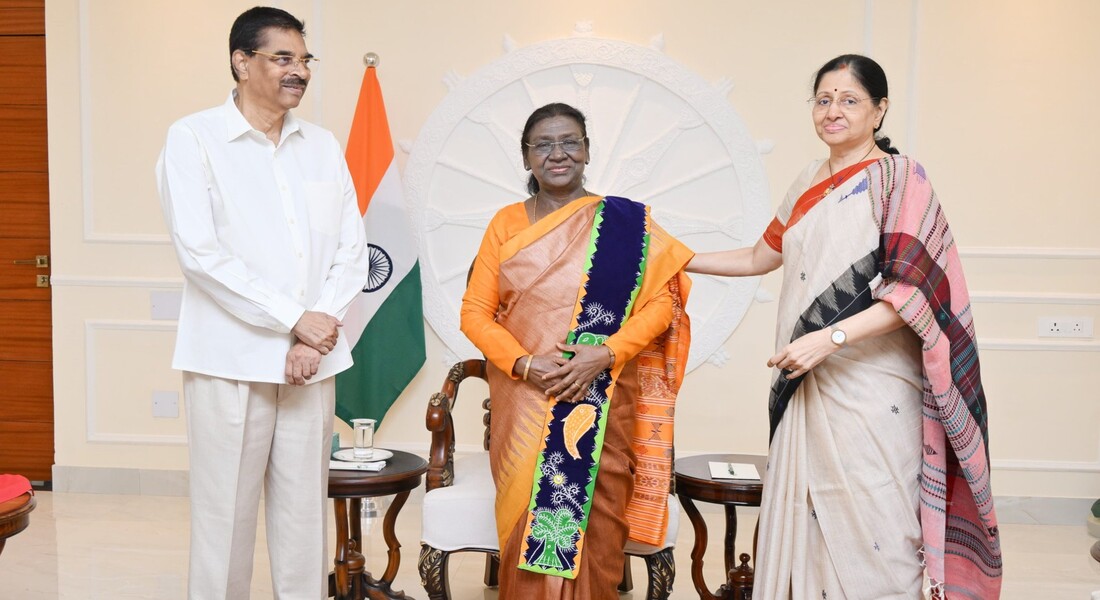
Bhubaneswar: President Droupadi Murmu was presented with special gifts reflecting Odisha’s handloom and handicraft traditions on Tuesday morning, during her three-day visit to the state.

Odisha Governor Dr. Hari Babu Kambhampati presented the gifts to the president at Lok Bhavan.

The gifts were given before the president left for Berhampur. Odisha’s First Lady, Dr. Jayashree Kambhampati, was present on the occasion.

The gifts included a National Handloom Award-winning Sambalpuri Bandha saree that also carries GI tag recognition.

They also included a traditional Chandua velvet stole from Pipili, and an idol of Lord Ganesha crafted using Cuttack’s fine silver filigree, known as tarakasi work.

In a post on X, Dr. Kambhampati said: Presented Hon’ble President of India, Smt. Droupadi Murmu Ji, with a specially curated collection celebrating Odisha’s rich cultural heritage, including the National Handloom Award-winning Sambalpuri Bandha (Odisha Ikat) saree, a handcrafted Pipili Appliqué velvet uttariya and a Cuttack Silver Filigree idol of Lord Ganesha.

He added: “The Sambalpuri Bandha saree, honoured with the National Handloom Award, beautifully showcases Odisha’s 17 GI-tagged products through their names, motifs, GI logos and distinctive traditions. Together, these creations reflect the exceptional craftsmanship of Odisha’s artisans and the timeless traditions that continue to define the State’s rich cultural identity.”

The handcrafted items were said to represent Odisha’s craftsmanship, tradition, and artistic excellence, reflecting the state’s cultural heritage.

New study finds raw farm turmeric within safe lead limits

New Delhi: A new study has found that raw turmeric collected directly from farms across six Indian states contained lead levels well within limits set by the Food Safety and Standards Authority of India (FSSAI).

The study conducted by Toxics Link suggests that contamination reported in market turmeric powder likely happens after harvest, rather than during cultivation.

The report, titled “Lead in Turmeric,” examined 13 raw turmeric rhizome samples gathered from farms in Maharashtra, Telangana, Tamil Nadu, Odisha, Karnataka, and Madhya Pradesh.

All samples were tested at an NABL-accredited laboratory using Inductively Coupled Plasma Mass Spectrometry. Lead levels ranged from below the detectable limit to 1.87 mg/kg, far below the FSSAI cap of 10 mg/kg for turmeric.

The study noted that naturally grown turmeric generally carries only background lead levels. It added weight to existing evidence that high lead levels found in commercial turmeric powder are more likely introduced during processing and marketing, particularly through adulteration with lead chromate used to enhance colour and market value.

Lead is described as a potent neurotoxin with no known safe exposure level for children. It can affect brain development, lower IQ, and cause learning disabilities, behavioural disorders, kidney damage, cardiovascular disease, and reproductive problems. Since turmeric is used daily in millions of Indian households and features widely in traditional medicine and religious practices, contamination was flagged as a serious public health concern.

The release pointed out that recent international studies had recorded dangerously high lead concentrations, largely from lead chromate, in turmeric sold across South Asian markets. Toxics Link’s study indicated that contamination occurs further down the supply chain rather than at the farming stage.

Satish Sinha, Associate Director at Toxics Link, said the findings showed that farm-cultivated turmeric generally met existing food safety standards for lead. He said the evidence pointed to contamination after harvest, and called for stronger surveillance and regulatory oversight across processing, packaging, and marketing stages. He added that protecting consumers required better traceability across the supply chain and stricter enforcement against food adulteration.

The report stated that environmental factors such as soil, irrigation water, industrial emissions, and agricultural inputs did not appear to significantly affect lead levels in the raw turmeric samples studied. It said post-harvest practices needed urgent investigation instead.

The report recommended that the FSSAI and state food safety authorities strengthen routine monitoring of turmeric and other spices in retail and wholesale markets, improve supply chain traceability, conduct targeted inspections of processing and packaging units, and take strict action against intentional adulteration.

The report also called for larger multi-state studies covering soil, irrigation water, agricultural inputs, and processing facilities to better understand contamination pathways.

The release noted that India, as the world’s largest producer, consumer, and exporter of turmeric, needed to protect its supply chain integrity to safeguard public health, consumer confidence, and its standing in international spice markets.

Toxics Link is an environmental research and advocacy organisation working to promote environmental justice and reduce exposure to toxic pollutants.

Odisha Police, NFSU sign MoU to strengthen cyber crime investigation, digital forensics

Bhubaneswar: In a significant step towards strengthening cyber crime investigation and digital forensic capabilities, the CID-Crime Branch of Odisha Police on Tuesday signed a five-year Memorandum of Understanding (MoU) with the National Forensic Sciences University (NFSU), Bhubaneswar.

The agreement seeks to enhance the scientific investigation of cyber crimes through specialised training, digital forensic expertise, research collaboration and technical support.

The MoU was signed in the presence of Director General of Police (DGP) Yogesh Bahadur Khurania by Crime Branch DGP Vinaytosh Mishra and NFSU Bhubaneswar Campus Director Dr Purabi Pokhriyal. The DGP also inaugurated the first training programme on “Cyber Crime Investigation and Digital Forensics” on the occasion.

Describing the initiative as a landmark in the modernisation of Odisha Police, Khurania said the five-year partnership would establish a strong institutional framework for capacity building and mark the beginning of a new chapter in cyber policing in the state.

Highlighting the evolving nature of crime, the DGP said digital evidence has become crucial in the investigation of almost every offence. He noted that cyber crimes such as mule account frauds, online investment scams and “digital arrest” frauds are increasing rapidly, while the new criminal laws have placed forensic science at the centre of criminal investigations.

He stressed that every police officer must acquire the skills required for the proper seizure, preservation and management of electronic evidence to ensure effective investigations and successful prosecution.

Khurania also highlighted the state’s efforts to strengthen cyber policing infrastructure. He said Odisha has established 20 new Cyber Crime and Economic Offences Police Stations and equipped police stations across the state with modern hardware and software worth nearly Rs 15 crore. He emphasised that advanced training is essential for the effective utilisation of these technological resources.

The DGP further said the collaboration with NFSU would extend beyond training to include crime scene management, higher education, joint research, development of forensic infrastructure and technical consultancy, thereby creating a comprehensive ecosystem for scientific policing.

Speaking on the occasion, Crime Branch DGP Vinaytosh Mishra said the partnership would enable police personnel across all ranks to receive high-quality technical training in cyber investigation and digital forensics.

He informed that by January 2027, a total of 480 officers and personnel from all 34 police districts and the Crime Branch would be trained in 16 batches. Each batch will comprise 30 participants, ranging from constables to Deputy Superintendents of Police (DSPs).

The six-day training programme will include five days of classroom and laboratory-based sessions at NFSU, followed by one day of practical training at the Cyber Complex.

Addressing the first batch of trainees, Khurania said the success of the programme should not be measured merely by obtaining certificates but by the ability to collect digital evidence scientifically, conduct professional investigations and present legally admissible evidence in courts. He also urged the participants to share the knowledge gained during the training with their colleagues after returning to their respective districts.

Among those present at the event were State Forensic Laboratory Director Dr Santosh Bala, NFSU Bhubaneswar Campus Director Dr Purabi Pokhriyal, Crime Branch Inspector General Dr Sarthak Sarangi and NFSU Associate Professor Dr Bishwakalyan Das, who conducted the proceedings.

Udhayanidhi Stalin arrested over alleged objectionable remarks on actor Trisha

Chennai: Tamil Nadu’s political landscape witnessed high drama on Tuesday after Leader of the Opposition Udhayanidhi Stalin was arrested by the Tamil Nadu Police from his residence in Chennai over alleged objectionable remarks concerning actor Trisha during a public rally.

The arrest follows a speech delivered by Udhayanidhi at a protest rally over the Cauvery water dispute in Thanjavur on Monday. During the address, he criticised Chief Minister Joseph Vijay, alleging that Tamil Nadu had failed to receive its rightful share of Cauvery water while the state government remained indifferent to the issue.

The controversy escalated when members of the audience chanted actor Trisha’s name during the speech. Udhayanidhi allegedly responded with a remark widely criticised as a double entendre, triggering outrage across the political spectrum and on social media.

Visuals of the arrest showed Udhayanidhi smiling as police escorted him. Speaking briefly after his arrest, he dismissed the action as “a joke” and said he would challenge it through legal means.

The DMK condemned the arrest, accusing the government of resorting to political vendetta. Senior DMK leader TKS Elangovan defended Udhayanidhi, stating that nothing in the speech was intended to insult anyone and that the opposition leader had merely highlighted what he described as the failures of Chief Minister Vijay. He also claimed that Udhayanidhi had not mentioned Trisha by name.

However, the Tamilaga Vettri Kazhagam (TVK) rejected the allegation of political revenge. TVK leader Americai Narayanan said the action was not related to criticism of the government or the party but stemmed from remarks that allegedly insulted a woman. Taking a swipe at Udhayanidhi, Narayanan also made a derogatory play on his name.

Soon after the speech, TVK submitted a complaint to the National Commission for Women (NCW), seeking action against the DMK leader. The party also lodged a police complaint, alleging that Udhayanidhi had used offensive, double-meaning remarks targeting a prominent woman public figure.

In its complaint, TVK argued that such language from a senior political leader normalises the objectification and verbal harassment of women in public life and undermines respectful political discourse.

The Bharatiya Janata Party (BJP) also demanded Udhayanidhi’s arrest. Tamil Nadu BJP chief spokesperson Narayanan Thirupathy described the remarks as “disgusting, obscene and shameful”, alleging that such language had no place in public life and calling for strict legal action.

The latest controversy has once again brought renewed attention to repeated public comments involving actor Trisha. In recent years, rumours linking her with Chief Minister Joseph Vijay have frequently become the subject of political and public remarks. Earlier this year, BJP leader Nainar Nagendran had also attracted criticism after making comments about the actor, prompting a legal response from Trisha’s representatives.

The arrest is expected to further intensify the political confrontation between the DMK-led opposition and the ruling TVK government in Tamil Nadu, with legal proceedings and political reactions likely to continue in the coming days.

FSSAI issues prohibition order against Dabur India over misleading “100%” claims

New Delhi: The Food Safety and Standards Authority of India (FSSAI) has issued a prohibition order against Dabur India Limited for selling food products bearing misleading “100%” claims.

The products flagged include honey, apple cider vinegar, virgin coconut oil, sesame oil, cow ghee, coconut water, coconut milk and other items.

According to the order, food products sold on the company’s website were found carrying claims such as “100% Natural”, “100% Pure”, “100% Purity Guaranteed”, “100% Organic” and “100% Tender Coconut Water”.

FSSAI said the use of such claims is ambiguous, unverifiable and likely to mislead consumers, in contravention of the FSS (Advertising & Claims) Regulations, 2018.

The regulator also found that Dabur Himalayan Organic Apple Cider Vinegar and Dabur Organic Honey were displaying the Jaivik Bharat Logo without valid FSSAI organic endorsement, in violation of the FSS (Organic Foods) Regulations, 2017.

Dabur Hommade Coconut Milk was found to be marketed with the claim “100% Purity”. FSSAI said such a claim is not permissible for compound foods under the FSS (Advertising & Claims) Regulations, 2018.

The order further noted that despite an earlier notice directing the discontinuation of the misleading “100%” claims, the food business operator took no satisfactory corrective action.

FSSAI has directed Dabur India Limited to immediately prohibit the sale of the food products identified in the notice, along with all other food products carrying misleading “100%” claims. The company has been directed to submit an Action Taken Report within 15 days.

Odisha announces monthly stipend for OUAT PG, PhD students

Bhubaneswar: The Department of Agriculture has announced a monthly stipend for Post Graduate and Ph.D. students at Odisha University of Agriculture and Technology (OUAT).

The move is aimed at boosting agricultural education and research in the state. Officials said the decision came through the special efforts of Deputy Chief Minister and Minister of Agriculture & Farmers’ Empowerment and Energy, Kanak Vardhan Singh Deo.

The step is expected to bring major relief to student researchers.

PG students pursuing agriculture and allied courses will receive Rs 10,000 per month for two years. Ph.D. scholars will get Rs 15,000 per month for up to three years.

The department said the assistance is meant to encourage quality research and motivate meritorious students across the state.

Deputy Chief Minister Singh Deo said investing in young researchers means securing the future of Odisha’s farmers. He added that the assistance would let students focus on innovation and research without financial worries.

In a post on X, the minister said: “By investing in our students today, we are sowing the seeds of tomorrow’s agricultural transformation — building a Samruddha Odisha and contributing to the vision of a Viksit Bharat.”

The scheme will cover all regular PG and Ph.D. students pursuing agriculture and allied subjects at OUAT.