At IndiaVerve, we go beyond the noise to bring you meaningful stories of change, resilience and progress—from India to the world stage. Our mission is to bring readers credible, wide-ranging coverage across politics, business, sports, culture, society and more.

Odisha highlights handloom heritage, announces Rs 490.95 crore textile development plan

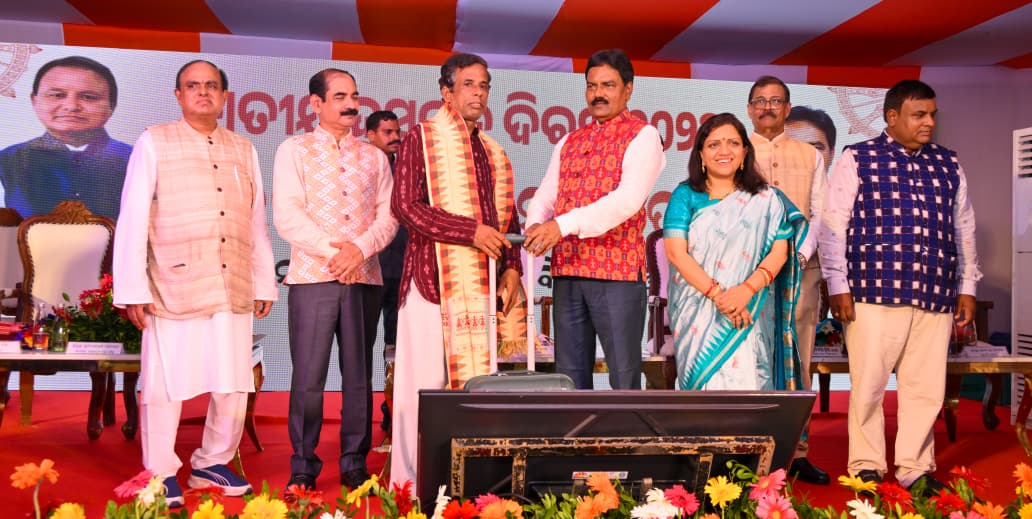
Bhubaneswar: The Odisha government on Thursday highlighted the state’s rich handloom heritage and announced a series of measures aimed at strengthening the textile sector and improving support for weavers at the concluding ceremony of the 12th State-Level National Handloom Day 2026.

The event was organised by the Department of Handlooms, Textiles and Handicrafts at Resha Bhawan in Mancheswar, Bhubaneswar.

Addressing the gathering, Handlooms, Textiles and Handicrafts Minister Pradip Bal Samanta described Odisha’s handloom tradition as a symbol of the state’s identity, culture and living heritage. He said traditional weaves such as Sambalpuri Bandha, Bomkai, Khandua, Kotpad, Berhampuri Patta and Gopalpur Tussar reflect the history and traditions of Odisha.

The minister said the state government was pursuing a multi-pronged approach to the welfare and empowerment of weavers. Under the Mukhyamantri Bayan Silpa Bikas Yojana, a budget allocation of Rs 490.95 crore has been made for five years for the development of the textile sector.

Under the Mukhyamantri Hastatanta Bikas Yojana, the government is establishing raw material banks, developing infrastructure, recognising weavers and creating better market access for handloom products.

The government has also set a five-year investment target of Rs 274 crore under the Mukhyamantri Resham Bikas Yojana for development of the silk sector, the minister said.

During the ceremony, Odisha’s Padma Shri awardees, Sant Kabir Award recipients and National Award-winning weavers were felicitated for their contribution to the state’s handloom tradition. Padma Shri awardees Sarat Kumar Patra and Gobardhan Panika were among those honoured, along with Sant Kabir Award recipients and National Awardees from the state.

Officials from different districts were also recognised for their outstanding performance in the Handlooms, Textiles and Handicrafts Department.

The department’s Commissioner-cum-Secretary, Guha Poonam Tapas Kumar, spoke about the history and significance of National Handloom Day and outlined various initiatives being undertaken for the sector. An audio-visual presentation showcasing Odisha’s handloom and textile heritage was also screened during the programme.

Foundation stones were laid for several development projects across the state. These included a production and sales centre for Sambalpuri Bastralaya at Sohela in Bargarh district, a rearing house at the Eri Seed Station in Khordha, and a multipurpose facility centre at Odisso WCS in Jagatsinghpur.

The projects also include a Resham Odisha showroom at Nimapada in Puri, a Common Facility Centre for weavers and sales staff, and renovation of the Boyanika showroom in Dhenkanal.

A state-level grand finale was also held following district-level hackathons, with winning teams from different districts presenting their innovations. The Ganjam district team comprising U. Adarsh Kumar, A. Ganapati and A. Kusum secured first place in the state-level competition.

As part of the event, guests planted saplings in support of environmental protection and the ‘Ek Ped Maa Ke Naam’ initiative.

Among those present were Boyanika President Prakash Meher, SERIFED President Bhagirathi Nanda, Director of Textiles and Handlooms Surya Narayan Pattnaik and Odisha Crafts Council Chairman Santosh Kumar Mohapatra. The programme concluded with a vote of thanks by Pattnaik.
Bhubaneswar to pilot bus priority lanes on two key corridors

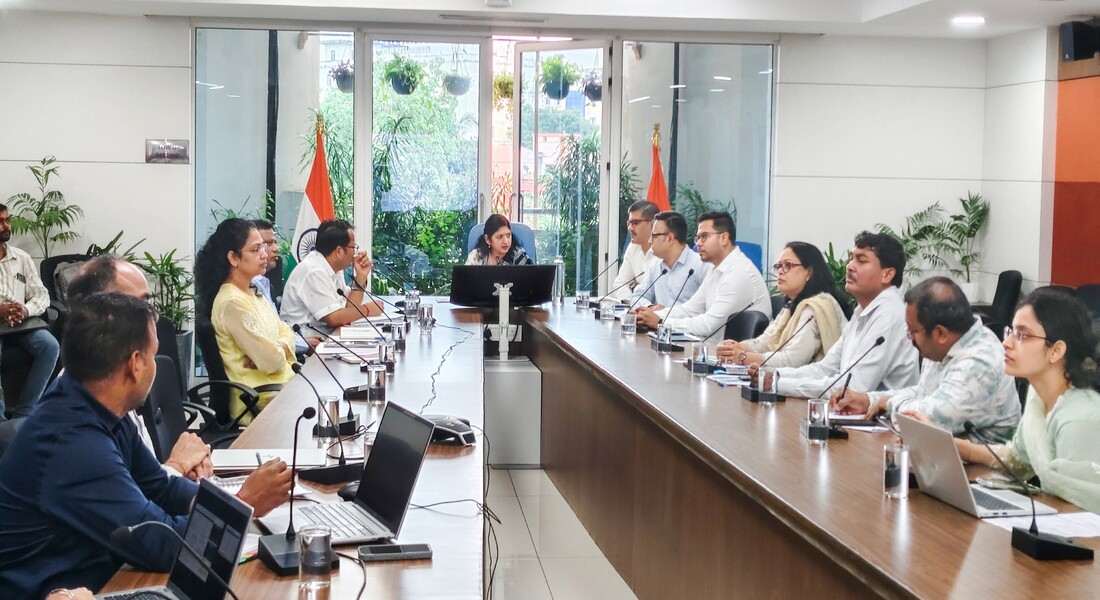
Bhubaneswar: The Odisha government, through the Comprehensive Regional Urban Transport (CRUT), has proposed piloting a Bus Priority Lane initiative on two key corridors in Bhubaneswar, a major step towards improving urban mobility and strengthening public transport in the city.

The decision was taken at a high-level meeting chaired by Additional Chief Secretary, Housing & Urban Development Department, Usha Padhee, at Kharavela Bhawan, Bhubaneswar.

Transport Commissioner Amitabh Thakur, CRUT Managing Director Md, attended the meeting. Siddique Alam, Bhubaneswar Municipal Corporation (BMC) Commissioner Chanchal Rana, Additional DCP (Traffic), and officials from the Chief Construction Engineer’s office, R&B, Works Department, Bhubaneswar Development Authority and BMC.

Following a detailed presentation by Md. Siddique Alam, the Additional Chief Secretary directed that the initiative be taken up initially on a pilot basis along two high-density corridors.

A multi-agency committee has been constituted to oversee implementation, monitor the pilot on a continuous basis, and make necessary refinements before finalising the model for wider expansion.

The Bus Priority Lane initiative seeks to address traffic congestion, improve the reliability and predictability of public transport, and make more efficient use of available road space by giving priority to public buses, school buses and emergency or essential services.

Congestion in mixed traffic currently results in an estimated loss of 1,200–1,500 bus trips every month, accounting for nearly 16 per cent trip loss due to traffic-related cancellations, besides causing significant variations in bus travel time.

By reallocating appropriate kerb-side road space for priority movement, the pilot is expected to achieve a 10–20 per cent reduction in bus travel time and a 15–25 per cent improvement in average bus speeds, along with improved road safety.

The two corridors identified by CRUT in coordination with Traffic Police and the Works Department are the Biju Patnaik International Airport–Nandankanan Corridor, covering 18 km, and the Vani Vihar–Sishu Bhawan Corridor, covering 5 km.

The Airport–Nandankanan corridor connects major administrative, educational, commercial, and healthcare destinations, covers 34 bus stops, and caters to an average daily ridership of around 9,000–10,000 passengers across major routes.

The Vani Vihar–Sishu Bhawan corridor traverses important commercial and transit locations, including Master Canteen, Rajmahal, Ram Mandir and the Bhubaneswar Railway Station area, covering 15 bus stops and catering to approximately 5,000–6,500 passengers daily.

The pilot will adopt a flexible kerb-side bus priority lane design rather than rigid physical segregation, aiming to minimise disruption to general traffic while improving bus movement and operational efficiency.

The preparatory phase, expected to take around 10–12 weeks, will include detailed traffic surveys, corridor-level design, lane markings, signage, improvement of Bus Queue Shelters, traffic signal optimisation, and identification of designated pick-up and drop-off points for three-wheelers and cabs. This will be followed by a 3–6 month pilot phase, during which operational performance will be closely monitored and real-time data collected through Intelligent Transportation Management Systems.

The multi-agency committee will also prepare detailed Standard Operating Procedures for operationalisation of the Bus Priority Lane, defining lane usage, bus movement protocols, stopping and boarding arrangements, interaction with other road users, enforcement mechanisms, emergency access, incident management and the responsibilities of concerned agencies.

These SOPs will be finalised based on operational requirements identified during the preparatory phase and refined further based on experience gained during the pilot.

A key component of the initiative will be training and sensitisation of CRUT bus crew. Drivers and other operational staff will receive dedicated training on the Bus Priority Lane system, covering lane discipline, entry and exit protocols, safe stopping at designated locations, interaction with general traffic, pedestrian safety, emergencies, and compliance with the approved SOPs. CRUT will conduct this training before the commencement of the pilot to ensure safe and consistent operations.

The initiative will be supported by round-the-clock ITMS-based monitoring and Automatic Number Plate Recognition CCTV cameras, along with on-ground enforcement by Traffic Police personnel. The in-bus camera system installed in public buses will also be explored as a technology-enabled enforcement and monitoring tool, with camera feeds and recorded footage assisting in identifying unauthorised use of the priority lane, unsafe lane changes, obstruction, illegal parking and other violations, subject to applicable protocols and technical feasibility.

Unauthorised entry of private vehicles into the priority lanes and illegal kerbside parking will attract auto-generated e-challans wherever technically and legally feasible, while emergency services, including ambulances and fire tenders, will have unrestricted priority access to the designated lanes.

Extensive public awareness and sensitisation measures will be undertaken before implementation. Road users, public transport users, residents, commercial establishments, schools and other stakeholders along the identified corridors will be informed about the proposed changes, lane markings, permitted users, traffic movement arrangements and enforcement provisions through signage, social media, media campaigns, on-road information boards and other channels, to facilitate a smooth transition and encourage voluntary compliance.

The initiative will also be aligned with a broader Hub-and-Spoke or Trunk-and-Feeder public transport model for Bhubaneswar.

Suitable feeder routes will be identified based on passenger demand and corridor-level travel patterns and integrated with major trunk routes and transport hubs, strengthening first- and last-mile connectivity, improving access to high-capacity public transport corridors, and reducing dependence on private vehicles for short connecting trips.

Odisha SHGs make 60 lakh national flags for Har Ghar Tiranga initiative

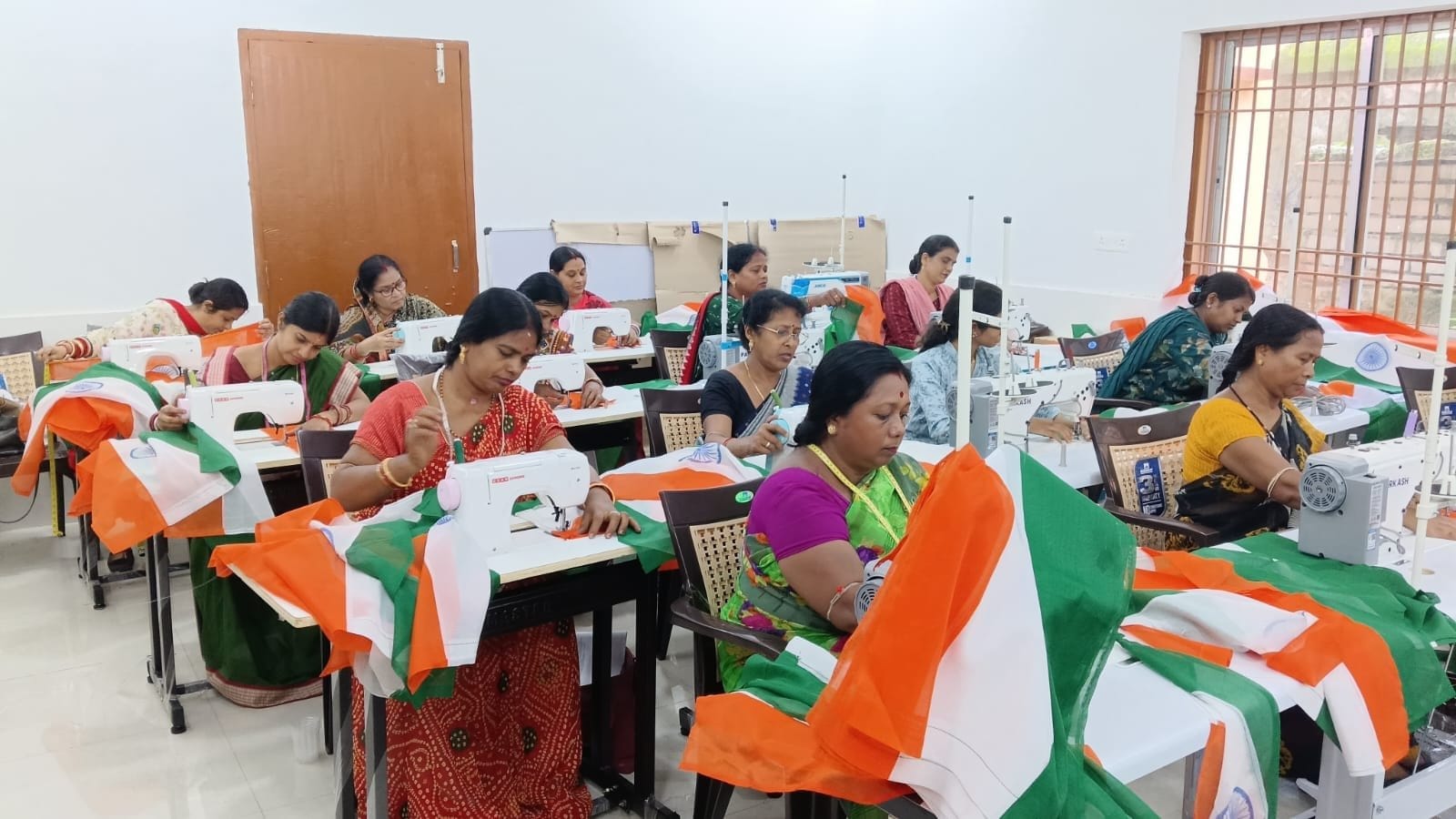
Bhubaneswar: Mission Shakti Self Help Groups (SHGs) across Odisha have prepared 60 lakh national flags under the Har Ghar Tiranga 2026 campaign, completing the entire target within the stipulated deadline.

The flag-making initiative involved 1,235 SHGs, 201 Producer Groups and 138 Federations, with a total of 16,162 SHG members participating across all 30 districts of the state.

The large-scale production drive, according to an official release, provided Mission Shakti women an opportunity to contribute to the national campaign while also strengthening their collective enterprise, production capabilities and livelihood opportunities.

Deputy Chief Minister Pravati Parida said the preparation of 60 lakh national flags by Mission Shakti women was a matter of pride for Odisha, highlighting their participation, dedication and entrepreneurial capabilities.

“The preparation of 60 lakh National Flags by our Mission Shakti women is a matter of immense pride for Odisha. It reflects their deep sense of patriotism, dedication and entrepreneurial spirit,” Parida said.

She added that the initiative demonstrated the potential of women working through collective platforms to undertake activities on a significant scale.

According to the Deputy Chief Minister, the Har Ghar Tiranga campaign also represents public participation in nation-building. She said Mission Shakti was enabling women to contribute to Odisha’s development while creating livelihood opportunities for themselves and their communities.

The government release said the completion of the 60 lakh flag target, representing 100 per cent achievement, highlights the participation of Mission Shakti women in the Har Ghar Tiranga campaign as Odisha prepares for the 2026 celebrations

Monsoon session of Parliament ends; 12 bills passed by both Houses

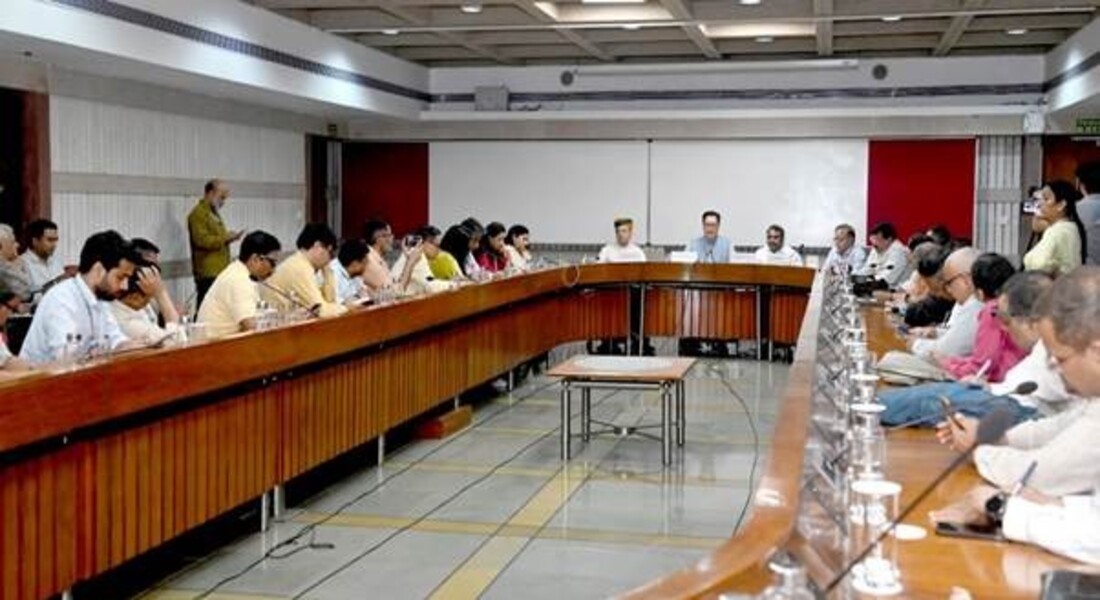
New Delhi: The Monsoon Session of Parliament, which commenced on July 20, 2026, was adjourned sine die on Thursday, August 13, after 19 sittings spread over 25 days.

During the session, 11 Bills were introduced in the Lok Sabha and 2 in the Rajya Sabha, while 12 Bills were passed by each House, taking the total number of Bills passed by both Houses to 12, according to an official statement.

Two Bills replacing Ordinances promulgated by the President before the session, namely the Supreme Court (Number of Judges) Amendment Ordinance, 2026 and the Income-Tax (Amendment) Ordinance, 2026, were considered and passed by both Houses.

Demands for Excess Grants for 2022-23 were also taken up, with the related Appropriation Bill passed by the Lok Sabha on August 4 and returned by the Rajya Sabha on August 6.

The Foreign Contribution (Regulation) Amendment Bill, 2026 was referred to a Joint Committee of the Houses for examination.

The Public Examinations (Prevention of Unfair Means) Amendment Bill, 2026 was introduced to strengthen the integrity of the public examination system and has since received presidential assent. The Bill ensures speedy investigation and time-bound trial of offences, mandating that investigations be completed within two months and trials within three months.

It empowers state governments and Union Territory administrations to designate Special Fast Track Courts and appoint Special Public Prosecutors, and enables the central government to constitute Special Task Forces for investigation wherever necessary.

The Bill also enhances penalties for offences and provides for a time-bound appellate mechanism before a Division Bench of the High Court.

Several other major Bills were passed by both Houses during the session. The Prevention of Insults to National Honour (Amendment) Bill, 2026 brings Vande Mataram within the ambit of the 1971 Act and makes it an offence to intentionally prevent its singing or disturb an assembly engaged in singing it.

The Registration of Births and Deaths (Amendment) Bill, 2026 makes delayed registration more stringent, requiring approval from an Executive Magistrate for registration after one to two years and from a Judicial Magistrate of the First Class after two years.

The Micro, Small and Medium Enterprises Development (Amendment) Bill, 2026 provides for a national digital platform for free MSME registration and decriminalises certain offences by replacing conviction-based fines with graded penalties.

The Bankers’ Books Evidence Bill, 2026 expands the definition of “bankers’ books” to include physical, electronic, digital, virtual and cloud-based records and creates a technology-neutral legal framework. The Kerala (Alteration of Name) Bill, 2026 amends the Constitution to alter the name of the State of Kerala to “Keralam”.

The National Co-operative Development Corporation (Amendment) Bill, 2026 expands the definition of “foodstuffs” and removes geographical restrictions applicable to industrial goods to strengthen the co-operative sector.

The Tribunals Reforms Bill, 2026 establishes a National Tribunals Commission to ensure independence, transparency and uniformity in the appointment and functioning of tribunals.

The Mines and Minerals (Development and Regulation) Amendment Bill, 2026 seeks to bring stability to the fiscal regime in the mineral sector in support of the Atmanirbhar Bharat and Viksit Bharat 2047 goals.

The productivity of the Lok Sabha during the session stood at approximately 19%, while that of the Rajya Sabha stood at approximately 39%.

President Murmu presents Sangeet Natak Akademi Awards

New Delhi: President Droupadi Murmu presented Sangeet Natak Akademi Fellowships and Awards for 2024 and 2025 to eminent artists at a ceremony in New Delhi on Thursday.

Speaking on the occasion, the president said the performing artists honoured at the event collectively represented a cultural map of India, woven with stories and songs native to the soil and encompassing the country’s diverse dances, festivals, languages and dialects shaped over centuries.

She said India possessed a multitude of musical traditions, dance styles and folk theatre forms, adding that Indian culture remained deeply rooted in the land, with its cuisine, attire, dance and music all drawing inspiration from nature.

Artists, Murmu said, drew on chirping birds, waterfalls, trees, clouds and rivers to shape their art, calling the bond between diversity and unity one of the greatest strengths of Indian arts, according to an official statement.

The president further said the Guru-Shishya tradition had played a vital role in sustaining India’s diverse art forms, describing the Guru as the most important book for the arts. She noted that many folk art forms faced the threat of extinction in the current fast-changing times and stressed the need to not only document such forms but also make dedicated efforts to keep them alive.

She welcomed the Sangeet Natak Akademi’s ‘Kala-Diksha’ programme launched with this objective and urged senior artists to systematically train the next generation.

Nature, she said, was the most natural training ground for enriching artistic sensibility, with folk and tribal arts reflecting a natural zest for life and a deep communion with nature.

She said community memory and collective consciousness found spontaneous expression through these art forms, making folk arts a vital foundation of India’s cultural identity.

Congratulating the award recipients, Murmu said that as bearers of Indian tradition, they were guardians of the country’s collective memory and creators of its future cultural vision.

She described the Sangeet Natak Akademi as an important centre of India’s soft power and expressed confidence that it would continue to enrich the world with India’s cultural energy in the years ahead.

Trump secretly switched planes in Turkey after Israeli warning of Iran threat: Reports

US intelligence officials reportedly questioned the credibility of the warning, while the Secret Service moved the president to a smaller military aircraft as a precaution.

Washington: US President Donald Trump was secretly moved from Air Force One to a smaller military aircraft while leaving Turkey last month after Israel warned US intelligence agencies of a possible Iranian threat to the presidential plane, according to reports by US media outlets.

The warning reportedly prompted the US Secret Service to arrange a covert aircraft switch as Trump departed Ankara following the NATO summit in July. The Washington Post first reported that Trump was not aboard the traditional Air Force One aircraft on the return journey, while NPR subsequently reported that the security operation was linked to an Israeli warning about a possible Iranian missile threat.

However, questions were raised within the US intelligence community about the credibility of the information. The Washington Post, citing current and former US officials familiar with the intelligence, reported that CIA analysts did not consider the information compelling and communicated their reservations to officials in the Trump administration.

One US official reportedly described the intelligence as single-sourced and uncorroborated, saying it was “Israeli-derived, not US-generated, and viewed as low confidence”. Turkish security services also reportedly examined the matter and found no specific plot to assassinate Trump in Ankara.

Despite the doubts, the Secret Service proceeded with the aircraft switch as a precaution. Trump was moved to another aircraft through a catering operation while journalists and some White House staff were led to believe that he was travelling on the traditional Air Force One.

When asked about the aircraft change, Trump said he was following instructions from the Secret Service.

The operation reportedly involved a smaller military jet, while Secretary of State Marco Rubio and Treasury Secretary Scott Bessent remained aboard the original Air Force One. Rubio was reportedly aware of the aircraft switch and the threat behind it. Bessent was likely aware of the situation.

The security precautions were reportedly considered particularly important because Trump has previously been the target of assassination attempts. A US official cited by The Washington Post said the Secret Service had experienced several security “near misses” involving the president and therefore was not prepared to take chances.

The episode has also raised questions about the influence of Israeli intelligence assessments on US policy towards Iran. Some US intelligence officials reportedly believed the warning was intended not only to alert Washington to a possible threat but also to influence Trump’s decision-making and the broader US approach to the region.

Trump had travelled to the NATO summit in a new red, white and navy-blue aircraft gifted by Qatar and retrofitted for presidential use. Before leaving Turkey, he had said the new aircraft would be flown ahead of him so that US troops based in eastern England could inspect it.

The use of a decoy aircraft for presidential security has historical precedent. Ex-President Bill Clinton had also reportedly used an unmarked aircraft during a 2000 trip from India to Pakistan, while another plane followed the traditional Air Force One route. The arrangement was intended to strengthen security during his visit to Pakistan.

In Trump’s case, however, the reported aircraft switch was carried out against the backdrop of heightened tensions between the United States, Israel and Iran, with the alleged threat remaining unverified.

Indian-origin teenager charged with killing mother, brother in Massachusetts

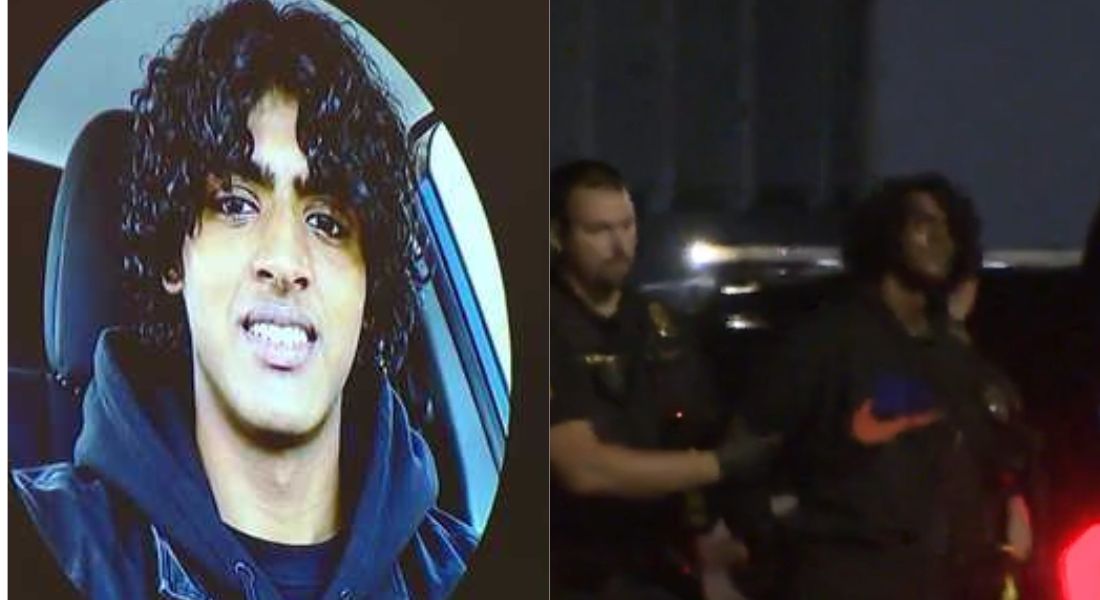
Washington: An Indian-origin teenager has been charged with killing his mother and younger brother at their home in Acton, Massachusetts, after an overnight search ended with his arrest early Wednesday, according to local authorities.

Middlesex County District Attorney Marian Ryan said the teenager, identified as Arjun Aravind, 17, was taken into custody after police found him inside his mother’s car in neighbouring Wayland. Ryan was quoted as saying by WCVB.com that Aravind had previously used the internet and ChatGPT to explore “gothic novel” stories involving the deaths of family members.

The two victims were identified as 45-year-old Sudha Venkatesan and her 14-year-old son, Siddharth Aravind. Police discovered their bodies at the family’s home on Martha Lane in Acton on Tuesday after a tutor arrived for a scheduled appointment but was unable to enter the house. The tutor contacted Arjun’s father, who then requested a police welfare check, according to the reports.

Officers who arrived at the residence found Venkatesan in the basement and Siddharth on the first floor. Authorities said both had suffered obvious trauma. The exact cause and manner of death are yet to be determined by the Office of the Chief Medical Examiner.

Arjun Aravind was not at the house when police arrived and was reported missing along with his mother’s Honda Accord car. Authorities subsequently issued an alert as officers searched for him and the vehicle. The search ended early Wednesday when Wayland police, responding to an unrelated alarm, located the car with Aravind inside. He was taken into custody without incident.

According to prosecutors, Aravind faces two counts of murder, along with charges including assault and battery on a household or family member, unauthorised use of a vehicle and theft of a motor vehicle. He was expected to appear in juvenile court initially, with the murder-related proceedings to take place in Concord District Court.

The killings have shocked the Acton community. Ryan described the incident as “an incredibly dark day” for the community and school system, while Acton Police Chief Douglas Sturniolo expressed condolences to the family and said authorities would continue working to ensure public safety.

The investigation into the deaths, including the exact cause and manner of death and circumstances surrounding the alleged killings, remains ongoing.

Union health minister meets Odisha MPs, discusses TB elimination drive

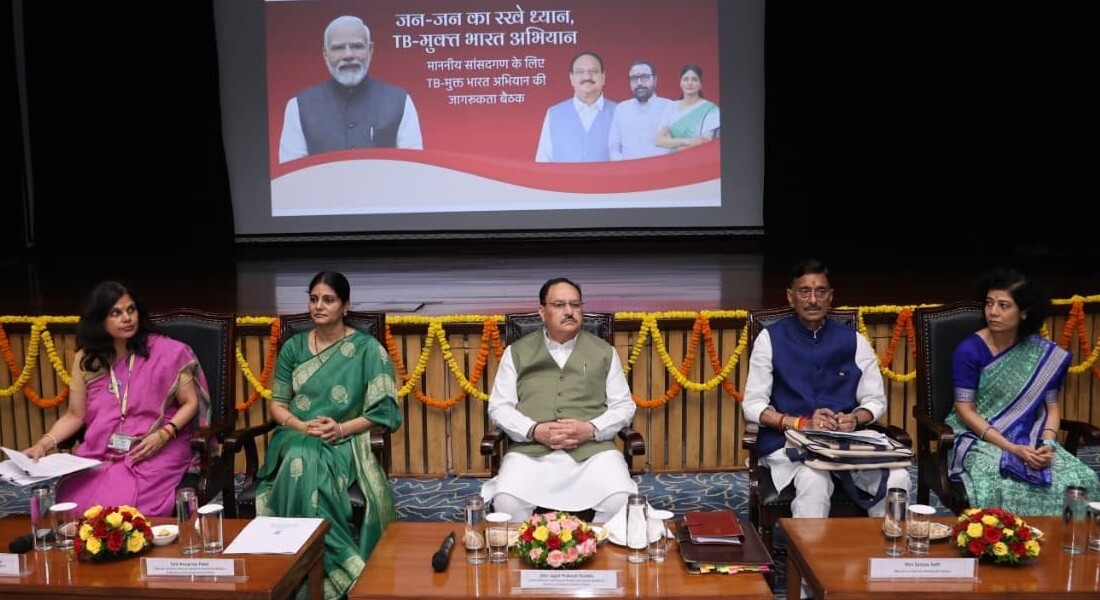
Bhubaneswar: Union Health Minister J P Nadda interacted with Members of Parliament from Odisha and Jharkhand on the sidelines of the Monsoon Session of Parliament.

During the meeting, they reviewed progress under the 100-Day TB Mukt Bharat Abhiyaan. Union Minister of State Anupriya Patel and Defence Minister of State Sanjay Seth also joined the interaction, themed “Parliamentarians Championing a TB Mukt Bharat.”

During the campaign, Odisha notified 15,268 TB patients, including 3,514 asymptomatic cases detected through proactive screening. Jharkhand, covered under the same drive, notified 16,754 patients, including 4,574 asymptomatic cases, according to an official statement.

Odisha remains a focus state due to several TB risk factors present in the region, including mining and industrial belts, migrant and tribal populations, malnutrition, urban slums and informal labour settlements.

The state adopted targeted screening strategies during the campaign, deploying Ayushman Arogya Shivirs in urban slums, construction sites, migrant clusters and mining areas to reach vulnerable groups. Jharkhand, which shares similar risk factors, also intensified its screening drive using the same shivir-based approach in high-risk pockets.

The campaign’s second phase, launched on March 24, 2026, covered nearly 1.58 lakh high-risk villages and urban wards nationwide before concluding in July 2026. More than 2.2 crore vulnerable individuals were screened across the country, with over 7 lakh new TB cases detected and 1.97 lakh asymptomatic cases identified.

India recorded a 21% decline in TB incidence between 2015 and 2024, nearly twice the global rate of decline, along with a 92% treatment success rate, according to the WHO Global TB Report 2025.

Nadda called on parliamentarians to engage actively with district collectors and health facilities in their constituencies, review the quality of TB services, and support early diagnosis efforts. He also stressed the need for sustained public mobilisation to turn TB elimination into a genuine Jan Andolan.

MPs from Odisha and Jharkhand reaffirmed their commitment to stepping up awareness campaigns, promoting Ni-kshay Shivirs for early detection, and strengthening supervision of TB services at the district and block levels.

They also pledged to mobilise community support for nutritional, psychosocial, and livelihood assistance to TB-affected patients.

Health Secretary Punya Salila Srivastava highlighted the focused efforts underway in both states to address TB among vulnerable groups, including mining communities, migrant and tribal populations, and those facing malnutrition or comorbidities.

Additional Secretary Aradhana Patnaik pointed to the expansion of India’s testing infrastructure, noting that molecular testing capacity has grown from a few hundred machines a decade ago to over 9,000, backed by nearly 3,000 AI-enabled handheld X-ray units now deployed in the field.