At IndiaVerve, we go beyond the noise to bring you meaningful stories of change, resilience and progress—from India to the world stage. Our mission is to bring readers credible, wide-ranging coverage across politics, business, sports, culture, society and more.

322 Godabarisha Mishra Model Primary Schools planned across Odisha

Bhubaneswar: The Odisha government has reviewed the progress of the Godabarisha Mishra Model Primary School scheme, under which 322 model primary schools are planned across the state to strengthen quality and inclusive primary education.

The first meeting of the State-level Steering Committee for the implementation of the scheme was held at Lok Seva Bhavan on Tuesday under the chairmanship of Chief Secretary Anu Garg.

The meeting reviewed the progress of infrastructure development, implementation of the scheme and other key issues related to the establishment of the model primary schools.

Development Commissioner-cum-Additional Chief Secretary Deo Ranjan Kumar Singh, School and Mass Education Commissioner-cum-Secretary N. Tirumala Naik, and other members of the committee and senior officials were present.

According to the government, 118 schools have been included in the first phase and 204 in the second phase, taking the total number of proposed schools under the scheme to 322.

The Chief Secretary reviewed the progress of construction work being undertaken by various implementing agencies and issued necessary directions and suggestions to expedite the projects.

The meeting also discussed proposed amendments to certain guidelines relating to school selection and infrastructure. In some locations, the size, width and shape of the available land have made it difficult to implement the originally approved square-shaped building design. A proposal was therefore discussed to allow rectangular building plans where required, depending on local conditions.

Other proposed changes include provisions for acquiring suitable government or private land near the proposed school sites, wherever necessary. The committee also discussed revising the guidelines so that the schools need not be restricted only to panchayat headquarters. Where suitable land is unavailable at the headquarters, schools may be established in the most populated areas of the respective panchayat.

The meeting further discussed strengthening the dedicated Godabarisha Mishra Model Primary School Cell through appropriate technical, academic, administrative, financial and human resource support to improve implementation, monitoring and quality supervision.

The scheme’s guidelines were approved by Chief Minister Mohan Charan Majhi in September 2025. A State-level Steering Committee was subsequently constituted in March 2026 to provide policy guidance, strategic direction and oversight for its implementation.

The committee will also review implementation progress regularly, facilitate inter-departmental coordination, address challenges arising during execution and recommend necessary updates to school selection, infrastructure and implementation norms based on field-level feedback.

The proposed schools are expected to provide modern and child-friendly learning environments, with facilities including classrooms, Shishu Vatika, an entrance lobby, head teacher’s room, staff room, store room, office and other essential amenities.

Chief Secretary Anu Garg emphasised that the objective of the scheme goes beyond infrastructure development and focuses on providing quality primary education. She stressed the importance of ensuring the availability of an adequate number of qualified teachers and other necessary facilities for students after the completion of construction work.

The meeting underlined the need to implement the scheme in a time-bound and quality-focused manner, with the larger objective of ensuring improved learning environments and access to quality education for children across Odisha.

Deputy CM Pravati Parida meets PM Modi ahead of 5th SUBHADRA instalment

New Delhi/Bhubaneswar: Odisha Deputy Chief Minister and Minister of Women and Child Development Pravati Parida on Tuesday met Prime Minister Narendra Modi in New Delhi ahead of the release of the fifth instalment of the state government’s flagship SUBHADRA scheme.

During the meeting, Parida apprised the Prime Minister of the preparations for the disbursement, scheduled for August 28, 2026, on the occasion of Rakhi Purnima. The instalment will be released from Nayagarh in Odisha.

Under the fifth instalment, each eligible beneficiary will receive ₹5,000 through Direct Benefit Transfer (DBT). According to the latest preparations, 1,03,26,162 eligible women beneficiaries are expected to receive the assistance, with the total disbursement exceeding ₹5,160 crore.

Parida also briefed the Prime Minister on the measures being taken by the Odisha government to ensure the smooth and timely transfer of funds to eligible beneficiaries. The preparations include beneficiary verification, completion of e-KYC, Aadhaar-linked bank accounts, NPCI mapping and other necessary banking arrangements.

The Deputy Chief Minister highlighted the significance of the fifth instalment in advancing the state government’s efforts towards the economic empowerment and financial inclusion of women across Odisha.

Prime Minister Modi had launched the SUBHADRA scheme in Bhubaneswar on September 17, 2024. The flagship women-centric scheme of the Odisha government provides financial assistance of ₹50,000 to eligible women over five years, with ₹10,000 disbursed annually in two equal instalments of ₹5,000 each through DBT.

The upcoming fifth instalment marks another milestone in the implementation of the scheme, as the state government continues its efforts to strengthen women’s economic independence and ensure the transparent and efficient delivery of welfare benefits.

IPS Officer Anugu Shiva Maruti Reddy joins as Odisha Governor’s ADC

Bhubaneswar: IPS officer Anugu Shiva Maruti Reddy has joined as the Aide-de-Camp (ADC) to Odisha Governor Dr Hari Babu Kambhampati, taking charge as the Governor’s Police ADC.

The Governor welcomed Reddy to his new assignment during a formal ceremony at Lok Bhavan on Tuesday. Dr Roopa Roshan Sahoo, Commissioner-cum-Secretary to the Governor, along with senior officials of the Governor’s Secretariat, was present on the occasion.

Before taking up the new assignment, Reddy was serving as the Sub-Divisional Police Officer (SDPO) of G. Udayagiri.

He succeeds IPS officer Ananya Awasthi, who was previously serving as the Police ADC to the Governor.

The Odisha Governor is assisted by two ADCs—one from the Indian Navy and another from the Odisha Police. While Lieutenant Harshit Deo is currently serving as the Naval ADC, Reddy has now taken charge as the Police ADC.

An ADC plays an important role in assisting the Governor during official engagements, ceremonial functions and other protocol-related responsibilities

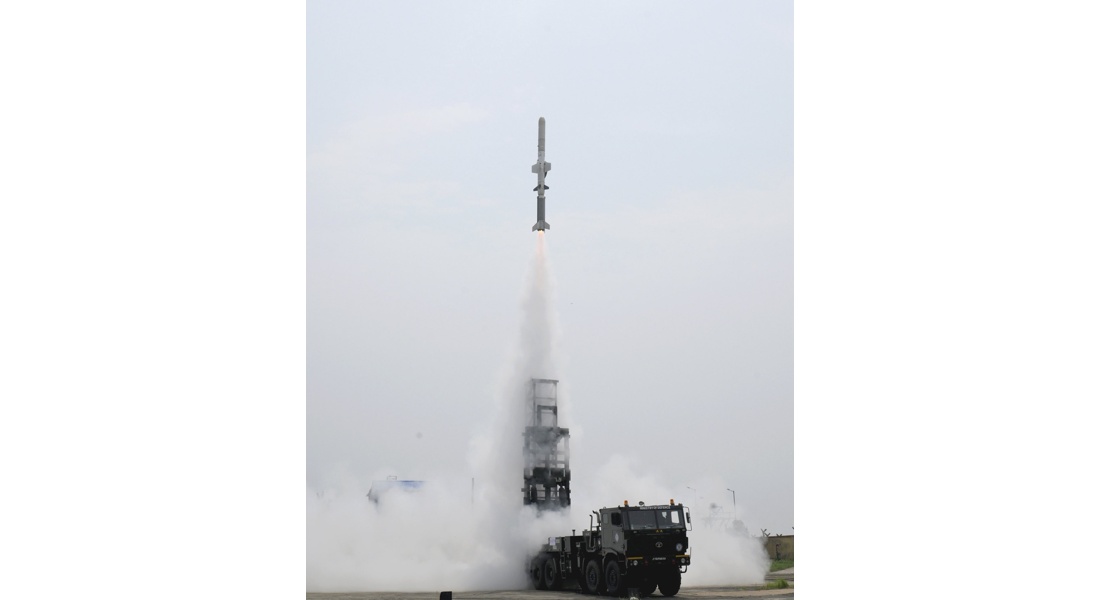
India opens DRDO missile technologies to domestic defence industry

New Delhi: India has taken two significant steps to strengthen its domestic defence manufacturing ecosystem. The government has opened the way for Indian industry to produce DRDO-developed conventional missile systems.

In a parallel development, CSIR-NAL has unveiled three indigenous micro and small gas turbine engines for defence applications.

Defence Minister Rajnath Singh has approved the transfer of technology for all conventional missile systems developed by the DRDO to the Indian defence industry for domestic production.

The move is aimed at accelerating the transition of missile technologies from development to industrial production. Indian companies will be able to undertake production subject to applicable qualifications, certifications and regulatory requirements, according to an official statement.

The technology transfer is expected to expand the role of domestic industry in India’s defence ecosystem. It will also create greater opportunities for Indian MSMEs and other technology partners to participate in the missile supply chain.

According to the government, the initiative will help strengthen domestic manufacturing capabilities, increase domestic value addition and reduce dependence on imports. It is also intended to support the wider growth of India’s defence manufacturing sector.

Separately, CSIR-National Aerospace Laboratories (CSIR-NAL) unveiled three indigenous Micro and Small Gas Turbine Engines in New Delhi.

The engines include the NJ-05 with 5 kg thrust, NJ-50 with 50 kg thrust, and NJ-100 with 100 kg thrust. The propulsion systems have been developed for potential applications in tactical unmanned aerial vehicles, drone interceptors, and compact missile systems.

The engines were unveiled at the SSB Auditorium at CSIR Headquarters in New Delhi. Air Marshal Tejinder Singh, PVSM, AVSM, VM, Chief of Integrated Defence Staff to the Chairman, Chiefs of Staff Committee, attended the event as the chief guest.

Dr Abhay A. Pashilkar, Director, CSIR-NAL, highlighted the laboratory’s role in supporting the country’s expanding drone ecosystem. He said Indian industry, including the growing aerospace start-up ecosystem, has the potential to manufacture the engines at scale for the requirements of the Indian defence sector.

The CSIR-NAL team, led by R. Prathapanayaka, also presented details of the engine development. The presentation highlighted advances in high-RPM turbomachinery and high-temperature combustion technologies behind the indigenous propulsion systems.

Dr N. Kalaiselvi, Director General, CSIR and Secretary, DSIR, described the development of the specialised propulsion systems as an important milestone for Atmanirbhar Bharat in aerospace engineering.

Air Marshal Tejinder Singh underlined the strategic importance of developing advanced gas turbine engine technologies within India. Indigenous capability in such critical technologies, he said, would strengthen national security and the technological self-reliance of the Armed Forces.

Together, the two developments underline the government’s push to expand domestic capabilities across the defence technology chain, from missile production to specialised propulsion systems.

The transfer of DRDO missile technologies is expected to widen industrial participation in defence manufacturing, while the NJ-05, NJ-50 and NJ-100 engines mark a step towards an indigenous ecosystem for designing, developing and manufacturing miniaturised gas turbine propulsion systems.

Odisha’s Talabira coal mine hits record 19.14 MT production

Bhubaneswar: Odisha’s Talabira II & III coal mine has achieved its highest-ever annual production, strengthening the state’s contribution to India’s domestic coal supply and energy security.

The NLC India-operated opencast mine, spread across Sambalpur and Jharsuguda districts, produced 19.14 Million Tonnes (MT) of coal in FY 2025-26. This was an 11.28% increase over the previous year, according to an official statement.

The mine also recorded its highest-ever daily production of 1,26,138.07 tonnes on March 21, 2026. Its monthly output reached a record 3.39 MT in March.

Coal dispatch also reached a new high during the financial year. Talabira II & III dispatched 17.69 MT of coal, including around 10.72 MT to the power sector and 6.97 MT to the non-regulated sector.

The mine supplies coal to several power plants across India. These include NTPC Darlipali in Odisha, along with power facilities in Chhattisgarh, Jharkhand, Madhya Pradesh, Karnataka, Andhra Pradesh, Tamil Nadu, and West Bengal.

The mine has maintained strong growth since production began. Its cumulative coal production reached 72.23 MT, while cumulative dispatch stood at 70.89 MT as of August 14, 2026.

Technology has also helped improve the efficiency of operations at Talabira II & III. Its Digital Logistics Management System uses RFID-based vehicle verification, AI-enabled cameras, and technology-based entry and exit gates to monitor coal transportation and dispatch.

The system has reduced average vehicle processing time at the entry gate from 1.42 minutes to 0.54 minutes. Tare weighment time has also fallen from 1.34 minutes to 0.48 minutes per vehicle.

The Odisha mine uses several other technologies, including GPS-based fleet management, geo-fencing, drone surveys and 3D terrestrial laser scanning. Surface miners with dust-suppression systems and continuous air-quality monitoring stations are also deployed.

Environmental measures include plantation across 23.43 hectares within the mine lease and 29.48 hectares outside it. More than 1.29 lakh plants have been covered under these plantation activities.

The mine has also installed 11.68 kW of solar power capacity. Solar lighting has been provided in nearby villages and within mine infrastructure.

Safety has remained another major focus. The mine has recorded no fatal accidents since its inception. It has also received a Five-Star Rating under the Ministry of Coal’s Star Rating Evaluation for five consecutive years from FY 2020-21 to FY 2024-25.

Talabira II & III also support local employment and livelihoods. The project provides 3,277 employment opportunities, including 1,277 direct jobs and around 2,000 indirect opportunities through transportation and allied activities.

Its community initiatives cover healthcare, drinking water, education, rural infrastructure, sports, solar lighting, and livelihood development. CSR expenditure stood at ₹5.32 crore in FY 2025-26.

Another Rs 4.20 crore was spent between April and July 2026 on initiatives covering drinking water, healthcare, solar lighting, school and Anganwadi infrastructure, rural roads, and community facilities.

Allocated to NLC India Ltd. in 2016 under the Nominated Authority framework, Talabira II & III has emerged as a major coal-producing mine in Odisha. Its record production and dispatch underline the growing role of the state’s coal resources in supporting India’s energy security.

FIH Hockey World Cup: India out of semi-final race

New Delhi: India’s bid for a place in the semi-finals of the FIH Hockey World Cup 2026 came to an end after Argentina secured a 5-3 win in their final Pool E match at Wagener Hockey Stadium in Amstelveen on Monday.

The defeat left India fourth in Pool E without a point and ended their hopes of making the last four, according to reports.

Argentina made the most of a fast start, scoring twice within the opening six minutes. Joaquin Toscani opened the scoring in the first minute before Nicolas della Torre converted a penalty corner to put Argentina 2-0 ahead.

India responded through Sukhjeet Singh in the 10th minute. Abhishek played a key role in the build-up before Sukhjeet finished the move with a firm push.

India could not build on the goal in the second quarter. Despite having possession, they struggled to create enough clear chances and went into the break 2-1 behind.

Argentina increased the pressure after half-time and restored their two-goal cushion through Tomas Domene in the 33rd minute. India then earned several penalty corners but failed to breach the Argentine defence.

Domene struck again from a penalty stroke in the 45th minute to make it 4-1. Lucas Toscani extended Argentina’s lead eight minutes into the final quarter with a powerful tomahawk.

India refused to give up and produced a late surge. Sukhjeet scored his second goal in the 58th minute after getting a decisive touch to Mandeep Singh’s cross.

India then won a penalty stroke, which Hardik Singh converted to make it 5-3. They had another chance from a late penalty corner, but Argentine goalkeeper Tomas Santiago made the crucial save to seal the result.

The loss came after India had already suffered a 3-1 defeat against the Netherlands in their previous Pool E match. Their earlier campaign had included wins over Wales and Pakistan, along with a loss to England.

India’s World Cup campaign will now conclude with the seventh-eighth place match against Belgium.

The Indian men’s team last reached the Hockey World Cup semi-finals in 1975, when they went on to win the title in Kuala Lumpur. The 1975 triumph remains India’s only World Cup title. At the 2023 edition, India finished ninth after failing to reach the quarter-finals.