
New Delhi: India has taken two significant steps to strengthen its domestic defence manufacturing ecosystem. The government has opened the way for Indian industry to produce DRDO-developed conventional missile systems.
In a parallel development, CSIR-NAL has unveiled three indigenous micro and small gas turbine engines for defence applications.
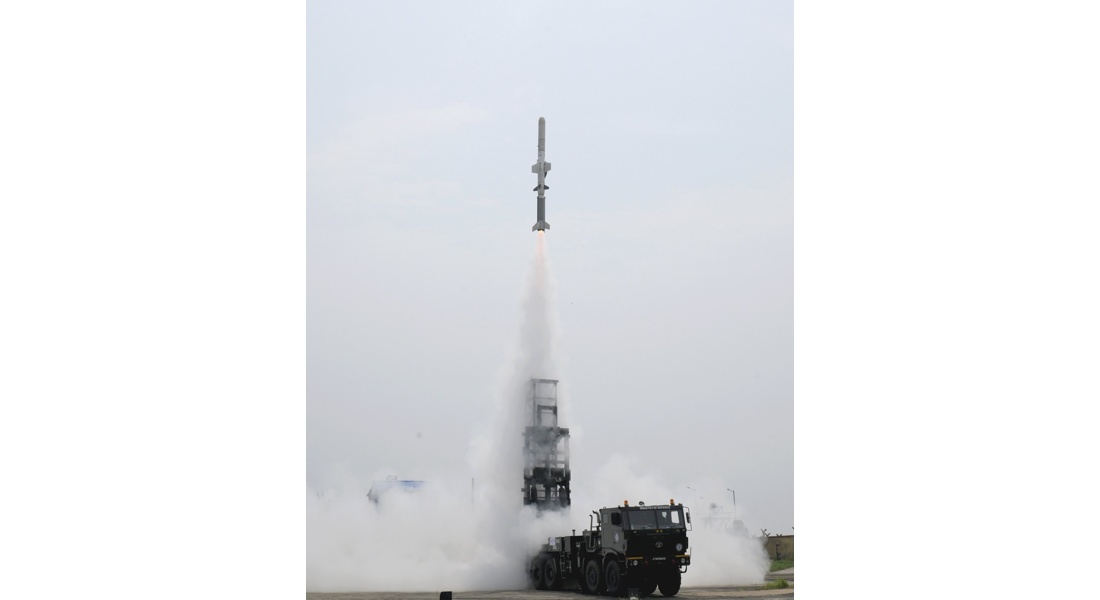
Defence Minister Rajnath Singh has approved the transfer of technology for all conventional missile systems developed by the DRDO to the Indian defence industry for domestic production.
The move is aimed at accelerating the transition of missile technologies from development to industrial production. Indian companies will be able to undertake production subject to applicable qualifications, certifications and regulatory requirements, according to an official statement.
The technology transfer is expected to expand the role of domestic industry in India’s defence ecosystem. It will also create greater opportunities for Indian MSMEs and other technology partners to participate in the missile supply chain.
According to the government, the initiative will help strengthen domestic manufacturing capabilities, increase domestic value addition and reduce dependence on imports. It is also intended to support the wider growth of India’s defence manufacturing sector.
Separately, CSIR-National Aerospace Laboratories (CSIR-NAL) unveiled three indigenous Micro and Small Gas Turbine Engines in New Delhi.
The engines include the NJ-05 with 5 kg thrust, NJ-50 with 50 kg thrust, and NJ-100 with 100 kg thrust. The propulsion systems have been developed for potential applications in tactical unmanned aerial vehicles, drone interceptors, and compact missile systems.
The engines were unveiled at the SSB Auditorium at CSIR Headquarters in New Delhi. Air Marshal Tejinder Singh, PVSM, AVSM, VM, Chief of Integrated Defence Staff to the Chairman, Chiefs of Staff Committee, attended the event as the chief guest.
Dr Abhay A. Pashilkar, Director, CSIR-NAL, highlighted the laboratory’s role in supporting the country’s expanding drone ecosystem. He said Indian industry, including the growing aerospace start-up ecosystem, has the potential to manufacture the engines at scale for the requirements of the Indian defence sector.
The CSIR-NAL team, led by R. Prathapanayaka, also presented details of the engine development. The presentation highlighted advances in high-RPM turbomachinery and high-temperature combustion technologies behind the indigenous propulsion systems.
Dr N. Kalaiselvi, Director General, CSIR and Secretary, DSIR, described the development of the specialised propulsion systems as an important milestone for Atmanirbhar Bharat in aerospace engineering.
Air Marshal Tejinder Singh underlined the strategic importance of developing advanced gas turbine engine technologies within India. Indigenous capability in such critical technologies, he said, would strengthen national security and the technological self-reliance of the Armed Forces.
Together, the two developments underline the government’s push to expand domestic capabilities across the defence technology chain, from missile production to specialised propulsion systems.
The transfer of DRDO missile technologies is expected to widen industrial participation in defence manufacturing, while the NJ-05, NJ-50 and NJ-100 engines mark a step towards an indigenous ecosystem for designing, developing and manufacturing miniaturised gas turbine propulsion systems.