At IndiaVerve, we go beyond the noise to bring you meaningful stories of change, resilience and progress—from India to the world stage. Our mission is to bring readers credible, wide-ranging coverage across politics, business, sports, culture, society and more.

Kohli, Gill centuries power India to eight-wicket win over West Indies

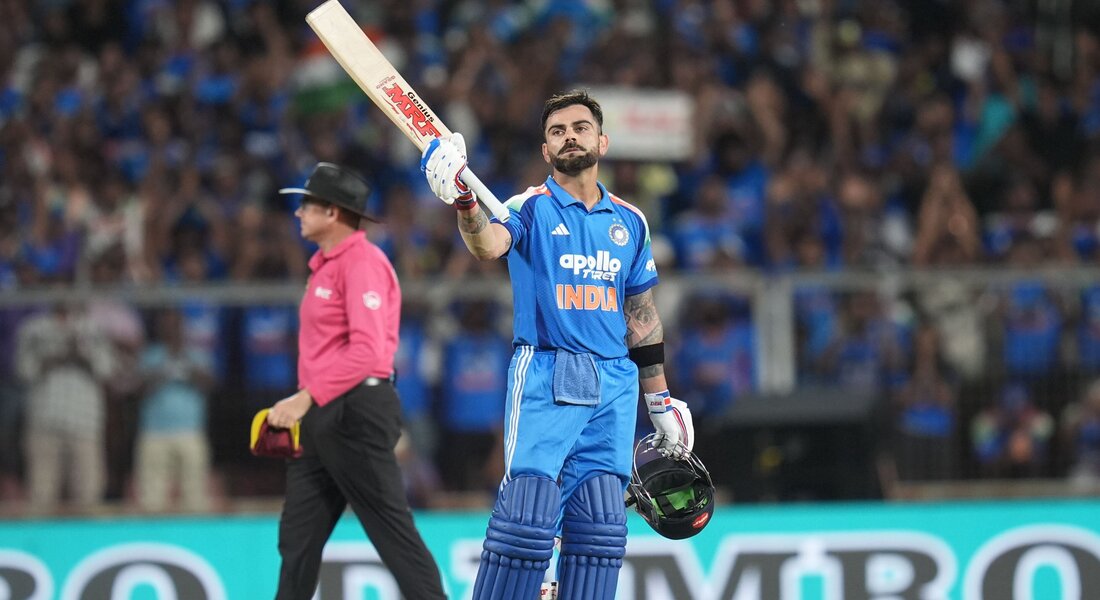
Thiruvananthapuram: Virat Kohli and Shubman Gill struck commanding centuries as India chased down West Indies’ 296-run target with eight wickets in hand in the opening ODI at Thiruvananthapuram.

India reached 300 for two in 41.4 overs, with Kohli unbeaten on 139 and captain Gill scoring 110. The victory was set up earlier by Kuldeep Yadav, who claimed four wickets for 40 runs on his return to the ODI side.

West Indies made a strong start after being sent in, with Justin Greaves and John Campbell putting together a 135-run opening partnership. Greaves scored 101, while Campbell made 62 as the visitors appeared well placed in the first half of their innings.

Kuldeep, however, changed the course of the innings in the middle overs. After Campbell was dismissed, the left-arm wrist-spinner removed three more batters as West Indies slipped from 176 for one to 198 for five.

Greaves, who battled cramps during his innings, eventually fell leg before wicket to Kuldeep after completing his century. Amir Jangoo then provided West Indies with some late momentum, scoring 58 off 43 balls to take the total to 295 for seven.

India’s chase was dominated by its top order. Gill, who reached his 10th ODI century in his 67th innings, provided a steady foundation before Kohli took control of the chase.

Kohli reached his 55th ODI century and remained unbeaten on 139. He also went past 15,000 ODI runs during the innings and struck nine sixes.

Gill, meanwhile, completed his century off 99 balls and reached 110 before being dismissed. He has now scored 22 international centuries, according to the report.

India completed the chase in 41.4 overs, securing an eight-wicket victory and taking an early lead in the ODI series.

The win also marked an impressive return for Kuldeep, who had been left out of India’s previous ODI series and had struggled for rhythm during the recent Test assignment in Sri Lanka.

Brief Scores: West Indies 295/7 in 50 overs (Justin Greaves 101, John Campbell 62, Amir Jangoo 58*; Kuldeep Yadav 4-40, Prasidh Krishna 2-60) lost to India 300/2 in 41.4 overs (Virat Kohli 139*, Shubman Gill 110) by 8 wickets

Odisha unveils new tourism initiatives on World Tourism Day

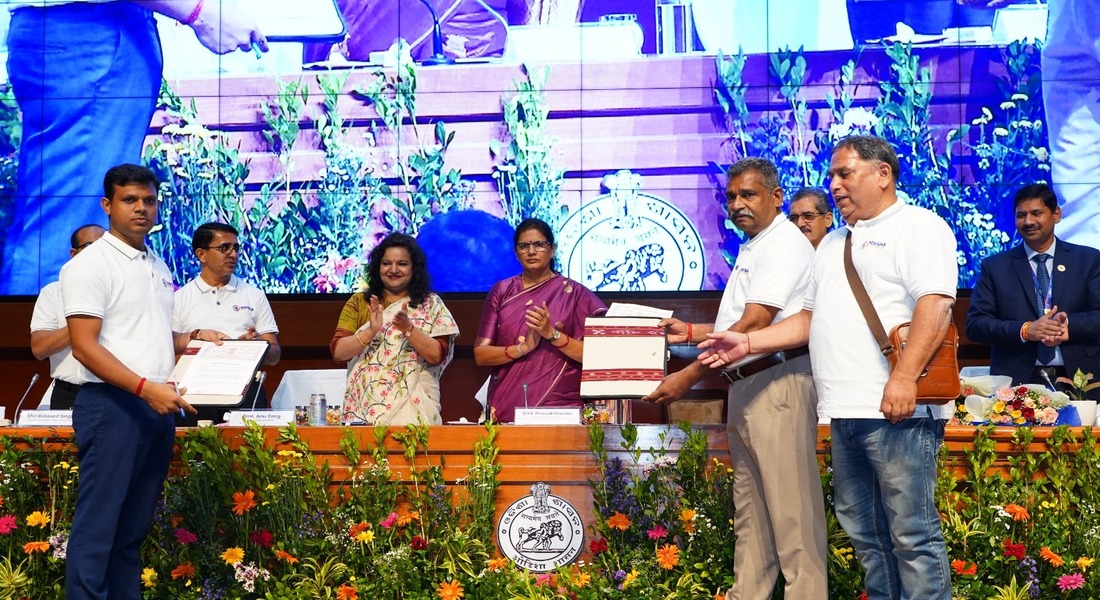
Bhubaneswar: Odisha marked World Tourism Day 2026 with a series of initiatives aimed at promoting digital innovation, sustainable tourism, entrepreneurship and greater community participation in the state’s tourism ecosystem.

The state-level celebration was held at the State Convention Centre, Lok Seba Bhawan, with Deputy Chief Minister and Tourism Minister Pravati Parida as Chief Guest and Chief Secretary Anu Garg as Guest of Honour.

The celebrations were aligned with the World Tourism Day 2026 theme, “Digital Agenda and Artificial Intelligence to Redesign Tourism”, highlighting the role of technology in creating accessible, connected and future-ready tourism experiences.

Addressing the gathering, Parida stressed the potential of tourism to generate livelihoods, promote entrepreneurship and enable local communities to become active stakeholders in Odisha’s development. She called for greater integration of technology, sustainability, heritage, innovation and community participation.

She also emphasised the need to ensure that tourism benefits reach youth, women, entrepreneurs, artisans and tourism service providers across the state.

Chief Secretary Anu Garg highlighted the importance of coordinated efforts, institutional partnerships and innovation in strengthening Odisha’s tourism ecosystem. She stressed the need to create opportunities for local communities while ensuring quality visitor experiences and sustainable management of destinations.

The Department of Tourism signed three key MoUs during the programme. An agreement with the State Bank of India (SBI) will facilitate financial support for homestays, while a partnership with the Indian Kayaking & Canoeing Association will support the development of adventure tourism.

An MoU with the Archaeological Survey of India (ASI) will strengthen heritage tourism. ASI Director General Yadubir Singh Rawat highlighted the importance of preserving and promoting heritage assets as part of the tourism experience.

The programme also saw the flag-off of OTDC luxury coaches to improve tourist mobility. An OTDC electric boat at Barkul and a catamaran by Swosti at Chilika Lake were virtually flagged off, adding new mobility and visitor-experience options at Chilika.

Provisional Registration Certificates were distributed to 176 beneficiaries under the Odisha Homestay Scheme, supporting community participation and livelihood opportunities through accommodation and experiential tourism. LTO/RTS were also distributed to adventure tour operators.

A presentation on “Redesigning Tourism with Digital Innovation” highlighted the role of digital technologies in destination discovery, tourism services and visitor experiences.

The celebrations also included a capacity-building workshop for homestay owners and a sensitisation workshop on the Ethnic Tourism Initiative to encourage community-based and ethnic tourism.

UNDP Deputy Resident Representative Isabelle Tschan addressed the gathering virtually.

Commissioner-cum-Secretary of the Department of Tourism Balwant Singh said the initiatives would help create diverse visitor experiences while strengthening local entrepreneurship, institutional partnerships and community participation.

The celebrations will conclude with the inauguration of a Light & Sound Show at Khandagiri by Deputy Chief Minister Pravati Parida. The show will combine heritage interpretation, technology and immersive storytelling to create a new visitor experience at the historic site

Amit Shah flags off India’s first LNG-powered train from Gujarat

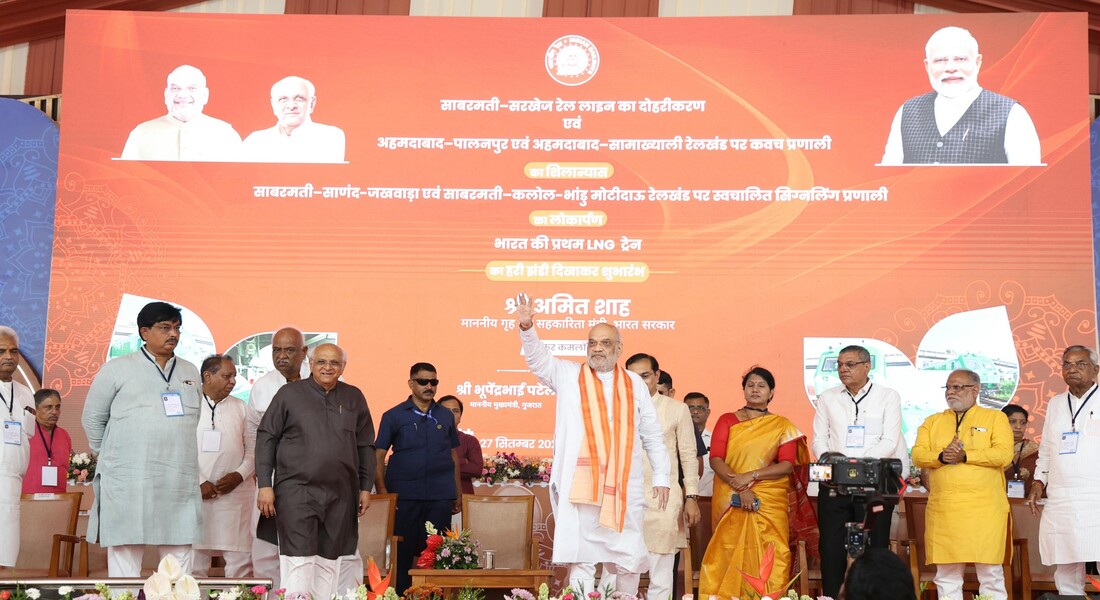
New Delhi: Union Home Minister and Minister of Cooperation Amit Shah on Sunday inaugurated railway development projects worth Rs 1,472 crore and flagged off the country’s first LNG-powered train from Sabarmati Railway Station in Ahmedabad, Gujarat.

Shah also inaugurated a WAG-12 Maintenance Shed built for the maintenance of railway locomotive engines. Gujarat Chief Minister Bhupendra Patel and other dignitaries were present at the programme, according to an official statement.

Speaking at the event, Shah said the projects launched in the Sabarmati division focus on environmental sustainability, passenger amenities and railway safety.

He highlighted the significance of Sabarmati, noting that several initiatives associated with Mahatma Gandhi, including Satyagraha, simple living, rural development and khadi, had their journey from the area.

He said Sabarmati Railway Station had undergone a major transformation in terms of passenger facilities, safety and connectivity.

Recalling its condition in the 1980s, Shah said passengers once had to walk nearly two kilometres from the station to find a rickshaw.

Among the major projects is the WAG-12 Maintenance Shed, constructed at a cost of Rs 700 crore. The Sabarmati–Kalol–Sabarmati rail section has also been equipped with the Kavach train protection system at a cost of Rs 48 crore.

Work has additionally begun on implementing Kavach on the Ahmedabad–Palanpur and Ahmedabad–Samakhiali sections and doubling the Sabarmati–Sarkhej railway line.

Shah also highlighted the commissioning of a 12,000-horsepower twin-section locomotive. According to him, a single WAG-12 can haul nearly as much freight as 600 trucks, replacing the need for two locomotives for the same task. He described the development as an important milestone for Indian Railways.

The LNG-powered train flagged off during the programme was also described as a step towards reducing the environmental impact of railway operations.

Shah said several railway modernisation initiatives had been undertaken since Narendra Modi became Prime Minister in 2014. He cited the successful trial of the country’s first double-stack long-haul container train between Jawaharlal Nehru Port Trust in Mumbai and Vadodara, saying the concept could nearly double freight-carrying capacity where rail tracks are limited.

He further said an 11,000-kilometre-long corridor is being converted into a four-lane network to facilitate traffic movement towards Delhi–Howrah and Delhi–Guwahati.

The Union home minister also referred to the introduction of Dedicated Freight Corridors, the Rapid Rail System and premium railway stations under the Modi government. He said India had recently seen the inauguration of a hydrogen-powered train, placing the country among only four nations with the technology.

According to figures cited by Shah, 97% of bio-toilets were installed during the Modi government’s tenure, while 87% of LHB coaches were manufactured in India. He said railway electrification, which stood at 30% before 2014, had reached 99.6%, with the remaining 0.4% expected to be completed soon.

Shah said railway electrification increased from 75 kilometres in 2010–11 to 7,188 kilometres in 2023–24. He also compared India’s reported electrification level with China, Spain, France and the UK, and said India would achieve complete electrification.

He said diesel consumption by the railways declined from 293 crore litres in 2015–16 to 108 crore litres in 2024–25. He also cited a 67% increase in the railway safety budget and a 66% rise in locomotive production capacity under the Modi government.

Turning to Gujarat’s railway allocation, Shah said the state’s rail budget during 2009-14 was Rs 589 crore, compared with Rs 17,366 crore allocated for 2026–27. He said the figures reflected the pace of development in the state.

During his address, Shah also criticised opposition parties over their statements on the government’s performance. He alleged that corruption, scams and scandals involving ₹12 lakh crore had taken place over a decade under the previous government and said no allegation of corruption had been levelled against Prime Minister Modi in 12 years.

The projects inaugurated and launched at Sabarmati are expected to strengthen railway infrastructure in the region while covering freight movement, passenger facilities, safety and cleaner fuel use.

India retain Nona Gaprindashvili Trophy despite losing individual Chess Olympiad titles

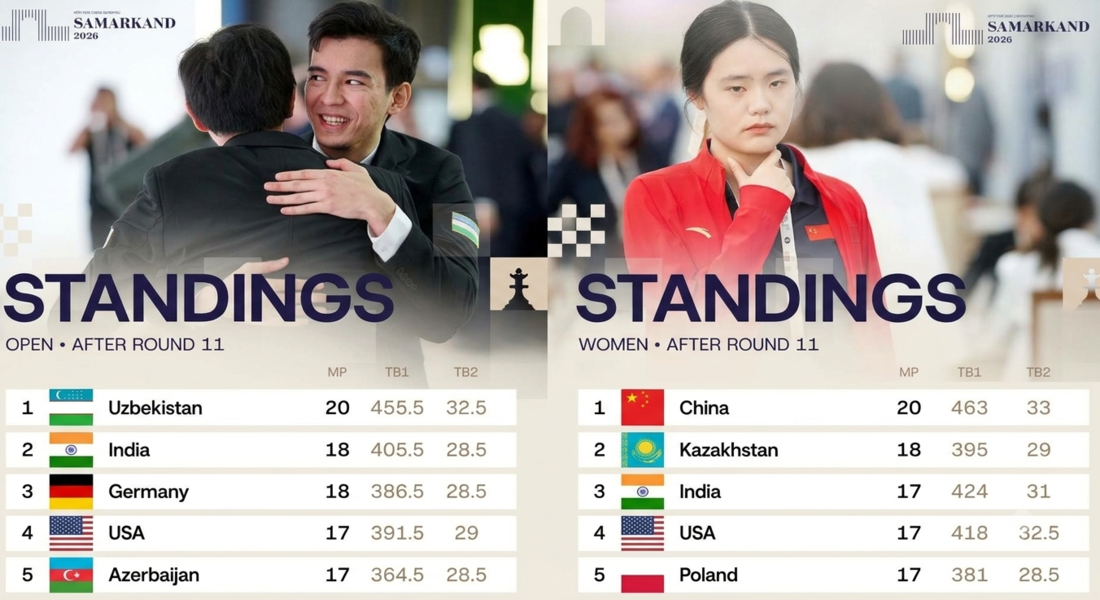
New Delhi: India’s remarkable run of overall dominance at the Chess Olympiad continued in Samarkand on Sunday, as the country secured the Nona Gaprindashvili Trophy for the third consecutive edition.

India finished as the best-performing nation across the Open and Women’s competitions after the 11-round event. The overall triumph came despite the Indian teams being unable to retain their respective titles, with the Open team taking silver and the Women’s team finishing with bronze.

The latest achievement follows India’s previous Nona Gaprindashvili Trophy victories at the 2022 Olympiad in Chennai and the 2024 edition in Budapest, where India completed a historic double-gold campaign, according to reports.

In the Open competition, hosts Uzbekistan emerged champions after repeating their success from 2022. India finished second following a 2-2 draw with Hungary in the final round.

India and Germany both ended the competition with 18 match points and 28.5 game points. India secured the silver medal through its head-to-head victory over Germany, leaving the German team with bronze.

The Women’s event saw China seal the gold medal with a round remaining, while Kazakhstan finished second. India took bronze after a 2-2 draw against Georgia in the final round.

Koneru Humpy delivered a win on the top board for India, while teenager Savitha Shri B produced an important defensive draw to help the team secure its place on the podium.

FarmX proposes Rs 1,000 crore investment in Odisha for autonomous electric tractors, AI

Bhubaneswar: Silicon Valley-based high-technology firm FarmX on Saturday submitted a Rs 1,000 crore investment proposal to the Odisha government to establish the state as an advanced manufacturing and export hub for autonomous electric tractors, AI software, robotics and intelligent farm systems.

A FarmX delegation led by Chief Operating Officer Premal Ashar and head of AI Lalit Bhatt met Deputy Chief Minister Kanak Vardhan Singh Deo, officials of the Agriculture & Farmers’ Empowerment and Energy departments, and Additional Chief Secretary Vishal Kumar Dev to discuss the proposal.

In a post on X, Singh Deo said: “Last night in Bhubaneswar, I met the leadership of FarmX, a Silicon Valley firm bringing cutting‑edge AI, robotics, and electric mobility to agriculture. They have presented a Rs 1,000 crore investment proposal to establish Odisha as a global hub for autonomous electric tractors and intelligent farm systems.”

The proposed project combines a state-of-the-art manufacturing campus with a smart precision farming initiative. It is planned to create up to 1,120 direct and 3,700 indirect jobs in specialised technology fields.

The proposed campus is expected to have an annual production capacity of 1,000 autonomous electric tractors and one lakh field-sensing units for both domestic and international markets.

Highlighting Odisha’s focus on deep-technology adoption, Singh Deo said the state was actively attracting global innovators in artificial intelligence, semiconductors and electric mobility.

He further said the effort was aimed at creating high-skilled employment opportunities for local youth while improving agricultural productivity.

The initiative also proposes to bring FarmX’s agricultural technology to local fields through FarmMap, the company’s open-architecture platform. The system uses satellite imagery, patented OSMO soil moisture sensors and a regional-language mobile application in Odia to provide real-time farm intelligence and automated irrigation.

According to the proposal, these technologies are intended to optimise the use of water, fertilisers and pesticides in farming.

The investment proposal is currently under active discussion. The initiative reflects Odisha’s efforts to provide infrastructure, policy support and global market connectivity for technology-driven industries, according to the proposal.

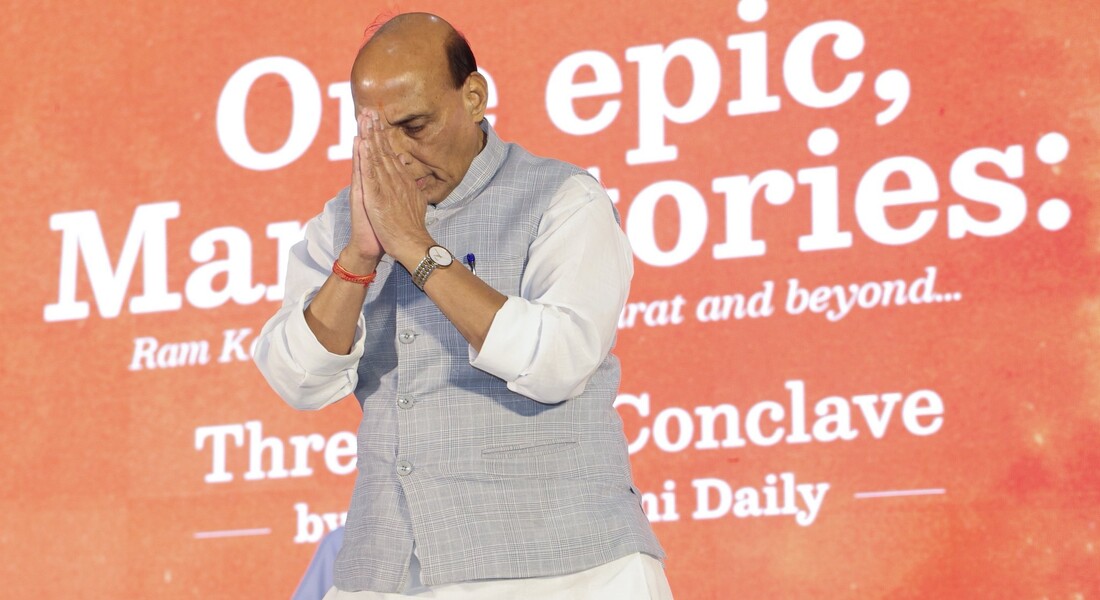
Rajnath Singh stresses strategic autonomy, defence self-reliance at Delhi conclave

New Delhi: Defence Minister Rajnath Singh said on Sunday that India believes in peace and does not seek to occupy the territory of any country, but peace should not be mistaken for weakness.

He was addressing a Defence Conclave in New Delhi, according to an official statement.

Singh said India seeks global stability without compromising its strategic autonomy and remains committed to protecting its security and strategic interests when threatened.

On terrorism, the defence minister said there could be no scope for dialogue with countries that promote terrorism against India. He said nations that use terrorism as an instrument of state policy or provide shelter and support to terrorists must be firmly reminded that terrorism cannot become a strategic asset for any country.

Referring to Prime Minister Narendra Modi’s remarks at the recent SCO meeting, he said India remains entitled to take all necessary measures against terrorism as long as a neighbouring country continues to support terrorism.

Emphasising national unity as a key element of national security, Singh said the responsibility for the country’s security does not rest solely with the armed forces but is shared by every citizen. He called for people to rise above divisions based on religion, caste, creed, language and region and place national interest above narrow or personal interests.

The minister described India as a civilizational power whose rise is rooted in inclusive development rather than confrontation or disruption. He outlined three foundations of India’s approach: its democratic and civilizational traditions, the principle of ‘Vasudhaiva Kutumbakam’ and the vision of ‘Sabka Saath, Sabka Vikas’. He also identified respect, dialogue, prosperity, security and culture as five strategic pillars.

Highlighting India’s role in the Global South, Singh described the country as a trusted partner and ‘Vishwa Bandhu’. He further said India had supplied more than 30 crore COVID-19 vaccine doses to over 100 countries under Vaccine Maitri and had supported developing nations through medicines, digital payment solutions, expertise and resources.

He also highlighted the Voice of Global South Summits as an initiative to advance the interests of developing countries.

On defence self-reliance, Singh highlighted India’s progress in developing indigenous capabilities ranging from aircraft and drone engines to fifth- and sixth-generation fighter jets. India’s defence exports have risen from Rs 686 crore in 2013-14 to a record Rs 38,424 crore in 2025-26, with exports reaching more than 100 countries.

After achieving the Rs 30,000-crore defence export target last year, India has now set a target of Rs 50,000 crore by 2029. Singh said international demand for Indian missiles, radars, ammunition and defence platforms reflected growing confidence in India’s technology, quality and delivery capabilities.

He said ‘Made in India’ was increasingly emerging as a symbol of trust in Indian defence capabilities.

The minister also highlighted the increase in defence allocation, which has reached Rs 7.85 lakh crore in 2026-27, compared with around Rs 2.53 lakh crore in 2013-14.

He said around 75% of the capital acquisition budget, amounting to Rs 1.39 lakh crore, had been earmarked for procurement from the domestic defence industry, supporting indigenous manufacturing and MSME supply chains.

Singh said the nature of warfare was rapidly changing, with modern conflicts extending into cyber, space, electronic and information warfare. He also pointed to the growing importance of Artificial Intelligence, drones, autonomous systems, quantum technology and hypersonic systems, stressing the need to develop future-ready capabilities across these domains.

He said India was also working to address strategic vulnerabilities involving technology, energy, data and supply chains. Steps were being taken to strengthen domestic capabilities in semiconductors and critical minerals, diversify energy sources and improve energy security.

On indigenisation, Singh said 509 defence equipment, weapon systems and platforms had been included in five positive indigenisation lists issued by the Armed Forces. He said DPSUs had released six indigenisation lists covering 5,417 items, including strategically important LRUs, subsystems, spares and components, with around 3,300 already indigenised.

The minister highlighted the growing role of private companies, startups and MSMEs in defence manufacturing.

The country’s defence ecosystem now includes DPSUs, private industries, more than 16,000 MSMEs, startups, universities and research institutions, with defence manufacturing capabilities developing across several regions.

He said investment proposals worth about Rs 70,000 crore had been received in the Uttar Pradesh and Tamil Nadu Defence Industrial Corridors, with around Rs 10,000 crore already invested.

Singh also highlighted the SRIJAN and SRIJAN DEEP portals for strengthening indigenous defence supply chains. Around 33,000 imported items have been identified for import substitution through SRIJAN, of which approximately 15,700 have been indigenised.

SRIJAN DEEP, meanwhile, has created a national digital database covering more than 40,000 manufacturers and sellers and lakhs of products.

On the transformation of the DPSU and Ordnance Factory ecosystem, Singh said corporatisation of the Ordnance Factories had improved their technology orientation, output and accountability. He said all 16 DPSUs were currently operating without losses and were increasing their focus on research, development and exports.

Highlighting youth and innovation, Singh said initiatives such as iDEX and iDEX-Prime were creating opportunities for startups and innovators to contribute to national security, while ADITI was supporting the development of advanced defence technologies. As of March 2026, 676 startups and innovators had been engaged through iDEX and 551 contracts had been signed.

The ministry had also approved procurement worth more than Rs 2,400 crore from startups and MSMEs and development projects worth over Rs 1,500 crore.

A key announcement at the conclave was the decision to transfer DRDO-developed technologies for conventional missile systems to eligible Indian industries. The move will allow qualifying private companies to undertake production of these systems.

40 Odisha faculty members complete Mentor Training at EDII

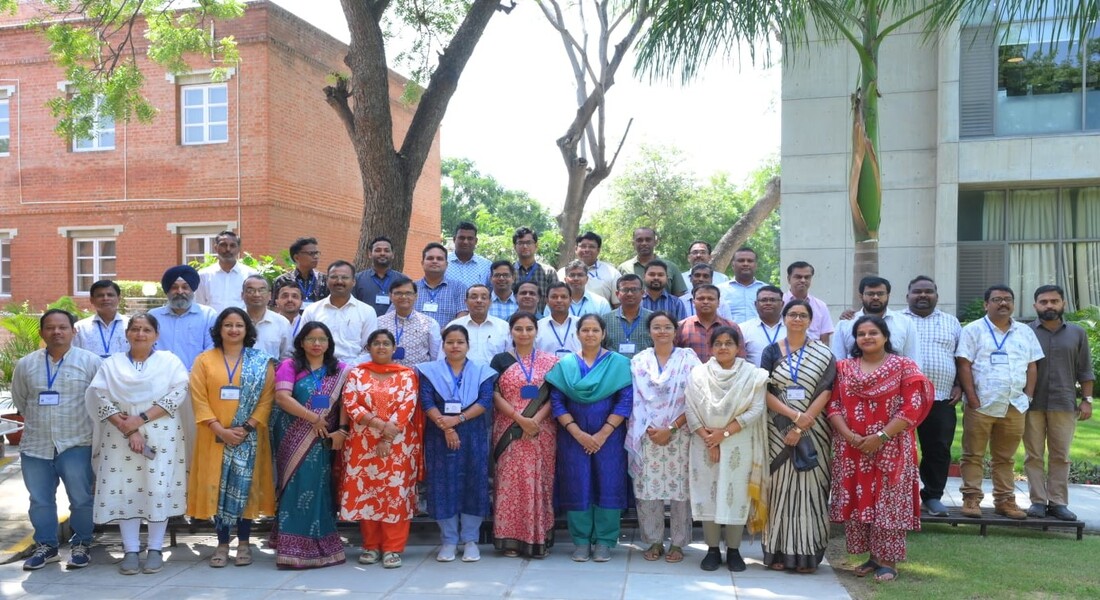
Bhubaneswar: A six-day residential Faculty Mentor Development Programme concluded on Saturday at the Entrepreneurship Development Institute of India (EDII) in Gandhinagar, Gujarat.

The programme was aimed at strengthening the entrepreneurship and startup ecosystem in Odisha’s higher education institutions.

It was held from September 21 to 26, with 40 selected faculty members from government colleges and universities across Odisha participating in the first phase of the initiative.

The programme was launched by Higher Education Minister Suryabanshi Suraj on September 5. Under the initiative, the Higher Education Department selected faculty members from higher education institutions across the state and sent them to EDII for specialised training in entrepreneurship and startup development.

During the intensive six-day programme, participants received training from experts on entrepreneurship pedagogy, business idea generation, the Business Model Canvas, startup mentoring, setting up incubation centres, funding opportunities, innovation and intellectual property rights.

On the concluding day, the participating faculty members presented Individual Action Plans for their respective institutions. The plans included proposals to establish Entrepreneurship Development Cells and Entrepreneurship Clubs on campuses and organise Startup Bootcamps, along with tentative timelines for implementing the activities.

Congratulating the participants, Higher Education Minister Suryabanshi Suraj said the programme was an important step towards strengthening the startup ecosystem in Odisha’s higher education institutions.

He said equipping faculty members with the knowledge and skills to mentor students and promote entrepreneurship would create greater opportunities for innovation and new ventures across campuses.

The initiative, he added, would also help foster a culture of entrepreneurship among students and support the vision of a Viksit Odisha.

EDII Director General Dr. Sunil Shukla said the programme would help build an entrepreneurship culture on a large scale in government institutions. Describing it as a visionary initiative of the Odisha government, he said students and the wider academic ecosystem would be the key beneficiaries of the programme and play an important role in realising the vision of a Viksit Odisha.

Odisha distributes appointment letters to 1,101 recruits

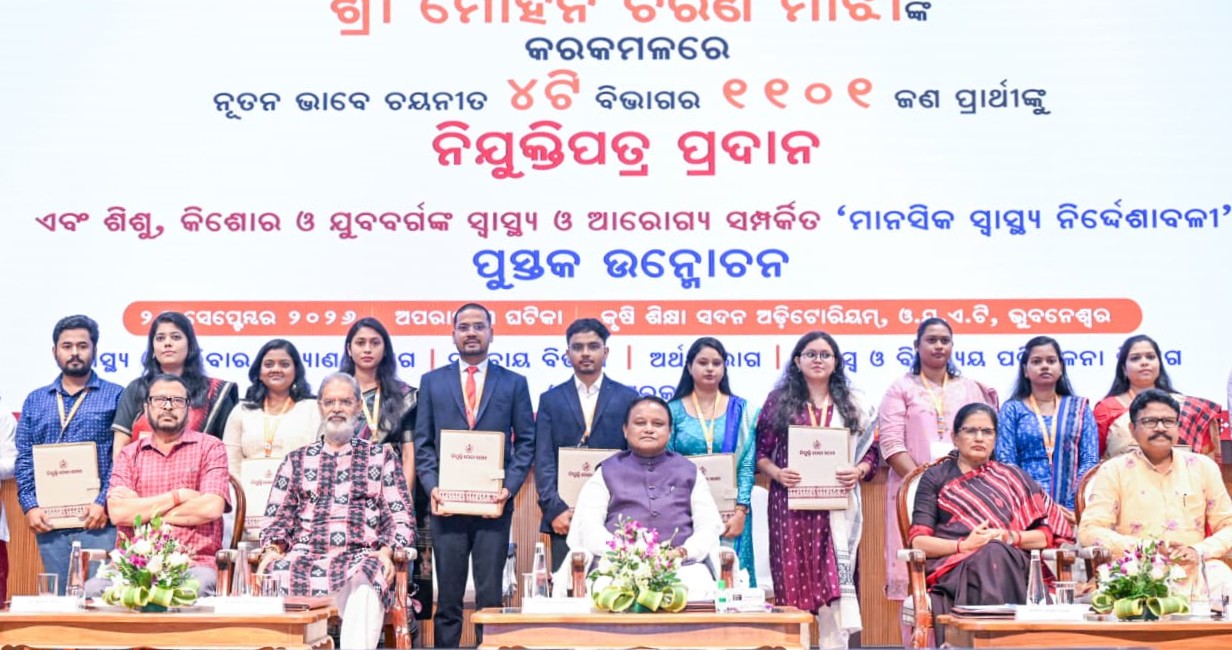
Bhubaneswar: Odisha Chief Minister Mohan Charan Majhi attended the 17th State-Level Employment Fair at the OUAT Agricultural Education Hall in Bhubaneswar on Saturday and distributed appointment letters to 1,101 newly recruited candidates across four major departments.

Officials handed appointment letters to 814 medical officers and 92 Assistant Professors in the Health Department.

The recruitment also included 30 Odisha Administrative Service officers, 42 Odisha Revenue Service officers, 46 Odisha Finance Service officers, 60 Odisha Treasury and Accounts Service recruits, and 17 Cooperative Service recruits.

According to the state government, 46,575 young men and women have been inducted into government service through 17 employment fairs during the 27 months since the government was formed.

Addressing the gathering, Chief Minister Majhi stressed the importance of working as public servants rather than rulers. He also emphasized Jana Shunani, or public grievance hearings, as a priority to ensure the speedy resolution of people’s problems at the grassroots level.

The occasion also saw the unveiling of an age-based Mental Health Guidelines booklet for youth, beginning at the pre-primary level. The state described the initiative as the first of its kind in the country.

The booklet has been prepared jointly by the Departments of Education, Health, Women and Child Development, and Skill Development. It is intended to strengthen the mental well-being of young people and support their overall development.

Deputy Chief Ministers Kanak Vardhan Singh Deo and Pravati Parida, Health Minister Dr. Mukesh Mahaling, and Minister of Revenue and Disaster Management Suresh Pujari attended the mega event.