At IndiaVerve, we go beyond the noise to bring you meaningful stories of change, resilience and progress—from India to the world stage. Our mission is to bring readers credible, wide-ranging coverage across politics, business, sports, culture, society and more.

Gill’s record double century, Rohit’s hundred power India to historic 2-0 ODI series win

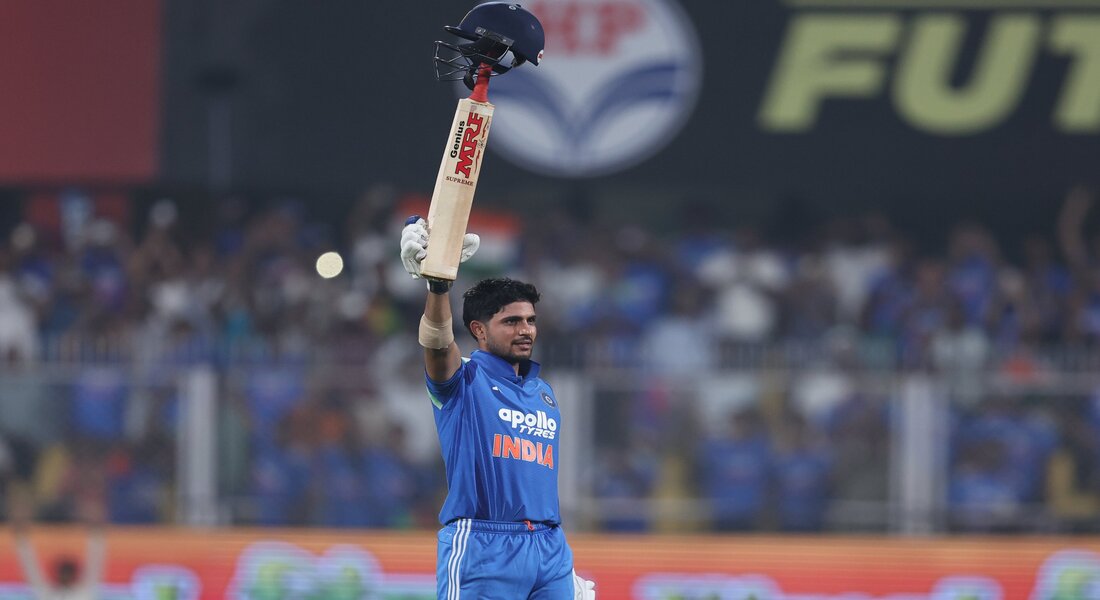
Guwahati: Shubman Gill and Rohit Sharma rewrote the record books with breathtaking centuries as India chased down West Indies’ mammoth 406-run target in just 43.3 overs to register an eight-wicket victory in the second ODI in Guwahati on Wednesday.

The win gave India an unassailable 2-0 lead in the three-match series. It was also India’s highest successful run chase in ODI cricket. Gill remained unbeaten on 223, while Rohit Sharma struck 101 from 75 balls as the opening pair put together a commanding 255-run partnership.

Gill’s innings was the centrepiece of the chase. The India captain completed his second ODI double century and became only the second batter after Rohit Sharma to score more than one ODI double hundred. His 223 not out also made it the fastest ODI double century, underlining the extraordinary pace of his innings.

Rohit, meanwhile, produced another attacking hundred, reaching his 35th ODI century from 75 balls. His aggressive approach alongside Gill ensured that India maintained control of the chase from the outset.

The Indian openers took apart a West Indies attack that had little answer to their stroke-making. Rohit eventually departed for 101, but Gill continued to dominate before India completed the chase with 39 balls to spare.

Earlier, the West Indies produced an extraordinary batting performance, posting 405/7 in their 50 overs — their highest-ever ODI total. Three West Indies batters scored centuries in the same innings, with John Campbell making 101, captain Shai Hope scoring 104 and Amir Jangoo contributing 114.

Campbell provided the initial assault, reaching his century in just 65 balls and finishing with 101 from 68 deliveries, including nine fours and five sixes. Hope then anchored the innings while maintaining a high scoring rate, before Jangoo accelerated further in the latter stages.

Jangoo’s 114 came from 77 balls and included 13 fours and three sixes. The three centuries made it the first time West Indies had three centurions in the same ODI innings and helped the visitors cross 400 for the first time in the format.

India’s inexperienced pace attack struggled on a batting-friendly surface. Debutant Auqib Nabi conceded heavily, while Gurnoor Brar was the most successful of the pace bowlers with two wickets. Prasidh Krishna also claimed one wicket.

The spinners provided some relief. Kuldeep Yadav finished with 2/65 and reached the landmark of 200 ODI wickets, while Ravindra Jadeja took 2/75.

Despite West Indies’ record-breaking total, India’s response was even more emphatic. Gill and Rohit transformed what initially appeared to be a daunting chase into a one-sided contest, taking India past the target with ease and sealing the series with one match still to play.

The third and final ODI will be played in New Chandigarh on October 3.

Brief Scores: India 406 for 2 (Gill 223*, Rohit 101) beat West Indies 405 for 7 (Jangoo 114, Hope 104, Campbell 101, Kuldeep 2-65) by eight wickets

India sweeps compound archery golds on Asian Games Day 11

New Delhi: India’s Day 11 at the 2026 Asian Games on Wednesday was defined by a remarkable run in compound archery, with the country claiming all three team gold medals and adding another gold in mixed team trap shooting.

India began the archery sweep with the women’s compound team defeating China 238-234 in the final. The victory also matched the world record and allowed the Indian team to retain its Asian Games title, according to reports.

The compound mixed team then added another gold after India overcame South Korea in the final. The victory also secured India a quota place for the mixed team event at the 2028 Los Angeles Olympics.

India completed the compound archery clean sweep with the men’s team defeating China in the final. The three victories gave Indian archery a clean sweep of the compound team titles on the day.

Shooting added another gold to India’s tally as Neeru Dhanda and Kynan Chenai won the mixed team trap event. The Indian pair staged a dramatic comeback after dropping targets early and edged Qatar by a single point to claim gold. The victory also gave Dhanda two titles in two days while setting a new national milestone.

Boxing also contributed two bronze medals. Priya Ghanghas lost her women’s 60kg semifinal to China’s Chengyu Yang, while Kapil Pokhariya was beaten by Uzbekistan’s Turabek Khabibullaev in the men’s 90kg event.

Lovlina Borgohain, meanwhile, reached the women’s 75kg final after defeating Natalya Bogdanova 3-2, assuring India at least a silver medal.

Wrestling brought another bronze through Sunil Kumar in the men’s Greco-Roman 87kg category. India’s Nisha was eliminated in the women’s freestyle 68kg competition after losing her repechage bout.

The squash teams also strengthened India’s medal prospects, with both the women’s and men’s teams reaching the semifinals and guaranteeing at least bronze medals. The women’s team defeated Singapore 2-0, while the men’s team also advanced to the last four.

India’s campaign also saw setbacks across several disciplines. In cycling, Keerthy Rangaswamy Chikka reached the women’s keirin semifinals but finished fourth in the classification final, while Sarita Kumari was eliminated. The men’s sprint campaign ended for Ronaldo Singh and David Beckham after the qualification and repechage stages.

In sepaktakraw, India lost 0-2 to Vietnam in the women’s quadrant event but defeated Laos 2-0 in the men’s competition. Judo’s Asmita Dey exited the women’s 48kg event after losses in the quarterfinal and bronze-medal stages.

India also progressed to the men’s kayak single final in canoe slalom through Pradhyumna Singh Rathod. Several sailing events involving Indian competitors were postponed.

In tennis, India’s men’s doubles pair of Anirudh Chandrasekar and N Sriram Balaji exited in the quarterfinals after losing to their Chinese opponents 7-6(4), 6(7)-7, [8-10]. India’s League of Legends team also lost all three of its group matches in esports.

The day’s results placed the spotlight firmly on India’s strength in archery and shooting, while medals in boxing, wrestling and squash added further depth to the country’s campaign.

KIIT secures 4th position among Indian universities in World University Rankings 2027

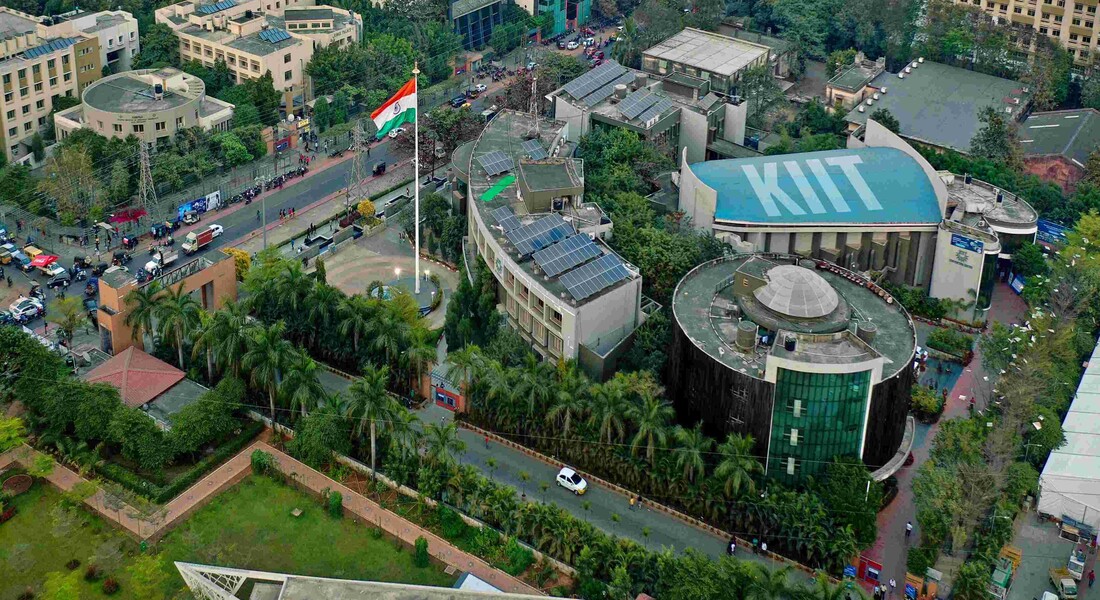
Bhubaneswar: KIIT Deemed to be University (KIIT-DU) has secured the fourth position among universities in India and the top position in eastern India in the Times Higher Education (THE) World University Rankings 2027, released on Wednesday.

KIIT-DU has improved by one position in the national rankings compared with last year. Globally, the university has been placed in the 501–550 cohort, marking an improvement over the previous year despite increased participation from institutions worldwide.

The latest ranking reflects gains across several areas of institutional performance, including teaching quality, research environment, industry engagement and international outlook.

According to KIIT-DU, its upward movement in the global rankings reflects its institutional strategies, quality assurance frameworks and continued investment in infrastructure and academic development.

The university attributed the achievement to the efforts of its leadership, faculty members and researchers, as well as the contributions of its students and wider global community.

Expressing happiness over the achievement, Dr Achyuta Samanta, Founder of KIIT and KISS, said the ranking was a matter of pride for Odisha and India.

He noted that KIIT, despite being a young university compared with others, had secured a place among the world’s top premier universities.

Kantapidha Mahotsav inaugurated in Sorada, cultural celebrations begin ahead of historic ritual

Four-day Mahotsav brings together traditional performances, folk culture and community participation ahead of Maa Kandhunidevi’s ceremonial Kantapidha ritual on October 3.

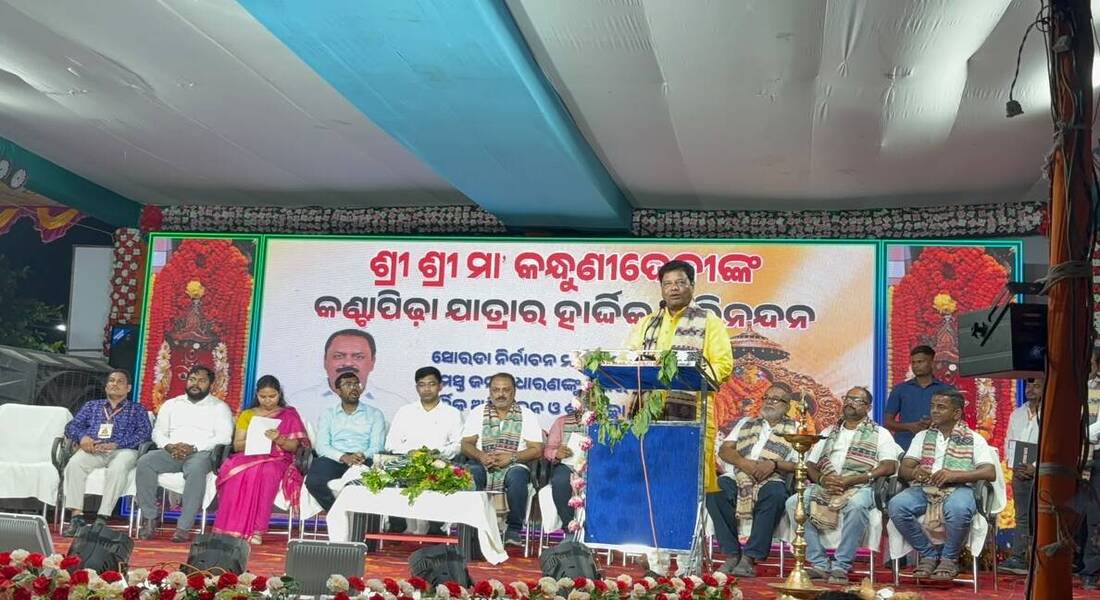
Sorada, Ganjam: The Maa Kandhunidevi Kantapidha Mahotsav was inaugurated in Sorada on September 29, marking the beginning of four days of cultural celebrations ahead of the centuries-old Kantapidha Yatra scheduled to culminate on October 3.

The Mahotsav was inaugurated by Ganjam District Magistrate V. Keertibhasan as the Chief Guest. The inaugural ceremony was attended by several dignitaries, including Odia film actor Asrumochan Mahanty, Samir Kumar Jena, Project Director of the District Rural Development Agency (DRDA) and District Urban Development Agency (DUDA), SDPO Aska Sourav Pradhan, Sub-Collector, Bhanjanagar, Uma Shankar Behera, along with the BDO, Bhanjanagar, the Tahsildar, Sorada, and other officials and guests.

The inaugural ceremony was held under the leadership of Sorada MLA and Maa Kandhunidevi Development Trust president Nilamani Bishoyi, with support from the Trust secretary and event head Rajanikant Mahapatra, who coordinated and managed the programme.

The opening evening presented a vibrant celebration of India’s diverse folk traditions, with performances representing Odisha, West Bengal, Rajasthan and Nagaland. The Natraj Dance Group from Kolkata and other participating cultural troupes showcased Jhumar dance of West Bengal, Nagaland’s tribal dance traditions, Sambalpuri dance from Odisha and Kalbelia dance from Rajasthan. The performances added colour and energy to the celebrations while highlighting the cultural diversity and folk heritage that the Mahotsav seeks to bring together.

The cultural programme also provided a platform to underline the importance of preserving the festival’s centuries-old traditions. Speaking at the inaugural ceremony, Trust secretary and event head Rajanikant Mahapatra appealed to the district administration to facilitate recognition of the Kantapidha festival in the State’s Mahotsav list. He said such recognition would help the historic tradition receive greater institutional support and provide a stronger platform for its preservation and promotion.

Responding to the appeal, District Magistrate V. Keertibhasan assured the gathering that the district administration would take steps towards facilitating the festival’s recognition at the state level. He emphasised that preserving such priceless cultural traditions for future generations was a collective responsibility and that efforts were needed to ensure that the centuries-old convention continued to find its rightful place in the state’s cultural landscape.

Trust president Nilamani Bishoyi also stressed the social and cultural significance of the festival. In his address, he described the colourful celebration associated with the Khidisingi Dynasty as a tradition that promotes harmony in society. He emphasised the need to preserve its cultural and moral values and pass them on to future generations.

The Mahotsav will continue until October 2, leading up to the main Kantapidha Yatra on October 3.

The concluding day is expected to witness the most distinctive and deeply revered ritual associated with the festival. According to local tradition and belief, Maa Kandhunidevi is believed to enter the body of the chief priest, known as the Dehuri, during the ritual. The Dehuri then carries out a ceremonial procession through the town, allowing devotees to seek the Goddess’s blessings.

The ritual culminates in the Dehuri mounting a ceremonial bed of thorns, known as the ‘Kanta Pidha’. The ritual is regarded by devotees as the defining spiritual moment of the annual Yatra and is closely associated with the name Kantapidha.

The festival’s traditions are rooted in Sorada’s royal, tribal and religious heritage and have been preserved across generations. The annual celebration of Maa Kandhunidevi brings together religious devotion, folk culture and community participation, making the Kantapidha Yatra an important part of Sorada’s cultural identity.

With the Mahotsav now underway, Sorada is gearing up for the grand culmination on October 3, when the centuries-old ritual tradition of Kantapidha will once again draw devotees and visitors to the town.

Cabinet approves higher Rabi MSP, green energy corridor and Delhi traffic project

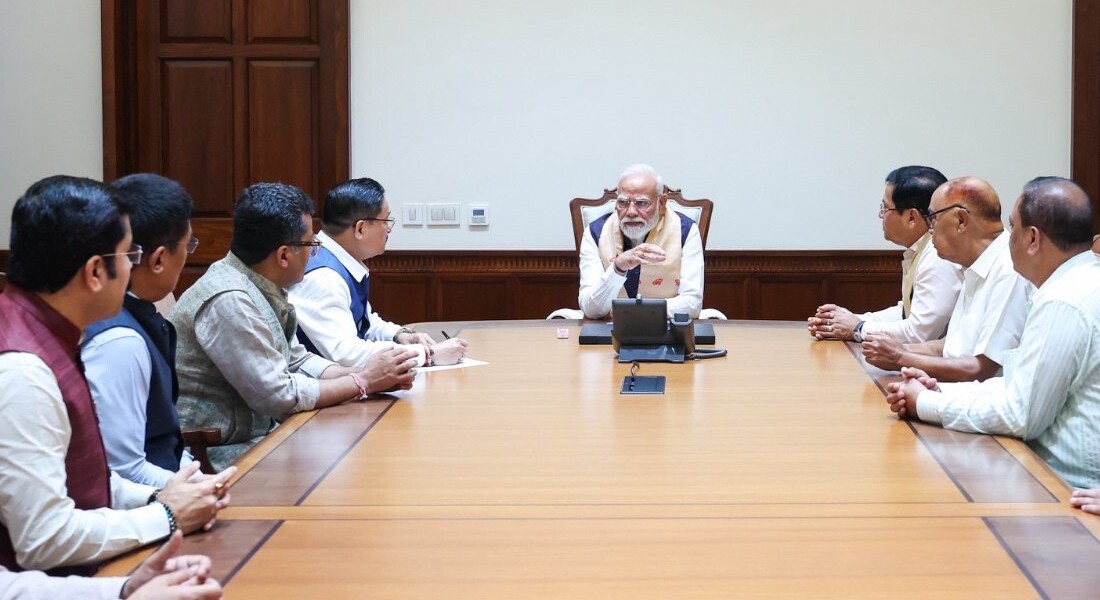
New Delhi: The Union Cabinet on Wednesday approved a series of measures covering agricultural support, renewable energy transmission, and urban traffic management.

The Cabinet Committee on Economic Affairs, chaired by Prime Minister Narendra Modi, approved the increase in Minimum Support Prices (MSP) for all mandated Rabi crops for the 2027-28 marketing season, according to an official statement.

The highest absolute increase has been approved for safflower at Rs. 675 per quintal, followed by rapeseed and mustard at Rs. 413 per quintal. The MSP for lentil (masur) will increase by Rs. 390 per quintal, while barley, gram and wheat will see increases of Rs. 136, Rs. 83 and Rs. 25 per quintal, respectively.

The government said the MSP increases are aimed at ensuring remunerative prices for farmers and are in line with the Union Budget 2018-19 decision to fix MSP at a level of at least 1.5 times the All-India weighted average cost of production.

The expected margin over the All-India weighted average cost of production is 106% for wheat, 96% for rapeseed and mustard, 92% for lentil, 59% for gram, 58% for barley and 50% for safflower.

The government said higher MSPs for pulses and oilseeds in recent years are also intended to encourage crop diversification beyond cereals.

According to the figures released by the government, wheat procurement during 2014-15 to 2025-26 stood at 3,715 LMT, compared with 2,254 LMT during 2004-05 to 2013-14. Procurement of the six Rabi crops during 2014-15 to 2025-26 increased to 3,921 LMT from 2,302 LMT during the earlier period.

The MSP amount paid to wheat-growing farmers during 2014-15 to 2025-26 rose to Rs. 7.31 lakh crore from Rs. 2.56 lakh crore during 2004-05 to 2013-14. For farmers growing the six Rabi crops, the corresponding MSP payments increased to Rs. 8.36 lakh crore from Rs. 2.65 lakh crore.

In another major decision, the Union Cabinet approved the Green Energy Corridor Phase-III (GEC-III) scheme to strengthen India’s intra-state transmission system and facilitate the evacuation of up to 135 GW of renewable energy across States and Union Territories.

The scheme also includes deployment of 50 GWh of Battery Energy Storage Systems (BESS) at renewable energy developer or generator ends, or at other locations considered important for grid flexibility. The storage systems are intended to help address intermittency, congestion, peak-hour curtailment, and demand during non-solar hours.

The scheme is targeted for completion by FY 2032-33 and has a total project outlay of Rs. 1,86,405 crore. Of this, Rs. 1,36,378 crore is earmarked for development of intra-state transmission systems under GEC-III and Rs. 50,000 crore for 50 GWh of BESS.

The scheme will involve Central Financial Support of Rs. 54,082 crore. The government said the assistance will help offset intra-state transmission charges and keep power costs lower for end users.

Greenfield projects under the intra-state transmission component will be implemented through Tariff Based Competitive Bidding, while brownfield upgrades and network-strengthening works will be undertaken on a Cost Plus Basis. State Transmission Utilities will serve as the overall implementing agencies, while Transmission Service Providers will participate through the TBCB route under a Build-Own-Operate-Maintain model.

The government said GEC-III will support the target of 900 GW of installed non-fossil capacity by 2035 and contribute to long-term energy security and lower carbon emissions. The scheme is also expected to generate employment across the power, manufacturing and construction sectors, as well as in battery energy storage, operations, maintenance and grid management.

The Cabinet also approved implementation of the Intelligent Traffic Management System project by Delhi Police at an estimated cost of Rs. 1,789.52 crore, inclusive of taxes.

The project will cover 42 identified traffic corridors and will be implemented in three phases over 24 months, followed by five years of operation and maintenance.

The technology-led initiative aims to improve traffic management, transport infrastructure, and urban mobility in the National Capital. It will use real-time traffic data, adaptive traffic signals, automated enforcement and integrated command-and-control systems to manage Delhi’s existing road network.

Delhi has around 71 lakh active registered vehicles, according to the government. The government noted that vehicle growth has substantially outpaced road infrastructure expansion, while traffic regulation still relies heavily on fixed signal timings and manual intervention.

The ITMS is intended to make better use of existing road capacity by enabling traffic management to respond dynamically to actual road conditions.

Flydubai flight diverted to Saudi Arabia after emergency alerts, hijacking ruled out

Flight FZ1073 travelling from Dubai to Tel Aviv landed safely in Tabuk after transmitting emergency codes; reports say an altercation between the pilots triggered the incident.

Dubai/Tel Aviv: A flydubai passenger flight travelling from Dubai to Tel Aviv was diverted to Saudi Arabia on Wednesday after transmitting a series of emergency signals while flying over the region, briefly triggering fears of a possible hijacking.

Flight FZ1073, operating from Dubai International Airport to Ben Gurion Airport near Tel Aviv, eventually landed safely at Tabuk airport in northwestern Saudi Arabia. The aircraft was carrying around 180 passengers, according to media reports.

Flight-tracking data showed that the aircraft transmitted the international emergency code 7700 while in flight. The code indicates a general emergency and does not, by itself, indicate a hijacking. The aircraft was subsequently reported to have transmitted code 7500, which is internationally used to indicate unlawful interference with an aircraft.

The alerts and a change in the aircraft’s course prompted an immediate security response. Israeli authorities initially considered the possibility of a hijacking and Israeli fighter jets were reportedly scrambled as a precaution.

However, the Israeli Prime Minister’s Office later said the incident was not believed to be a hijacking. Prime Minister Benjamin Netanyahu held an emergency security consultation as authorities worked to ensure the safe return of the Israeli passengers,

The aircraft also made a significant change in altitude during the incident. Flight-tracking data indicated a steep descent while the aircraft was over Saudi Arabia, although the precise circumstances behind the change in altitude have not been independently established.

According to reports citing Israeli officials and passengers, the emergency situation may have resulted from a physical altercation between the two pilots in the cockpit. Passengers reportedly heard shouting and commotion towards the front of the aircraft before the plane changed course and headed towards Tabuk.

The exact sequence of events inside the cockpit, including what led to the reported altercation and the activation of the emergency signals, remains under investigation.

After landing in Tabuk, passengers remained on board while Saudi security personnel secured the aircraft, according to reports. There were no immediate reports of injuries among the passengers.

Flydubai confirmed that the aircraft had experienced an incident and was diverted to Tabuk. The airline said it was working closely with the relevant authorities and would provide further information as confirmed details became available.

The incident comes amid heightened security concerns surrounding aviation in the region. The Dubai-Tel Aviv route is regularly operated by flydubai and has become an important air link between the United Arab Emirates and Israel following the normalisation of relations between the two countries in 2020.

The unusual emergency also comes several years after a separate incident involving two Air France pilots who were suspended following a physical confrontation in the cockpit during a 2022 flight from Geneva to Paris. That aircraft completed its journey without being diverted.

Authorities are continuing to establish the circumstances surrounding the flydubai incident and the events that led to the aircraft’s emergency diversion to Saudi Arabia