At IndiaVerve, we go beyond the noise to bring you meaningful stories of change, resilience and progress—from India to the world stage. Our mission is to bring readers credible, wide-ranging coverage across politics, business, sports, culture, society and more.

Cyclone Arnab kills eight in Andhra Pradesh; Odisha braces for more heavy rain

The storm weakened after making landfall with winds of up to 135 kmph, leaving power disruptions, damaged crops and homes, and thousands evacuated across Andhra Pradesh and Odisha.

Vizag/Bhubaneswar/New Delhi: Cyclone Arnab claimed eight lives in Andhra Pradesh after making landfall along the state’s coast and the adjoining Yanam region early on Wednesday, triggering destructive winds, torrential rain, flooding and widespread damage to infrastructure. The storm has since weakened, but heavy rainfall remains a concern in parts of Andhra Pradesh and neighbouring Odisha.

Andhra Pradesh Chief Minister N Chandrababu Naidu announced an ex gratia payment of ₹5 lakh to the family of each person killed in cyclone-related incidents. He also contacted Union Home Minister Amit Shah and sought the deployment of a central team to assess the damage and support relief and rehabilitation efforts.

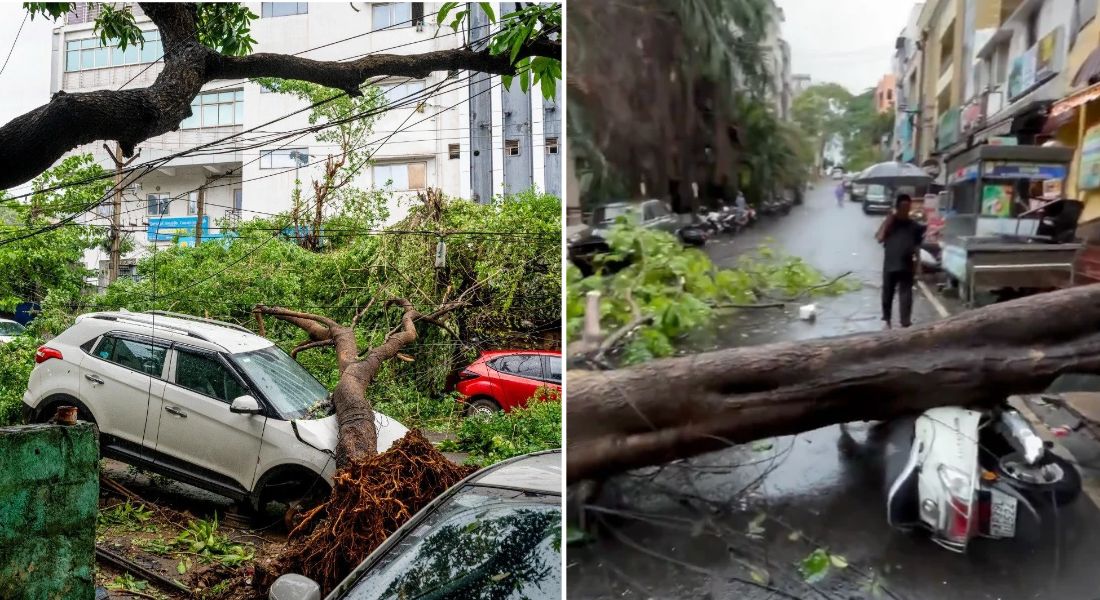
The fatalities reportedly occurred in several districts, including West Godavari, Konaseema, Visakhapatnam and Anakapalli. The incidents involved falling trees, collapsing electric poles, a damaged thatched house and electrocution from exposed or snapped live wires. Earlier preliminary information provided by the National Disaster Response Force (NDRF) had put the death toll at three, before the later report cited eight fatalities.

Naidu’s letter to the Centre cited damage to agricultural land and homes. Paddy crops across approximately 70,900 hectares and horticultural crops over 10,450 hectares were reported to be inundated or damaged, while around 180 houses were affected. Power supply to more than 25 lakh connections was disrupted across north and central Andhra Pradesh.

Air travel was also affected, with 38 flights cancelled at Visakhapatnam airport and 17 services at Vijayawada airport, according to the information provided by the state government. Strong winds uprooted trees and electricity poles, damaged roads and disrupted communication networks in several coastal districts.

Cyclone weakens after landfall

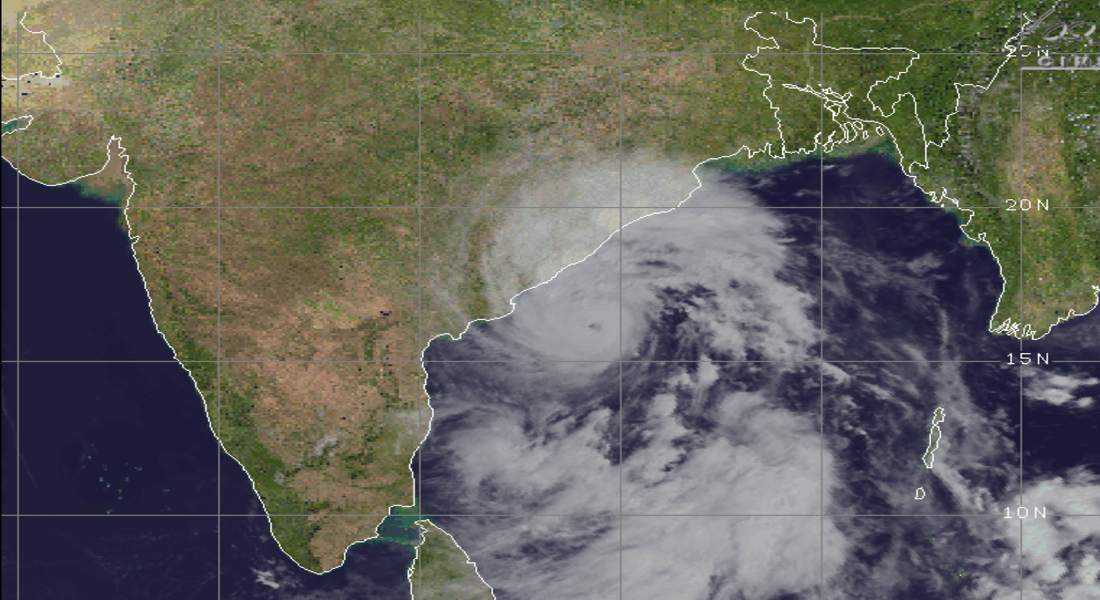
According to the India Meteorological Department (IMD), Cyclone Arnab crossed the Andhra Pradesh–Yanam coast between Bapatla and Visakhapatnam, southwest of Yanam and near Narsapur, between 2 am and 8 am on Wednesday. At landfall, it was classified as a very severe cyclonic storm, with maximum sustained wind speeds of 125–135 kmph and gusts reaching 150 kmph.

The system subsequently weakened into a severe cyclonic storm. In its bulletin issued at 5.30 pm on Wednesday, the IMD said it had weakened further into a cyclonic storm and was centred over coastal Andhra Pradesh, Yanam and the adjoining west-central Bay of Bengal. The weather agency expected it to weaken into a deep depression by midnight and lose strength gradually thereafter.

Odisha faces heavy rainfall

Although the cyclone’s impact was most severe in Andhra Pradesh, southern Odisha also experienced persistent rainfall, waterlogging and disruption. The IMD issued a red warning for extremely heavy rainfall in vulnerable southern districts, including Ganjam, Gajapati, Rayagada, Koraput, Malkangiri and Nabarangpur, according to the alerts reported during the day. Orange and yellow warnings covered other parts of the state.

Several locations recorded substantial rainfall. Puri received 78.3 mm, Chhatrapur 61.4 mm and Gopalpur 50 mm, while Paralakhemundi recorded more than 40 mm. Bhubaneswar had received 24.2 mm by 5.30 pm, with the total exceeding 30 mm later in the evening.

The Odisha government also mobilised disaster-response resources and moved people from vulnerable areas to safer locations.

Odisha Chief Minister Mohan Charan Majhi said the state had achieved its zero-casualty target during Cyclone Arnab, with no deaths reported so far, crediting extensive preparedness and coordinated emergency response.

A total of 43,827 people were evacuated to 634 relief camps across eight districts, while 313 response teams were deployed. The government also shifted 2,245 pregnant women to health centres, where 931 babies were delivered safely, and ensured the safe return of all 19,143 fishing boats. Potangi in Koraput recorded the highest rainfall at 188 mm, followed by Mohana in Gajapati at 182.4 mm.

Earlier, Special Relief Commissioner Rajesh Prabhakar Patil briefed the Chief Minister on the cyclone’s status and its impact on Odisha. Majhi also interacted with Deputy Chief Ministers and Ministers overseeing different districts to review rainfall, damage, river water levels and relief camp arrangements.

Rescue and relief operations continue

The NDRF said 39 teams had been deployed across Andhra Pradesh, Odisha and neighbouring areas expected to experience the effects of the weather system. Four additional teams were sent to Andhra Pradesh on Tuesday night. Around 57,000 people had been moved to relief camps in Andhra Pradesh, while 38 people were evacuated from Yanam on Tuesday night, according to the force’s preliminary update.

The IMD has warned that rainfall could continue in parts of Andhra Pradesh even as the cyclone weakens. Authorities are continuing relief operations, assessing damage and working to restore essential services.

With the storm moving inland, attention has shifted to the risk of further flooding, damage to crops and disruption in southern Odisha and adjoining states, including Chhattisgarh and Jharkhand.
Prithviraj Harichandan flags off special train carrying 775 senior citizens to Varanasi, Ayodhya

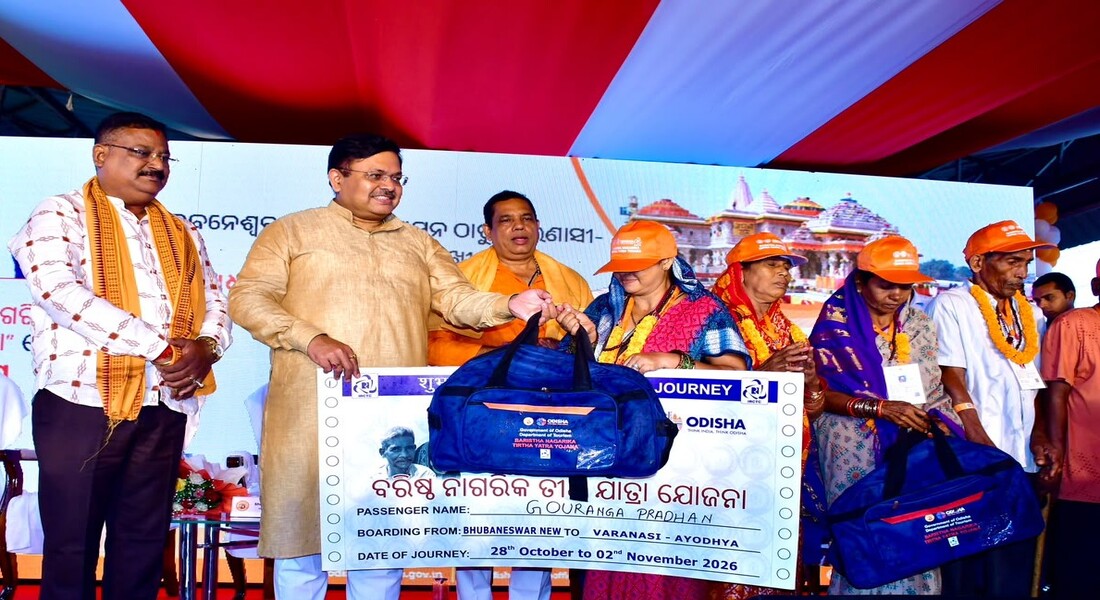
Bhubaneswar: A special train carrying 775 senior citizens from Odisha to Varanasi and Ayodhya was flagged off from Bhubaneswar New Railway Station on Wednesday under the sixth phase of the Mukhyamantri Baristha Nagarika Tirtha Yatra Yojana for 2026–27.

Odisha Law, Works and Excise Minister Prithviraj Harichandan flagged off the pilgrimage train, which is carrying 25 officials to assist the elderly passengers throughout their journey. Organised by the Department of Tourism in collaboration with the Indian Railway Catering and Tourism Corporation, the pilgrimage is scheduled to conclude with the pilgrims’ return to Odisha on November 2.

The journey will provide the senior citizens with an opportunity to visit two of the country’s prominent religious destinations, including the Kashi Vishwanath temple in Varanasi and the Shri Ram Janmabhoomi temple in Ayodhya. The itinerary also includes witnessing the Ganga Aarti.

Addressing the gathering at the flag-off ceremony, Harichandan wished the pilgrims a safe and fulfilling journey. He expressed hope that their pilgrimage from the sacred lands of Lord Jagannath and Lord Lingaraj to Kashi Vishwanath and Shri Ram Lalla would bring them spiritual fulfilment.

The minister also said the state government had made comprehensive arrangements to ensure a safe, comfortable and well-organised journey for all participants.

The pilgrims in this phase have been drawn from six districts of Odisha. Cuttack accounts for the largest contingent, with 197 senior citizens, followed by Khordha with 169, Puri with 127, Kendrapara with 108, Jagatsinghpur with 85 and Dhenkanal with 89. Together, the six districts account for all 775 pilgrims travelling on the special train.

During the ceremony, railway tickets and kit bags were symbolically handed over to the participants. Babu Singh, MLA from Ekamra, and Ashrit Pattanayak, MLA from Pipili, attended the event and conveyed their best wishes to the senior citizens.

Bhupendra Singh Poonia, Commissioner-cum-Secretary in charge of the Department of Tourism; Pratap Chandra Beura, Additional District Magistrate, Khordha; R. Manoj Babu, Senior Divisional Commercial Manager, Khordha Road Division; and Dipankar Mahapatra, Director of Tourism, also addressed the gathering.

The Mukhyamantri Baristha Nagarika Tirtha Yatra Yojana is a state government initiative designed to help senior citizens undertake pilgrimages to major religious destinations across India.

For the financial year 2026–27, approximately 8,000 senior citizens are scheduled to travel under the scheme in 10 phases. The destinations include Ayodhya, Varanasi, Haridwar, Rishikesh, Rameswaram and Madurai.

Approximately 4,000 senior citizens have already visited various pilgrimage destinations under the scheme during the current financial year.

Odisha Chief Secretary Anu Garg reviews Cyclone Arnab impact

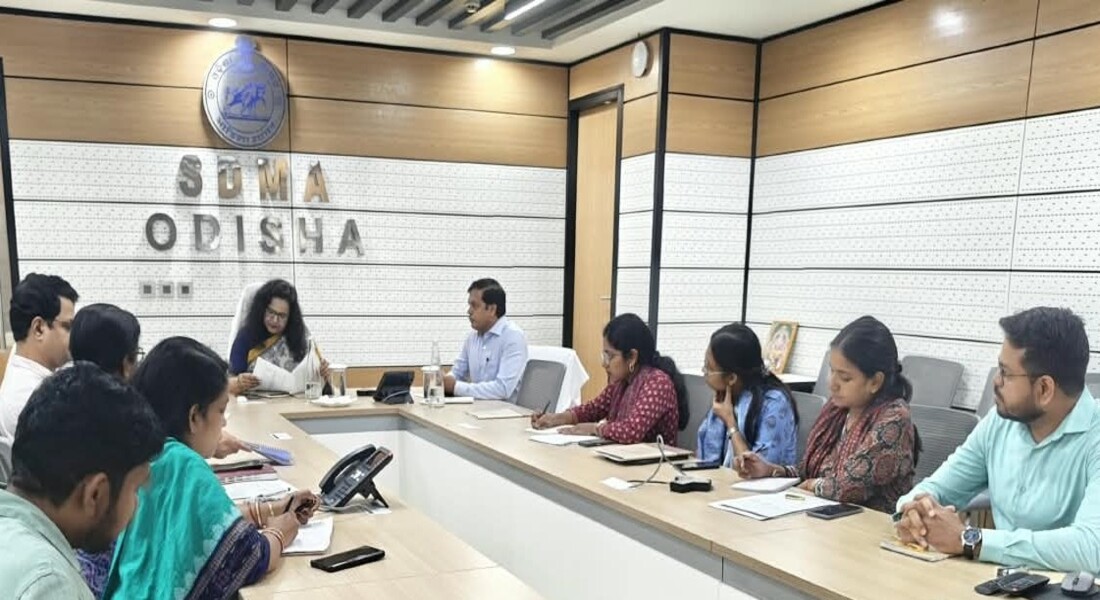
Bhubaneswar: Odisha Chief Secretary Anu Garg on Wednesday reviewed the impact of Cyclone Arnab, the state’s preparedness to deal with the situation, and ongoing repair and restoration work following the cyclone.

The review meeting was held at the office of the Special Relief Commissioner (SRC), where SRC Rajesh Prabhakar Patil briefed the Chief Secretary on the prevailing situation, precautionary measures and emergency arrangements.

According to Patil, the government has intensified its response with a focus on preventing loss of life.

The meeting also assessed preparations made ahead of the cyclone and the steps being taken to address the impact of continuous rainfall.

The state government has taken necessary measures to deal with the possible damage caused by the cyclone and the associated rainfall. Disaster mitigation efforts are being carried out with the prevention of casualties as the highest priority, following direct reviews by Chief Minister Mohan Charan Majhi and Revenue and Disaster Management Minister Suresh Pujari.

As part of the response, authorities have stepped up evacuation arrangements, emergency services and the deployment of disaster management personnel across the affected areas.

A total of 31,255 people have been evacuated from eight affected districts and accommodated in 324 active shelters. The government has also kept 2,067 shelters ready across Odisha to meet any further evacuation requirements. These include 141 permanent shelters and 1,926 temporary facilities.

District administrations have been directed to maintain round-the-clock vigilance as the situation continues to be monitored. All district control rooms are functioning 24 hours a day, while the leave of government employees has been cancelled to ensure their availability for emergency duties.

Schools and Anganwadi centres in the affected areas have also been ordered to remain closed as a precautionary measure.

The administration has paid particular attention to the safety of pregnant women. Of the 4,139 pregnant women identified in the affected areas, 2,245 have been shifted safely to nearby hospitals and health centres to ensure access to medical assistance during the adverse weather conditions.

Authorities have also taken steps to protect the fishing community. A total of 19,143 fishing boats have been brought safely ashore, including 11,955 boats from the sea and 7,188 from Chilika Lake.

Continuous rainfall associated with Cyclone Arnab has affected several parts of Odisha, with some blocks recording particularly heavy precipitation.

According to rainfall data recorded up to 8.30 am on Wednesday, the state received an average of 23.9 mm of rainfall during the preceding 24 hours. During the same period, 14 blocks and three urban areas recorded rainfall exceeding 100 mm.

Pattangi block in Koraput district recorded the highest rainfall at 188 mm, followed by Mohana in Gajapati district at 182.4 mm. Ganjam block received 161.4 mm, while Chhatrapur recorded 154.6 mm and Semiliguda in Koraput district received 143.1 mm.

At the district level, Gajapati recorded the highest average rainfall at 121.2 mm. Ganjam followed with 83.1 mm, while Koraput received an average of 61 mm and Puri recorded 54.2 mm.

The rainfall figures underline the need for continued monitoring of vulnerable areas and the maintenance of emergency response arrangements as the state deals with the effects of the cyclone.

To strengthen disaster response operations, Odisha has deployed 62 teams of the Odisha Disaster Rapid Action Force (ODRAF), nine National Disaster Response Force (NDRF) teams and 244 Fire Service teams across the state.

The government has also mobilised equipment and resources required for emergency operations, including 1,510 power chain saws, 225 towing tenders, 110 boats, 135 water drainage pumps and 225 tower lights.

These resources are intended to support response and restoration activities, including emergency access, water drainage and other essential operations in affected areas.

The availability of boats and drainage pumps is particularly important for areas experiencing heavy rainfall, while power chain saws and other equipment can support field operations where fallen trees and obstructions require clearance.

The government has also sanctioned Rs 19 crore in relief assistance for the eight cyclone-affected districts.

Ganjam district has received Rs 5 crore, while Gajapati, Malkangiri, Koraput, Rayagada, Nabarangpur, Kalahandi and Kandhamal have each been allocated Rs 2 crore.

The funds are intended to support relief measures in the affected districts as the administration responds to the situation.

The government has arranged adequate stocks of essential relief materials to meet immediate requirements in affected areas. These include chuda (flattened rice), jaggery, rice, biscuits and polythene sheets.

Anti-snake venom (ASV) has also been stocked as part of the emergency preparedness measures.

The availability of food supplies and other essential materials is a key component of relief arrangements for people moved to shelters and communities affected by the cyclone and heavy rainfall.

With district control rooms operating around the clock and government employees required to remain available for emergency duties, the administration is continuing to coordinate preparedness and response measures across the affected regions.

Union Cabinet approves 3% DA hike for central government employees and pensioners

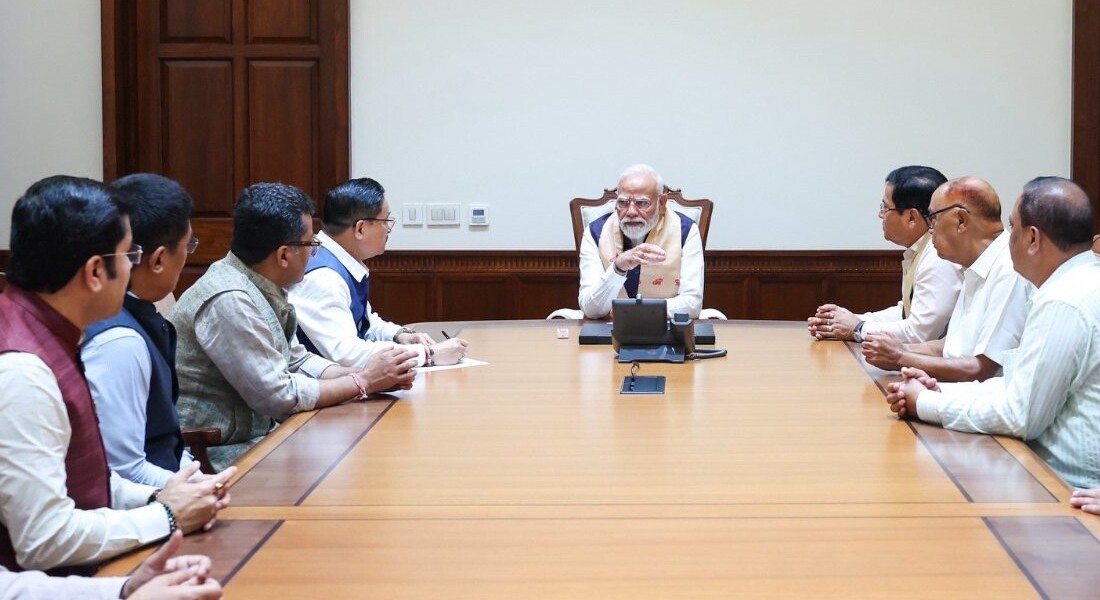
New Delhi: The Union Cabinet, chaired by Prime Minister Narendra Modi, on Wednesday approved a 3% increase in Dearness Allowance (DA) for central government employees and Dearness Relief (DR) for pensioners, along with three major initiatives covering rural governance, sports goods manufacturing and container production.

The decisions include the Pradhan Mantri Viksit Gram Swaraj Yojana (PM VGSY), the Khelo India Sports Goods Manufacturing Scheme and the Container Manufacturing Promotion Scheme (CMPS), according to an official statement.

The Cabinet approved an additional instalment of DA and DR with effect from July 1, 2026. The increase of 3 percentage points will raise the existing rates from 60% to 63% of basic pay or pension.

The increase is intended to compensate central government employees and pensioners for rising prices. It will benefit approximately 48.54 lakh central government employees and 68.71 lakh pensioners.

The combined annual impact on the government exchequer is estimated at Rs. 10,016.10 crore. The increase follows the accepted formula based on the recommendations of the Seventh Central Pay Commission.

The Union Cabinet also approved the PM VGSY, a Centrally Sponsored Scheme aimed at strengthening grassroots governance and improving rural development planning.

The scheme will be implemented from 2026–27 to 2030–31, in line with the period of the Sixteenth Finance Commission. It has a total outlay of Rs. 7,395.55 crore, comprising a central share of Rs. 4,869.48 crore and a state share of Rs. 2,526.07 crore.

Around 32 lakh elected representatives, Panchayat functionaries and other stakeholders across more than 2.55 lakh Panchayats and traditional local bodies are expected to benefit directly.

The scheme aims to help Gram Panchayats prepare comprehensive development plans by bringing together local priorities, government schemes and available resources. It will support the preparation of 2.55 lakh Gram Panchayat Development Plans annually through the eGramSwaraj portal.

The initiative will also strengthen the capacity of elected representatives, improve coordination between government departments and promote greater public participation in local development.

Each coordinated awareness-generation exercise is expected to reach at least one crore citizens. The scheme will also support the preparation of at least 2.55 lakh online audit plans annually through AuditOnline, with an emphasis on transparent accounting, public disclosure and improved revenue mobilisation by Panchayats.

The scheme will cover all states and Union Territories, including traditional rural local government institutions in areas where Panchayats do not exist. No permanent posts will be created under the scheme, although need-based contractual personnel may be engaged at state, district and block levels.

The Cabinet has approved the Khelo India Sports Goods Manufacturing Scheme with an outlay of Rs. 1,856.67 crore for the period from 2026 to 2033-34.

Announced in the Union Budget 2026-27, the scheme aims to strengthen India’s sports goods manufacturing sector by encouraging investment, improving production capacity, supporting innovation and expanding exports.

The initiative is aligned with Khelo Bharat Niti 2025, Make in India and Atmanirbhar Bharat. It is expected to attract domestic and international investment, generate employment and improve the competitiveness of Indian sports goods in global markets.

A key component is the development of dedicated Sports Goods Manufacturing Zones. These zones will bring manufacturers, suppliers, testing facilities, design and prototyping centres, and ancillary enterprises together to create integrated manufacturing ecosystems.

The zones are expected to be developed in coordination with existing industrial infrastructure under the BHAVYA Scheme and NICDC Industrial Parks.

The scheme will also provide support to attract major domestic and global manufacturers, brands and retail chains to establish production facilities. Its investment support and turnover-linked incentives are intended to encourage new manufacturing units, expand existing capacity and strengthen domestic supply chains.

A combined outlay of Rs. 1,130 crore has been earmarked for the Anchor Investment Support and Turnover Linked Support components. The scheme will also focus on upgrading existing sports goods manufacturing clusters, including common facilities and shared infrastructure, with particular attention to micro, small and medium enterprises.

The Union Cabinet has also approved the Container Manufacturing Promotion Scheme with a budgetary outlay of Rs. 10,000 crore up to the financial year 2039-40.

Announced in the Union Budget 2026-27, the scheme aims to establish a globally competitive container manufacturing ecosystem in India, reduce import dependence and strengthen supply-chain resilience.

It will support the establishment of new manufacturing facilities as well as the expansion of existing container production units.

The scheme has three major components. Interest Subvention Assistance has an allocation of Rs. 859 crore and will provide a 3% annual interest subsidy on eligible term loans for new manufacturing facilities and the expansion of existing capacity.

Operational Expenditure Assistance, with an allocation of Rs. 8,891 crore, will provide financial support for containers manufactured to global shipping standards and sold by eligible manufacturers. The assistance is intended to bridge the cost gap and improve the competitiveness of domestically produced containers.

Another Rs. 150 crore has been allocated for testing and certification assistance, including support for common facilities for specialised tests such as dynamic longitudinal impact testing.

The scheme aims to increase India’s annual container manufacturing capacity by around tenfold to 7.5 lakh twenty-foot equivalent units. It also seeks to position the country as a potential global export hub for quality shipping containers.

According to the scheme’s projections, the initiative could generate around 3,000 direct jobs and more than 50,000 indirect jobs. It is also expected to support related industries involved in manufacturing corner castings, specialised steel, wooden frames and paints.

Hockey: India thrash Bangladesh at Asian Champions Trophy

New Delhi: India thrashed Bangladesh 13-0 in their opening match of the 2026 Asian Champions Trophy at the Olympian Surjit Singh Hockey Stadium in Jalandhar on Tuesday.

Mandeep Singh led the scoring with three goals in the 3rd, 10th and 54th minutes. Captain Harmanpreet Singh, Dilpreet Singh and Hardik Singh each scored two goals, with Harmanpreet scoring in the 2nd and 44th minutes, Dilpreet in the 43rd and 44th, and Hardik in the 60th minute.

Shilanand Lakra, Abhishek, Nilakanta Sharma and Jugraj Singh also found the net in the 15th, 18th, 26th and 46th minutes, respectively, as the five-time champions produced a strong attacking display.

India, fresh from defending their men’s hockey title at the Asian Games earlier this month, will next take on the People’s Republic of China on Thursday.

Other results: Malaysia 5 (Abu Kamal Azrai 4, 14, Akhimullah Anuar 14, Faizal Saari 34ps, Azimuddin Kamaruddin 35pc) bt China 4 (Yaqi Wang 11, Moda Ne12, Benhai Chen 27pc, 44pc); Japan 3 (Kentaro Fukuda 14, Ryoma Ooka 36, Kazumasa Matsumoto 52) bt Korea 2 (Han Sangjun 15, Jeong Junseong 59)

Cyclone Arnab: Heavy rain batters Odisha as storm makes landfall in Andhra Pradesh

New Delhi: Heavy rainfall triggered by Cyclone Arnab has disrupted normal life across Odisha, with the India Meteorological Department (IMD) issuing a red warning for five southern districts as the storm continues its landfall along the Andhra Pradesh coast.

Ganjam, Gajapati, Koraput, Rayagada and Malkangiri are under a red warning for extremely heavy rainfall. An Orange Warning has been issued for nine adjoining districts, while the remaining 16 districts are under a yellow warning for heavy showers, according to reports.

South Odisha has borne the brunt of the weather system, with continuous downpours reported across coastal and interior areas over the past 24 hours. The persistent rainfall has raised concerns over disruption to normal activities, particularly in districts under the highest weather alert.

Jagatsinghpur recorded more than 50 mm of daytime rainfall, while Paralakhemundi received over 40 mm. Among other locations, Puri recorded 78.3 mm, Chhatrapur 61.4 mm, Gopalpur 50 mm, Baripada 45.2 mm, Daringbadi 34 mm and Paradip 33 mm.

Bhubaneswar recorded 24.2 mm of rainfall by 5.30 pm, with the total rising to more than 30 mm by late evening.

Meanwhile, Cyclone Arnab continued its landfall along the Andhra Pradesh coast on Wednesday, with its centre remaining close to the shoreline, according to the IMD. The northern spiral band of the very severe cyclonic storm had moved further inland, and the landfall process was expected to continue for another three hours.

The storm was positioned over the west-central Bay of Bengal, around 30 km east of Narsapur, 45 km south-southwest of Yanam and 70 km south-southwest of Kakinada. It was expected to move northwestwards and cross the Andhra Pradesh and Yanam coasts between Bapatla and Visakhapatnam, close to the south of Yanam.

The IMD warned that the system could produce sustained winds of up to 135 kmph, with gusts reaching 150 kmph, during the following three hours.

Heavy rain and strong winds affected parts of Anakapalli, Visakhapatnam, Kakinada and Konaseema districts in Andhra Pradesh, where officials also reported trees falling at several locations.

In Kakinada district, police rescued four people stranded near the Bombay Katta area after heavy rain and seawater flooded the surroundings. Three other people were reported stranded at the CWC godowns in Kakinada Anchorage Port, where flooding and a power cut prevented them from leaving the premises.

Police urged residents to avoid unnecessary travel and stay away from flooded areas. People requiring emergency assistance were advised to call Dial 112 or the Kakinada Police Control Room.

With heavy rainfall continuing across Odisha under the influence of the cyclone, the weather warnings remain particularly significant for the state’s southern districts. The IMD’s alerts cover a wide area, with five districts under Red Warning, nine under Orange Warning, and the remaining 16 under Yellow Warning.