At IndiaVerve, we go beyond the noise to bring you meaningful stories of change, resilience and progress—from India to the world stage. Our mission is to bring readers credible, wide-ranging coverage across politics, business, sports, culture, society and more.

380 Artisans, 218 Stalls: MRUTTIKA-2026 celebrates Odisha’s pottery heritage

Bhubaneswar: Odisha’s rich terracotta and pottery traditions are in the spotlight as the annual state-level exhibition MRUTTIKA-2026 opened at IDCO Exhibition Ground in Bhubaneswar on Saturday. The week-long exhibition brings together around 380 artisans from 26 districts, offering them an opportunity to showcase their creations and connect with buyers ahead of the festive season.

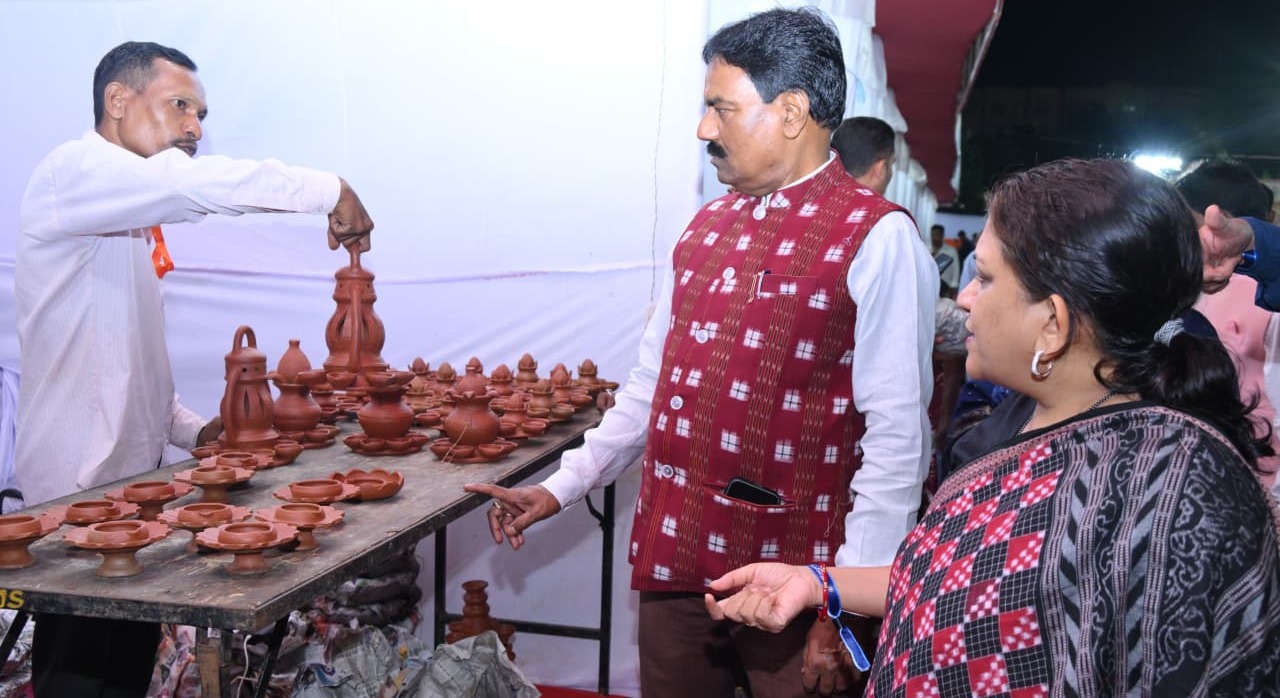
Inaugurating the exhibition, Minister for Handlooms, Textiles and Handicrafts Pradip Bal Samanta said: “We are committed to the growth and prosperity of the Terracotta and Pottery Crafts.” He described these crafts as an important part of Odisha’s traditional handicraft heritage.

To support participating artisans, the state government has provided free stalls and assistance towards travel expenses, daily allowances and transportation of their products.

Organised by the Department of Handlooms, Textiles and Handicrafts ahead of Diwali, the exhibition will continue until November 6. A total of 218 stalls have been set up, with visitors welcome daily from 11 AM to 9 PM. The organisers expect business transactions to cross Rs 3 crore during the event.

Beyond providing a platform to display traditional pottery and terracotta products, MRUTTIKA aims to help artisans expand their market reach and improve their earnings. A special theme pavilion has also been created to showcase the journey and heritage of terracotta crafts. Cultural programmes will be held every evening to make the exhibition more attractive for visitors.

Speaking at the inaugural event, Department Commissioner-cum-Secretary Guha Poonam Tapas Kumar highlighted the exhibition’s role in bringing artisans and their products together under one roof. She said the initiative aims to provide better market opportunities and support the commercial growth of traditional crafts.

During their visit to the stalls, the Minister and the Secretary interacted with artisans, enquired about their well-being and discussed their experiences in the handicraft business.

Terracotta and pottery remain important sources of livelihood in Odisha, supporting more than 44,000 artisans across the state. Among the 64 handicrafts recognised by the state government, these traditional crafts hold a significant place in Odisha’s cultural and artistic identity.

With hundreds of artisans, a wide range of handcrafted products and an expected business turnover of over ₹3 crore, MRUTTIKA-2026 offers an opportunity to celebrate Odisha’s craft heritage while strengthening the livelihoods of the people who keep these traditions alive.

The exhibition will remain open to the public until November 6, from 11 AM to 9 PM, at IDCO Exhibition Ground, Bhubaneswar.

World Stroke Day: Know the warning signs and act fast to save a life

A stroke can strike without warning, turning an ordinary moment into a medical emergency. A person may suddenly develop slurred speech, facial drooping, weakness in one arm or difficulty walking. Recognising these symptoms and getting medical help quickly can make a life-changing difference.

Observed on October 29 every year, World Stroke Day highlights the importance of stroke awareness, early detection and timely treatment.

A stroke occurs when blood supply to part of the brain is blocked or a blood vessel ruptures, damaging brain cells. Families can remember the warning signs through the simple BE FAST approach:

B – Balance: Sudden dizziness, loss of balance or difficulty walking.

E – Eyes: Sudden blurred or double vision or loss of sight.

F – Face: Drooping or numbness on one side of the face.

A – Arms: Sudden weakness or numbness in one arm.

S – Speech: Slurred speech or difficulty speaking or understanding others.

T – Time: Call emergency services immediately.

Even one of these symptoms warrants urgent medical attention. Do not wait for symptoms to improve or try home remedies.

What to do in the first few minutes

The first step is to call an ambulance. Note the exact time symptoms began or, if the person wakes up with symptoms, when they were last known to be well. This information helps doctors decide which treatments may be suitable.

While waiting for help, keep the person comfortable and safe. Avoid unnecessary movement and monitor their breathing and responsiveness. If they become unconscious but are breathing normally, place them on their side if safe. If they are not breathing normally, follow the emergency operator’s instructions for CPR.

Do not give food, water or oral medicines. A stroke can affect swallowing and cause choking. Avoid giving aspirin, blood thinners or additional blood-pressure medicines unless directed by a medical professional, as a stroke may involve either a blocked blood vessel or bleeding in the brain.

Help doctors make faster decisions

Family members can prepare information about the patient’s regular medicines, existing conditions such as diabetes and high blood pressure, and any history of previous strokes.

Even if symptoms disappear, hospital assessment remains essential. Temporary symptoms may indicate a transient ischaemic attack (TIA), commonly called a mini-stroke, which can warn of a major stroke.

Why every minute matters

Quick recognition, an immediate emergency call and safe handling can reduce delays in treatment. This World Stroke Day, remember: know the warning signs, act without delay and help save a life.

Omar Abdullah marries journalist Nidhi Razdan, begins a new chapter

Srinagar/New Delhi: Jammu and Kashmir Chief Minister Omar Abdullah has married senior journalist Nidhi Razdan. The couple announced their wedding through social media posts on Saturday.

According to reports, the marriage was solemnised under the Special Marriage Act in New Delhi on Friday, October 30, in the presence of close family members. Wedding celebrations were also held in Srinagar, attended by relatives from both sides.

The wedding comes nearly three months after the Supreme Court dissolved Abdullah’s 32-year marriage with his estranged wife, Payal Abdullah, by mutual consent. The couple, who married in England in 1994, have two sons and had been living separately since 2011. In its July 31 order, the court invoked Article 142 of the Constitution, noting that there was no possibility of reconciliation.

This is Razdan’s second marriage. She was previously married to journalist and writer Neelesh Misra. A prominent television journalist, she was associated with NDTV, where she anchored popular programmes such as Left, Right & Centre and The Big Fight. She has extensively covered Indian politics, international affairs and Jammu and Kashmir.

Abdullah, 56, became Chief Minister for the second time in October 2024 after the National Conference-led alliance won the Jammu and Kashmir Assembly elections. He had earlier held the post from 2009 to 2014, when the region was a state.

The marriage marks a new chapter in the personal life of the National Conference leader, who currently heads the elected government in Jammu and Kashmir.

Cyclone Arnab: Odisha steps up flood damage assessment

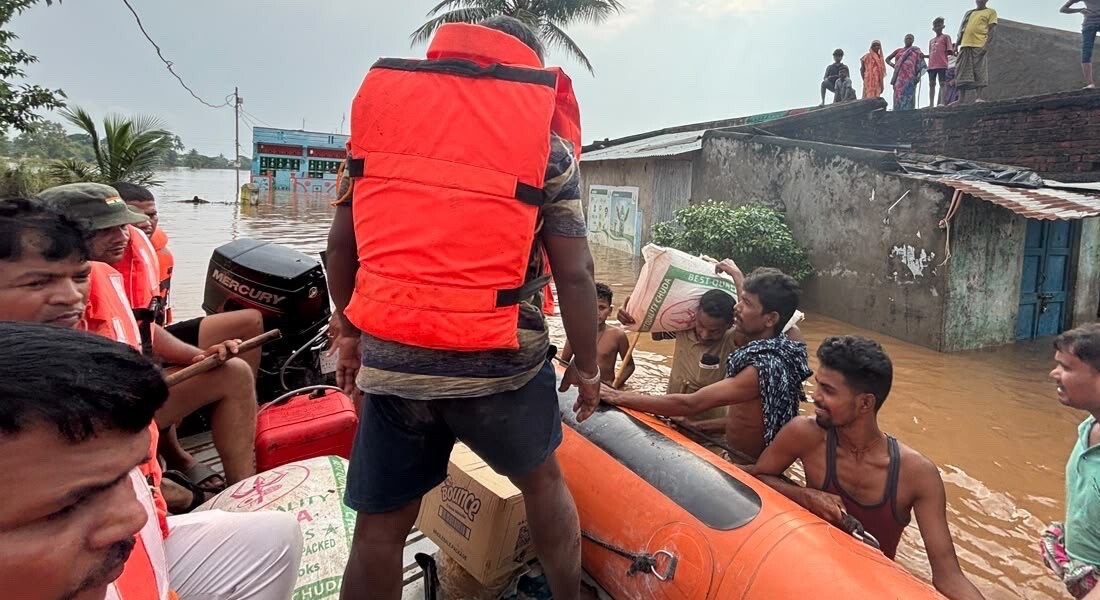
Bhubaneswar: Odisha has intensified flood damage assessment, infrastructure restoration, and rescue operations in Ganjam district following the impact of Cyclone Arnab.

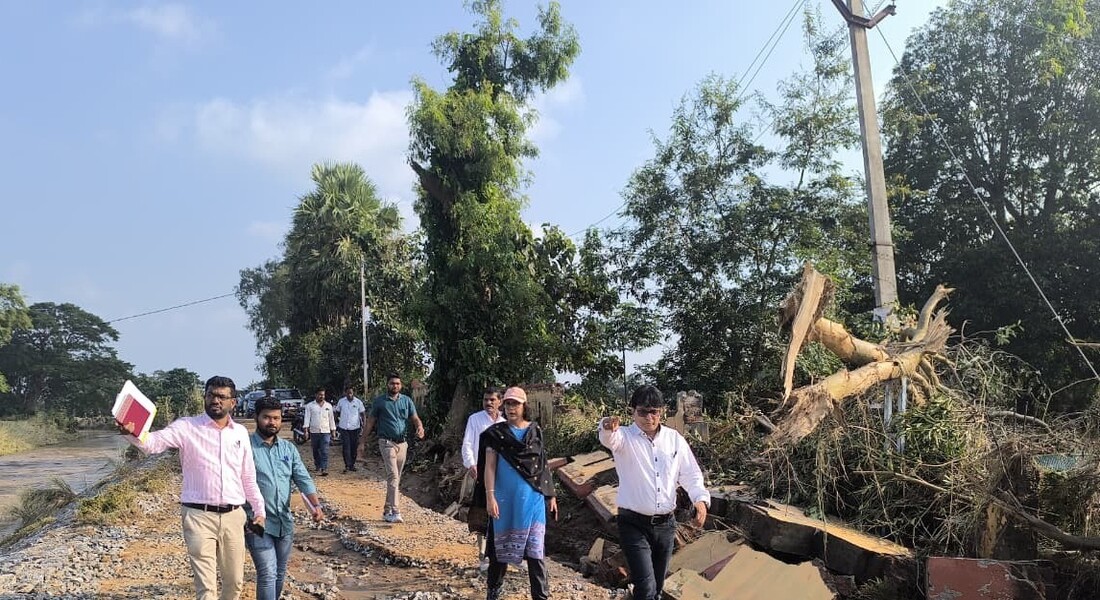
Principal Secretary of the Water Resources Department Shubha Sarma visited the Rushikulya River gauge site at Purushottampur along with Engineer-in-Chief Dillip Kumar Rout to assess the river situation and inspect damage to flood protection infrastructure.

The river water level at the Purushottampur gauge site stood at 15.835 metres RL during the inspection, just below the prescribed warning level.

The team also inspected a washed-away section of the Rushikulya Flood Bank and the head reach of the Main Canal at Hiradharabati Anicut near Hanumanpali. Other severely affected locations included Hiradharabati Anicut, Janhibili Anicut, the main canals and a drinking water intake point.

During the visit, Sarma interacted with local residents to understand their concerns over the flood situation and damage to local infrastructure. Departmental officers were directed to carry out an accurate assessment of the embankment breach and submit reports supported by geo-tagged photographs.

The officials were also asked to expedite preparation of the Detailed Project Report and initiate the tendering process for restoring the damaged flood bank.

The field inspection was attended by the Chief Engineer, Drainage, senior departmental officials and engineering staff. The assessment is intended to establish the extent of damage and facilitate restoration planning for the affected flood protection infrastructure.

Telecom services gradually returning

Meanwhile, efforts to restore mobile connectivity across Ganjam district are continuing, with BSNL, Airtel and Jio bringing services back in several areas affected by the cyclone.

According to the district administration’s update issued at 5 pm on Saturday, BSNL services had been restored in 21 of the 23 blocks, including Berhampur. The network remained unavailable in Dharakote and Sheragada.

Airtel had restored connectivity in 16 blocks, while Jio services were operational in 15 blocks.

Airtel restoration work was pending in Dharakote, Digapahandi, Hinjilicut, Kabisuryanagar, Patrapur, Purushottampur and Sheragada.

Jio services were yet to be restored in Bhanjanagar, Hinjilicut, Kabisuryanagar, Patrapur, Purushottampur, Sheragada, Polasara and Sanakhemundi.

Restoration teams are working in the affected areas, with the administration expecting services in the remaining locations to resume at the earliest.

Relief operations continue in Aska

In Aska, relief and restoration arrangements have been strengthened, with improvements reported in traffic management and the distribution of essential supplies.

The administration has moved parked heavy vehicles to clear space for relief operations. Around 20 autos and 10 tractors have been engaged in distributing essential supplies to affected areas.

Most buses have also been moved, while efforts are continuing to clear the remaining vehicles.

Drinking water distribution has been stepped up. Ten tankers and around 30,000 bottles of drinking water had been distributed by the evening of Saturday. The administration plans to increase the number of water tankers to 30–35 from the following morning.

Additional lights have been installed across Aska town to support relief activities, while fuel has been kept on standby with the local Minor Irrigation authorities.

Cooked food is being distributed throughout the day to meet the needs of affected residents. Meanwhile, TPSODL has assured the administration that electricity supply will be restored by the following morning.

The administration expects the overall situation in Aska to improve further as drinking water distribution, food supplies and restoration work continue.

Advanced equipment is being deployed to locate missing persons

Rescue efforts are also continuing in the landslide-affected area of Gidipabali in G. Udayagiri, where teams are trying to locate missing persons in Ganjam district’s border region adjoining Kandhamal.

An Indian Navy helicopter carried three specialised search equipment units to G. Udayagiri to assist the operation. These included a seismic life-detection unit, a vibration-detection unit and a victim location camera.

However, the helicopter could not descend at the location due to adverse weather conditions. The equipment is being transported by road and is expected to be positioned for use in the early hours of November 1.

Heavy rainfall at the landslide site has made rescue operations particularly difficult, with challenging weather and access conditions hampering efforts to reach the affected location.

Teams from the National Disaster Response Force (NDRF), Odisha Disaster Rapid Action Force (ODRAF) and Odisha Fire Service are engaged in the operation. Teams from Indian Railways are also expected to join the rescue effort.

Authorities are consulting experts and making efforts to advance the search operation despite the difficult terrain, persistent rainfall and challenges in reaching the site.

Fire service team rescues 10 people trapped in canal

In a separate rescue operation, a Rourkela Fire Service team rescued 10 people trapped in a canal amid strong water currents at Tadama under Bhanjanagar police station limits.

The fire service personnel were proceeding towards the landslide-affected area of Gidipabali when they noticed the group stranded in the middle of the canal.

The 10 people had initially been evacuated from their homes to a safer location due to flooding. However, they later returned to collect their belongings and became trapped as the water current intensified.

Recognising the danger, the fire service team immediately launched a rescue operation under the leadership of Assistant Station Officer Pradeep Kumar Nayak.

All 10 people were safely rescued through coordinated efforts and shifted to a secure location.

The rescue came as emergency services continued to respond to multiple challenges arising from the cyclone, including flooding, damaged infrastructure, disrupted communication networks, and landslides across affected areas of the district.

Odisha student tops National Science Seminar 2026

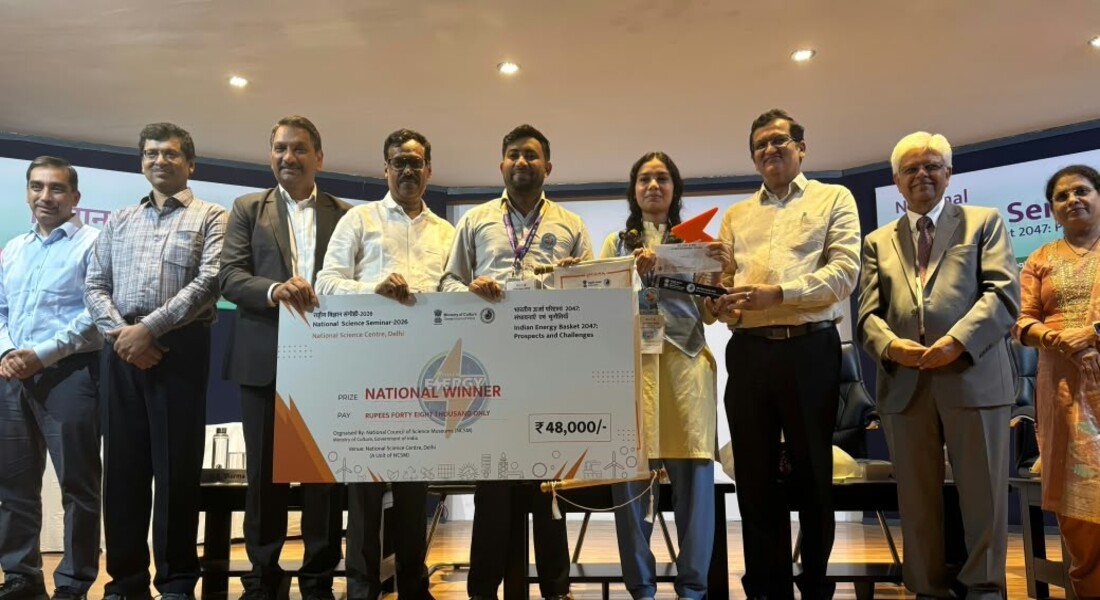
Bhubaneswar: Soumyashree Thanapati, a Class X student of Odisha Adarsha Vidyalaya (OAV), Jharmunda in Loisingha block of Balangir district, has secured first position at the National Science Seminar 2026 held in New Delhi.

Organised by the National Council of Science Museums under the Ministry of Culture, the national-level competition was held at the National Science Centre in the national capital.

Soumyashree emerged at the top after competing with students from across the country. She impressed the jury with her presentation on the theme, “Indian Energy Basket 2047: Prospects and Challenges”.

Her achievement has brought recognition to Odisha, with the state securing the national-level first position in the competition after a gap of 13 years.

Her success has been attributed to the guidance and support extended by the Odisha Adarsha Vidyalaya Sangathan, the principal and teachers of OAV Jharmunda, the Balangir district administration, and the Regional Science Centre, Odisha.

The contribution of her science teacher, mentor, and parents has also been acknowledged in her journey to the national-level achievement.

OAVS congratulated Soumyashree on her accomplishment and wished her success in her future endeavours.

Odisha celebrates Rashtriya Ekta Diwas at Kalinga Stadium

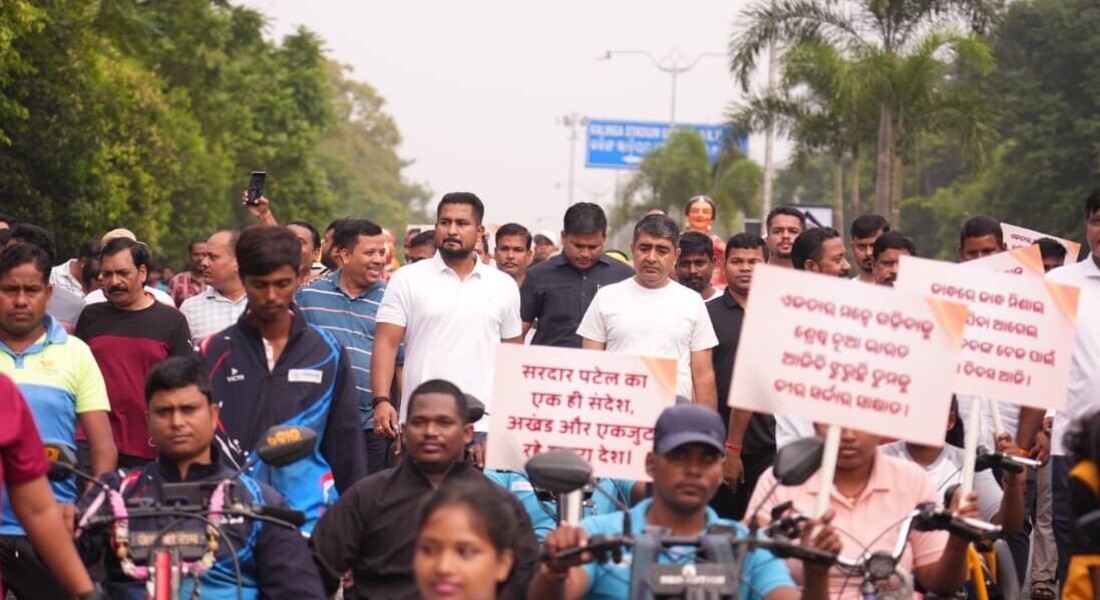
Bhubaneswar: The Sports and Youth Services Department celebrated Rashtriya Ekta Diwas at Kalinga Stadium on Saturday to mark the birth anniversary of Sardar Vallabhbhai Patel, with Sports and Youth Services Minister Suryabanshi Suraj attending the programme as the chief guest.

The Minister paid floral tributes to the statue of Sardar Vallabhbhai Patel and recalled his contribution to strengthening the unity and integrity of the nation.

Addressing the gathering, Suraj said Rashtriya Ekta Diwas and the Unity March are organised every year to commemorate Patel’s birth anniversary. He urged people to draw inspiration from the leader’s ideals and work together to uphold national unity and contribute to the country’s development.

Referring to the leadership of Prime Minister Narendra Modi and Odisha Chief Minister Mohan Charan Majhi, the Minister called upon people to contribute towards realising the vision of Viksit Odisha 2036 and Viksit Bharat 2047. He also stressed the importance of strengthening the spirit of ‘Ek Bharat Shreshtha Bharat’.

On the occasion, Suraj administered the Rashtriya Ekta Diwas pledge to participants. A Unity March was also organised, drawing participation from sportspersons, volunteers, students and social workers.

Commissioner-cum-Secretary, Sports and Youth Services Department, Bhupendra Singh Poonia, former MLA and social worker Priyadarshi Mishra, social worker and politician Golak Mohapatra, Jagannath Pradhan, Sudipta Ray and senior officials of the Sports and Youth Services Department were present at the event

ISRO successfully launches NVS-03 satellite

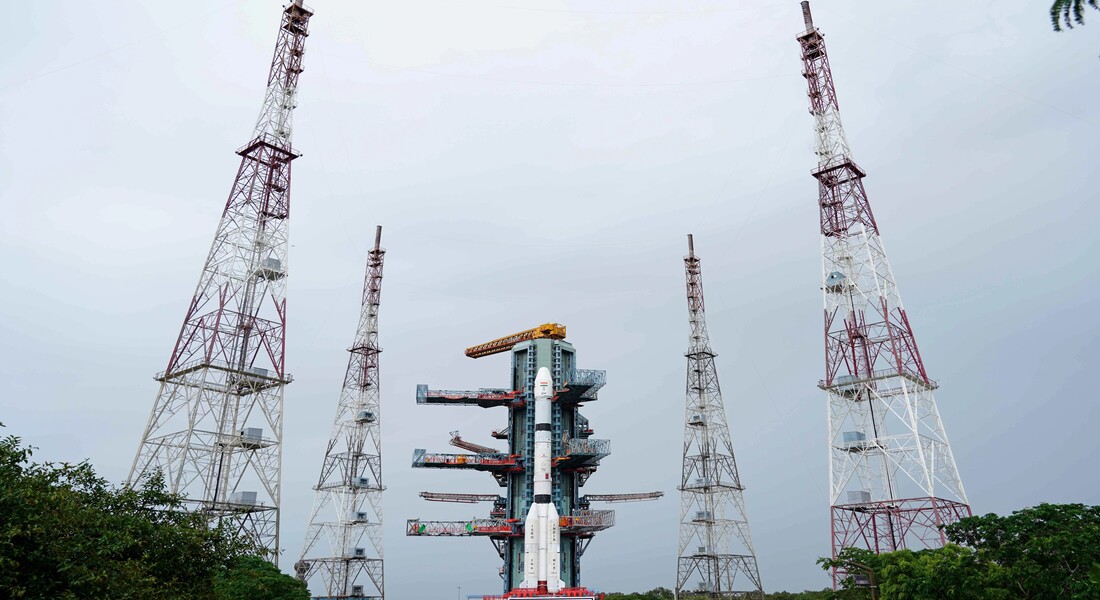
New Delhi: The Indian Space Research Organisation (ISRO) on Friday night successfully launched its next-generation navigation satellite NVS-03 aboard the GSLV-F18 rocket, placing it into a Geosynchronous Transfer Orbit and marking another milestone in India’s indigenous satellite navigation programme.

The 2,250-kg satellite was launched from the Second Launch Pad at the Satish Dhawan Space Centre, Sriharikota, Andhra Pradesh. The mission marks the 20th flight of India’s Geosynchronous Satellite Launch Vehicle.

NVS-03 is the third satellite in the next-generation navigation satellite series designed to ensure continuity of services provided by the Indian Regional Navigation Satellite System, also known as NavIC.

The satellite carries an indigenous atomic clock alongside procured atomic clocks, an important feature for precise satellite-based navigation. It also introduces the L1 signal band in addition to the existing L5 and S bands, expanding the system’s navigation capabilities.

NVS-03 is designed to provide coverage across India’s landmass and an area extending 1,500 km beyond the country’s geopolitical boundaries. Its enhanced navigation capabilities are expected to support various civilian applications.

The successful deployment of NVS-03 is significant for India’s NavIC programme, as it restores the navigation system to a minimum operational configuration of four satellites, strengthening the continuity of positioning services.

Prime Minister Narendra Modi congratulated ISRO scientists and engineers on the successful launch of GSLV-F18 carrying NVS-03.

Meanwhile, Prime Minister Narendra Modi congratulated ISRO scientists and engineers on the successful launch of GSLV-F18 carrying NVS-03.

In a post on X, he said: “This mission marks an important step in strengthening NavIC, our indigenous satellite navigation system. Equipped with enhanced capabilities, NVS-03 will further our pursuit of self-reliance in critical technologies and support navigation services that benefit our people. The dedication and ingenuity of our space scientists continue to make our nation proud.”

Relief operations intensified in cyclone-hit Aska

Bhubaneswar: Relief and restoration efforts have gained momentum in cyclone-affected Aska in Ganjam district, with the administration stepping up the distribution of essential supplies and taking measures to ease traffic congestion and restore basic services.

The situation in the town is gradually improving through coordinated efforts by the district administration, Collector and District Magistrate Keerthi Vasan V said.

Traffic movement has improved after parked heavy vehicles were shifted to clear space for relief operations. Around 20 autos and 10 tractors have been engaged in distributing essential supplies since the previous evening.

Most buses have also been moved, while efforts are underway to clear the remaining vehicles.

Drinking water distribution has been expanded to meet the needs of residents. Ten water tankers and around 30,000 bottles of drinking water had been distributed by the evening of October 30. The administration is preparing to increase the number of tankers to 30–35 on October 31 to strengthen the supply.

Additional lighting arrangements have also been made across Aska town, with new lights brought in and installed to support relief and restoration activities. The administration is ensuring the distribution of cooked food throughout the day to assist affected residents.

Meanwhile, TPSODL has assured the district administration that electricity supply will be restored soon.

Chief Secretary Anu Garg is closely monitoring the relief and restoration operations in coordination with the Ganjam Collector to ensure that the measures are implemented effectively.

The district administration has decided to continue relief and support arrangements for at least one week or until normalcy is fully restored. With improvements in traffic management, drinking water distribution, food supplies, and restoration work, the administration expects conditions in Aska to improve further.