
A stroke can strike without warning, turning an ordinary moment into a medical emergency. A person may suddenly develop slurred speech, facial drooping, weakness in one arm or difficulty walking. Recognising these symptoms and getting medical help quickly can make a life-changing difference.
Observed on October 29 every year, World Stroke Day highlights the importance of stroke awareness, early detection and timely treatment.
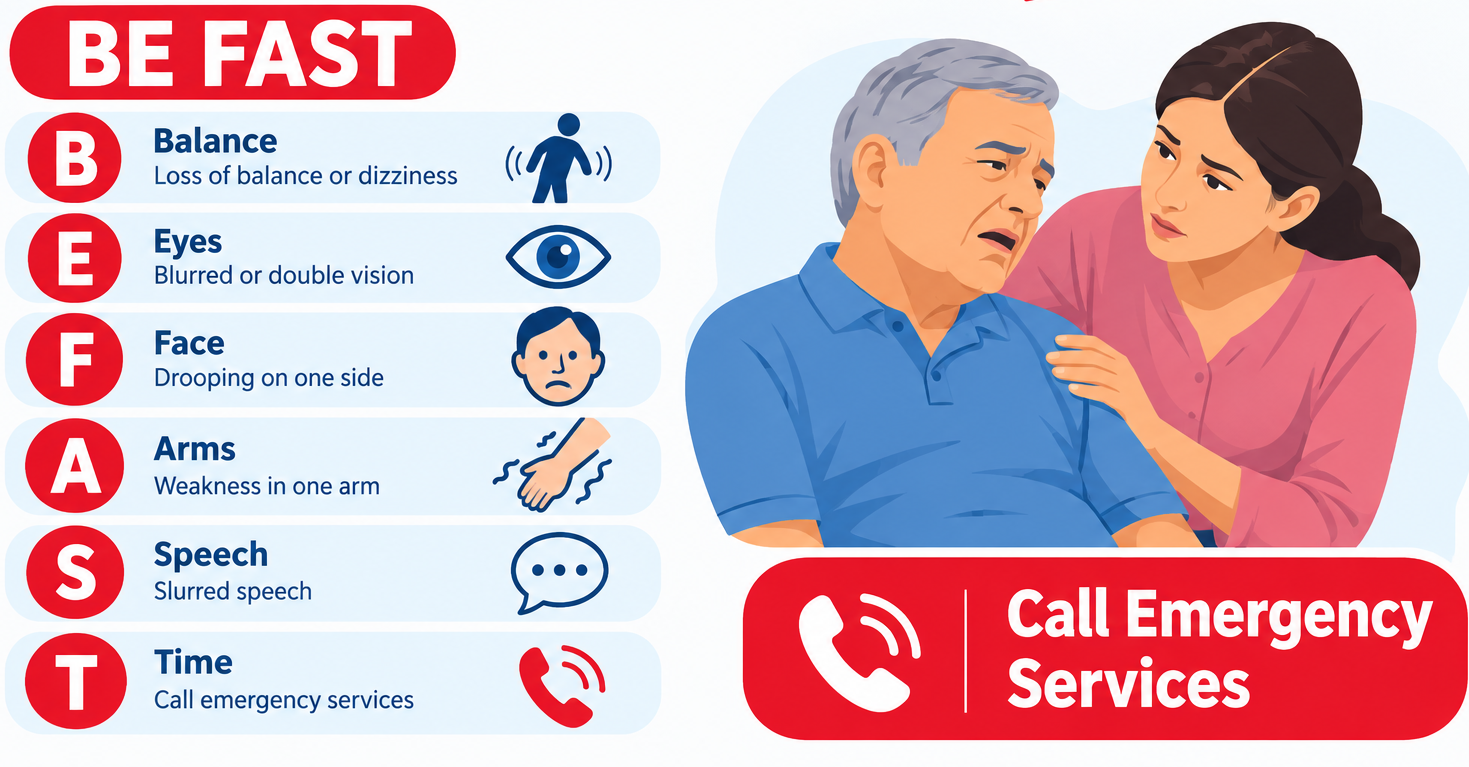
A stroke occurs when blood supply to part of the brain is blocked or a blood vessel ruptures, damaging brain cells. Families can remember the warning signs through the simple BE FAST approach:
B – Balance: Sudden dizziness, loss of balance or difficulty walking.
E – Eyes: Sudden blurred or double vision or loss of sight.
F – Face: Drooping or numbness on one side of the face.
A – Arms: Sudden weakness or numbness in one arm.
S – Speech: Slurred speech or difficulty speaking or understanding others.
T – Time: Call emergency services immediately.
Even one of these symptoms warrants urgent medical attention. Do not wait for symptoms to improve or try home remedies.
What to do in the first few minutes
The first step is to call an ambulance. Note the exact time symptoms began or, if the person wakes up with symptoms, when they were last known to be well. This information helps doctors decide which treatments may be suitable.
While waiting for help, keep the person comfortable and safe. Avoid unnecessary movement and monitor their breathing and responsiveness. If they become unconscious but are breathing normally, place them on their side if safe. If they are not breathing normally, follow the emergency operator’s instructions for CPR.
Do not give food, water or oral medicines. A stroke can affect swallowing and cause choking. Avoid giving aspirin, blood thinners or additional blood-pressure medicines unless directed by a medical professional, as a stroke may involve either a blocked blood vessel or bleeding in the brain.
Help doctors make faster decisions
Family members can prepare information about the patient’s regular medicines, existing conditions such as diabetes and high blood pressure, and any history of previous strokes.
Even if symptoms disappear, hospital assessment remains essential. Temporary symptoms may indicate a transient ischaemic attack (TIA), commonly called a mini-stroke, which can warn of a major stroke.
Why every minute matters
Quick recognition, an immediate emergency call and safe handling can reduce delays in treatment. This World Stroke Day, remember: know the warning signs, act without delay and help save a life.