Severe cyclonic storm crosses coast near Ongole with winds up to 120 kmph; heavy rain damages crops and homes, while Odisha continues post-Arnab rehabilitation.
Cyclone Murasu made landfall on the south Andhra Pradesh coast near Ongole in Prakasam district in the early hours of Tuesday, bringing heavy rainfall and gale-force winds. At least two people have died in cyclone-related incidents, while thousands have been moved to relief centres as the storm advances inland and gradually weakens.
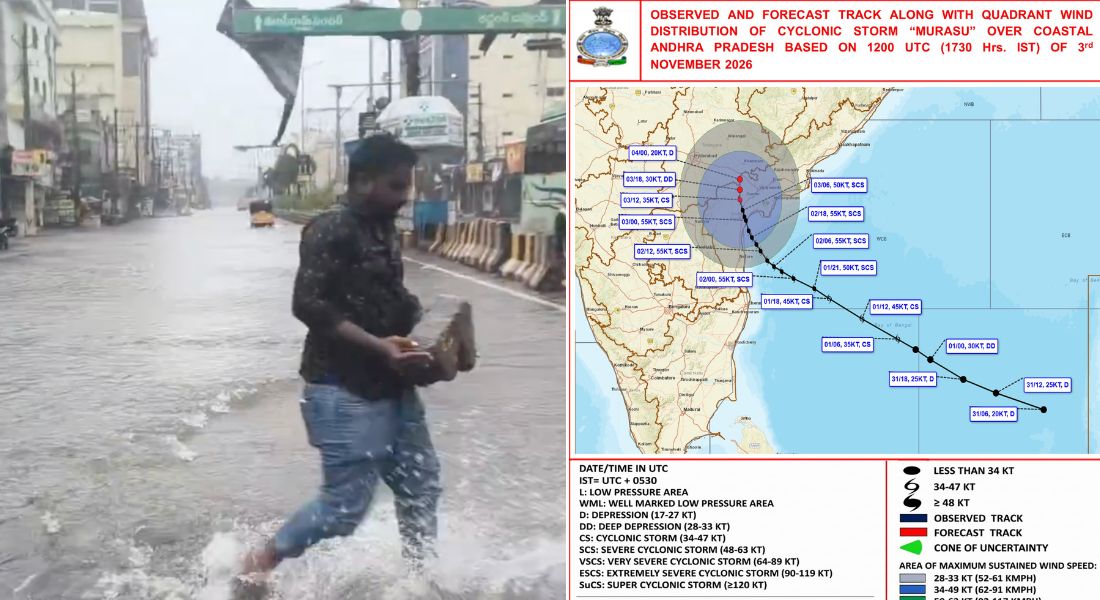
The India Meteorological Department (IMD) said the severe cyclonic storm crossed the coast between 3.30 am and 5.30 am on November 3, with wind speeds of 100–110 kmph and gusts reaching 120 kmph.
In its Tuesday evening bulletin, the IMD said the system was moving north-northwestwards and was expected to weaken into a deep depression by midnight, with wind speeds falling to 55–65 kmph and gusts up to 75 kmph. IMD Director General Mrutyunjay Mohapatra said the system was likely to weaken further on Wednesday and dissipate by November 5.
Two dead; crop damage across 52,459 hectares
The Andhra Pradesh State Disaster Management Authority (APSDMA) reported two deaths in incidents linked to the cyclone. Its Managing Director, Prakhar Jain, said 12,230 people were staying in rehabilitation centres in the affected districts.
A preliminary assessment has put the estimated financial loss at Rs 344 crore. Standing crops spread across 52,459 hectares have been damaged by heavy rainfall, while 312 houses have suffered damage, Jain said.
The state government is monitoring 814 minor irrigation tanks, of which 776 have been placed on high alert amid concerns over continued rainfall and rising water levels.
The IMD warned of heavy to very heavy rainfall, with isolated extremely heavy spells, across coastal Andhra Pradesh and Rayalaseema. A storm surge of around 1.5–2 metres above the astronomical tide was also forecast, posing a risk of inundation in low-lying coastal areas, particularly in Bapatla, Krishna and Prakasam districts.
Evacuations and transport disruption
Authorities had moved residents from vulnerable coastal and low-lying areas ahead of landfall. In Prakasam district alone, nearly 2,000 people were shifted to safer locations, District Collector P Raja Babu said, crediting advance preparations and coordination with the state government.
The National Disaster Response Force (NDRF) deployed 14 teams across Andhra Pradesh, including three moved from Tamil Nadu. Six districts were identified as likely to face the most significant impact, with NDRF personnel working alongside the State Disaster Response Force and local administration.
The cyclone disrupted transport, with dozens of flights cancelled across Chennai, Vijayawada, Visakhapatnam and Tirupati. Several trains were cancelled, diverted or rescheduled. South Coast Railway said services in the affected Vijayawada–Gudur section were gradually resuming as conditions improved.
The Andhra Pradesh government also cancelled the leave of Panchayat Raj and Rural Development department staff until the rainfall subsides. Deputy Chief Minister Pawan Kalyan reviewed preparedness and directed personnel to remain vigilant.
Odisha focuses on Arnab recovery
In neighbouring Odisha, the government said Cyclone Murasu had not caused any significant impact so far. However, disaster response arrangements remained on alert as the system moved inland through Andhra Pradesh towards Telangana.
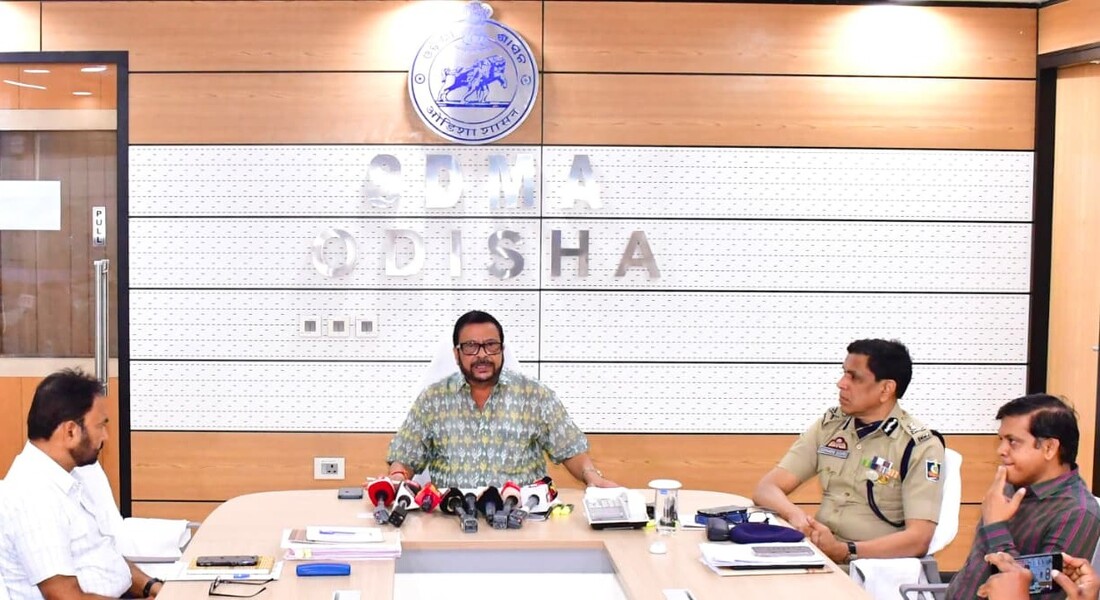
Revenue and Disaster Management Minister Suresh Pujari said Odisha had recorded average rainfall of around 2 mm in the 24 hours preceding Tuesday’s review. Puri received 12 mm, while Malkangiri, Koraput and Ganjam recorded 10 mm or less.
The state’s immediate priority remains relief and rehabilitation following Cyclone Arnab, which caused extensive damage in parts of southern Odisha and Andhra Pradesh last week. The government said 1,65,809 people had been evacuated from six Odisha districts — Ganjam, Kandhamal, Malkangiri, Koraput, Rayagada and Gajapati. A total of 592 permanent and temporary shelters were operational, while 169 rescue teams comprising ODRAF, NDRF and Fire Service personnel had been deployed.
Ganjam accounted for the largest number of evacuees, with 1,52,010 people moved to safer locations. Kandhamal recorded 6,269, Malkangiri 5,073, Koraput 1,101, Rayagada 736 and Gajapati 620.
Odisha accelerates damage assessment and restoration
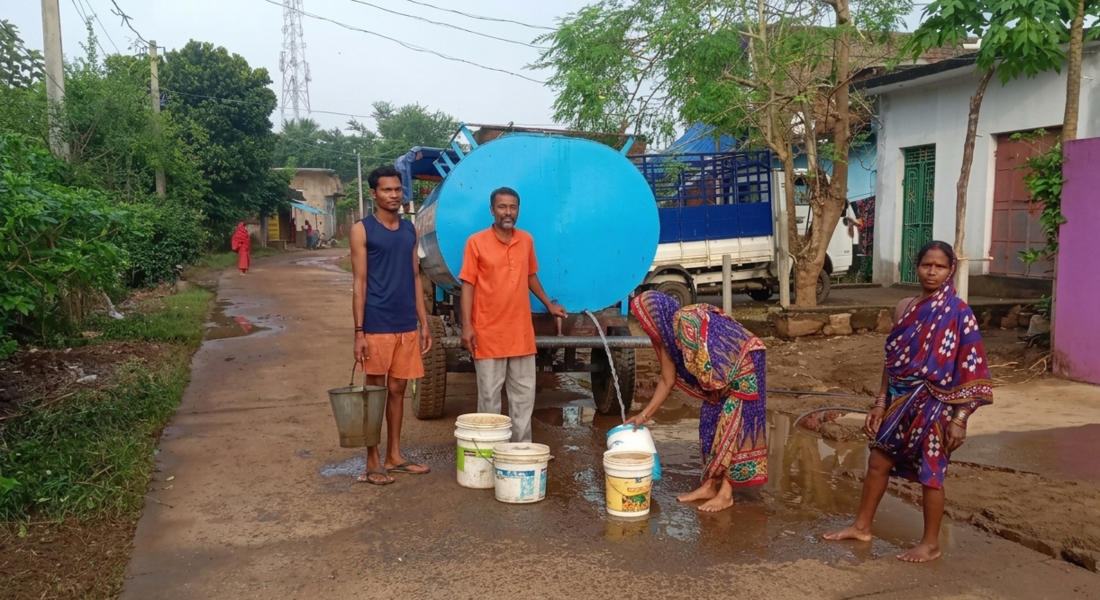
The Odisha government has stepped up damage assessments and infrastructure restoration following Cyclone Arnab. Chief Minister Mohan Charan Majhi has announced compensation for damage to houses, agricultural land and businesses, while departments responsible for rural development, roads, energy and water resources have been directed to expedite repairs.
Four IAS officers have been appointed as Additional Special Relief Commissioners to strengthen coordination and speed up assessments and compensation in Ganjam, Gajapati and Kandhamal. Ajit Kumar and Tejaswini Behera have been assigned to Ganjam, Pawan Kumar to Gajapati and Shiva Malavya to Kandhamal.
A Central government team visiting Odisha to assess Cyclone Arnab damage inspected Gajapati on Tuesday and is scheduled to visit Ganjam before returning to Bhubaneswar. District administrations have been asked to submit preliminary damage reports, followed by detailed assessments for submission to the Centre.
With Murasu weakening after crossing the Andhra coast, authorities remain focused on monitoring rainfall, restoring essential services and assisting people affected by the successive weather events.