At IndiaVerve, we go beyond the noise to bring you meaningful stories of change, resilience and progress—from India to the world stage. Our mission is to bring readers credible, wide-ranging coverage across politics, business, sports, culture, society and more.

US describes Ukraine peace talks in Abu Dhabi ‘very productive’

Trilateral discussions involving Ukraine, Russia and the United States will resume on Wednesday, but major differences over territory and post-war security arrangements remain unresolved.

The first day of trilateral peace talks between Ukraine, Russia and the United States concluded in Abu Dhabi on Tuesday, with Washington describing the discussions as “very productive”, even as the two sides remain divided over key territorial and security issues.

US Secretary of State Marco Rubio, who was not part of the negotiations, said the initial discussions had been encouraging. The four-hour meeting between senior officials from Kyiv and Moscow, facilitated by Washington, is scheduled to resume on Wednesday.

Expectations of an immediate breakthrough remain low. However, US officials have indicated that both Moscow and Kyiv have shown some private flexibility over the future of Ukraine’s eastern territories, although neither side has publicly shifted its position, BBC reported.

At the opening of the talks, US President Donald Trump’s son-in-law, Jared Kushner, told delegates that Washington had narrowed the differences between the two sides. He expressed hope that the discussions could lead towards a solution to end the war. Kushner and US special envoy Steve Witkoff also held separate meetings with Ukrainian, European and NATO officials on the sidelines.

The future of Donetsk, a largely Russian-occupied region in eastern Ukraine, remains one of the most contentious issues. Moscow wants Kyiv to surrender the parts of the region still under Ukrainian control, while Ukraine has proposed freezing the existing frontline to retain those territories, which it considers vital to its security.

US officials have suggested that progress on the territorial question will depend on agreement over a post-war security framework. For Kyiv, this could involve assurances that its allies would support it if Russia launches another attack. Moscow, meanwhile, has long sought restrictions on NATO’s presence and influence in Eastern Europe, a demand that has raised concerns among European countries.

Proposals under discussion reportedly include security consultations, crisis communication hotlines and reciprocal de-escalation measures. The possible reactivation of the NATO-Russia Council, largely inactive since 2022, has also been raised.

Russia has rejected calls for an unconditional ceasefire before substantive negotiations. Foreign Minister Sergei Lavrov said on Tuesday that a truce would give Ukraine an opportunity to regroup, adding that Moscow would not agree to such a proposal.

European governments, which have largely remained outside the main peace negotiations so far, are pressing for a greater role in discussions that could shape the continent’s future security. Rubio acknowledged during a visit to Paris that European countries would be part of finding a long-term solution, although a US official indicated that Moscow remained reluctant to engage with them.

The latest round follows earlier trilateral discussions in Geneva in February, which ended without an agreement. Subsequent developments, including the US-Israel conflict with Iran, diverted Washington’s attention from the Ukraine negotiations.

Trump has made ending the war a central foreign policy objective since returning to office, but previous rounds of diplomatic efforts have produced little progress. His increasingly conciliatory approach towards Moscow has also caused concern in Kyiv and across the European Union.

Following a meeting with Kremlin envoy Kirill Dmitriev in Washington last week, Trump spoke of a possible major agreement involving Europe.

However, scepticism remains strong in Ukraine. Ukrainian MP Oleksandr Merezhko, who heads the parliamentary committee on foreign affairs, told the BBC that he believed Trump was seeking a quick settlement at Ukraine’s expense, which Kyiv would reject. He argued that greater pressure through sanctions and military action against Russian targets was necessary to persuade President Vladimir Putin to negotiate seriously.

Meanwhile, Russian strikes on Ukrainian cities and energy infrastructure have continued, reinforcing concerns in Kyiv that Moscow is attempting to force it into accepting a settlement on Russian terms.

The Russian delegation in Abu Dhabi includes Kremlin aide Vladimir Medinsky, Deputy Foreign Ministers Sergei Ryabkov and Mikhail Galuzin, intelligence chief Igor Kostyukov and military official Yury Zhigarlovsky. Ukraine is represented by senior officials including Rustem Umerov, Kyrylo Budanov and MP Davyd Arakhamiya.

As the discussions prepare to resume, the immediate challenge remains bridging the differences over territory and security guarantees. Kushner has cautioned that the Abu Dhabi meetings may, at best, build momentum for the next phase of negotiations, describing the conflict as extraordinarily difficult and complicated.
Sonia Gandhi’s memoir revisits personal tragedies and India’s changing political landscape

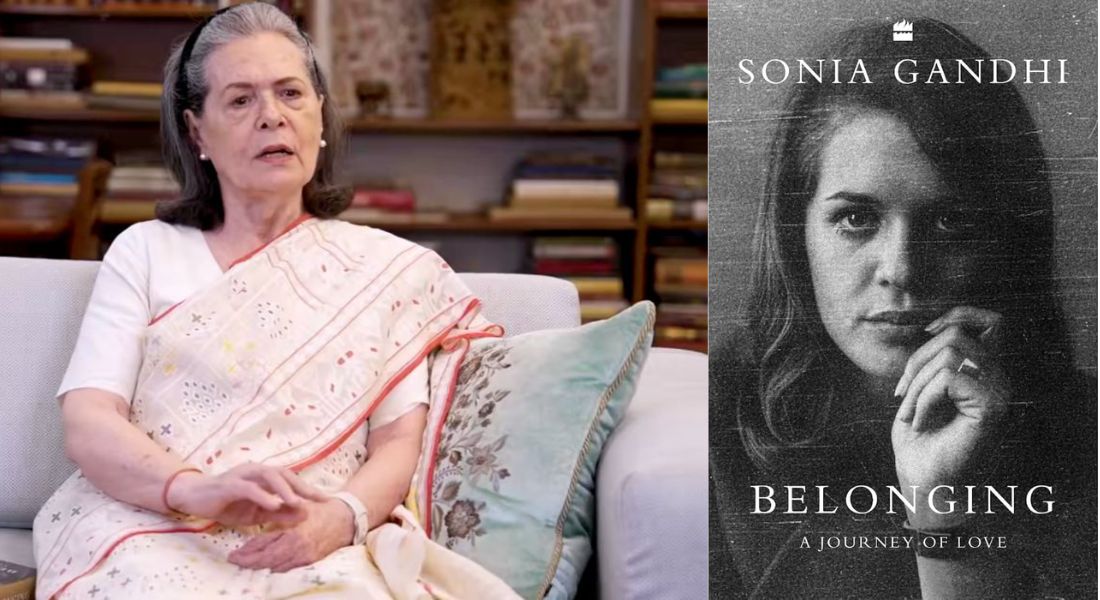
In Belonging: A Journey of Love, the former Congress president recounts family losses, her relationship with Indira Gandhi, and her increasingly strained interactions with Prime Minister Narendra Modi, drawing sharp reactions from the BJP and the Shiromani Akali Dal.

New Delhi: From the death of her first child and the assassinations of Indira and Rajiv Gandhi to her assessment of the changing relationship between political leaders and the media, Congress leader Sonia Gandhi’s memoir, Belonging: A Journey of Love, offers a deeply personal account of nearly six decades of life in India, interwoven with some of the country’s most consequential political developments.

The memoir traces Gandhi’s journey from a small town in Italy to the centre of Indian political life after her marriage to Rajiv Gandhi in 1968. While recounting private moments of grief and family life, she also revisits the Emergency, Operation Blue Star, the evolution of the Congress party and the growing ideological divide in contemporary Indian politics.

One of the most intimate revelations concerns the couple’s first child, a baby boy born prematurely on January 18, 1969, more than a year before Rahul Gandhi’s birth. Sonia recalls that the newborn appeared healthy and that she and Rajiv immediately developed an attachment to him. However, the child survived only a few hours. She writes that both parents were devastated by the loss and that Rajiv, despite his reserved upbringing, broke down and cried alongside her. Indira Gandhi, who was away on an official tour, reportedly cut short her visit and returned to comfort the couple.

The memoir also revisits the traumatic period surrounding Operation Blue Star in 1984. Sonia recounts that Indira Gandhi was deeply distressed after seeing images of the damage caused by the military operation at the Golden Temple complex in Amritsar. According to Sonia, tears rolled down her mother-in-law’s face as she looked at the images. She also recalls the discovery of grenades in a room of their residence following the operation, underscoring the atmosphere of insecurity surrounding the family.

The book addresses the Emergency imposed by Indira Gandhi in June 1975, during which civil liberties were curtailed, political opponents imprisoned and press freedom restricted. Sonia describes the decision as a mistake and writes that much of the damage could have been avoided had Indira exercised greater control over her younger son, Sanjay Gandhi. She believes her mother-in-law eventually recognised the consequences of the decision.

A significant part of the memoir is devoted to the changing nature of political relationships. Sonia says she has had practically no meaningful interaction with Prime Minister Narendra Modi despite his more than 12 years in office. Recalling encounters at official gatherings, she writes that the two exchange formal greetings but that Modi tends to look away and avoid eye contact. She contrasts this with an earlier political culture in which leaders across party lines maintained cordial relations. She also recalls calling former Prime Minister Atal Bihari Vajpayee after the 2001 Parliament attack to enquire about his safety.

Gandhi presents the political divide as fundamentally ideological, contrasting her vision of an inclusive, secular and socially just India with what she describes as Modi’s RSS-influenced understanding of the country. She also criticises the treatment of political opponents and argues that public discourse has become increasingly hostile.

The former Congress president raises concerns about the changing relationship between the media and the government, pointing to Modi’s absence from open, independent press conferences during his tenure. She argues that the opportunity for journalists to question prime ministers directly has diminished.

The memoir’s publication itself became contentious after Penguin Random House India withdrew from the project in August. Gandhi told The Guardian that the publisher was uncomfortable with criticism of the government and had dropped the book after she declined suggested edits. Penguin disputed this account, saying that the suggestion that its decision was linked to her refusal to make editorial changes did not accurately reflect the circumstances. The memoir is being published in India by HarperCollins, while Alfred A Knopf has released it in the United States.

The book has already drawn sharp political reactions. Shiromani Akali Dal spokesperson Arshdeep Singh Kler criticised Sonia’s account of Indira Gandhi’s distress over Operation Blue Star, arguing that expressions of anguish could not erase the suffering caused to the Sikh community. Speaking to media, he described the operation as an attack on the community and Sri Akal Takht Sahib, and invoked the 1984 anti-Sikh violence, demanding that Congress leaders acknowledge the suffering of victims and their families.

The BJP also questioned the memoir’s portrayal of the Congress legacy. Party spokesperson CR Kesavan called the book Whitewashing rather than Belonging, accusing Sonia Gandhi of attempting to soften the historical record of the Nehru-Gandhi family and the Congress. He particularly rejected what he described as an attempt to normalise the Emergency, citing the suspension of fundamental rights and press censorship. Kesavan also questioned her references to the Babri Masjid demolition and accused her of being selective in expressing concern over communal violence.

Through personal recollections and political assessments, Belonging presents Sonia Gandhi’s interpretation of India’s journey from the Congress-dominated decades of the post-Independence era to the present political landscape. Its revelations have reopened debates over the past, while its political observations have ensured that the memoir is being received as more than a personal account.

Odisha, Japan strengthen startup ties as Tottori delegation visits Bhubaneswar

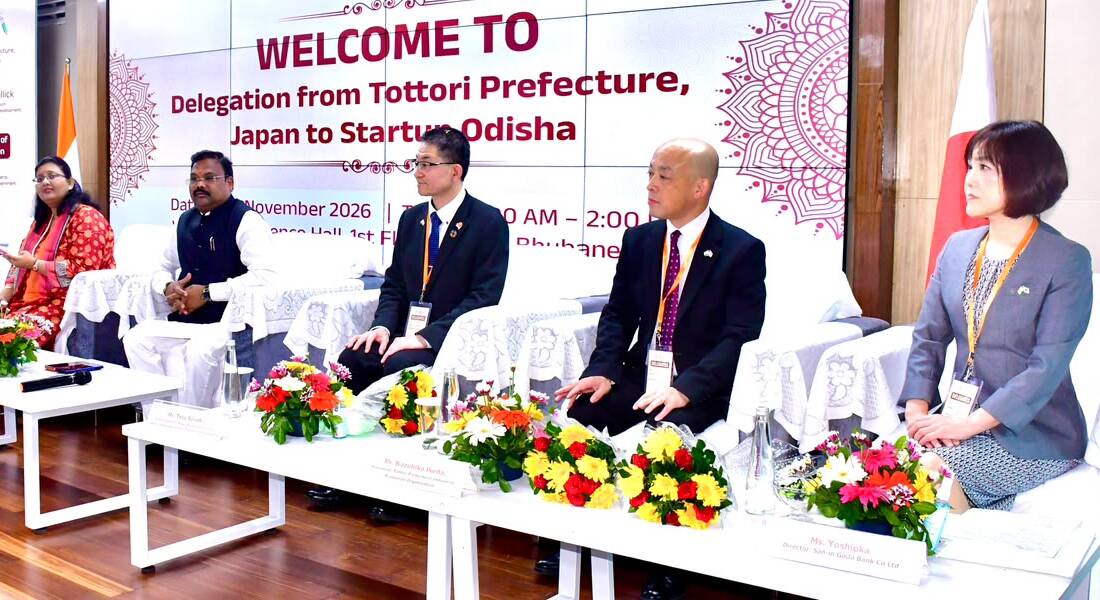
Bhubaneswar: Odisha and Japan are exploring stronger business and institutional partnerships following a visit by a delegation from Japan’s Tottori Prefecture to Startup Odisha at O-Hub in Bhubaneswar on November 10, 2026.

The visit aimed to strengthen cooperation between the startup ecosystems of Odisha and Japan and explore opportunities for international business collaboration, institutional partnerships and cross-border business linkages.

The delegation comprised Toru Sasaki, Director General, Department of Commerce, Industry and Labour, Tottori Prefectural Government; Yoshioka, Director, San-in Godo Bank Co. Ltd.; and Kazuhiko Ikeda, President, Tottori Prefectural Industrial Promotion Organization, along with representatives of Japanese companies.

A key development during the engagement was the signing of a Memorandum of Understanding (MoU) between Sustainability Leaders Odisha Pvt. Ltd., an Odisha-based startup, and ONESTRUCTION Inc., a business organisation from Tottori.

The agreement marks progress towards business collaboration between enterprises from the two regions.

The MoU follows initial discussions during the Tottori delegation’s visit to Odisha on July 30, 2026, and subsequent follow-up engagements aimed at translating the initial interactions into concrete business partnerships.

Odisha’s Minister for Micro, Small and Medium Enterprises and Fisheries and Animal Resources Development, Gokulananda Mallik, addressed the gathering and highlighted the importance of fostering entrepreneurship and expanding business opportunities through international cooperation.

Rashmita Panda, Commissioner-cum-Secretary of the MSME Department and Chairperson of Startup Odisha, outlined the state government’s commitment to strengthening the startup ecosystem, promoting innovation and facilitating international partnerships.

The programme began with a welcome address by Startup Odisha Chief Executive Officer Smruti Ranjan Pradhan, followed by addresses from members of the Japanese delegation.

The visiting delegates also toured the Startup Showcase Stall, where they gained insights into innovative products, technologies and entrepreneurial initiatives emerging from Odisha’s startup ecosystem.

A video presentation on Startup Odisha provided an overview of the state’s initiatives, institutional support mechanisms and efforts to nurture innovation, entrepreneurship and startup growth.

Odisha-based startups presented their ventures, products and solutions to the Japanese delegation, highlighting the state’s entrepreneurial capabilities and exploring potential areas of cooperation with Japanese companies.

The programme also featured Business-to-Business interactions between Odisha-based startups and companies from Tottori Prefecture. The discussions focused on business networking, exchange of ideas, potential partnerships, market opportunities and areas of mutual interest across agriculture, construction, artificial intelligence, manufacturing, sustainability and healthcare.

The engagement is expected to strengthen international startup linkages and create opportunities for cross-border business collaboration. Startup Odisha aims to build sustained institutional engagement, facilitate business connections, and provide global exposure to emerging enterprises in the state through such initiatives.

Odisha to revise electoral rolls for 2027; final voter list on January 21

Bhubaneswar: The Election Commission of India (ECI) will conduct a Special Summary Revision (SSR) of electoral rolls in Odisha for 2027, with January 1, 2027, fixed as the qualifying date for voter eligibility.

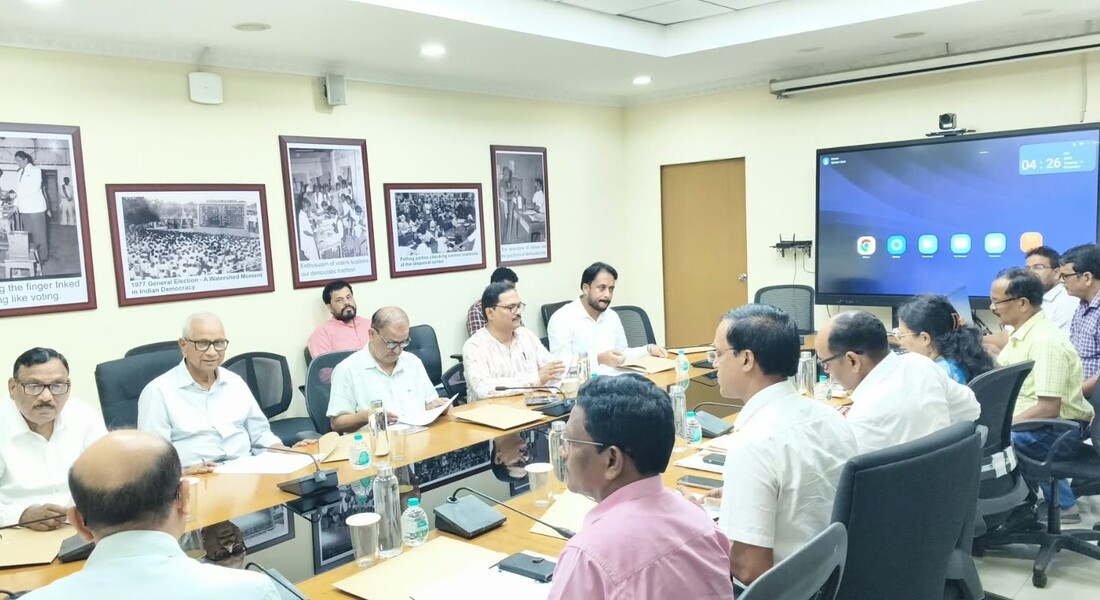
In this connection, a meeting was held at the conference hall of the Office of the Chief Electoral Officer (CEO), Odisha, under the chairmanship of Additional Chief Electoral Officer Sushant Kumar Mishra.

Representatives of various political parties attended the meeting, where the methodology, prescribed timeline, and arrangements for conducting the revision smoothly, impartially, and transparently were discussed.

As of November 8, 2026, Odisha has 3,19,12,623 registered electors, comprising 1,62,51,443 male and 1,56,58,405 female voters. The state also has 2,775 third-gender electors, 3,86,185 young electors and 4,52,073 electors with disabilities.

Under the revision schedule, the rationalisation and reorganisation of polling stations will be completed by November 20, 2026. The integrated draft electoral roll will be published on November 30, followed by a month-long period from November 30 to December 30 for filing claims and objections relating to the addition, deletion and correction of names.

The claims and objections will be disposed of by January 16, 2027, and the final electoral roll will be published on January 21.

The Election Commission has prescribed different forms for voter registration and corrections in electoral records. Eligible citizens can use Form 6 to apply for inclusion of their names in the electoral roll, while Indian electors residing abroad can register through Form 6A. Form 7 can be used to object to the proposed inclusion of a name or seek deletion of an existing entry.

Form 8 is meant for reporting a change of residence, correcting details in the electoral roll, obtaining a new Electors Photo Identity Card (EPIC), and marking an elector as a Person with Disability.

Applications can be submitted online through the Voter Service Portal at https://voters.eci.gov.in. Electors can also submit the prescribed forms to the Booth Level Officer (BLO) of their respective polling stations.

The revision process will also accept advance applications for the subsequent qualifying dates of April 1, July 1 and October 1, 2027. These applications will be processed during their respective quarters.

To facilitate coordination at the polling station level, the CEO’s office has requested all recognised political parties to appoint one Booth Level Agent (BLA) for each polling station. The agents will coordinate with the respective BLOs during the revision exercise.

Each BLA can collect and submit a maximum of 10 Forms 6, 7 and 8 per day, subject to an overall limit of 30 forms during the claims and objections period. If an agent submits more than 30 applications in total, the Electoral Registration Officer (or Assistant Electoral Registration Officer will re-verify them. BLAs will also be required to submit a declaration confirming that they have personally verified the details provided in the applications.

Political parties have been requested to submit their suggestions and proposals before the polling station reorganisation plans are finalised.

As part of the transparency measures, the list of claims and objections will be published on the website of the Chief Electoral Officer, Odisha. After publication of the list and its circulation to political parties, a minimum period of seven days will be provided, along with compliance with other legal requirements, before the claims and objections are disposed of.

The names of deceased electors, those who have permanently shifted, and those registered at more than one place will be deleted only after proper verification in accordance with the Election Commission’s directions.

The CEO’s office has also clarified that furnishing an Aadhaar number is voluntary for inclusion or retention of a name in the electoral roll. No application will be rejected, and no existing name will be deleted, solely because an elector has not submitted an Aadhaar number.

Electors aggrieved by a decision of the Electoral Registration Officer can file a first appeal before the District Magistrate under Section 24(a) of the Representation of the People Act, 1950. A second appeal can be filed before the Chief Electoral Officer under Section 24(b) of the Act.

Special registration drives and camps will be organised to enrol eligible citizens whose names are yet to be included in the electoral roll. The initiatives will particularly focus on young and first-time voters, women, third-gender persons, Scheduled Tribes and Particularly Vulnerable Tribal Groups, persons with disabilities, senior citizens, migrants, and other vulnerable sections.

Help centres will be established at the district and Assembly constituency levels. Every recognised political party will also receive one printed copy and one soft copy of the draft and final electoral rolls for each polling station free of cost.

The CEO’s office has emphasised that the active participation of recognised political parties is essential to ensure that all eligible citizens are included and an accurate, inclusive and error-free electoral roll is prepared. Political parties have been urged to create awareness and support the registration of eligible voters.

Additional CEO Sushant Kumar Mishra, Financial Adviser Sanjay Kumar Lugun, Joint CEO Gopinath Kuanr, Deputy CEOs Dr Laxmiprasad Sahu and Anamika Singh, other officers of the CEO’s office and representatives of various political parties attended the meeting.

Odisha adds 5.05 lakh beneficiaries to Madhubabu Pension Scheme

Bhubaneswar: The Odisha government has achieved full saturation of social security allowances under the Madhubabu Pension Yojana, adding 5,05,817 new eligible beneficiaries and taking the total number of pension recipients to 41,80,825.

Chief Minister Mohan Charan Majhi announced the expansion at a programme held at the Reserve Police Line ground in Balasore on Tuesday, where he also unveiled the Unified Pension Management Portal.

Describing the occasion as historic, the Chief Minister said no eligible elderly person, person with disability, or helpless individual in the state would be deprived of government assistance. He said eligible applicants would no longer have to wait for an existing pensioner to pass away before receiving benefits.

Majhi said the previous government had maintained fixed beneficiary quotas at both the state and district levels, under which new eligible applicants could be included only when an existing pensioner died. He said his government had ended this system.

In line with the commitment made in this year’s budget, 5,05,817 additional eligible persons have been brought under the scheme, taking the total beneficiary count to 41,80,825 and achieving full saturation.

The Chief Minister said the additional beneficiaries would entail an annual expenditure of Rs 625 crore. He described the allocation as a worthwhile investment in the welfare of senior citizens and said elderly people should not be made to wait for assistance over an amount of Rs 500-600 crore when the government spends crores on various schemes.

To simplify the application and delivery process and make it more transparent and efficient, Majhi unveiled the Unified Pension Management Portal. Eligible persons can apply online through the portal or submit applications at their nearest Jana Seva Kendra or Block Development Officer’s office.

According to the Chief Minister, the allowance will be paid regularly from the month following the submission of an application. Beneficiaries will not need to apply again to receive the enhanced monthly allowance of Rs 3,500 after attaining the age of 80, as the increase will be applied automatically once they reach the prescribed age.

The newly added beneficiaries will receive their allowances for October and November together. Distribution programmes will be organised at the district level on November 11 and 12, followed by block-level programmes on November 13 and 14.

Those unable to collect the allowance during these programmes can receive it on November 25 from their respective panchayat or municipality offices. From December onwards, the regular allowance will be disbursed on the 15th of every month, the Chief Minister said.

During the programme, Majhi distributed pension benefits directly to selected beneficiaries, including Amulya Acharya and Phulamani Marandi from Balasore Sadar; Shiba Singh and Jayanti Sahu from Remuna; Prafulla Nayak and Hiran Das from Nilgiri; and Gayatri Behera and Gajendra Mahapatra from Nilgiri NAC, among others.

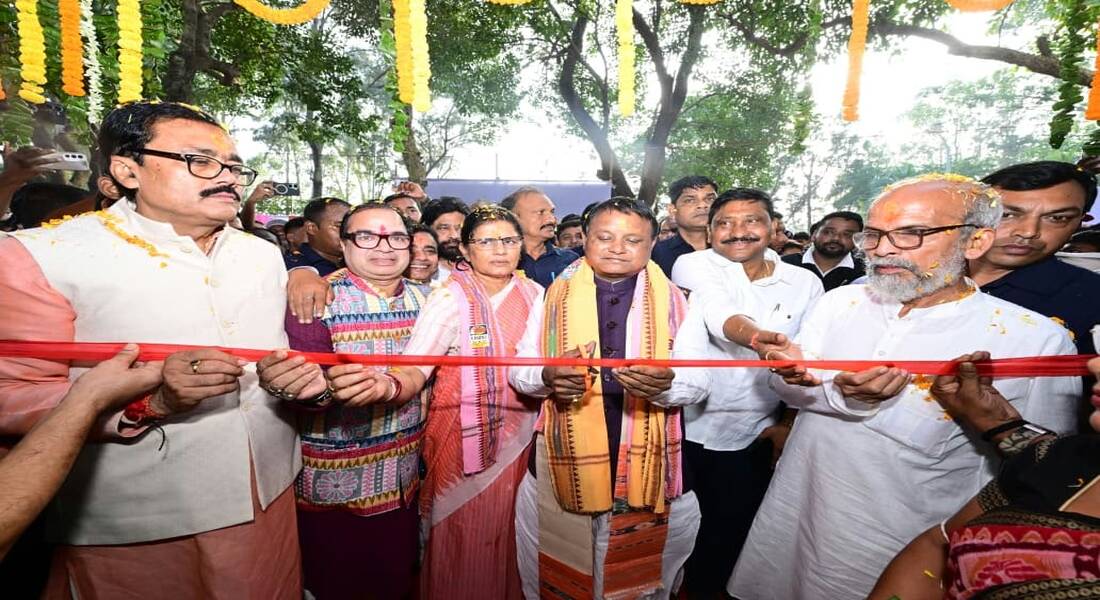
He also inaugurated a Madhubabu Pension Yojana awareness chariot prepared by the state government’s Social Security and Empowerment of Persons with Disabilities Department to spread awareness about the scheme.

On the occasion, 70 development projects worth around Rs 340 crore were launched in Balasore district. These included the inauguration of 28 completed projects worth Rs 78 crore and the laying of foundation stones for 42 projects estimated at Rs 262 crore.

Speaking at the same venue, Deputy Chief Minister and Minister for Women and Child Development and Tourism Pravati Parida said self-help groups were increasingly creating opportunities for small and medium enterprises.

She said women would no longer remain mere beneficiaries but would become entrepreneurs. She added that the government was committed to ensuring that people received their rightful benefits without facing the prolonged delays experienced under the previous government.

Minister for Social Security and Empowerment of Persons with Disabilities, and School and Mass Education, Nityananda Gond said pension was not merely financial assistance but a symbol of human dignity and social security. He said the government was focusing on ensuring the smooth delivery of monthly pensions, particularly to elderly people, widows, persons with disabilities and those in need.

Balasore MP Pratap Sarangi described the occasion as special for the district, noting that the Chief Minister had personally distributed pension benefits to eligible recipients.

Odisha steps up efforts to become India’s millet hub

Bhubaneswar: Odisha is intensifying efforts to establish itself as the millet hub of India, with a focus on conserving indigenous millet varieties, strengthening traditional seed systems and expanding market opportunities for farmers.

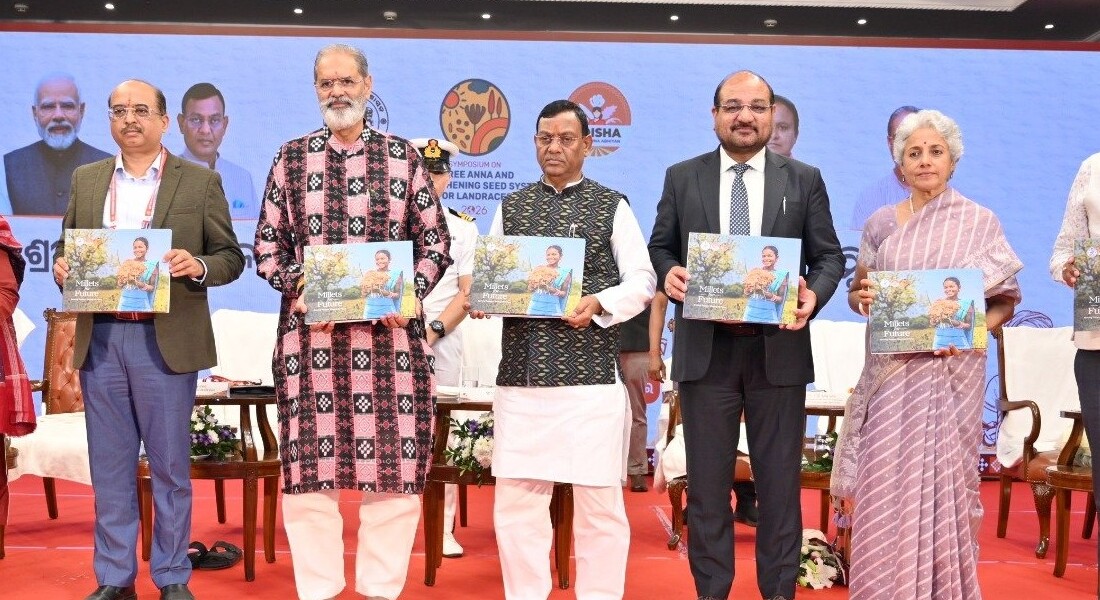
Governor Braj Mohan Ram inaugurated the two-day ‘Symposium on Shree Anna and Strengthening Seed System for Landraces-2026’ at a Bhubaneswar hotel.

Deputy Chief Minister Kanak Vardhan Singh Deo, who holds the Agriculture & Farmers’ Empowerment and Energy portfolios, also attended the inaugural programme.

Addressing the inaugural session, the governor emphasised the need to conserve indigenous millet landraces, popularise millet-based food and encourage people to include millets in their daily diets.

He expressed gratitude to farmers for safeguarding Odisha’s rich agricultural heritage and commended their dedication in establishing Odisha as the Millet Hub of India.

Singh Deo highlighted the importance of preserving indigenous seed varieties, enhancing millet production, strengthening FPOs and expanding market opportunities for farmers.

He said collective efforts in these areas would help safeguard the state’s agricultural heritage, enhance farmers’ prosperity and strengthen Odisha’s agricultural future.

He also highlighted that Odisha is the only state in India celebrating Mandia Divas on a grand scale. Emphasising the state government’s initiatives to promote organic cultivation and popularise millets, Singh Deo noted Odisha’s rapid emergence as the Millet Hub of India.

The Deputy Chief Minister further remarked on India’s agricultural transformation, noting that the country had evolved from being a grain-importing nation into a self-sufficient country and a global contributor to food security.

The event was attended by the Secretary of the Department of Agricultural Research and Education and Director General of the Indian Council of Agricultural Research, the Commissioner-cum-Secretary of the Department of Agriculture & Farmers’ Empowerment, the Chairperson of the MS Swaminathan Research Foundation, the Vice-Chancellor of Odisha University of Agriculture and Technology, the Director of the Directorate of Agriculture & Food Production, agricultural scientists and farmers from across the state.

The governor also inaugurated an exhibition showcasing a range of millet-based products.

The symposium aims to conserve and promote traditional millet landraces, enhance millet productivity, strengthen Farmer Producer Organisations, establish robust market linkages for farmers, and popularise millet-based food culture across rural and urban areas.

PM Modi hails Anuj Shrivatri as India reaches 100 chess grandmasters

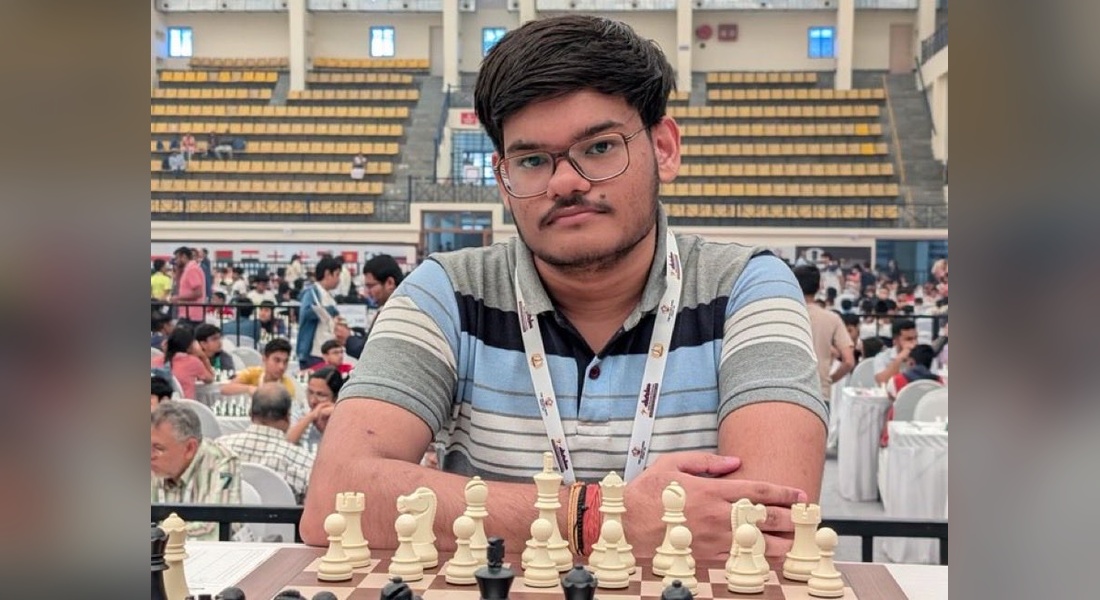
New Delhi: India has achieved a significant milestone in chess by producing its 100th Grandmaster, with Anuj Shrivatri earning the prestigious Grandmaster title.

Prime Minister Narendra Modi on Tuesday congratulated the young chess player, describing the achievement as an exceptional feat and celebrating India’s growing presence in the sport.

In a message acknowledging the milestone, the Prime Minister said India’s achievement of having 100 Chess Grandmasters reflected the immense talent, dedication and hard work of its players. He also highlighted the growing popularity of chess among the country’s youth.

Modi expressed happiness over the emergence of young chess talents from different parts of India who are making their mark on the global stage. He expressed hope that the milestone would inspire more youngsters to take up chess and strive for excellence.

The achievement marks an important moment for Indian chess, highlighting the country’s growing pool of talented players and the increasing interest in the game among younger generations.

In a post on X, he said: “It is particularly heartening to see young chess talents emerging from different parts of the country and making their mark on the global stage. May this achievement inspire many more youngsters to take up chess and pursue excellence.”

Also, Union Youth Affairs and Sports Minister Dr Mansukh Mandaviya congratulated Anuj Shrivatri.

In a post on X, he said: “A historic century on the 64 squares! 🇮🇳♟️Today we proudly celebrate a phenomenal achievement as India crowns Anuj Shrivatri as its 100th Chess Grandmaster. The intellectual dominance of New India is shining brighter than ever. The Modi Government is building a strong foundation for future champions to thrive on the global stage. The goal is set and the vision is clear. Onwards to 200 Grandmasters!”

India calls for fair and equitable climate outcome at COP31

New Delhi: India has reaffirmed its commitment to climate multilateralism, equity and the principle of Common But Differentiated Responsibilities and Respective Capabilities, calling for a fair, equitable and ambitious outcome at the 31st Conference of the Parties (COP31) to the UN Framework Convention on Climate Change (UNFCCC) in Antalya, Türkiye.

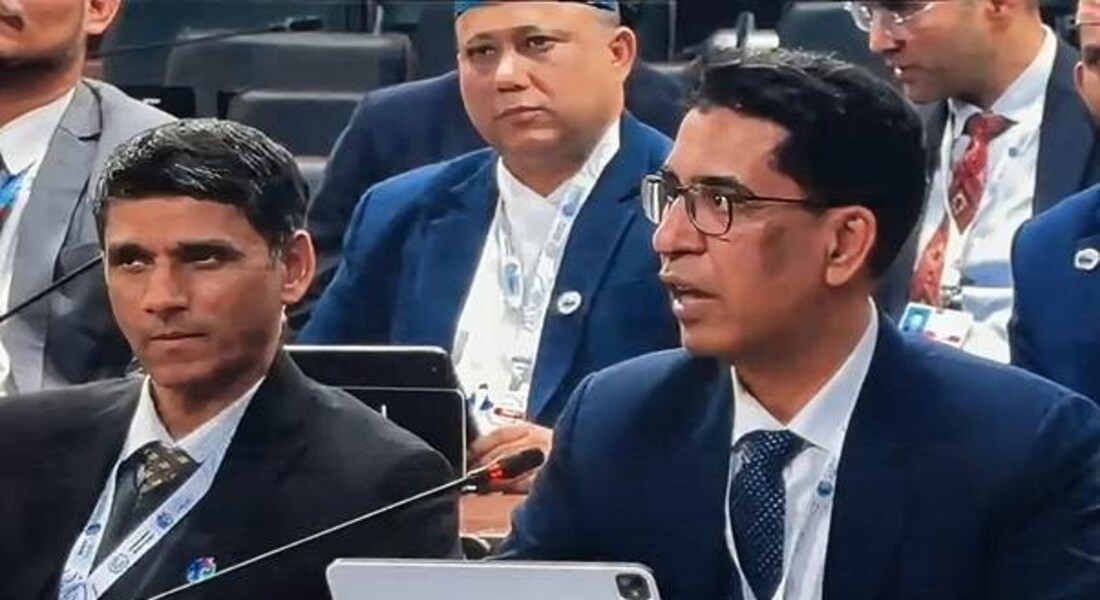
Delivering India’s opening statement at COP31, Narendra Bhooshan, Secretary, Ministry of Environment, Forest and Climate Change, expressed gratitude to Türkiye and Australia for their leadership of the conference.

He appreciated the efforts of all Parties and negotiating groups towards strengthening climate multilateralism and stated that India aligned itself with the positions expressed by G77 and China, the Like-Minded Developing Countries and BASIC.

Emphasising the importance of international cooperation, India highlighted that the UNFCCC and its Paris Agreement remain the most inclusive platforms for addressing climate change, ensuring that every country has a voice.

India reiterated its confidence in this multilateral process, which is founded on equity and the principle of CBDR-RC, according to an official press release.

Welcoming the Presidency’s vision of a ‘COP of Implementation’, guided by Dialogue, Consensus and Action, India observed that dialogue builds trust, consensus ensures collective ownership of outcomes, and action translates commitments into tangible progress on the ground.

Highlighting the increasing challenges associated with the prospect of global warming crossing the 1.5°C threshold, India stressed the urgent need to uphold equity so that no country or community is left behind in collective efforts to tackle climate change.

India reiterated its commitment to making a fair contribution to global climate action while safeguarding the development and well-being of its people.

It also pointed out that just transition and addressing adaptation needs remain major challenges, particularly for countries in the Global South, where these concerns are closely linked to broader development challenges.

On climate finance, India emphasised that public financial support from developed countries remains essential for catalysing climate action in developing nations and strengthening adaptation finance to address their vulnerabilities.

It also underscored the fundamental importance of Article 9.1 of the Paris Agreement, which establishes the obligation of developed countries to provide financial resources to developing countries.

Reaffirming its constructive engagement at COP31, India said it would work with all Parties towards securing a fair, equitable and ambitious outcome.

Odisha Cabinet approves 12 key proposals

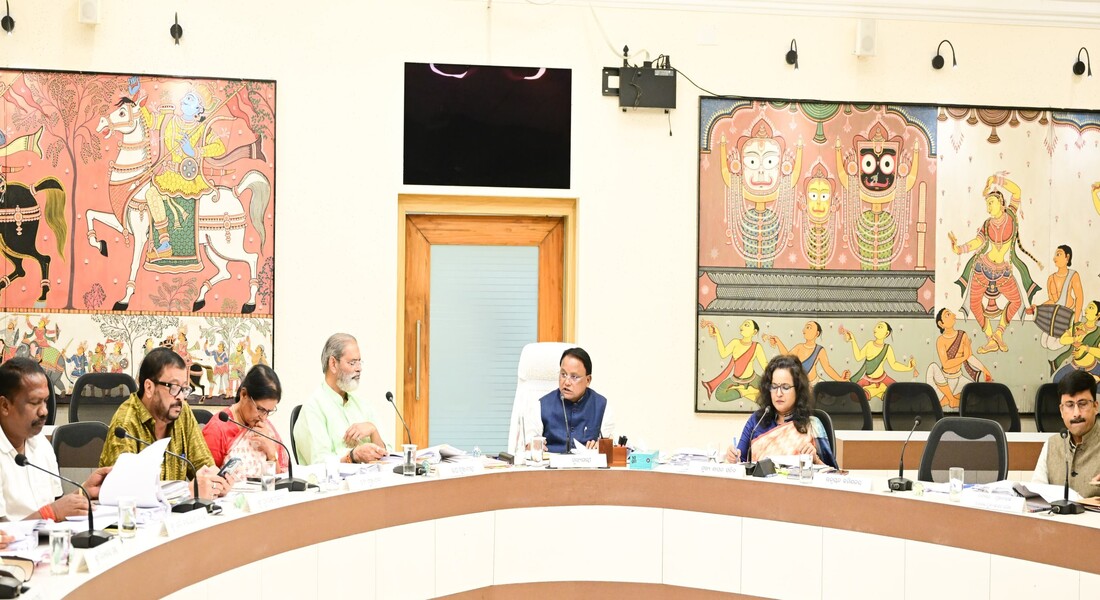
Bhubaneswar: The Odisha Cabinet, chaired by Chief Minister Mohan Charan Majhi, on Monday approved a series of 12 significant proposals aimed at strengthening governance, expanding opportunities, improving public services and accelerating the state’s overall development.

Among the major decisions are the provision of free Wi-Fi facilities in 601 government and aided colleges, removal of the attempt limit for eligible candidates appearing in the Odisha Civil Services Examination, creation of new career progression opportunities in the Panchayat Executive Officers cadre, and major investments in irrigation and energy storage infrastructure.

The Cabinet approved the Odisha Shikshanet scheme with an outlay of Rs 393.62 crore to provide free Wi-Fi connectivity and up to 1 GB of daily data to students across 601 government and aided colleges.

It also approved amendments to facilitate the direct recruitment of 19 Assistant Town Planners through the Odisha Public Service Commission, with revised age and educational eligibility criteria.

In a decision concerning judicial officers, the Cabinet approved a structured programme under which trainee judicial officers will undergo one year of institutional training followed by one year of Law Clerkship.

The Panchayat Executive Officers cadre will also be restructured with a total of 3,294 posts, creating enhanced career progression opportunities while strengthening grassroots administration.

Another significant decision is the removal of the limit on the number of attempts for eligible candidates appearing in the Odisha Civil Services Examination.

In the energy sector, the Cabinet approved the 600 MW Upper Indravati Pumped Storage Project at Ranibahal in Kalahandi district, with an estimated investment of ₹4,708.64 crore. The project is expected to strengthen the state’s energy storage capacity and improve grid stability.

The Cabinet also approved the Odisha Bovine Breeding (Regulation) Bill, 2026, to establish a regulatory framework for scientific breeding, quality assurance and traceability of breeding services, to improve livestock productivity.

To expand irrigation coverage in Nuapada district, seven mega lift irrigation schemes were approved at an execution cost of Rs 268.22 crore. The schemes are expected to create irrigation potential across 8,800 hectares, covering 59 villages.

In another water infrastructure initiative, the Cabinet approved an in-stream storage project near Patharla village in Balangir district at an estimated cost of Rs 99.99 crore. The project will ensure water supply to 12 villages and support local livelihoods.

The Cabinet also extended the deadline for replacing institutional dealers with private dealers under the Public Distribution System to September 30, 2027.

Approving the Food and Paddy Procurement Policy for Kharif Marketing Season 2026–27, the Cabinet set a target of procuring 53 lakh metric tonnes of rice, equivalent to approximately 78 lakh metric tonnes of paddy. Farmers will receive Rs 3,100 per quintal, inclusive of the Minimum Support Price and input assistance.

Additionally, the Cabinet approved the Kursud In-stream Storage Project on the Indra River in Balangir district at an estimated cost of Rs 81.36 crore. The project will benefit 17 drought-prone villages across Titilagarh and Bangomunda blocks.