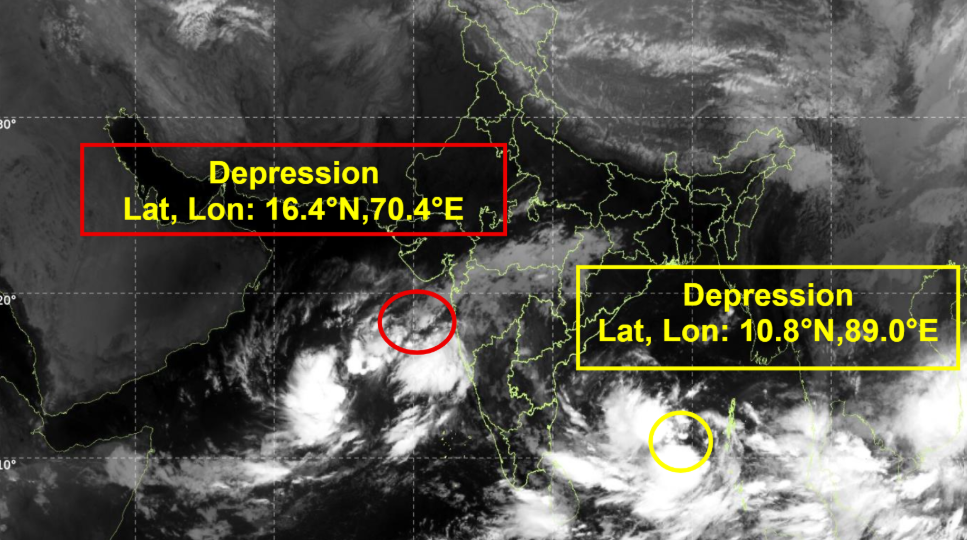

Bhubaneswar: The India Meteorological Department (IMD) has placed Odisha on heightened alert as a low-pressure system is forming over the southeast Bay of Bengal, bringing the possibility of substantial rainfall and intensified weather over the coast and adjacent inland districts.
According to IMD regional forecasts, a cyclonic circulation over the Andaman Sea is likely to evolve into a more organised low-pressure zone by the end of this week. While the system is not yet confirmed to develop into a full cyclone, the bureau expects moderate to very heavy rainfall and strong winds across southern and coastal Odisha in the next 48-72 hours.
State authorities have been kept on standby. District collectors in prone zones have already been advised to initiate disaster-preparedness protocols: mobilising rescue teams, readying relief shelters, ensuring clearance of drains, and issuing advisories to fishermen and outgoing vessels. Coastal communities, particularly in districts such as Ganjam, Gajapati and nearby areas, are being urged to avoid venturing into the sea.
“While the system is still far from land-fall, we are taking this seriously given recent seasonal patterns,” said the head of the IMD regional centre in Bhubaneswar. Local forecast models hint at isolated one-day accumulations of rainfall exceeding 100 mm in vulnerable districts.
The state’s Disaster Management Department has asked municipalities and local bodies to keep essential services ready, maintain drainage systems, and monitor river-and-stream levels closely. Power and communication infrastructure teams have also been alerted to respond to possible outages or generator failures caused by wind-or-rain-related damage.
Farmers in coastal plain and hilly tracts have been warned of possible crop damage, especially in vulnerable paddy fields and vegetable patches. Instructions have been issued to safeguard livestock and produce ahead of any heavy-downpour episode.
Even as the system remains under observation, meteorologists noted that this post-monsoon phase often brings episodic low-pressure systems over the Bay of Bengal, which can intensify rapidly under favourable conditions. With increased sea-surface temperatures and active upper-air circulation, early caution is deemed wise.
Residents are encouraged to monitor official weather bulletins, heed local authority instructions, and follow safety measures such as staying indoors during heavy spells, securing loose items, and avoiding low-lying areas prone to flash flooding.