
New Delhi: India’s Ancient Buddhist Site of Sarnath has been inscribed on the UNESCO World Heritage List, becoming the country’s 45th property to receive the recognition. The decision was taken at the 48th Session of the World Heritage Committee, held at Busan, South Korea.
Sarnath was India’s official nomination for the 2025-26 cycle. The inscription celebrates India’s cultural legacy and its traditions of architectural brilliance, regional identity and historical continuity, according to an official statement.
Prime Minister Narendra Modi called it a proud moment for every Indian and said he was delighted that Sarnath in Uttar Pradesh had been inscribed on the list.
In a post on X, he said Sarnath’s close association with Lord Buddha, whose message of wisdom, compassion and harmony inspires the world, made the recognition significant. Modi added that it celebrates India’s civilisational and spiritual heritage and would inspire more people worldwide to visit Sarnath.
Union Minister of Culture Gajendra Singh Shekhawat termed it a defining moment for India’s cultural heritage, saying Sarnath reflects the profound spiritual and philosophical contributions of Indian civilisation to humanity and reaffirms India’s role as a cradle of ideas across generations.
Uttar Pradesh Chief Minister Yogi Adityanath said the inscription was a proud moment for every Indian and a reflection of Uttar Pradesh’s spiritual and cultural legacy under the leadership of PM Modi.
In a post on X, he said Uttar Pradesh welcomes the world to experience this heritage.
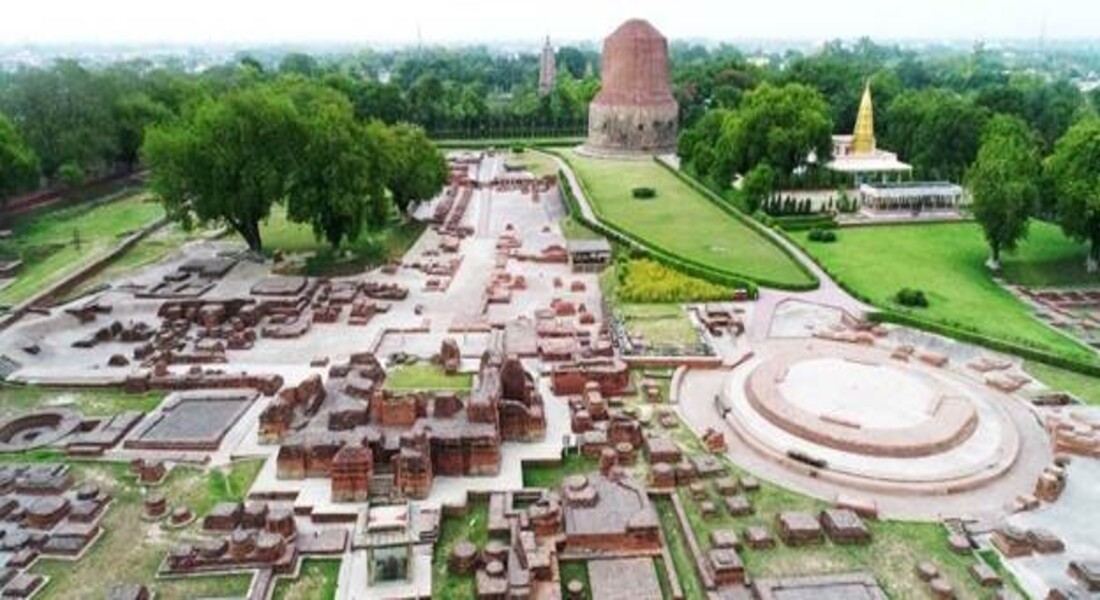
The inscribed serial property comprises two parts – the Chaukhandi Stupa and the Archaeological Remains of Sarnath, which include the Dhamekh Stupa, Dharmrajika Stupa, Mulagandhakuti Vihara and the Ashokan Pillar – located within Varanasi in Uttar Pradesh.
Together, the two components preserve the architectural and archaeological remains of ancient Sarnath, known in Buddhist tradition by names including Rishipatana, Ishipatana and Mrigadava. The Buddha visited the site in the 6th century BCE and delivered his first sermon, known as the “Turning of the Wheel of the Law” (Dharmachakra pravartana), marking the inception of the Buddhist sangha and the establishment of the Noble Eightfold Path.
Sarnath is regarded as one of the four key sites of Buddhist pilgrimage, indicated by the Buddha himself. The site developed over centuries through royal, monastic and lay patronage, with numerous stupas, temples and viharas built around the believed location of the first sermon and the Buddha’s meeting with his first disciples. Sarnath declined in the 12th century CE and fell into obscurity until its rediscovery in the 18th century.
The monuments at the site date from the pre-Mauryan period (5th-4th centuries BCE) up to the 3rd century BCE, continuing until the destruction of Sarnath in the 12th century CE, with some later additions. Sarnath has been one of the most extensively excavated sites by the Archaeological Survey of India, revealing a stratified settlement spread across 16 centuries.