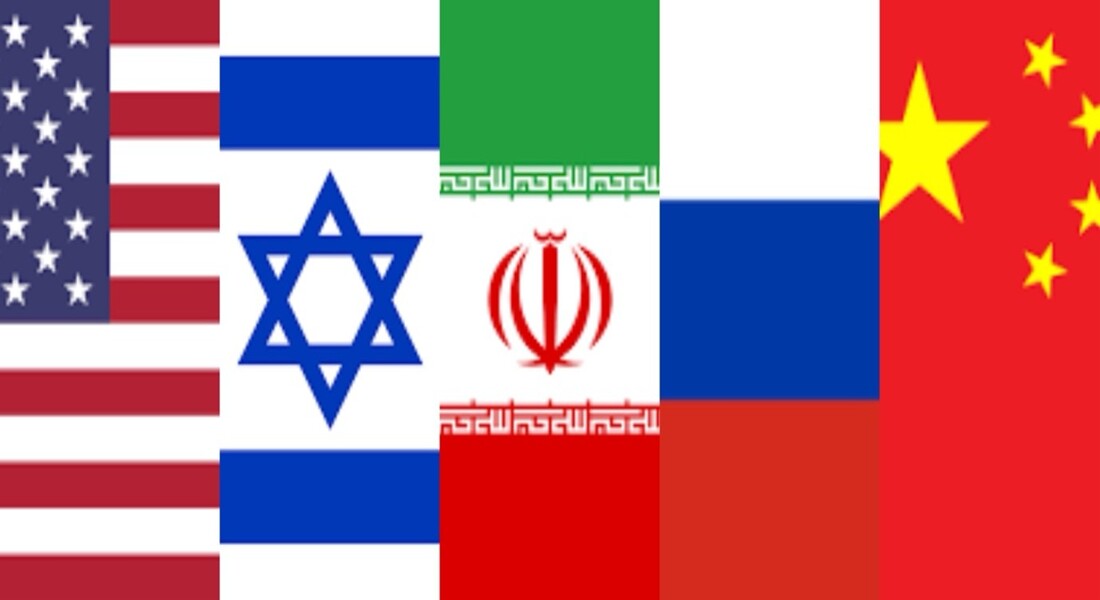

When military operations commence, missiles and bombs are deployed, and alliances are scrutinized; silence can indeed be more profound than the roar of weaponry and air raid sirens. In the escalating conflict involving Iran, the most notable sound in international politics may not be the loudness of fighter jets, but rather the relative silence from two of Tehran’s purported strategic partners, namely Russia and China.
‘Realism’ in international relations theory holds that the international system is inherently chaotic, prompting states to prioritize their own interests. Its core focus is on the survival of each state. The idea that no country will help another in times of conflict holds true, especially considering the current Israel-U.S.-led military operation, ‘Epic Fury’ in Iran.
Russia and China have condemned the United States-Israel strikes on Iran that resulted in the death of Supreme Leader Ali Khamenei, asserting that these actions violate international law and are unacceptable assaults on a sovereign nation. However, neither country committed to providing military or civilian support to Iran. Both called for an immediate ceasefire and a return to diplomatic negotiations. Meanwhile, Donald Trump warned that U.S. operations in Iran could continue for up to four weeks or longer, indicating openness to deploying ground forces and thereby involving the United States directly in the campaign. Additionally, other nations have merely reiterated their usual rhetoric, condemning the violence and urging the conflicting parties to seek resolution through diplomatic channels. It is clear that Iran currently has no reliable allies. Russia is preoccupied with the war in its backyard, while China seems to be playing a waiting game. After the US seized Venezuela’s president in early January this year, Beijing only condemned the ‘blatant use of force’ but offered little beyond vague criticism. China’s responses to US interventions in both Venezuela and Iran suggest that their so-called ‘strategic partnerships’ with Iran fall far short of a military alliance and are not ready to provide support when partners face serious threats.
Iran has been a key strategic, military, and economic partner for Russia in West Asia, supplying drones and missiles since Russia’s 2022 invasion of Ukraine. Moscow also risks losing another regional foothold if Iran’s regime collapses, following the fall of Syria’s Bashar al-Assad in 2024. However, beyond condemning the attacks on Iran, the Kremlin has remained publicly silent, reflecting Russia’s limited capacity to project power at this stage. Nevertheless, Moscow may benefit from rising global oil prices, as higher prices could boost Russian crude sales.
In the ‘Realist’ view of international relations, the global system operates on the principle of self-help, since there is no overarching authority to enforce rules. This means states must rely on their own military and economic power for security. In today’s context, the limitations of the United Nations become evident. Ultimately, national interests outweigh friendships. It should be recognized that alliances are more significant during ‘no-war’ periods. The idea of shared interests also has inherent value. Based on research using the Alliance Treaty Obligations and Provisions (ATOP) dataset, it has been found that the reliability of alliance commitments has declined considerably since World War II, compared with earlier periods. Alliances are not always honoured. Even the overall average from 1816 to 2003 shows that alliances were maintained roughly 50% of the time. A stark difference exists between higher compliance before 1945 and lower compliance afterward. In short, the assumption that formal treaties are always trustworthy is incorrect.
A clear example of successful alliances is the North Atlantic Treaty Organization (NATO), established on April 4, 1949. However, in recent decades, NATO has not been tested to its full extent, and it can be argued that the alliance has primarily served as a framework for strategic coordination rather than frequently engaging in direct conflict. Today, the US remains NATO’s largest contributor, both financially and in military assets. If this imbalance continues or Washington reduces its commitment, NATO’s influence and cohesion could face future challenges.
It is clear that Iran’s relationship with Russia and China has been more of an alliance driven by necessity in opposition to Western dominance. They also share significant economic interests. It is also evident that strategic partnerships enable collaboration without forcing either side to fight each other’s wars.
Interestingly, Iran is only permitting Chinese vessels to pass through the Strait of Hormuz as a sign of appreciation for Beijing’s (moral) support since the war started. China is the biggest consumer of oil from many Arab countries, with about half of its imports coming from the region. Clearly, Iran is making this move both as a diplomatic gesture and as a potential long-term strategic investment. Today, they need allies. During the ongoing conflict, the performance of Chinese-made air defense systems supplied to Iran has been scrutinized, and China had previously provided older models of drones and UAVs. Iran also knows that Russia is already deeply involved in its prolonged war with Ukraine and is unlikely to offer significant military help, so Tehran has little choice but to rely more heavily on Beijing.
Overall, amidst the escalating tension concerning Iran, two of the world’s most influential nations are observing from the sidelines: Russia and China, frequently identified as Tehran’s strategic allies. It is known that there have been no binding defense commitments in this regard; however, as major powers positioning themselves as challengers to US dominance, more was expected from them. Currently, Russia is deeply involved in the war in Ukraine, while China is focusing on its economic interests and also considers the Taiwan issue in its calculations. Ultimately, it is about interests, not ideology or friendship. So when interests clash, even the strongest alliances can fall silent.
Group Captain (Retd.) Dr. Ajey Lele is the Deputy Director General of the Manohar Parrikar Institute for Defence Studies and Analyses (MP-IDSA), New Delhi. This article is republished from SSPC under a mutual content sharing collaboration. Read the original article here. The views expressed are personal and do not necessarily reflect those of IndiaVerve.