
Women farmers navigate erratic climate, migration and resource stress while building local, sustainable solutions through collective action
In Udali village of Budhikhamari panchayat of Odisha’s Mayurbhanj district, Mina Rani Naik waited, watching the sky stretch endlessly above her fields. When the monsoon finally arrived, it came all at once—hard, unforgiving—washing away the seeds she had sown just days before.
She sowed again. By then, her husband had already left for Gujrat in search of work. The farm, like everything else, was now hers to manage.
“We don’t know the seasons anymore,” she said. “But the work keeps increasing.”
In neighbouring Khadikasole, Ganga Marandi tells a similar story, though hers is less about a single season and more about a slow, unsettling shift. “Earlier, we could understand the rains,” she says. “Now we keep guessing. If the crop fails, we adjust. If water is less, we walk more.”
This is what climate change looks like in Mayurbhanj. Not charts or forecasts—but waiting, guessing, adjusting. And in this landscape of uncertainty, it is women who are quietly holding everything together.
When the climate shifts, women absorb the shock
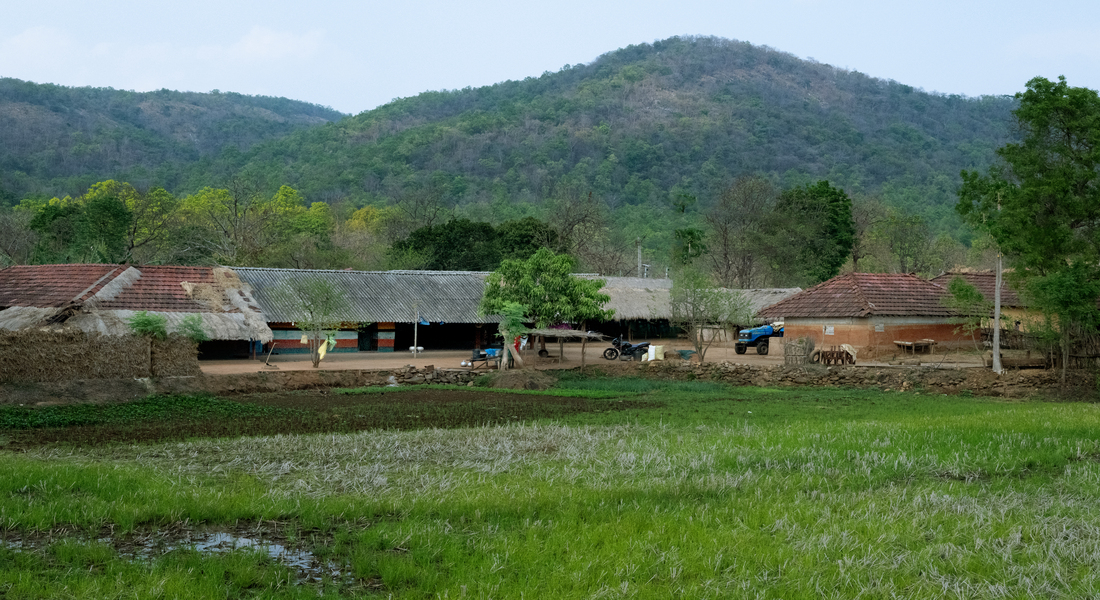
Mayurbhanj is a place where agriculture depends almost entirely on the monsoon. A place where forests, fields, and daily wage labour are tightly interwoven. A place where climate change is no longer a distant idea—it is a daily negotiation.
Across Udali, Khadikasole and Budhikhamari villages, women describe the changes not in technical terms, but through lived disruptions:
Rain that arrives too late—or too suddenly.
Ponds that dry up before summer peaks.
Crops that no longer behave as they used to.
Forests that yield less than before.
And, increasingly, men who leave either permanent or seasonal, but in search of work.
When farming fails or income dips, men move to cities—Hyderabad, Surat, Chennai—chasing work that the land can no longer guarantee.
What remains behind is not emptiness, but a shift.
Women step into expanded roles—farmers, caregivers, water carriers, livestock keepers, decision-makers in practice if not always in name.
“We have to manage everything now,” one woman said during a community assessment. “Field, home, animals—everything.”
Climate change, here, is not just environmental. It is deeply gendered. Its weight settles unevenly—and women carry most of it.
Not just coping—women are seeking change
And yet, what stands out is not just the burden, but the response.
A Community Need and Training Assessment conducted with 100 women across these villages in November 2025 revealed something striking: women were not only aware of the changes around them, but they were also actively looking for ways to adapt.
Their demands were clear, grounded, and practical:
How to make organic manure.
How to preserve seeds.
How to grow crops that can withstand uncertain weather.
This was not only curiosity but a search for control in a system that had become unpredictable.
Chemical fertilisers, widely used across farms, are becoming expensive and increasingly unreliable. Soil was weakening, losing its texture and moisture-holding capacity. Costs were rising season after season, even as yields remained uncertain. Risks were multiplying—financial, ecological, and deeply personal.
In a group discussion held in Budhikhamari last November, women spoke about another layer of concern—one that rarely enters formal conversations. Several of them linked the growing use of chemical inputs in their fields to persistent health issues within their households.
“We are seeing more problems now,” one woman said. “Blood pressure, gastric trouble, bloating… even breathing issues.”
There is no formal study here, no clinical attribution. But the pattern, as the women described it, felt too consistent to ignore.
“Earlier, we did not have so many of these problems,” another added. “Now both the food and the fields have changed.”
Their articulation may not be framed in scientific terms, but it reflects a lived connection—between what goes into the soil and what returns to the body.
“We spend more, but we are not sure what we will get,” one woman explained.
Organic practices, by contrast, felt closer—more within reach. They could be prepared using local materials. They reduced dependence on markets. They drew on knowledge that women already carried, even if it had long been undervalued.
“There is cow dung, leaves, what we already have,” another woman said. “We can use that.”
This was not just about farming differently. It was about reclaiming a sense of agency in uncertain times.
Learning together, trying together
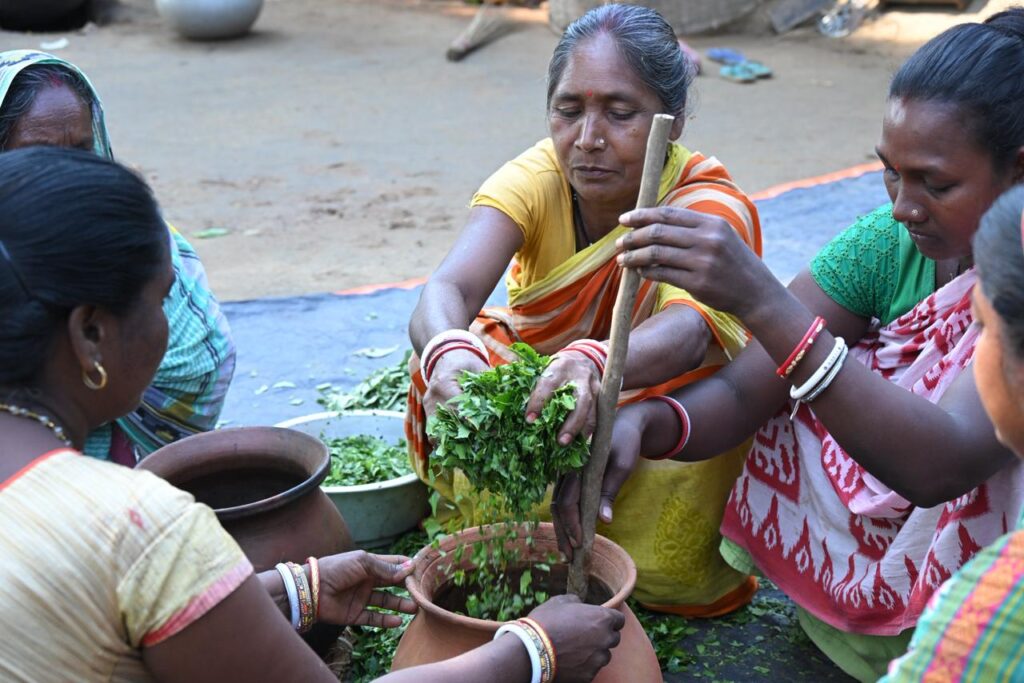
In response, a series of trainings were introduced under the project “Empowering Rural Women Groups in Climate Resilient Farming Practices in Mayurbhanj,” supported by the Hubert Humphrey Alumni Impact Grant and implemented in collaboration with Kartabya, Centre for Social Change.
The project trained 100 women from the three villages in organic practices.
The sessions were practical, hands-on, and rooted in local realities. Women learned to prepare jeevamrit and beejamrit as organic manures, experiment with composting, and use botanical pesticides like neemastra.
They were not just learning new techniques—they were recognising the value of what they already knew.
“It felt like something we could do ourselves,” said Mina Rani Mohanta from Budhikhamari. “Not something we have to buy.”
For Brundabati Mohanta in Khadikasole, the appeal was simple: “It saves money. And we understand it.”
But learning, here, was never meant to remain in the training space. It moved—to fields, to conversations, to collective experimentation.
The power of small beginnings
Adoption did not arrive as a sweeping change. It began in fragments: a small patch of land, a shared experiment, a conversation between women after a meeting.
In Udali, Minati Murmu remembers how it started: “At first, we were not sure. Then we spoke among ourselves. A few of us tried together.”
That “together” mattered. It reduced risk. It built confidence. It turned individual hesitation into collective action. Soon, more women began to observe, ask questions, and join in.
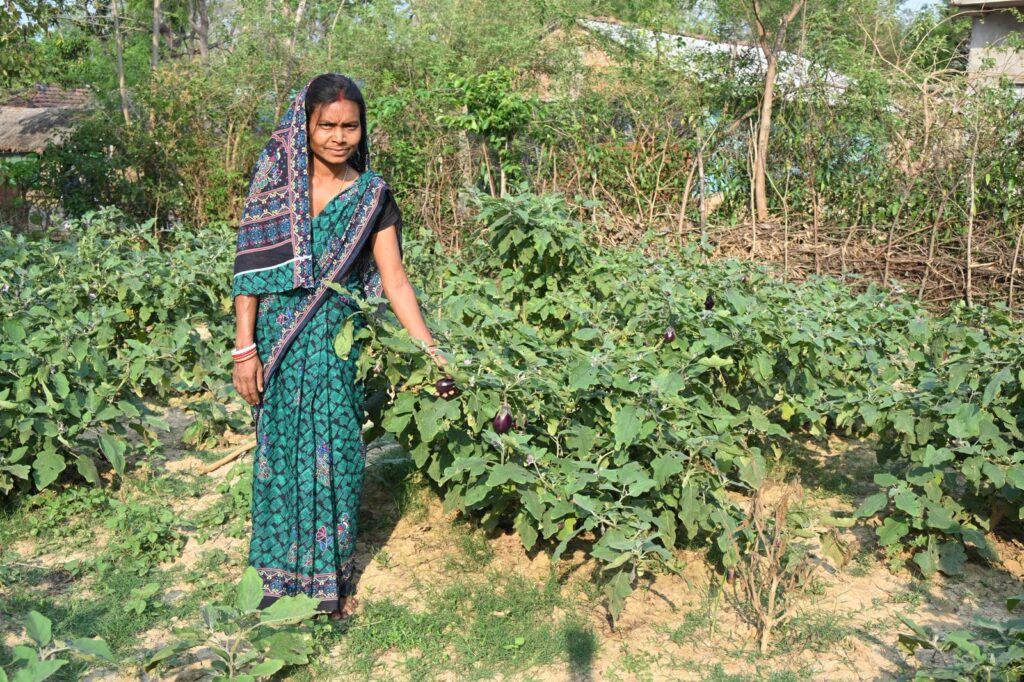
“When others saw, they also wanted to try,” Mina said.
This is how resilience takes shape—not through a single intervention, but through a slow, social process of learning, sharing, and adapting.
Resilience is work—often invisible, always constant
But resilience is not romantic. It is labour.
Preparing organic inputs takes time—collecting materials, mixing, storing. Managing water scarcity means walking longer distances. Balancing farming with household responsibilities leaves little room for rest.
And yet, women persist. Not because the path is easy, but because the alternatives are fewer.
“We cannot depend on the old ways anymore,” one participant reflected. “We have to find new ways.”
In this persistence lies a quiet strength—one that rarely makes it into policy conversations, but defines survival on the ground.
A different kind of leadership
In Mayurbhanj, leadership does not announce itself. It does not always come with titles or recognition.
It looks like Mamata choosing to sow again after failure.
It looks like Minarani gathering others to try something new.
It looks like Brundabati shifting to practices that cost less, risk less.
It looks like women holding steady—through uncertainty, through loss, through change.
They are not waiting for climate resilience to be delivered.
They are building it—step by step, season by season
Back in Udali, Sabitri now experiments cautiously. A portion of her field is under organic inputs. She discusses what she learns with other women. She watches closely—what works, what doesn’t.
The rains are still unpredictable. Water is still scarce. Work is still hard. But something has shifted.
“Earlier, we just followed,” she says. “Now we are trying to understand.”
It is a small sentence. But it carries the weight of transformation. Because resilience, in places like Mayurbhanj, does not arrive as a solution.
It grows—slowly, collectively, and often invisibly—in the hands of women who refuse to stop adapting.
And in that quiet persistence lies its strongest foundation.
***
Ranjana Das is a Humphrey Hubert Fulbright Fellow. The article is based on a Project “Empowering Rural Women Groups in Climate Resilient Farming Practices” in Mayurbhanj district of Odisha. The views expressed are personal and do not necessarily reflect those of IndiaVerve.